
How to Complete Anodizing Treatment on Grade 5 Titanium Foil?
- Grade 5 Titanium Foil
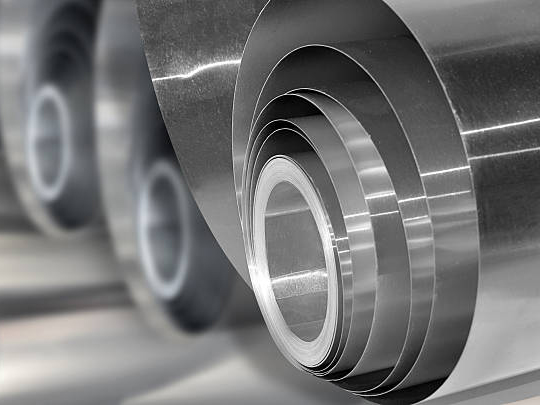
Anodizing for Grade 5 titanium foil (Ti-6Al-4V) is an electrochemical process. It grows a titanium dioxide film with controllable thickness on titanium alloy surfaces. Workers apply direct current voltage to electrolyte liquid. This action forms dense TiO₂ layers from nanometer to micrometer scale on foil surfaces. This oxide film creates multiple colors through optical interference from different film thicknesses. It also raises surface hardness and corrosion resistance to a certain degree. The standard process sequence follows this order: surface pretreatment (degreasing, pickling) → anodizing (10–120 V voltage, several seconds to minutes of treatment time) → water rinsing and sealing. Grade 5 titanium foil contains 6% aluminum and 4% vanadium. Its oxide film grows slightly faster than pure titanium during anodizing. Operators need precise voltage and time control to get uniform color shades. Manufacturers use this technology for aerospace marking, aesthetic finishing of medical devices, and functional surface treatment of high-end electronic products.
1. Basic Principles and Full Process Flow of Grade 5 Titanium Foil Anodizing
1.1 Electrochemical Mechanism of Anodizing
Workers connect Grade 5 titanium foil to the positive terminal of a DC power supply as the anode during treatment. Electric fields push oxygen ions (O²⁻) inside electrolyte liquid toward the titanium surface. These ions react with the titanium base metal and produce TiO₂. Oxide film thickness keeps an almost linear relation with applied voltage, at a rate of roughly 2.5–3.0 nm per volt. When voltage rises from 10 V to 100 V, the oxide film changes from fully transparent to golden, magenta, blue-green and other interference colors. Aluminum and vanadium inside Ti-6Al-4V take part in partial oxidation reactions. The process creates mixed oxides such as Al₂O₃ and V₂O₅. These compounds make the film’s chemical composition slightly complex, yet TiO₂ remains the main phase.
1.2 Four Complete Steps of the Process Flow
The pretreatment stage removes all surface oil stains and native oxide layers on Grade 5 titanium foil. Factories first soak foils in alkaline degreasing liquid for 5–10 minutes at 50–70°C. Next they carry out pickling with mixed acid solution (HF:HNO₃ = 1:4 to 1:6) for 30–60 seconds at room temperature. This step exposes fresh bare metal surfaces. The core anodizing step runs inside electrolytic tanks. Common electrolyte liquids include 5–15% sulfuric acid, 10–20% phosphoric acid, or citrate solutions. The voltage range stays between 10 V and 120 V, current density sits at 0.5–2.0 A/dm². Operators adjust oxidation time from 5 seconds to 5 minutes based on target colors. Rinsing and sealing after anodizing carry critical importance. Multi-stage deionized water washes clear leftover electrolyte liquid. Then workers submerge foils in hot water at 80–100°C for 10–20 minutes. This action closes tiny pores on oxide films and improves corrosion resistance and color stability.
1.3 Core Control Points for Key Process Parameters
Voltage acts as the main factor to decide oxide film thickness and surface color. Operators set exact voltage values according to target color ranges: 20–30 V for golden shades, 60–80 V for blue tones, 100–120 V for gray finishes. Too high current density creates local overheating and cracked films. Too low current density slows oxidation speed and forms loose oxide layers. Electrolyte concentration and temperature directly affect liquid conductivity and reaction speed. Temperatures above 30°C easily produce powdery oxide residues. Temperatures below 15°C slow down all chemical reactions. Grade 5 titanium foil only measures 0.02–1.0 mm thick. Production lines must use low current density plus fast even cooling to stop thin sheets from bending out of shape.
2. Equipment Selection and Electrolyte Formulas for Grade 5 Titanium Foil Anodizing
2.1 Equipment Setup for Specialized Anodizing Production Lines
Industrial anodizing lines for Grade 5 titanium foil need DC regulated power supplies. The power unit delivers adjustable output from 0–150 V and 0–500 A. Ripple coefficient must stay below 1% to guarantee even film quality across all foil surfaces. Manufacturers build oxidation tanks from acid-resistant polypropylene or PVDF materials. They fit titanium mesh or graphite plates to work as cathodes. Wide-format titanium foil (350–670 mm width) requires dedicated tension winding systems. These fixtures hold foil flat and wrinkle-free while submerged in electrolyte liquid. Circulating cooling systems lock electrolyte temperature between 18–25°C. Mixing equipment pushes liquid to flow constantly and removes local concentration differences.
2.2 Comparison of Widely Used Electrolyte Systems
| Electrolyte Type | Main Ingredients | Voltage Range | Film Features | Typical Applications |
|---|---|---|---|---|
| Sulfuric Acid System | 5–15% H₂SO₄ mixed with water | 10–100 V | High hardness, strong wear resistance, bright saturated colors | Decorative colored surfaces, aerospace identification marks |
| Phosphoric Acid System | 10–20% H₃PO₄ mixed with water | 20–120 V | Dense film, high transparency, soft gray tones | Medical devices, protective coating for precision instruments |
| Citrate System | 15–25% sodium or ammonium citrate mixed with water | 15–80 V | Low environmental impact, mild soft colors | Parts that touch food, consumer electronics |
| Oxalic Acid System | 3–8% H₂C₂O₄ mixed with water | 30–100 V | Flexible film, strong crack resistance | Surface strengthening for structural parts under heavy stress |
The sulfuric acid system holds the dominant share of industrial applications. It costs little and delivers fully mature stable processing results. The phosphoric acid system suits projects that demand high transparency and tight dimensional control. The citrate system meets strict environmental rules and gains wider use in food and medical production fields.
2.3 Special Process Adjustments for Ultra-Thin Grade 5 Titanium Foil
Grade 5 titanium foil from 0.02 mm to 1.0mm thick easily suffers local over-oxidation burn marks from concentrated electric current during anodizing. Factories apply three practical solutions. First, replace constant current power with pulse power supplies. Set forward pulse width to 5–20 ms and duty cycle between 30–60%. This setup cuts instantaneous current density. Second, add buffering agents such as boric acid or phosphate to electrolyte liquid. These additives stabilize liquid pH value from 3.5 to 5.5. Third, install double-sided cathode clamping tools. The devices supply even electric current from both foil sides and prevent sheet warping from one-sided mechanical stress.
3. Color Control and Quality Inspection for Grade 5 Titanium Foil Anodizing
3.1 Voltage Matching Chart for Full Color Spectrum
Colors formed on anodized Grade 5 titanium foil come from optical thin-film interference. Oxide films of different thicknesses reflect and transmit specific wavelengths of visible light. The table below lists matching voltage, film thickness, surface color and target uses:
| Voltage (V) | Oxide Film Thickness (nm) | Visible Color | Application Scenarios |
|---|---|---|---|
| 10–15 | 25–40 | Pale gold | Jewelry decoration, brand logo marks |
| 18–25 | 45–65 | Rose gold / light pink | Consumer electronic casings, fashion accessories |
| 30–40 | 75–100 | Purple | Aerospace cabin interior parts, sports equipment |
| 50–70 | 125–175 | Deep blue / royal blue | Markers for medical implants, high-end craftwork |
| 80–100 | 200–250 | Blue-green | Architectural curtain walls, artistic installations |
| 110–120 | 275–300 | Gray-green / gray | Military stealth coatings, industrial equipment housings |
Production teams run small sample tests first to build exclusive color swatch libraries. Tiny shifts in alloy element levels (Al 5.5–6.75%, V 3.5–4.5%) between different foil batches create minor color deviations.
3.2 Testing Methods for Film Thickness and Adhesion Strength
Operators measure oxide film thickness with eddy current thickness gauges or capacitive thickness testers. Standard machines reach ±5 nm measurement accuracy, while premium devices hit ±1 nm. Workers follow ISO 2409 standards for cross-cut adhesion tests. They cut grid lines with 1 mm spacing, attach adhesive tape then peel it off quickly. Qualified samples score Grade 0 (zero peeled squares) or Grade 1 (less than 5% peeling area). Bend tests check film flexibility. Testers wrap 0.1 mm thick anodized Grade 5 foil around a 5 mm diameter metal rod for full 180-degree bends. No cracks or peeling should appear on film surfaces after bending. Neutral salt spray tests (ASTM B117) evaluate corrosion resistance. Products pass inspection after continuous 240-hour spray exposure with zero rust spots and obvious color fading.
3.3 Diagnosis of Common Defects and Corresponding Fixes
Uneven color shading usually comes from uneven current flow or unstable local liquid temperature. Adjust cathode layout designs and boost electrolyte circulation flow to solve this issue. White powdery surface spots form from over-oxidation. Lower operating voltage or shorten anodizing time to fix the problem. Check liquid aging status at the same time. Replace electrolyte liquid when acid concentration drops 20% or dissolved metal ions rise above 500 ppm. Blisters and peeling oxide films mostly appear from incomplete pretreatment. Leftover oil stains or native oxide layers block new film growth. Production lines must fully follow alkaline cleaning plus acid pickling steps to activate bare metal surfaces. Aluminum and vanadium distribute unevenly inside Grade 5 titanium foil. Extend hot water sealing time to 30 minutes. This step pushes full hydration and solidification of the oxide layer.
4. Application Cases of Anodized Grade 5 Titanium Foil in High-End Industries
4.1 Lightweight Color Markers for Aerospace Components
Manufacturers use anodized Grade 5 titanium foil for colored identification marks inside aircraft passenger cabins and decorative strips on luggage racks. Precise voltage control creates smooth multi-color gradient effects for corporate brand logos. The anodized oxide film is inorganic ceramic material with zero flammability. It meets all aerospace fire safety standards and cuts overall component weight compared to painted stainless steel alternatives. Thin 0.05 mm Grade 5 titanium foil inside honeycomb sandwich panels receives light-tone anodizing treatment. This surface raises light reflectivity and supports aircraft body thermal management systems. Gray anodized shielding foil fits engine compartment heat insulation parts. It delivers low thermal emissivity and strong oxidation resistance, and withstands short-term exposure up to 400°C.
4.2 Improved Biocompatibility for Medical Implant Surfaces
Grade 5 titanium foil holds excellent biological compatibility, so factories select it as base material for orthopedic bone screws and dental implant fixtures. Anodizing builds nano-porous TiO₂ layers (50–200 nm pore diameter) on implant surfaces. These porous structures speed bone cell attachment and cell growth. Clinical test data shows anodized Grade 5 implants with optimized process parameters achieve much faster bone integration speed than untreated metal parts. The bonding strength between bone tissue and implant surfaces rises significantly. Colored anodizing also supports classification management of surgical instruments. Blue marks label neurosurgery tools, golden marks mark cardiovascular devices. This color coding stops cross-use errors during medical operations.
4.3 Thermal Management and Electromagnetic Shielding for New Energy Batteries
Power battery thermal runaway protection requires light, high-strength heat resistant insulation materials. Anodizing forms ceramic surface layers on 0.1–0.5 mm Grade 5 titanium foil. The finished film reaches thermal emissivity of 0.65, and works as fire barrier plates between battery modules. The dielectric constant of anodized film sits near εᵣ ≈ 80, much higher than raw titanium metal. This extra dielectric property boosts electric field attenuation performance of shielding foil. Lab tests record 8–12 dB higher shielding efficiency across the 10–100 MHz frequency range. Consumer electronics brands apply colored anodizing to Grade 5 titanium heat dissipation foils inside mobile phones. The colored surface meets visual design needs and resists fingerprint marks and surface scratches.
5. Cost-Benefit Analysis and Process Upgrade Directions for Grade 5 Titanium Foil Anodizing
5.1 Economic Evaluation and Return on Investment
Full industrial anodizing production lines for Grade 5 titanium foil require initial investment between 1.5 million and 3 million RMB. This budget covers power supply units, treatment tanks, liquid circulation systems and wastewater disposal equipment. The line suits titanium foil factories with annual output of 30–100 tons of precision thin foil. Reference cost breakdown per square meter of finished foil: electricity cost 0.8–1.2 RMB, chemical supplies (acid liquids, electrolyte) 1.5–2.5 RMB, labor plus equipment depreciation 3–5 RMB. Total processing cost ranges from 5.3 RMB to 8.7 RMB per square meter. Standard paint coating processes (primer + topcoat + baking) cost 12–18 RMB per square meter. Anodizing delivers clear cost advantages, generates low VOC emissions and simplifies waste material handling. Product value grows noticeably after anodizing treatment. Raw Grade 5 titanium foil sells at 500–700 RMB per kilogram. Anodized finished foil reaches 800–1200 RMB per kilogram, with value growth rates from 40% to 70%.
5.2 Intelligent and Continuous Production Upgrades
Traditional batch-type anodizing lines waste long time during tank transfers and create large quality gaps between separate product batches. Leading industry factories adopt roll-to-roll continuous anodizing production lines. Wide Grade 5 titanium foil (350–670 mm width) moves through multi-section electrolytic tanks at constant speed (0.5–2 m/min). Real-time sensors track current density and oxide film thickness. PLC closed-loop control systems adjust output voltage automatically. Matching online spectrophotometer color testers collect color difference data every meter of foil. The system automatically marks and rejects sections that fail color standards (top-grade products require ΔE < 0.5). Smart continuous lines raise total production capacity 3–5 times. The defective rate from uneven color drops from the traditional 8–12% down to below 2%. This equipment perfectly supports stable mass delivery of colored marking foil for aerospace orders.
5.3 Green Process Upgrades to Meet Updated Environmental Regulations
EU REACH rules set tighter limits on hydrofluoric acid (HF) pickling liquid usage. These rules push research on low-fluoride and fluoride-free pickling technologies. Two mature alternative solutions exist at present. The first option mixes nitric acid and sulfuric acid with a small HF additive, cutting HF concentration to one-third of traditional formulas. The second option uses organic acid chelating agents such as EDTA-citric acid blends to assist surface pickling. Fully fluoride-free pickling processes still need further technical improvements. Electrolyte liquid recycling systems separate sulfate ions and dissolved metal ions via electrodialysis and ion exchange resin filters. These devices reuse over 85% of electrolyte liquid. Wastewater output falls from the traditional 8–10 tons per ton of foil down to 1.5–2 tons. Factories also test steam sealing to replace hot water soaking for post-anodizing treatment. Steam sealing cuts energy consumption around 40% and eliminates secondary film pollution from hard tap water minerals.
Conclusion
The anodizing process for Grade 5 titanium foil combines electrochemical theory, material science and precise process control. It acts as a core technical method to raise added value of high-performance titanium materials. Operators adjust voltage, current density, electrolyte formulas and pretreatment steps properly. They can grow uniform dense TiO₂ films from 10 nm to 300 nm thick on ultra-thin foil ranging 0.02-1.0 mm. This single process achieves three core goals: adjustable full color range, reinforced surface mechanical strength and improved corrosion resistance. The technology delivers unique strengths of light weight, stable biological compatibility and multi-functional surface layers for high-end markets including aerospace, medical implants and new energy equipment. Global market demand keeps steady growth for anodized Grade 5 titanium foil products.
FAQ
Q1: Will colors fade off Grade 5 titanium foil after anodizing treatment?
Properly processed anodized films maintain excellent long-term color stability. The oxide film consists of inorganic ceramic TiO₂ and contains zero organic dyes. Surface colors form purely from physical optical interference effects, so fading does not occur in theory. Operators must complete full sealing treatment (hot water or steam soaking for 10–30 minutes). Unsealed residual pores on film surfaces collect pollutants and trigger corrosion-induced color changes over time. For outdoor exposure applications, pick dark tones such as gray or blue. These shades carry stronger ultraviolet resistance than light pale colors.
Q2: Does anodizing treatment easily bend ultra-thin Grade 5 titanium foil (0.02–0.1 mm)?
Thin foil materials carry real bending risks during anodizing, and factories apply targeted countermeasures. The core fix uses low current density (≤1.0 A/dm²) plus pulse power supplies. This setup stops local overheating and internal thermal stress. Custom fixture designs spread equal tension across the full foil width. Production lines may use vacuum adsorption platforms or soft roller supports to hold flat foil surfaces. Workers move foils to water rinsing stations right after anodizing to avoid bending from thermal shock. For 0.02 mm super-thin foil, specialized low-stress anodizing processes limit overall deformation to less than 0.5 mm per meter.
Q3: Can anodizing treatment improve fatigue strength of Grade 5 titanium foil?
Anodizing brings limited direct changes to the base metal’s fatigue performance, yet it creates indirect improvements by optimizing surface conditions. The oxide film fills tiny surface scratches and micro defects. It removes stress concentration points and slows crack generation under repeated cyclic loads. Lab test data shows Grade 5 titanium samples treated with optimized anodizing parameters gain 10–25% longer fatigue service life. Note that overly thick oxide films (above 500 nm) stay brittle. These thick layers crack easily under heavy cyclic stress and create new crack initiation points. Aerospace structural parts normally control oxide film thickness within the 100–200 nm range.
Searching for a Stable, Trusted Supplier of Grade 5 Titanium Foil?
Baoji Titanium Valley Titanium, Nickel & Zirconium Material Processing Co., Ltd. runs world-class ultra-thin titanium foil production lines with annual capacity of 3,000 tons. We supply high-precision Grade 5 titanium foil from 0.02 mm to 1.0 mm thick and 350 mm to 670 mm wide. Our factory also provides customized OEM anodizing services. All products fully comply with ASTM B265 and AMS 4911 standards. Clients from European, American aerospace and premium medical industries widely adopt our foil products. Contact our team right away for technical proposals and free sample supplies: sales@titaniumvalleys.com
References
- Titanium, Zirconium and Hafnium Branch of China Nonferrous Metals Industry Association. Surface Anodizing Technology of Titanium Alloys and Its Applications[M]. Beijing: Metallurgical Industry Press, 2021.
- Beijing Institute of Aeronautical Materials, AVIC. Surface Treatment Technical Manual for Ti-6Al-4V Alloys in Aerospace Use[R]. Beijing: Internal Technical Document, 2020.
- Li Hua, Wang Wei. Research Progress on Anodizing Processes and Performance of Titanium and Titanium Alloys[J]. Surface Technology, 2019, 48(8): 1–10.
- Chen Zhigang, Liu Hong. Surface Modification Technology of Medical Titanium Alloys and Its Biocompatibility Evaluation[J]. Materials Reports, 2020, 34(3): 310–318.
- National Technical Committee for Nonferrous Metals Standardization. GB/T 23603-2009 Anodic Oxide Films on Titanium and Titanium Alloys[S]. Beijing: China Standards Press, 2009.