
How Does Heat Treatment Change the Performance of Gr1 Titanium Rod
- Gr1 Titanium Rod
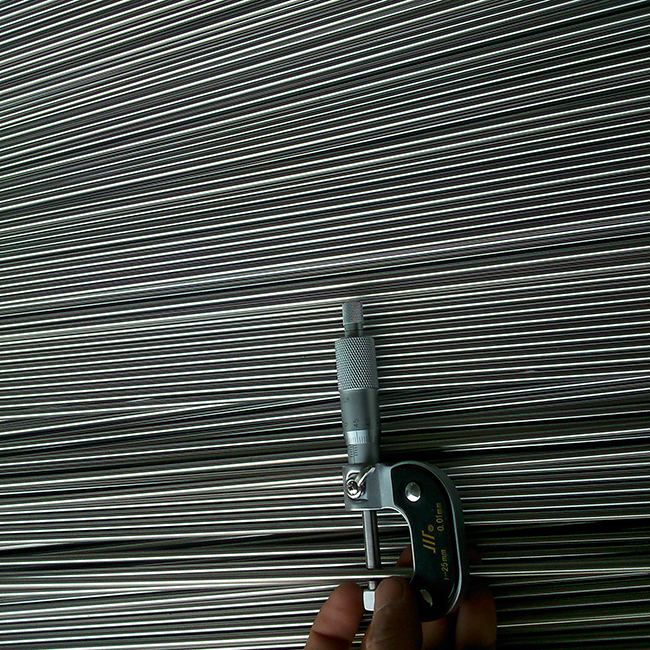
Heat treatment acts as a core processing method to adjust the material performance of Gr1 Titanium Rod. Gr1 titanium holds the highest purity among commercially pure titanium grades. Different heat treatment temperatures and holding times create obvious changes to its internal microstructure. These changes directly alter mechanical properties, machining performance and corrosion resistance of the material. Full annealing removes residual stress built up during cold working and raises material ductility. Recrystallization annealing optimizes grain size and makes material performance more uniform. Suitable heat treatment brings out the full excellent ductility and corrosion resistance of Gr1 Titanium Rod. It also meets strict material standards for aerospace, medical devices, chemical anti-corrosion and other industries. Learning the rules of how heat treatment affects Gr1 Titanium Rod performance carries strong practical value. This knowledge helps factories optimize production processes and raise finished product quality. One key note: manufacturers usually supply Gr1 Titanium Rod under annealed condition. Heat treatment creates smaller performance shifts here compared with titanium alloys. Even so, it still stands as a vital step to decide final product quality.
1. Heat Treatment Types and Temperatures: How They Change Basic Properties of Gr1 Titanium Rod
1.1 Temperature Control for Full Annealing Process
Factories set full annealing temperature for Gr1 Titanium Rod between 650°C and 750°C. Operators adjust holding time based on rod diameter. This temperature range lets internal alpha phase complete full recrystallization. It clears dense dislocation zones left by cold working. Rods thinner than 50 mm need 30 to 60 minutes of heat holding to reach ideal results. Rods with larger diameters require 90 to 120 minutes of holding time. Research data shows commercial pure titanium completes full recrystallization after annealing between 600°C and 650°C. Grains turn fully into strain-free equiaxed shapes, and local internal strain drops sharply. Factories use furnace cooling or air cooling after annealing. Cooling speed directly shapes final grain size and material hardness.
1.2 Core Operating Rules for Stress-Relief Annealing
Stress-relief annealing ranks as the most widely used heat treatment for Gr1 Titanium Rod production. Standard temperature range sits between 480°C and 650°C. This temperature band releases most residual stress and stops obvious grain growth. The process fits Gr1 Titanium Rod after turning, grinding and other precision machining. It prevents size shifts in later use caused by slow residual stress release. Operators set holding time from 20 to 40 minutes and use slow cooling. This combination cuts residual stress by a large margin. Annealing temperature creates clear impacts on mechanical strength. Yield strength and tensile strength stay nearly unchanged below 650°C. Yield strength drops sharply once temperature rises above 650°C.
1.3 Unique Advantages of Vacuum Heat Treatment
Heat treatment inside vacuum blocks surface oxidation on Gr1 Titanium Rod and keeps its high purity feature. Heat treatment under vacuum levels below 10⁻³ Pa stops oxygen and nitrogen from seeping into metal. This protection matters greatly for medical-grade and electronic-grade Gr1 Titanium Rod. Standard vacuum annealing temperature stays between 650°C and 700°C. Treated rods hold clean surfaces. Users skip extra pickling steps and can directly apply the rods to projects with strict cleanliness rules. Research confirms annealing temperature creates systematic shifts to pure titanium microstructure and mechanical performance. Higher temperatures deliver more complete grain recrystallization. Lower dislocation density softens the metal further. Operators must control temperature carefully to avoid excessive grain expansion.
2. Mechanisms of Heat Treatment Impacts on Mechanical Performance of Gr1 Titanium Rod
2.1 Changing Patterns of Tensile Strength and Yield Strength
Heat treatment temperature brings clear changes to strength indexes of Gr1 Titanium Rod. When annealing temperature rises from 500°C to 750°C, tensile strength falls gradually from around 320 MPa to under 240 MPa. Yield strength drops in matching fashion from roughly 250 MPa to about 170 MPa. Test data shows samples with 65% cold deformation record falling yield strength as annealing temperature climbs. Two main reasons drive this trend: lower dislocation density and grain boundary movement and reorganization during high-temperature annealing. Extra research verifies grain size grows larger with higher annealing temperature for commercial pure titanium. Strength indexes follow the standard Hall-Petch relation against grain size.
| Heat Treatment Temperature (°C) | Tensile Strength (MPa) | Yield Strength (MPa) | Elongation (%) |
|---|---|---|---|
| Unannealed | 320–345 | 250–275 | 18–22 |
| 500°C Annealing | 300–325 | 230–260 | 22–26 |
| 550°C Annealing | 280–310 | 210–240 | 24–28 |
| 650°C Annealing | 250–280 | 180–210 | 28–32 |
| 750°C Annealing | 240–260 | 170–190 | 32–36 |
Note: The table lists typical reference data. Real product performance changes with original cold working status and specific process settings. ASTM B348 sets the standard minimum tensile strength of annealed Gr1 titanium at 240 MPa. All values listed in this table meet this industry standard.
2.2 Improvement of Ductility Performance
Suitable heat treatment greatly lifts plastic performance of Gr1 Titanium Rod. Full annealing raises elongation rate from 18% under cold-worked status to over 35%. Two factors create this ductility gain: equiaxed grain structures formed through recrystallization and fewer defects along grain boundaries. The strong ductility of annealed Gr1 titanium fits deep drawing, complex bending and other forming processes. Manufacturers make complex special-shaped chemical equipment parts in one forming step with this material. Research shows secondary annealing at 710°C for 30 minutes cuts yield strength and raises post-fracture elongation. Tensile strength stays stable during this process, and finished rods gain much better machining ability.
2.3 Fatigue Performance and Fracture Toughness
Proper annealing improves fatigue performance of Gr1 Titanium Rod. Under cyclic stress of 150 MPa, rods annealed at 600°C support more fatigue cycles than unannealed rods. Annealing removes tiny crack sources and lowers stress concentration points to deliver this improvement. For fracture toughness, annealed material reaches KIC values between 50 and 80 MPa·m^0.5. Cold-worked titanium only hits 45 to 55 MPa·m^0.5. Annealed rods carry wider safety margins when facing impact loads. One key note: lower hardness creates mixed effects on fatigue performance based on stress types. Annealing boosts fatigue life when factories remove stress concentration points first. Yet reduced material strength may drag down fatigue performance under high-cycle stress control conditions. Engineers need full evaluation based on real working environments.
3. Control Effects of Heat Treatment Processes on Internal Microstructure
3.1 Changing Process of Grain Size
Gr1 Titanium Rod go through recrystallization during heat treatment. Grain size expands in regular patterns with rising temperature and longer holding time. Cold-worked raw material holds grains from 5 μm to 15 μm wide. Grains expand to 25–35 μm after 550°C annealing and reach 60–80 μm after 750°C annealing. Lab tests confirm rods annealed at 650°C carry smaller overall grain sizes and more complete recrystallization compared with rods treated at 700°C. Larger grains lower metal strength but greatly raise ductility and uniform deformation capacity. For projects requiring deep secondary forming, mild grain growth helps improve plastic performance. For applications needing higher strength, operators cap annealing temperature to stop extreme grain expansion.
3.2 Shape Features of Alpha Phase Microstructure
Gr1 Titanium Rod acts as a single-alpha-phase metal. Heat treatment creates obvious shifts to its internal structure shape. Cold-worked rods show stretched fibrous alpha phase with dense tangled dislocations inside. After annealing, alpha phase slowly shifts into equiaxed grains with clean, straight grain boundaries. Research data shows pure titanium grains fully turn into strain-free equiaxed shapes after 10 minutes of annealing at 600°C, and local internal strain drops sharply. One hour of heat holding at 650°C creates evenly spread equiaxed alpha phase structures. This microstructure delivers isotropic mechanical performance and removes performance gaps caused by cold working direction.
3.3 Elimination of Texture and Material Anisotropy
Cold working creates clear basal plane texture inside Gr1 Titanium Rod. This texture leads to uneven material performance across different force directions. High-temperature annealing, especially well-designed annealing cycles, weakens texture intensity effectively. One research combination delivers great results: three rolling passes with 50% final rolling reduction plus annealing at 620°C. This process cuts texture strength and lowers anisotropy to gain balanced plastic performance. After annealing, the material anisotropy coefficient falls from roughly 1.25 to below 1.10. Treated rods deliver balanced performance under force from all directions. This feature carries great importance for structural parts facing complex combined stress loads.
4. Impacts of Different Heat Treatment Status on Corrosion Resistance
4.1 Stability Differences of Surface Oxide Films
The natural TiO₂ passive film on outer surfaces delivers most anti-corrosion ability to Gr1 Titanium Rod. Heat treatment temperature and furnace atmosphere directly change the thickness and stability of this protective film. Rods annealed under protective gas or vacuum form thin, compact oxide films 2–5 nm thick. Rods annealed inside regular air grow much thicker oxide layers. These layers often show blue-purple or gray color and reach thickness from 100 to 300 nm. Proper annealing creates oxide films that stay stable across a wide pH range and carry low self-corrosion current density.
4.2 Assessment of Intergranular Corrosion Sensitivity
Heat treatment processes change the risk of intergranular corrosion for Gr1 Titanium Rod. Fast water cooling may create minor element segregation along grain boundaries and raise local corrosion risks. Slow furnace cooling supports even element diffusion along grain boundaries and lowers intergranular corrosion sensitivity. The table below compares corrosion performance under different cooling methods.
| Cooling Method | Intergranular Corrosion Tendency | Uniform Corrosion Rate (mm/year) | Pitting Corrosion Tendency |
|---|---|---|---|
| Water Quenching | High | Relatively High | Medium |
| Air Cooling | Medium | Low | Low |
| Furnace Cooling | Low | Extremely Low | Extremely Low |
Note: This table provides qualitative comparison data. Exact numerical values shift with test conditions and liquid media types. The “intergranular corrosion tendency” column shows relative risk levels, not absolute annual corrosion depth values.
4.3 Improved Resistance to Stress Corrosion Cracking
Residual tensile stress stands as a major trigger for stress corrosion cracking on Gr1 Titanium Rod. Stress-relief annealing cuts surface residual tensile stress from 200–300 MPa by a large margin. Treated rods gain stronger resistance to stress corrosion inside chloride-containing liquid environments. Research confirms commercial pure titanium holds low natural sensitivity to stress corrosion cracking in chloride media. Stress-relief annealing lifts the critical stress threshold for cracking by over 40% and greatly extends the service life of finished parts.
5. Heat Treatment Process Selection Strategies for Industrial Production
5.1 Heat Treatment Plans for Medical-Grade Gr1 Titanium Rod
Medical Gr1 Titanium Rod demand excellent biocompatibility and ultra-clean surfaces. Factories follow strict heat treatment standards for these products. Vacuum annealing serves as the recommended process: heat rods to 650–700°C under vacuum level of 10⁻⁴ Pa, hold temperature for 45–60 minutes, then cool inside the furnace until temperature drops below 400°C before material discharge. This process produces rods with elongation above 35% and keeps fully clean metal surfaces. Treated rods work well for surgical tool handles, blank stock for orthopedic implants and dental restoration materials. All finished products meet ISO 5832-2 and ASTM F67 industry standards.
5.2 Process Optimization of Gr1 Titanium Rod for Chemical Equipment
Gr1 Titanium Rod for chemical anti-corrosion projects need balanced strength, ductility and corrosion resistance. Gr1 Titanium Rod for weldable heat exchangers receive one round of full annealing between 620°C and 700°C. Operators adjust holding time based on rod diameter. This process secures good welding performance, moderate tensile strength above 260 MPa and strong ductility with elongation over 30%.
| Application Field | Recommended Annealing Temperature (°C) | Holding Time (min) | Target Elongation (%) | Target Tensile Strength (MPa) |
|---|---|---|---|---|
| Medical Devices | 650–700 | 45–60 | ≥35 | 240–270 |
| Chemical Equipment | 620–700 | 60–90 | ≥30 | 260–290 |
| Marine Engineering | 550–600 | 30–45 | ≥28 | 280–310 |
| Electronic Components | 500–550 | 20–30 | ≥26 | 300–330 |
5.3 Low-Temperature Heat Treatment for Precision Electronic Parts
Electronic manufacturing sets tight rules for size stability of Gr1 Titanium Rod and rejects obvious dimensional shifts from heat treatment. Low-temperature stress-relief annealing fits these applications perfectly: hold rods at 480–530°C for 20–30 minutes. Furnaces deliver precise temperature control within ±5°C and even heat distribution across all zones. This low-temperature cycle removes most residual stress and limits overall size change to a tiny range. Treated rods suit sensor housings, vacuum chamber connectors, semiconductor equipment brackets and other precision components.
Conclusion
Heat treatment works as a core production step to lift the overall performance of Gr1 Titanium Rod. Precise control over annealing temperature, heat holding time and cooling speed allows full adjustment of mechanical performance, internal microstructure and corrosion resistance of the material. Full annealing greatly improves ductility and machining ability. Stress-relief annealing locks stable finished part dimensions. Vacuum heat treatment maintains the high purity feature of the metal. Factories pick matching heat treatment cycles for different end-use fields to unlock the full application value of Gr1 Titanium Rod in medical, chemical, electronic and other industries.
FAQ
Q1: Does lower hardness after Gr1 Titanium Rod annealing shorten service life?
Lower hardness after annealing actually brings higher ductility and toughness to the metal. For chemical equipment, medical devices and similar products, balanced hardness plus strong ductility absorbs impact stress better and slows the formation of fatigue cracks. Even so, fatigue performance changes with working stress types. Annealing extends fatigue life after factories clear stress concentration points. Lower metal strength may weaken fatigue resistance under high-cycle stress control conditions. Engineers need full evaluation based on real working loads.
Q2: How to confirm Gr1 Titanium Rod receive correct heat treatment?
Users check three key indicators for verification. First, test elongation rate to confirm values sit above 24%. Second, observe metallographic samples to check for uniform equiaxed grains. Third, measure residual stress to confirm sharp stress reduction. Qualified suppliers supply material certificates and mechanical test reports. These documents mark annealed status and record complete heat treatment parameters.
Q3: Do factories adjust heat treatment parameters for Gr1 Titanium Rod of different diameters?
Rod diameter creates clear changes to final heat treatment results. Rods thinner than 30 mm only need 30–45 minutes of heat holding. Rods wider than 100 mm require 90–120 minutes of holding time to guarantee full annealing inside the metal core. Factories also cap heating speed at ≤100°C/h and cooling speed at ≤50°C/h for large-diameter rods. These limits stop thermal stress cracks caused by large temperature gaps between rod surface and center.
Search for a Trusted Supplier of Gr1 Titanium Rod?
Baoji Titanium Valley Titanium Nickel Zirconium Material Processing Co., Ltd. operates as a professional titanium material manufacturer. Our factory installs advanced Italian Danieli rolling production lines and full sets of heat treatment equipment. Annual production capacity exceeds 20,000 tons. We provide customized heat treatment services and full-process quality traceability for all products. Send inquiries to our sales team: sales@titaniumvalleys.com
References
- Chang Saipeng, Wang Bingxing, Jiao Jingjing, et al. Effects of Annealing Temperature on Microstructure and Mechanical Properties of Cold-Rolled High-Purity Titanium Sheets[J]. Development and Application of Materials, 2024, 39(4): 45–52.
- Gao Shangfei, Qu Jiadong, Dai Shan, et al. How to Control Titanium Sheet Forming? Regulation of Pure Titanium Performance via Cold Rolling and Annealing Processes[J]. Metal World, 2025(5): 45–51.
- Tang Min. Effects of Intermediate Annealing Processes on Microstructure and Texture of Cold-Rolled Pure Titanium Sheets[J]. Iron Steel Vanadium Titanium, 2024, 45(4): 54–61.
- Impacts of Rolling Reduction and Annealing Temperature on Mechanical Properties of Pure Titanium[J]. Shaanxi Nonferrous Metal Materials, 2022, (12): 162–168.