
How Should Gr4 Titanium Rod Be Selected for Industrial Corrosion and Structural Applications?
- Gr4 Titanium Rod
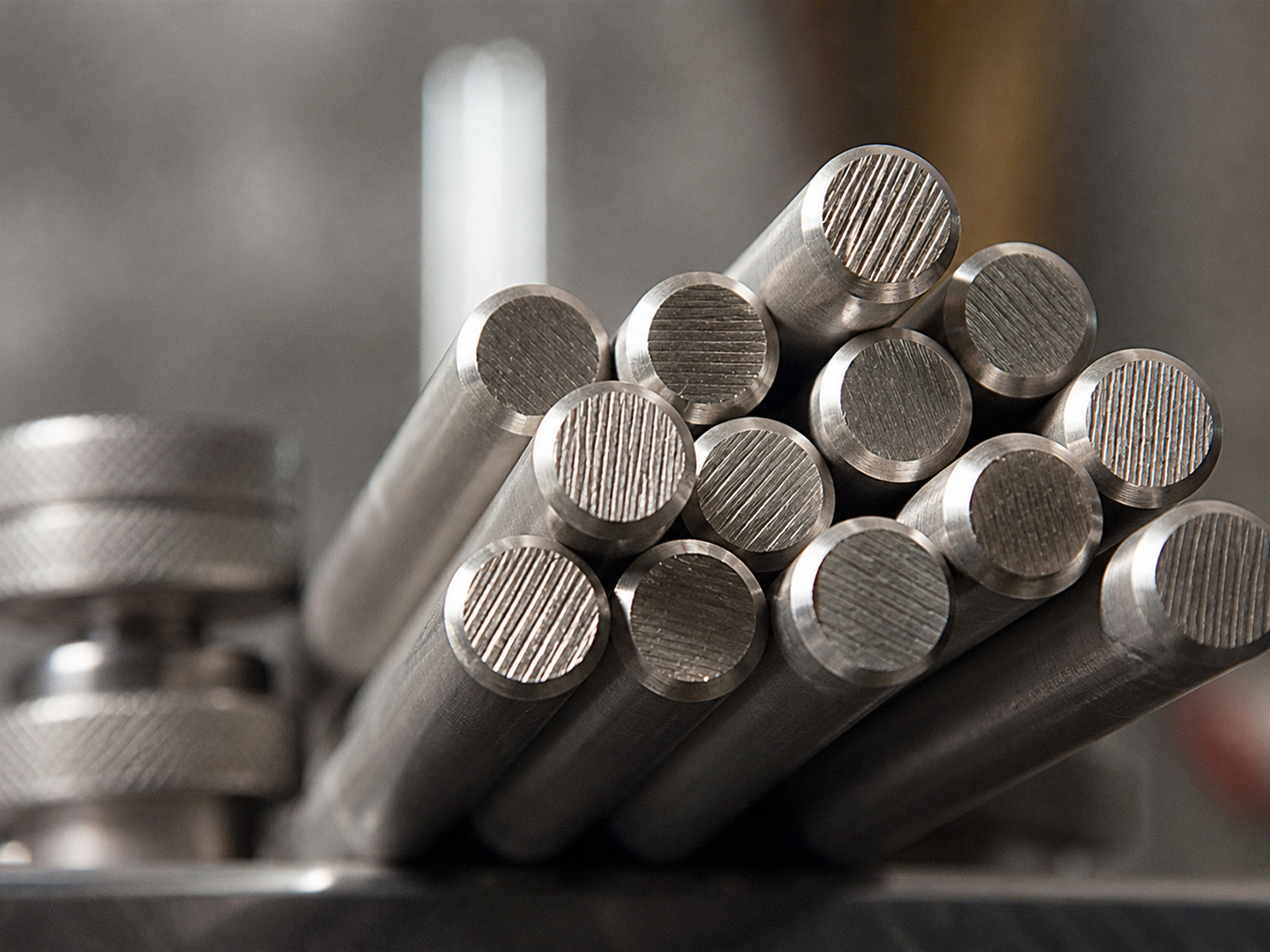
As the strongest grade among commercial pure titanium, Gr4 Titanium Rod shows unique comprehensive advantages in industrial applications. Tensile strength >= 550 MPa (typical value 550~680 MPa), while maintaining excellent corrosion resistance and good processing performance. Compared with Gr2 (tensile strength approximately 345 MPa, elongation 20%) and Gr3 (approximately 450 MPa, elongation 18%), Gr4 Titanium Rods have reached a better balance between strength and ductility, making them the preferred material in chemical anti-corrosion, marine engineering, precision machinery and other fields. The density of only 4.51 g/cm? makes it outstanding in weight-saving designs, while its non-magnetic and biocompatibility further expand its application scope in precision instruments and medical devices. This material is made through processes such as vacuum arc remelting, forging, hot rolling and precision cold drawing, which ensures the uniformity of the microstructure and the stability of dimensional accuracy.
1. Why Gr4 titanium rod has become the best solution for cross-industry general materials
(1) The value of versatility in the dilemma of material selection
Traditional industrial material procurement faces severe challenges: different working conditions require the storage of a variety of materials, resulting in a generally high inventory capital occupancy rate (industry survey data shows about 35~40%), while the material utilization rate is often less than 65%. Chemical companies often need to stock multiple brands such as 316L stainless steel, Hastelloy C-276, and duplex stainless steel at the same time. The minimum order quantity limit for each brand further intensifies financial pressure. Gr4 Titanium Rod effectively breaks this dilemma through its broad applicability – a single material can cover a variety of application scenarios such as medium-strength structural parts, acid-base corrosion environments, marine atmospheric exposure, and non-magnetic precision instruments. This versatility enables companies to reduce material SKUs by more than 60% and increase inventory turnover by 2 to 3 times.
(2) Comprehensive economic benefits brought by balanced performance
Compared with special special alloys, the core advantage of Gr4 Titanium Rods lies in the balance of performance. In seawater environment, its corrosion resistance is excellent, its cost is only 40~45% of that of titanium-palladium alloy, and its comprehensive cost-effectiveness is outstanding; in terms of structural strength, although it is not as good as TC4 titanium alloy, it has met the needs of most industrial structural parts, and the processing difficulty is significantly reduced. This “enough but not excessive” feature avoids wasting material performance. After a petrochemical company used Gr4 Titanium Rods to replace five materials that were purchased separately, not only did the material cost drop by 28%; the standardization of the processing technology increased production efficiency by 35%; the equipment failure rate was reduced by 42% due to the unified material.
(3) Processing compatibility lowers manufacturing threshold
The machinability of Gr4 Titanium Rods is significantly better than that of high-strength titanium alloys. It can be turned, milled and drilled using conventional machining equipment, and the tool life is approximately 1.8~2.2 times that of TC4 alloy. The welding performance is good and can be connected using TIG, MIG and other conventional methods without special post-weld heat treatment. This processing friendliness allows small and medium-sized manufacturing companies to complete product manufacturing without investing in expensive special equipment, significantly reducing technical thresholds and capital investment.
2. How does Gr4 Titanium Rod solve the core problems of chemical industry and marine engineering?
(1) Technical basis for full spectrum corrosion resistance
The corrosion resistance of Gr4 Titanium Rods comes from the ability to instantly form a dense TiO? passivation film on its surface, several nanometers (usually 2~5 nm). Stable in non-reducing and oxidizing media…, phosphoric acid and other acidic media. In a seawater environment, its corrosion rate is less than 0.001 mm/year, which is much better than the 0.05~0.5 mm/year of stainless steel. It has natural immunity to chloride ion stress corrosion cracking, which is the Achilles heel of ordinary stainless steel – data from a certain desalination plant shows that 316L stainless steel pump shafts develop cracks in a chlorine-containing environment for an average of 18 months, while Gr4 Titanium Rod shafts have been used for 8 years without any obvious damage.
(2) Advantages of lightweight design under high strength
In the design of the load-bearing structure, Gr4 Titanium Rods achieve an ideal balance of strength and weight. Its specific strength (strength/density) reaches 108-122 kN?m/kg, which has obvious advantages compared with 50~65 kN?m/kg of carbon steel and 90~110 kN?m/kg of aluminum alloy. This allows the weight of titanium rod structural parts to be reduced by 40~45% under the same strength requirements. A case of an offshore platform shows that after using Gr4 Titanium Rods to make pump body connectors, the weight of a single piece of equipment is reduced by 73 kilograms, and the annual transportation cost is saved by about $12,000. In scenarios that require frequent disassembly and maintenance, the lightweight features increase operating efficiency by more than 60% and significantly reduce labor costs.
(3) Economics of long-term maintenance-free operation
Full life cycle cost analysis shows that although the initial purchase cost of Gr4 Titanium Rods is 8 to 10 times that of carbon steel and 3 to 4 times that of stainless steel, its service life of 25 to 30 years far exceeds the 5 to 8 years of carbon steel and 10 to 15 years of stainless steel. Comparative calculations by a chemical company show that the carbon steel pipeline system needs to be replaced three times in 10 years, with a total cost of $280,000 including production shutdown losses, disassembly and assembly labor, and new material procurement; the stainless steel system needs to be replaced once, with a total cost of $185,000; and the Gr4 Titanium Rod system only needs regular cleaning, with a total cost of $95,000 in 10 years. The average annual maintenance hours dropped from 420 hours for carbon steel and 180 hours for stainless steel to 45 hours for titanium rods, and the equipment availability increased from 89% to 97%.
3. Unique application value in precision manufacturing and medical devices
(1) The key role of non-magnetic properties in precision instruments
The magnetic permeability is close to that of vacuum (?r?1.00005), making Gr4 Titanium Rod an ideal material for precision measurement equipment. In magnetic resonance imaging (MRI) equipment, any ferromagnetic material will cause image artifacts and uneven field strength, but brackets, positioning devices, and patient table frames made of titanium rods do not affect the magnetic field distribution at all. After a medical equipment manufacturer replaced the aluminum alloy frame with Gr4 Titanium Rods, the image signal-to-noise ratio increased by 18% due to the higher stiffness and stability of the titanium rods, and the scanning accuracy increased from ?0.8 mm to ?0.3 mm. In vacuum coating equipment for semiconductor manufacturing, the tooling fixtures made of titanium rods do not produce magnetic field interference, improving the film thickness uniformity from ?5% to ?2%, and increasing the chip yield by 12 percentage points.
(2) Effect of surface cleanliness on precision machining
The surface roughness of the precision ground and electrolytically polished Gr4 Titanium Rod can reach Ra 0.2~0.4 ?m. With ultrasonic cleaning and vacuum annealing treatment, the surface heavy metal residue/leaching amount is in the wet etching equipment of the electronics industry. The chemical liquid delivery pipeline and spray arm made of titanium rods do not release impurity ions, reducing the wafer surface defect density from 15/cm? to 3/cm?.
(3) Expansion of biocompatibility in medical applications
Although Gr4 is mainly targeted at industrial applications; its excellent biocompatibility makes it widely used in non-implantable medical devices. Surgical instrument handles, endoscope shells, dental instrument rods and other components are made of Gr4 Titanium Rods, which not only meet the strength requirements, but also avoid allergic reactions that may be caused by nickel-chromium alloys. The chemical inertness of the material allows it to withstand repeated high-temperature and high-pressure sterilization without performance degradation. After a certain surgical instrument was used for 2,000 sterilization cycles, the mechanical performance retention rate still reached 98%. In the field of rehabilitation equipment, wheelchair frames and walker support rods made of titanium rods have the triple advantages of lightweight, high strength, and corrosion resistance, and their service life is 2-3 times that of aluminum alloy products.
4. How to ensure the stable performance of Gr4 Titanium Rods through process control
(1) The decisive role of vacuum melting in impurity control
The source of the performance stability of Gr4 Titanium Rods lies in the smelting process. Using vacuum arc remelting (VAR) technology for more than two refining times, gas impurities and metal inclusions can be reduced to extremely low levels. The key indicator is to control the oxygen content below 0.40% – exceeding this value will significantly reduce the plasticity, and below 0.25%, the strength will be insufficient. The iron content is limited to 0.50% to prevent the precipitation of brittle phases, and the strict control of interstitial elements such as carbon, nitrogen, and hydrogen ensures the ductility of the material. Advanced manufacturers use electron beam cooled bed furnaces (EBCHM) combined with VAR processes to control batch-to-batch fluctuations in impurity distribution within ?0.015%. This consistency reduces end product performance deviations by 70%.
(2) Effect of thermal processing parameters on microstructure
Temperature control in forging and hot rolling directly determines grain size and microstructure uniformity. The ideal processing temperature window for Gr4 Titanium Rods is 850~950?C. If it is too high, it will cause grain coarsening (average grain size >50 ?m) and reduce the toughness. If it is too low, the deformation resistance will increase and cause surface cracks. Using multi-pass rolling with small deformation (single pass deformation rate 15~20%) and heat preservation between passes, a uniform structure with an average grain size of 25~35 ?m can be obtained. A certain production line uses a real-time temperature monitoring system to control the temperature fluctuation of the heating furnace at ?8?C, and cooperates with precise rolling assisted by infrared temperature measurement to reduce the microhardness difference of different sections of the bar from HV 35 to HV 12.
(3) Synergy between annealing and surface treatment
Stress relief annealing at 520~650?C for 2~4 hours can reduce the residual stress level from 180~220 MPa to below 30 MPa, significantly improving the dimensional stability of subsequent machining. Vacuum annealing avoids surface oxidation and maintains the original luster and chemical purity of the material. Pickling uses a HF-HNO? mixed acid system to remove oxide scale and form a uniform micro-etching layer on the surface. This modified layer with a depth of 0.5~1.5 ?m enhances the coating bonding force or directly improves the corrosion resistance. Precision grinding combined with electrolytic polishing can make the surface roughness reach Ra 0.1~0.3 ?m. With ultrasonic cleaning to remove residual abrasive particles, the surface cleanliness of the final product meets semiconductor and medical grade requirements.
5. Practical considerations in procurement and application
(1) Specification selection and inventory optimization strategy
The choice of standardized specifications directly affects procurement efficiency and inventory costs. The conventional diameter range of Gr4 Titanium Rods is 8~200 mm, and the length can be up to 6000 mm, but not all specifications are suitable for standing inventory. Based on the 80/20 rule, common specifications such as diameters of 10 mm, 12 mm, 16 mm, 20 mm, 25 mm, and 30 mm account for more than 75% of actual demand. It is recommended that enterprises establish ABC classifications based on annual usage: Class A (annual usage >500 kg) maintains 1.5 to 2 months of safety stock, Class B (100~500 kg) adopts order-triggered procurement, and Class C (
(2) Key inspection points for quality acceptance
Incoming factory inspection should cover the four dimensions of chemical composition, mechanical properties, surface quality and internal defects. The chemical composition is detected by spectral analysis or ICP-MS, focusing on oxygen, iron, carbon, nitrogen and other elements that affect performance; the mechanical properties are tensile tested in accordance with the ASTM B348 standard. The tensile strength should be above 550 MPa, with a typical value of 550~600 MPa, and the elongation is ?15%; the surface is inspected visually and with a roughness meter, and there must be no defects such as cracks, folds, inclusions, etc.; the internal quality is verified by ultrasonic flaw detection, in accordance with ASTM E213 standard is implemented, and the equivalent diameter of the defect should be
(3) Optimization suggestions for processing process parameters
When machining, a lower cutting speed (20~40 m/min) and a larger feed (0.2~0.4 mm/r) should be used. High-speed steel or carbide tools should be used, and the tool tip angle should be maintained at a positive rake angle of 5~8?. Adequate cooling and lubrication is crucial. It is recommended to use emulsion containing extreme pressure additives or special titanium alloy cutting fluid. The flow rate should reach 15~25 L/min. Argon gas protection is used for welding, with a purity of ?99.99%. The back liner should be protected by an argon gas hood. The welding current is selected according to the diameter of the rod: 60~90 A for diameter ?10 mm, 90~150 A for 10~20 mm, and 150~250 A for 20~50 mm. If heat treatment is required, it should be heated in vacuum or inert atmosphere, air-cooled or furnace-cooled to avoid residual stress caused by rapid cooling.
(4) Decentralized management of supply chain risks
The titanium raw material market is characterized by price fluctuations and long supply cycles. The price of titanium sponge is affected by factors such as electricity costs and magnesium resource supply, and the annual fluctuation range can reach 20~35%. It is recommended to adopt a rolling procurement strategy: lock in 40-50% of annual demand when prices are low, purchase 30-40% in batches on a quarterly basis, and keep 10-20% flexible. Establish cooperative relationships with multiple suppliers. The main supplier will bear 60~70% of the share, and the backup supplier will share the remaining share to avoid single-source risks. For large-volume purchases, you can sign a long-term framework agreement with the manufacturer to lock in a price range and enjoy a 5-8% volume discount, while agreeing on a fixed delivery cycle of 30-45 days.
in conclusion
Gr4 Titanium Rods provide the industrial field with an overall solution that simplifies material selection, reduces inventory, and improves efficiency through the comprehensive advantages of balanced performance, wide adaptability, and processing friendliness. Its multiple properties in terms of corrosion resistance, high strength, lightweight and non-magnetic properties allow a single material to meet the needs of multiple industries such as chemical industry, marine industry, precision manufacturing, etc., significantly reducing the complexity of material management and comprehensive use costs of enterprises, and becoming a model of general-purpose high-performance materials in modern industry.
FAQ
Q1: What is the core difference between Gr4 Titanium Rods and Gr2 Titanium Rods, and how to choose?
The tensile strength of Gr4 is about 100-120 MPa higher than that of Gr2, which is suitable for scenes that require structural functions, while Gr2 focuses more on ultimate corrosion resistance and formability. If the application involves both moderate strength requirements and corrosive environments, Gr4 is the more economical choice.
Q2: Can Gr4 Titanium Rods be used in high temperature environments? What is the upper limit of the working temperature?
Gr4 can work stably in an environment below 300 ~ 350 ?, and can withstand 400 ? in a short period of time. Above this temperature, the strength of the material will decrease and it will easily absorb oxygen and nitrogen, leading to embrittlement. For high temperature applications it is recommended to choose titanium alloy such as TC4.
Q3: How to judge whether the processing difficulty of Gr4 Titanium Rod is suitable for existing equipment?
If the equipment can process 316 stainless steel, it can usually process Gr4 Titanium Rods, but the parameters need to be adjusted: reduce the cutting speed by 30-40%, enhance cooling, and use sharp tools. Risks can be avoided by trial processing small batches for verification before mass production.
Looking for a reliable Gr4 Titanium Rod supplier?
Baoji Baoji Titanium Valley Titanium Nickel Zirconium Material Processing Co., Ltd. is China’s leading high-end titanium material manufacturer, equipped with Italian Danieli rolling production lines and full-process quality control systems, with an annual production capacity of more than 20,000 tons. We provide custom size processing and high-volume supply services. Contact us for technical support and quotations: sales@titaniumvalleys.com
References
Zhao Yongqing, Qu Hennglei, Zhou Lian. Titanium alloy processing technology[M]. Beijing: Science Press, 2018.
Chang Hui, Zeng Liying, Zhou Lian. Application of titanium and titanium alloys in marine engineering [J]. Progress in Titanium Industry, 2009, 26(4): 1-7.
Wang Weiguo, Chen Jun. Research on the structure and properties of industrial pure titanium materials [J]. Rare Metals, 2017, 41(3): 276-282.
Liu Jianrong, Zhou Lian. Structure and properties of titanium alloy[M]. Beijing: Metallurgical Industry Press, 2016.