
Why Is Gr4 Titanium Wire a Benchmark Material for High-Load Industrial Applications?
- Gr4 titanium wire
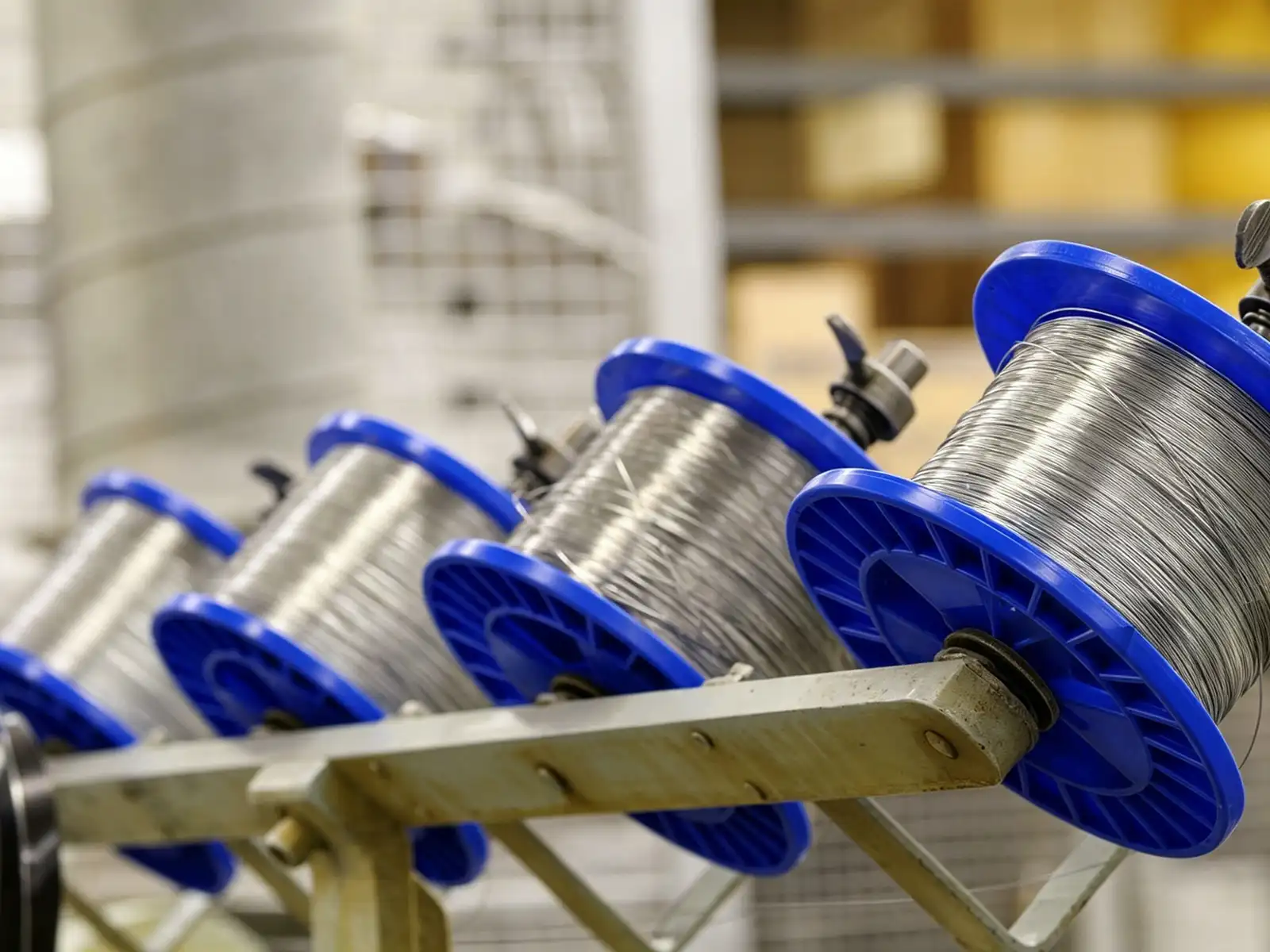
When engineers face complex working conditions of high load and strong corrosion, conventional materials are often unable to cope. Gr4 Titanium Wire, as the strongest category among commercial pure titanium, is redefining the performance boundaries of industrial wire materials. Its tensile strength is ?550 MPa, and its yield strength is ?485 MPa, which is more than 40% higher than Gr1 and Gr2, but it retains the excellent corrosion resistance of pure titanium. This unique combination of properties makes it a core material in chemical anti-corrosion, marine engineering, precision welding and other fields. This article will provide an in-depth analysis of the technical characteristics, application value and selection strategies of Gr4 Titanium Wire to help engineers and purchasers make accurate decisions and achieve dual optimization of equipment reliability and full-cycle costs.
1. The material nature of Gr4 titanium wire: why it can take into account both strength and corrosion resistance
(1) Precise balance of ingredient design
Gr4 Titanium Wire belongs to ? single-phase commercial pure titanium. Its composition system is strictly controlled: titanium content ?99.0%, oxygen content 0.30~0.40%, iron ?0.50%. The interstitial atom strengthening effect of oxygen element is the core source of its high strength. Compared with Gr1, the oxygen content of Gr4 is increased by about 67% to 169%, which intensifies the lattice distortion and significantly increases the resistance to dislocation movement, ultimately achieving a substantial jump in strength. More importantly, the pure titanium matrix remains unchanged, which means that the formation mechanism of the surface passivation film (TiO?) is not affected and the corrosion resistance is still excellent.
(2) Stable advantage of microstructure
The material adopts a non-heat treatment strengthening path and maintains a stable ?-phase equiaxed crystal structure at room temperature. After a multi-pass cold drawing and segmented annealing process, the grain size is controlled in the range of 10~30 ?m, which not only ensures high strength but also avoids the common embrittlement risk of ?-phase titanium alloys. This organizational state makes it stable in a wide temperature range from -50 ? to 350 ?, without mechanical fluctuations induced by phase change, and is particularly suitable for industrial environments with alternating temperatures.
(3) Actual performance of mechanical properties
It means that it has stronger resistance to elastic deformation and is less likely to undergo permanent plastic deformation when bearing load. It is much higher than 0.35 of stainless steel, which means that it has stronger resistance to deformation and is less likely to undergo plastic failure when bearing impact loads. The advantage of lightweight is also outstanding: under the same strength, the weight is only 56% of steel, which can significantly reduce the structural load.
2. Performance verification and value realization in high-load scenarios
(1) Breakthrough applications in the field of chemical anti-corrosion
The electrolytic cell hanger of a chlor-alkali enterprise originally used Gr2 titanium wire. Due to the increase in current density, the local stress exceeded the standard and broke once every three months on average. Woven slings reduce replacement frequency by 83%. The key reason is that its high yield strength resists the tendency of stress corrosion cracking (SCC), and the pure titanium matrix ensures that the passivation film remains stable in high chloride ion concentration environments.
(2) Fatigue durability in marine engineering
The ?3.0 mm Gr4 Titanium Wire rope used in deep-sea cage farming facilities needs to withstand 10? cyclic loads generated by waves. Actual measurement data shows that its fatigue strength reaches 50% of the tensile strength (about 275 MPa), far exceeding the 35% threshold of ordinary titanium wire. After simulating 10 years of seawater immersion + alternating stress test, there are no obvious corrosion pits on the section, and the fatigue crack growth rate is reduced by 40%. This is attributed to the stable ? phase structure that inhibits the rapid expansion of cracks, while the pickled surface maintains a roughness of Ra?0.6 ?m, reducing stress concentration points.
(3) Deformation control in precision machinery
Titanium wire reeds in medical devices are required to achieve a high elastic limit under a wire diameter of ?0.5 mm. After Gr4 Titanium Wire is treated in the cold working state (Y state), the hardness reaches 220HV, the elastic limit is increased to 400 MPa, and the residual deformation is
3. Analysis of the entire process from production process to quality control
(1) Bar blank selection and melting purity
The raw material is triple vacuum consumable arc melting (VAR) sponge titanium. The crucible capacity of a single furnace is ?5 tons, and the cooling rate is controlled at 50~80 ?/h to ensure the uniformity of the ingot structure. The key impurity control indicators are: hydrogen ? 0.012% (much lower than the standard 0.015%), nitrogen ? 0.03%. The low hydrogen content avoids the risk of hydrogen embrittlement, which is particularly important during subsequent cold working. The smelted ingot undergoes two-stage deformation of ? forging + ? forging, with a total deformation of >80%, which completely breaks the as-cast columnar crystals and provides a homogeneous blank for subsequent drawing.
(2) Precise control of multi-pass drawing
Use 12 to 18 passes to reduce the diameter step by step, and the area reduction rate in a single pass is controlled at 15 to 20%. Intermediate annealing (750 ? ??? 2 h, vacuum degree <10??Pa) is performed every 3 passes to release work hardening stress and prevent edge cracking. The surface is coated with titanium nitride (TiN) coating, and the friction coefficient is <0.05, ensuring no scratches on the surface of the wire. Combined with a special lubricant (extreme pressure additive containing sulfur and phosphorus), it can effectively solve the problem of mold sticking during the drawing process of titanium wire, and the ovality of the finished product is ?0.002 mm.
(3) Surface treatment and performance stabilization
The pickled wire has passed the salt spray test (ASTM B117 standard) without rust for 1000 hours, and the tensile strength retention rate of the welded joint is ?92%. The diameter tolerance of bright wire can be controlled at ?0.01 mm, which meets the feeding requirements of automated equipment.
(4) Non-destructive testing and traceability system
The entire process is implemented with eddy current flaw detection + ultrasonic testing, which can identify internal defects above ?0.1 mm. Each batch shall be randomly inspected for ?5 tensile specimens and ?10 hardness test points, and a material sheet conforming to ASTM B863 shall be issued. Establish a QR code traceability system to record complete data from the smelting furnace number to the drawing pass, and realize the quality check of a single Gr4 Titanium Wire. This stringent system results in batch performance fluctuations of <3%, well below the industry average of 8%.
4. Key decision-making factors in project selection
(1) Matching strategy between diameter and state
, elongation >20%, excellent weld formation, porosity <0.5%. The preferred specification for chemical pipeline and heat exchanger manufacturing.
?2.0~3.0 mm cold working state (Y state): hardness 200~240HV, suitable for making high-strength fasteners and spring clamps. This specification is commonly used in automobile exhaust systems and aviation seat connectors.
?0.1~0.4 mm ultra-fine wire: dedicated for electron beam welding and woven filters. High value-added applications such as surface coating of medical implants and semiconductor process baskets.
(2) Performance boundaries under composite working conditions
Stress + chloride ion corrosion: The stress corrosion cracking (SCC) threshold stress of Gr4 Titanium Wire in 200 MPa stress + 5% NaCl solution is 350 MPa, which is 40% higher than that of Gr2. Seawater desalination devices and ocean platform mooring cables can be used with confidence.
High temperature + oxidation environment: long-term exposure to 350?C air, oxidation weight gain
Vibration + fatigue load: Under the conditions of stress amplitude ?250 MPa and frequency 10Hz, fatigue life is >10? times. Dynamic components such as vibrating screens and automobile suspension springs of oil drilling and production equipment perform well.
(3) Quantitative comparison of cost-effectiveness
Comparative calculations by a chemical company show that the unit price of Gr4 Titanium Wire is 35% higher than that of Gr2, but the comprehensive full-cycle cost is reduced by 28%. The specific composition is:
The frequency of replacement is reduced by 60%, and downtime losses are reduced by 400,000 yuan/year.
Lightweight design simplifies the support structure and saves 15% of steel costs
High strength allows for thinning design, reducing the amount of titanium wire used by 20%
Especially in the European and American markets with high labor costs, the hidden benefits brought by maintenance convenience are more significant. After a Japanese electronics manufacturer replaced stainless steel with Gr4 Titanium Wire, the failure rate of the production line dropped by 55%, and the overall benefit increased by more than 2 million US dollars per year.
(4) The value of customized processing capabilities
The Danieli continuous rolling line is used to produce high-precision wire rod blanks (such as ? 5.0 mm straightness <= 2%), and coupled with precision drawing and automatic cutting systems… ?5 mm wire straightness is ?2?, and with the automatic cutting system, the fixed length accuracy is ?1 mm. This kind of flexible manufacturing capability allows customers to go online without the need for secondary processing, shortening the project cycle by more than 30%.
5. Future trends and technological evolution direction
(1) Material upgrades adapted to extreme environments
The 11,000-meter deep-sea manned submersible poses a new challenge to titanium wire: it needs to maintain toughness at a low temperature of 110 MPa hydrostatic pressure + 2 ?. Research and development directions include: microalloying (adding 0.05% palladium to enhance corrosion resistance), surface nano-treatment (increasing fatigue strength by 15%), and composite core material design (titanium-clad steel wire to achieve high strength and low cost). These technologies have been verified in laboratories and are expected to be industrialized within 3-5 years.
(2) The quality revolution of digital manufacturing
Smart production lines based on the Industrial Internet of Things are being deployed: online laser diameter gauges monitor dimensional fluctuations in real time, and AI algorithms automatically adjust the drawing speed and annealing temperature to narrow the diameter tolerance from ?0.01 mm to ?0.005 mm. Blockchain technology is applied to quality traceability. The mechanical property data of each meter of wire can be queried by scanning the QR code on your mobile phone, meeting the strict audit requirements in the aerospace field.
(3) Green manufacturing and circular economy
The energy consumption of titanium wire production is as high as 15 kWh/kg, resulting in significant carbon emission pressure. The industry is implementing three major improvements: the proportion of green electricity used in electric arc furnaces has been increased to 60%, the waste wire recycling and re-melting rate has reached 95%, and the pickling liquid closed-loop treatment system has reduced waste liquid emissions by 80%. Forced by the EU carbon tariff policy, Gr4 Titanium Wire with green certification will receive a price premium of 15~20%, becoming the core competitiveness of export companies.
in conclusion
Gr4 Titanium Wire is reshaping the selection logic of industrial materials with its unique strength-corrosion resistance advantages. From chemical anti-corrosion to marine engineering, from precision medicine to aviation fasteners, its application territory continues to expand. Engineers need to focus on the system balance of material essence, process details and cost-effectiveness, rather than a single performance indicator. As extreme environmental challenges intensify and digital manufacturing becomes popular, the technical potential of Gr4 Titanium Wire will be further unleashed and become an indispensable basic material for high-end equipment.
FAQ
Q1: How to choose between Gr4 Titanium Wire and TC4 titanium alloy wire?
Gr4 is pure titanium, with better corrosion resistance and lower cost, and is suitable for chemical industry, marine and other corrosive environments; TC4 is an ?+? alloy with a strength of up to 900 MPa but slightly weaker corrosion resistance, suitable for aviation structural parts. If the working temperature is
Q2: What should you pay attention to when welding Gr4 Titanium Wire?
Argon gas protection (purity ?99.99%) must be used, and the welding current is reduced by 10~15% compared to Gr2 to prevent overheating embrittlement. Before welding, the surface oil must be cleaned with acetone, and the interlayer temperature should be controlled below 80?C. It is recommended to use ER Ti-2 or ER Ti-3 welding wire to obtain better weld plasticity. If you pursue ultimate strength, you can use ER Ti-4 welding wire under strict protection. The joint strength can reach more than 90% of the base metal.
Q3: How to verify the true composition of Gr4 Titanium Wire?
Suppliers are required to provide ICP spectrum analysis reports, focusing on checking whether the oxygen content is in the range of 0.30~0.40% (this is a characteristic indicator of Gr4). The hardness (annealed state should be ?180 HV, cold working state should be ?210 HV) and tensile strength (?550 MPa) can be randomly checked. If both meet the standards and have an ASTM B863 certificate, the authenticity of the material can basically be confirmed.
Looking for a reliable Gr4 Titanium Wire manufacturer?
Baoji Baoji Titanium Valley Titanium Nickel Zirconium Material Processing Co., Ltd., as a professional Gr4 Titanium Wire supplier, is equipped with Italian Danieli production line and full-process quality system, with an annual production capacity of 10,000 tons, and its products cover a full range of specifications from ?0.1 to 6.5 mm. We provide customized processing, 3.1 material certificates and technical support services. Welcome to obtain samples and detailed technical solutions through sales@titaniumvalleys.com.
References
China National Standardization Administration. GB/T 3623-2007 Titanium and titanium alloy wire[S]. Beijing: China Standards Press, 2007.
Li Yong, et al. Titanium Alloy Materials Handbook[M]. Beijing: Chemical Industry Press, 2018.
Wang Yu. Research progress on interstitial atom strengthening of pure titanium [J]. Rare Metal Materials and Engineering, 2020, 49(7): 2345-2350.
American Society for Testing and Materials. ASTM B863-2022 Standard Specification for Titanium and Titanium Alloy Wire[S]. Pennsylvania: ASTM International, 2022.