
Why Is ASTM B550 Zirconium Wire the Preferred Material for Strong Corrosion Resistance in Chemical and Nuclear Power Industries?
- ASTM B550 Zirconium Wire
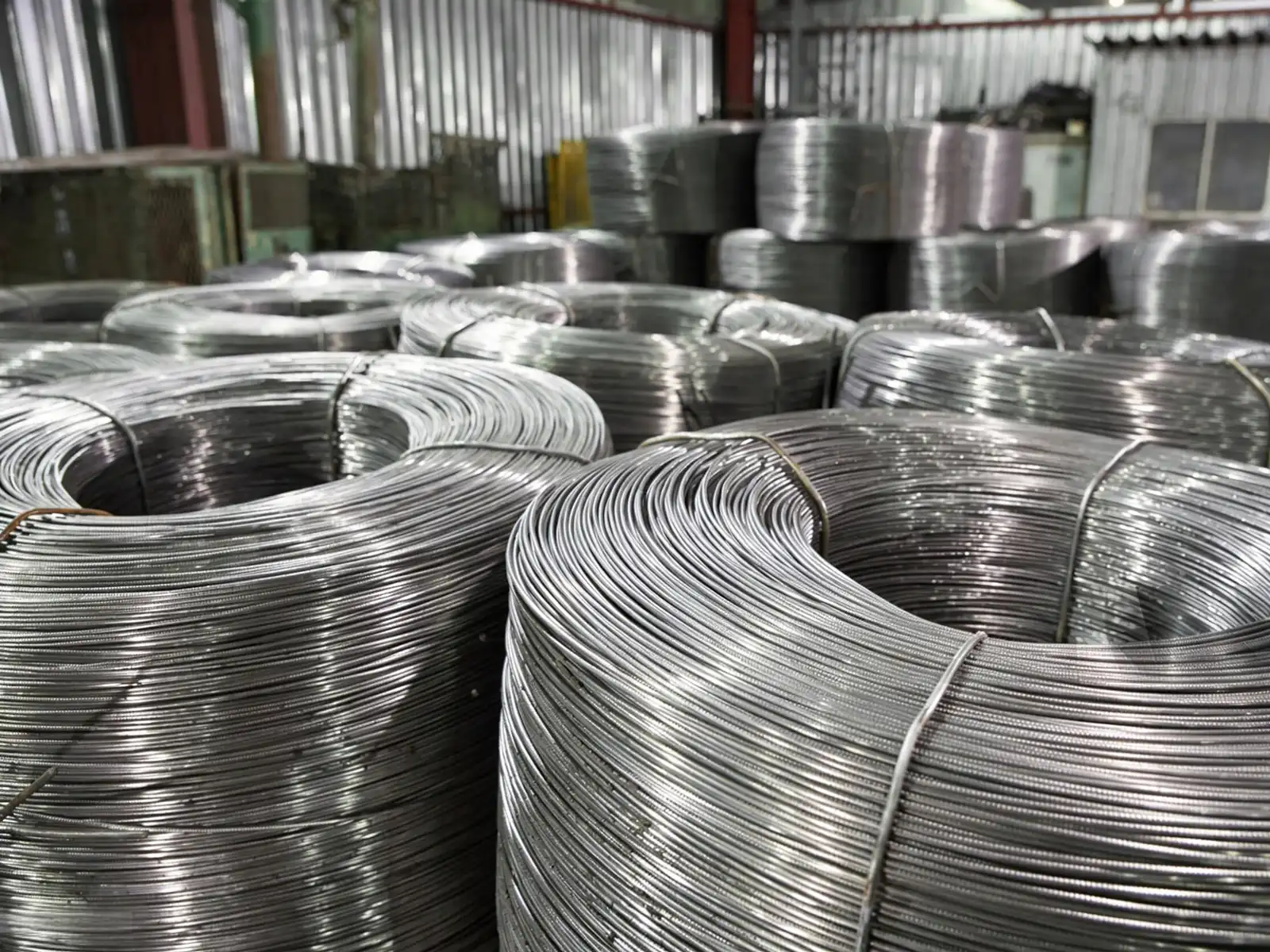
ASTM B550 Zirconium Wire has become a critical material for chemical processing, nuclear power, and other severe-service environments because of its exceptional corrosion resistance and stable mechanical performance. This specification covers multiple grades, including R60702 commercially pure zirconium and R60705 zirconium-niobium alloy, enabling the material to withstand hydrochloric acid, wet chlorine, organic acids, and other aggressive corrosive media while maintaining stable performance below 350 C. Compared with the failure risks of stainless steels and titanium alloys in reducing acids, zirconium wire provides long-term, reliable protection through a self-healing oxide film. Its nonmagnetic behavior, biocompatibility, and broad size range from 0.06 mm to 10 mm further expand its use in precision instruments, medical devices, and nuclear reactor components. Selecting zirconium wire that complies with ASTM B550 provides a solid foundation for extending equipment life, reducing downtime costs, and protecting process safety.
I. Understanding ASTM B550: Zirconium Wire Grades and Material Systems
1. Scope of the Standard and Technical Requirements
ASTM B550 is an international specification specifically developed for zirconium and zirconium alloy bars, wire, and forgings. It defines key requirements for chemical composition, mechanical properties, surface quality, and dimensional tolerances. The standard requires hafnium content to be controlled below 4.5 percent, oxygen content to be no more than 0.18 percent, and hydrogen content to be no more than 0.005 percent, ensuring that the material does not precipitate brittle phases under high-temperature, high-pressure service conditions. Producers are required to manufacture ingots using vacuum arc remelting (VAR), followed by multiple hot-rolling and cold-drawing passes to achieve final diameter tolerances as tight as plus or minus 0.01 mm. Full-process quality control includes spectrochemical analysis, tensile testing, intergranular corrosion testing, and ultrasonic inspection, ensuring traceability for each lot back to the original melt number.
2. Performance Comparison of Major Grades
Commercially pure zirconium R60702 contains no more than 4.5 percent hafnium, with tensile strength of at least 380 MPa and elongation of at least 20 percent, making it suitable for conventional acidic and alkaline media. R60704 contains 1.0 to 2.0 percent tin, increasing tensile strength to at least 410 MPa and making it more suitable for moderate-stress service. R60705 zirconium-niobium alloy contains 2.0 to 3.0 percent niobium and reaches tensile strength of 552 MPa, maintaining excellent corrosion resistance while meeting the load-bearing requirements of high-pressure piping and fuel assemblies. Grade selection should be based on a combined assessment of media type, operating temperature, and structural stress to avoid either overdesign or insufficient performance that could cause economic loss.
3. Wire-Specific Technical Requirements
The key distinction between zirconium wire and zirconium bar is the stricter requirement for surface integrity and dimensional consistency. For wire diameters from 0.1 mm to 3.0 mm, surface scratch depth must be controlled to no more than 0.02 mm to prevent stress concentration sites that could initiate brittle fracture. In coil form, a single coil length can reach 3000 m, and straightness deviation must not exceed 1 mm/m, meeting the continuous wire-feed requirements of automated welding equipment. Annealed zirconium wire is limited to hardness HV 200 or less for ease of bending and forming, while half-hard material in the HV 220 to 260 range provides a balance of elasticity and workability. Available surface finishes include pickling, bright drawing, and electropolishing, with roughness Ra values from 0.2 to 0.8 um for different cleanliness requirements.
II. Performance Validation in Severe Service: Why Zirconium Wire Outperforms Conventional Metals
1. Measured Resistance to Highly Corrosive Media
After 1000 hours of immersion in boiling 38 percent hydrochloric acid, 316L stainless steel exhibits a corrosion rate of 12 mm/year, titanium alloy reaches 0.8 mm/year, and ASTM B550 zirconium wire measures only 0.01 mm/year. In wet chlorine service (Cl2 plus H2O), stainless steel can fail by pitting perforation within hours, while zirconium wire forms a dense ZrO2 protective film and the corrosion rate becomes negligible. Organic acids such as acetic acid and formic acid at 150 C can break down the passive film on titanium, but zirconium maintains protection because its oxide film repairs rapidly and continues to block ion penetration. In 80 percent sulfuric acid at 120 C, annual zirconium wire corrosion is below 0.05 mm, allowing equipment life to extend beyond 15 years. In the anode zone of chlor-alkali electrolyzers, zirconium can operate for more than 20,000 hours under the combined environment of pH 14 strong alkali and hypochlorite.
2. High-Temperature Stability and Oxidation Resistance Mechanism
Zirconium retains a hexagonal close-packed crystal structure from room temperature to 862 C and does not undergo embrittling phase transformation in that range. Oxidation weight gain follows a parabolic growth trend with increasing temperature, and at 300 C the oxidation rate is only 0.02 mg/cm2.h, far below titanium at 0.15 mg/cm2.h. In the primary water circuit of nuclear reactors, zirconium alloy cladding endures long-term exposure to 330 C water vapor at 15 MPa and remains structurally intact after cumulative irradiation up to 60 GWd/tU. Zirconium wire used in heat exchanger bundles under a complex service environment of 200 C steam and ammonium sulfate crystal deposition has shown no intergranular corrosion or stress-corrosion cracking within 10 years. Short-term temperature capability can reach 550 C, although inert gas shielding is required to prevent rapid oxidation.
3. Mechanical Properties and Fabrication Adaptability
Annealed zirconium wire provides elongation of at least 30 percent and can undergo repeated 90-degree bending at least five times without cracking, making it suitable for field fabrication of helical parts. Its cold-work hardening exponent of n = 0.18 means deformation resistance increases gradually during drawing, extending die life by 40 percent compared with titanium wire processing. The elastic modulus of 98 GPa falls between stainless steel and titanium, giving springs made from zirconium wire moderate stiffness and stable recovery. With GTAW (TIG) welding, when heat input is controlled at 0.8 to 1.2 kJ/mm and argon purity is at least 99.99 percent, joint efficiency can reach at least 0.9. Its nonmagnetic behavior (permeability mu approximately 1) makes zirconium the only practical choice for fasteners in MRI equipment and aerospace gyroscopes. Its density of 6.5 g/cm3 is about 18 percent lower than stainless steel, supporting lightweight design.
III. In-Depth Review of Key Applications: How Zirconium Wire Solves Industry Pain Points
1. Full Life-Cycle Management of Chemical Corrosion-Resistant Equipment
ASTM B550 zirconium wire used in anode hangers for chlor-alkali electrolyzers withstands current density of 5 kA/m2 and continuous caustic solution erosion. Conventional titanium hangers fail in six months, while zirconium wire shows only minor wear after three years. In internals for urea synthesis towers operating in a high-pressure CO2 + NH3 + H2O system at 180 C, stainless steel fasteners can loosen and leak within three months, whereas zirconium fasteners remain maintenance-free for five years. In sulfuric acid concentrators, demister pads woven from zirconium wire achieve capture efficiency greater than 99 percent and resist corrosion from 95 percent sulfuric acid vapor for 10 years. In hydrometallurgical leach tanks, zirconium bushings provide both wear resistance and acid resistance, replacing Hastelloy and reducing cost by 60 percent. In flue gas desulfurization spray piping, zirconium filler wire enables transition welding to 316L base material, preventing galvanic corrosion in dissimilar-metal joints.
2. Implementation Under Nuclear Industry Standards
R60705 zirconium wire used in end plugs for pressurized water reactor fuel assemblies must satisfy both ASTM requirements and nuclear safety certification. Niobium content must be precisely controlled within 2.0 to 3.0 percent, and neutron absorption cross section must remain below 0.2 barns to preserve reactor physics performance. Hydrogen content in the wire must be no more than 0.003 percent to prevent delayed hydrogen embrittlement cracking under irradiation. Spacer grid spring wire with a diameter of 0.8 mm must withstand 300 assembly and disassembly cycles plus a 60-year irradiation design life without failure. Zirconium-wire baskets used in spent fuel reprocessing equipment resist both nitric acid and radionuclide-related corrosion, ensuring safe transfer of nuclear waste. Nuclear-grade zirconium wire must be supplied with material certificates, nondestructive examination reports, and irradiation performance prediction data, with full traceability back to the ore source.
3. Expansion Into Precision Manufacturing and Emerging Industries
In semiconductor etching equipment, zirconium wire heating elements used in process chambers require 99.95 percent purity to avoid heavy-metal contamination of wafers. In medical devices, ultra-fine 0.15 mm zirconium wire used for minimally invasive guidewires combines flexibility with X-ray visibility, while biocompatibility is validated under ISO 10993. In the hydrogen energy sector, zirconium welding wire solves the challenge of joining titanium to stainless steel in electrolyzer bipolar plates, and the resulting joints withstand 30 MPa hydrogen pressure plus alkaline corrosion. In 3C electronics, zirconium wire contact springs provide more stable elastic modulus than beryllium copper while remaining nontoxic and environmentally compliant. In seawater desalination evaporators, zirconium wire welds used in tube sheets offer pitting resistance in chloride service three times greater than nickel-based alloys, extending service life from 8 years to 25 years.
IV. Critical Procurement Factors: How to Identify a High-Quality Zirconium Wire Supplier
1. Evaluation of Manufacturing Process and Equipment Capability
High-quality zirconium wire depends on complete control of the manufacturing chain, from sponge zirconium purification to final shipment, typically involving 12 process steps. Vacuum arc remelting furnaces with power of at least 1 MW are needed to ensure uniform ingot chemistry. Continuous rolling lines should use Danieli short-stress-path mills, with pass reductions precisely controlled within 15 to 25 percent to avoid internal microcracking. Cold-drawing systems should use tungsten carbide dies with graphite lubrication to reduce surface damage. Annealing furnaces should operate at vacuum levels of no more than 10^-3 Pa to prevent oxygen and nitrogen contamination. Online inspection systems should include laser diameter measurement, eddy current testing, and visual defect recognition, with rejection rates below 0.5 percent. Only producers with annual capacity above 5000 tons can reliably support high-volume orders and avoid batch instability associated with small workshop-style production.
2. Quality Certification System and Material Traceability
Qualified suppliers should hold ISO 9001 quality management certification, nuclear material supply qualifications such as ASME nuclear code certification, and AS9100 aerospace certification. Each lot of zirconium wire should be supplied with a chemical analysis report covering 20 elements, a mechanical test report including tensile strength, elongation, and hardness, intergranular corrosion test results, and ultrasonic inspection records. Heat numbers should be permanently retained through laser marking, allowing customers to trace raw material origin, production date, and process parameters. For critical applications, suppliers should also provide corrosion-rate test data based on ASTM G28, dedicated hydrogen-content inspection, and metallographic images. Third-party inspection reports from organizations such as SGS and TUV further strengthen credibility.
3. Customization Capability and Technical Support
Professional suppliers provide full technical support from material selection through welding procedure development. For specific media such as mixed acids or high-chloride brines, corrosion simulation testing can be used to recommend the optimal grade. For complex structural parts, suppliers can assist with joint design and heat treatment procedures. Small-quantity sample supply of 5 kg or more should be available before full-scale production. Delivery formats should be flexible, with coil wire customized from 500 m to 5000 m per coil and straight wire supplied with precision cut lengths and chamfered ends. Surface finishes can include pharmaceutical-grade electropolishing with Ra no more than 0.2 um or aerospace-grade pickling and passivation. Stock programs should cover at least 10 common sizes, allowing 7-day emergency delivery and no more than 30 days for custom specifications. A 5-year warranty with full replacement or refund for material-related quality issues provides additional assurance.
V. Future Trends: The Strategic Value of Zirconium Wire in Carbon Neutrality and the Hydrogen Economy
1. Core Material for Green Hydrogen Equipment
Alkaline water electrolysis systems operate at 80 to 90 C, current density above 0.4 A/cm2, and 30 percent KOH solution, creating severe corrosion for diaphragm frames and electrode leads. Diaphragm support meshes woven from zirconium wire provide both electrical conductivity and alkali resistance, extending service life from 3 years for nickel mesh to 10 years. In PEM electrolyzers, bipolar plate coatings must withstand anodic potentials of 1.8 V in a pH 2 acidic environment, and zirconium-titanium alloy welding wire enables reliable bonding between the coating and the substrate. Zirconium wire reinforcement used in high-pressure hydrogen storage vessel liners helps prevent leakage risks associated with hydrogen embrittlement. With global green hydrogen capacity projected to reach 40 GW by 2030, annual growth in zirconium demand is expected to exceed 25 percent.
2. Deep-Sea Resource Development and Marine Engineering
Mining equipment operating at 6000 m water depth faces combined corrosion from high-pressure seawater, sulfides, and microorganisms, making zirconium alloy piping systems the only practical option. Offshore wind platforms use zirconium anodes in cathodic protection systems, achieving current efficiency above 95 percent and a 30-year replacement-free life. In seawater desalination membrane-module pressure vessels, titanium-clad plate welded with zirconium wire combines strength and corrosion resistance. In electrolytic disinfection systems for ship ballast water treatment, zirconium electrodes provide residual chlorine corrosion resistance five times greater than ruthenium-iridium coated titanium anodes. With the marine economy projected to exceed 3 trillion dollars by 2035, zirconium penetration in advanced offshore equipment is expected to rise from 8 percent to more than 20 percent.
3. High-Purity Chemical Processing and the New Energy Battery Supply Chain
Lithium battery electrolyte synthesis vessels must resist anhydrous HF corrosion. A process combination of zirconium reactors and zirconium wire heating tubes can increase batch qualification rates from 92 percent to 99.5 percent. In photovoltaic-grade polysilicon reduction furnaces, zirconium tube bundles in heat exchangers resist high-temperature corrosion from silicon tetrachloride, lowering energy consumption by 15 percent. For semiconductor specialty gas piping systems, an all-welded structure using electropolished zirconium tubing and zirconium welding wire limits particle contamination to less than 0.1 um, meeting 5 nm process requirements. In the hydrochloric acid leaching stage of lithium carbonate extraction, zirconium wire filtration screens capture impurities with efficiency greater than 99.9 percent and improve lithium recovery by 2.3 percent. Expansion of the trillion-dollar new energy materials market is driving zirconium consumption from traditional chemical processing into higher value-added sectors.
Conclusion
With its standardized grade system, outstanding corrosion resistance, and cross-industry adaptability, ASTM B550 zirconium wire has become an irreplaceable strategic material in chemical processing, nuclear power, and marine engineering. Selecting high-quality zirconium wire that complies with international standards requires a comprehensive assessment of supplier manufacturing capability, certification systems, and customization support. As carbon neutrality initiatives accelerate and deep-sea resource development advances, zirconium will continue to show growing value in emerging sectors such as green hydrogen production and high-purity chemical processing, providing essential material support for global industrial upgrading.
Frequently Asked Questions
Q1: How large is the performance difference between R60702 and R60705 zirconium wire in hydrochloric acid service?
In dilute hydrochloric acid at room temperature, both grades have similar corrosion rates at no more than 0.01 mm/year. In concentrated hydrochloric acid above 80 C, however, R60705 offers about 30 percent better corrosion resistance because niobium strengthens the grain boundaries, and its tensile strength is about 45 percent higher, making it more suitable for pressure-bearing components.
Q2: Why must zirconium wire welding use high-purity argon shielding?
Above 350 C, zirconium has a very strong affinity for oxygen and nitrogen. Residual impurities in standard argon with 99.9 percent purity can embrittle the weld metal. Using 99.99 percent high-purity argon together with trailing-shield protection allows joint elongation to remain above 90 percent of the base metal.
Q3: How can buyers verify that zirconium wire meets nuclear-grade material standards?
Nuclear-grade zirconium wire should be supplied with a test report showing hafnium content of no more than 100 ppm, a neutron absorption cross-section calculation report, predicted post-irradiation mechanical property data, and ASME certification documentation. The heat number should also be traceable within the nuclear regulatory filing system.
Call to Action
Baoji Titanium Valley Titanium Nickel Zirconium Material Processing Co., Ltd., as a professional zirconium wire manufacturer and supplier, operates Italian Danieli production lines and a complete quality traceability system, with annual capacity of 5000 tons and full ASTM B550 grade customization capability. Whether you need nuclear-grade precision wire or corrosion-resistant welding wire for chemical processing, our technical team is ready to support your material selection and process optimization. Contact sales@titaniumvalleys.com today for samples and technical documentation.
References
ASTM International, ASTM B550-2021 Standard Specification for Zirconium and Zirconium Alloy Rods, Wire, and Forgings, 2021
Li Zhiqiang, Zhao Wenxuan, et al., Application and Performance Optimization of Zirconium Alloys in Nuclear Reactors, Atomic Energy Press, 2020
Chen Guoliang, Handbook of Metal Corrosion and Protection, Third Edition, Chemical Industry Press, 2019
Zhang Wei, Wang Guanghou, et al., Nuclear Reactor Materials, Shanghai Jiao Tong University Press, 2016