
How Should Gr5 Titanium Rod Be Selected for High-Strength Industrial Applications?
- Gr5 Titanium rod
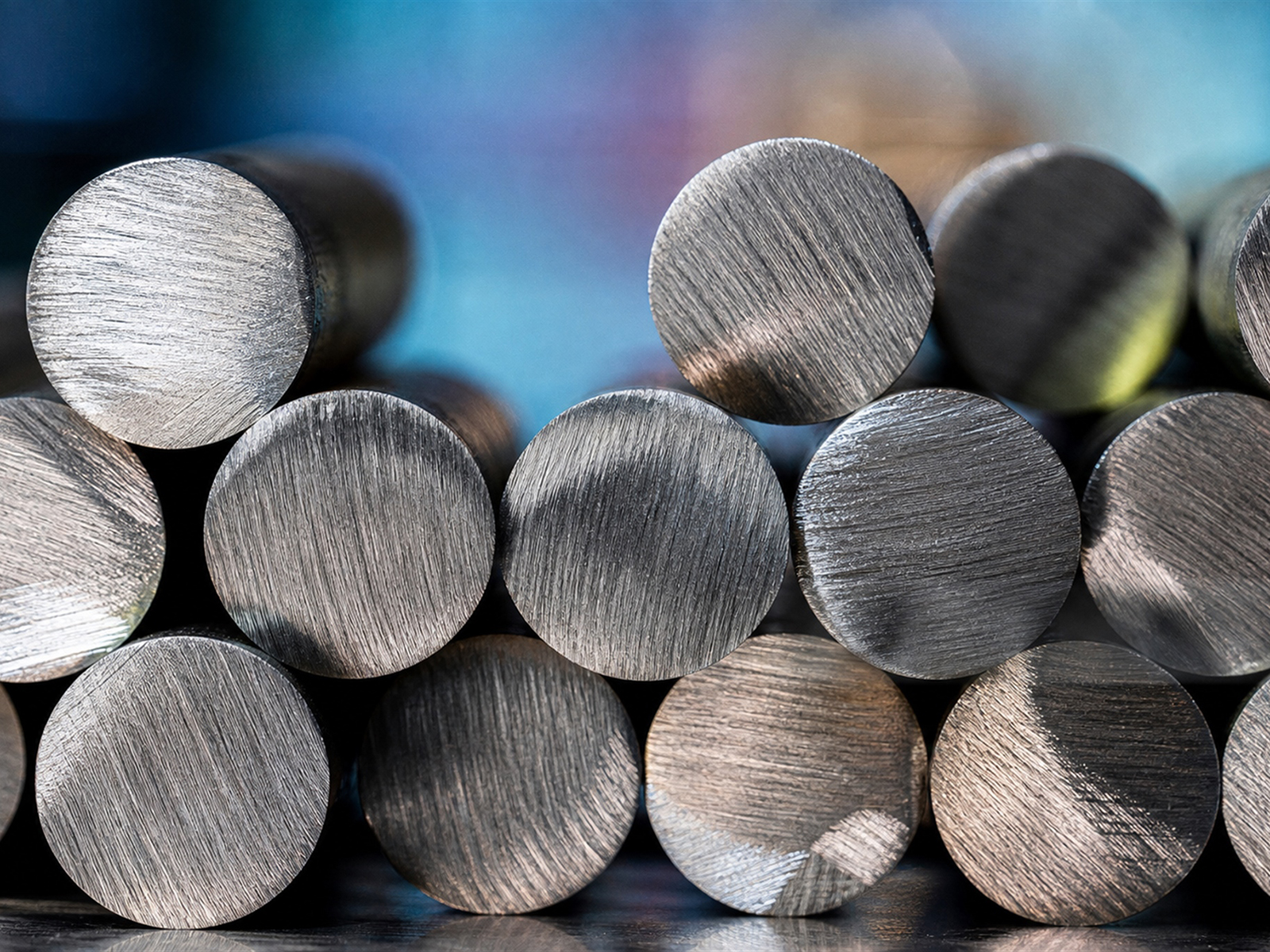
In high-end manufacturing fields such as aerospace, medical implants, and marine engineering, the choice of materials directly determines the reliability and service life of the product. As the most widely used titanium alloy material, Gr5 Titanium Rod (Ti-6Al-4V) has become an ideal choice to replace traditional steel and aluminum alloys due to its excellent strength-to-weight ratio, excellent corrosion resistance and good high-temperature stability. This ?+? titanium alloy can not only maintain structural stability in a high temperature environment of 400~500?C, but its tensile strength can reach more than 895 MPa, and its density is only about 60% of steel. For engineering projects that face complex working conditions, pursue lightweight design, and require long-term stable operation, an in-depth understanding of the material properties, processing techniques, and application scenarios of Gr5 Titanium Rods can effectively reduce material selection risks, reduce later maintenance costs, and significantly enhance the overall competitiveness of the product.
1. Material characteristics and technical advantages of Gr5 titanium rods
(1) Alloy composition and microstructural characteristics
The chemical composition of Gr5 titanium alloy is strictly controlled within a specific range: aluminum content is 5.5~6.75%, vanadium content is 3.5~4.5%, iron content does not exceed 0.30%, and oxygen content does not exceed 0.2%. After appropriate heat treatment in the annealed state, the internal stress is fully released and the grain size is evenly distributed. This organizational structure enables the material to exhibit excellent fatigue resistance when subjected to cyclic loads.
(2) Mechanical properties and temperature adaptability
The tensile strength of the alloy at room temperature is not less than 895MPa, the yield strength reaches more than 825MPa, the elongation remains above 10%, and the hardness range is 280~340 HB. Compared with pure titanium grades (Gr1, Gr2), the strength of Gr5 is nearly 3 times higher, which allows it to withstand higher working loads. More importantly, this material still maintains excellent mechanical properties in medium and high temperature environments. The strength retention rate at 400?C can reach more than 70%, and it still has good structural stability at 500?C. This high-temperature strength property makes it the material of choice for hot-end parts such as aerospace engine components and gas turbine blades. The density is only 4.43 g/cm?, which can achieve a weight reduction of more than 40% compared with high-strength steel.
(3) Corrosion resistance mechanism and environmental adaptability
The surface of Gr5 titanium alloy can quickly form a stable TiO? passivation film. The thickness of this dense oxide film is about nanometer level, which can effectively isolate the erosion of corrosive media such as chloride ions and sulfate radicals. In seawater environment, the corrosion rate of this material is less than 0.01 mm/year, which is much better than that of 316 stainless steel. Even after long-term exposure to marine atmosphere containing chloride ion concentrations up to 3.5%, pitting corrosion or stress corrosion cracking will not occur. This self-passivation characteristic enables the material to work stably for a long time in harsh environments such as chemical equipment, seawater desalination devices, and ocean platforms, significantly reducing the frequency of maintenance. It is worth noting that this corrosion resistance is also excellent in acidic, alkaline and oxidizing media.
Note: The strength of 316 stainless steel decreases significantly at high temperatures. The common working temperature usually does not exceed 500 ?. The data in the table takes the safety upper limit.
2. Production process and quality control system
(1) Smelting and forging technology
After strict screening, the raw materials are melted multiple times using a vacuum consumable arc furnace (VAR). This process can reduce the impurity content in the titanium sponge to the lowest level. The electrode preparation stage requires calculation of the ratio of raw materials to ensure uniform distribution of alloy elements. During the smelting process, the vacuum degree is kept below 10?? Pa, and the smelting temperature is accurately controlled at 1700~1800 ? to avoid element burning loss. After the ingot is cooled, billet forging is performed. This temperature range spans the ?+? dual-phase region and the ? single-phase region… The material has good plasticity and is easy to deform. The multi-directional forging process can break coarse grains and improve the uniformity of the structure. The forging ratio is usually controlled above 3:1.
(2) Rolling processing and heat treatment process
The forged bar blank enters the hot rolling or cold drawing process. The hot rolling temperature is set at 800~900?C, and the diameter is gradually reduced to the target size through multi-pass rolling. The cold drawing process is suitable for small diameter precision bars (?4~?30 mm). By using centerless peeling and cold drawing, higher dimensional accuracy and surface finish can be obtained. Heat treatment is a key process. The annealing process is usually maintained at 700 ~ 800 ? C for 2 ~ 4 hours, and then air cooled or furnace cooled. This process can eliminate processing stress and adjust the organizational state. By controlling the annealing temperature and holding time, different combinations of mechanical properties can be obtained. Some high-strength applications require quenching + aging treatment, heating temperature 920~960 ?, rapid cooling after insulation, and then aging temperature 500~550 ?.
(3) Surface treatment and testing standards
Surface quality directly affects the fatigue performance and corrosion resistance of materials. The black leather rod retains the oxide scale after forging or rolling, and has a high surface roughness, so it is suitable for blank parts with sufficient margin for subsequent machining. The peeling rod removes the surface oxide layer through unintentional peeling, showing a silver-white metallic luster, and the surface roughness Ra value can be controlled within 3.2 ?m. The polished rod has been precision turned to further improve the surface finish and the dimensional tolerance can reach h9 level. The polishing rod adopts a centerless grinding process. Rough grinding and fine grinding are performed in stages. The final surface roughness Ra value can be stably controlled within 0.8 ?m (as low as 0.4 ?m). The dimensional accuracy reaches h6 level, which is suitable for precision shaft parts. All finished products must pass ultrasonic flaw detection, eddy current testing and other non-destructive testing methods to ensure that there are no internal defects such as cracks and inclusions. The material certificate must contain complete data such as chemical composition and mechanical properties.
3. Performance and selection strategies in engineering applications
(1) Key applications in aerospace
Among aircraft structural parts, Gr5 Titanium Rods are widely used to manufacture load-bearing parts such as landing gear struts, flap guide rails, and engine mounting joints. Landing gear struts need to withstand huge impact loads during takeoff and landing. The material’s high strength and excellent fatigue resistance ensure safe use. The landing gear strut of a certain model of aircraft is made of ?150 mm forged bars. After aging treatment, the tensile strength reaches 1050 MPa and the fatigue life exceeds 100,000 take-off and landing cycles. In the engine field, high-temperature components such as compressor discs, turbine discs, and compressor blades using this material can operate stably for a long time at an operating temperature of 450?C, and are about 35% lighter than nickel-based high-temperature alloys. Fasteners such as bolts and nuts are processed from cold-drawn polished rods and have good anti-loosening properties and corrosion resistance after surface treatment.
(2) Biocompatibility advantages of medical implants
Medical implants such as artificial joints, orthopedic implant screws, and dental implants have extremely high requirements on the biocompatibility of materials. The TiO? passivation film on the surface of Gr5 titanium alloy is chemically inert, will not cause rejection reactions with human tissues, and can form good osseointegration with bone tissue. The femoral stem of the artificial hip joint is made of forged rods through precision machining. The surface roughness is controlled within Ra0.8 ?m. It can be tightly integrated with the surrounding bone tissue 3-6 months after implantation. Orthopedic trauma screws have a diameter range of ?3.5~?7.0 mm and are processed from cold-drawn polished rods. The surface needs to be sandblasted or anodized to enhance osseointegration ability. The elastic modulus of this material is about 110 GPa, which is close to human bones, which can effectively reduce the stress shielding effect and reduce the risk of osteoporosis.
(3) Corrosion resistance applications in chemical industry and marine engineering
In the petrochemical industry, equipment components such as reactor stirring shafts, heat exchanger tube bundles, valve stems, etc. are exposed to corrosive media for a long time. The anode rod of the electrolytic cell of a chlor-alkali chemical company uses ?50 mm peeled rods. After continuous operation for 5 years in an electrolyte containing 20% ??chloride ion concentration, the surface corrosion depth is less than 0.05 mm, which far exceeds the service life of titanium steel composite materials. The high-pressure pump shaft of the seawater desalination device is processed from Gr5 Titanium Rods. The pump shaft has a diameter of ?80 mm, a length of 2500 mm, a working pressure of 7 MPa, and a rotation speed of 3000 rpm. It has operated stably for more than 30,000 hours in a high-salinity seawater environment without failure. For key parts such as the mooring chain connectors of ocean platforms and the pressure-resistant shell connecting bolts of deep submersibles, this material has become the best choice due to its high strength and seawater corrosion resistance.
4. Response to common problems in procurement and use
(1) Specification selection and inventory management optimization
Faced with complex and changing working conditions, companies often need to reserve bars of various specifications, leading to inventory backlogs and rising management costs. A reasonable selection strategy should be based on practical applications and give priority to conventional stock specifications (?8~?200 mm) in the market. These specifications have short supply cycles and relatively stable prices. For special size requirements, close to standard specifications can be used and the machining allowance can be appropriately enlarged for machining. In terms of state selection, the annealed state (O state, Annealed) is generally preferred for machining. The material has good plasticity, low cutting resistance, and is not prone to work hardening. For precision parts processing, peeled or polished rods can be used to reduce surface processing allowance and improve production efficiency. Establishing long-term cooperative relationships with suppliers and signing framework agreements can provide more stable supply guarantees and price advantages.
(2) Reasonable setting of processing technology parameters
Gr5 Titanium Rod is a difficult-to-machine material with high cutting temperature, rapid tool wear, and prone to tool sticking. Carbide or ceramic tools should be used for turning. The cutting speed should be controlled at 30~60m/min, the feed rate should be 0.1~0.3 mm/r, the cutting depth should be 1~3 mm, and a large flow of coolant should be used for sufficient cooling. It is recommended to use coated carbide milling cutters for milling, with a milling speed of 40~80m/min and a feed per tooth of 0.05~0.15 mm/z. Drilling is difficult, so a carbide twist drill should be used. The rotation speed should be reduced to 1/3 of ordinary steel, the feed rate should be halved, and chips should be removed in time. Argon arc welding or vacuum welding must be used during welding, and the welding area must be fully protected to prevent oxidation and hydrogen embrittlement. The preheating temperature before welding should not be too high, generally 100~150 ?, and slow cooling after welding can avoid cracks.
(3) Quality acceptance and performance testing methods
After the purchased bars arrive, they will first be visually inspected. There should be no defects such as cracks, folds, pitting, etc. on the surface. Vernier calipers or micrometers should be used for dimensional measurement, and multi-point measurements should be made to confirm whether the diameter and ovality meet the requirements. The material certificate checks whether the chemical composition and mechanical property data are within the standard range, and the furnace batch number, heat treatment status and other information should be complete. For key applications, third-party testing agencies can be entrusted to conduct re-inspections of chemical composition spectral analysis, tensile testing, impact testing and other items. Ultrasonic flaw detection can detect internal defects, and full coverage inspection is recommended for rods with a diameter larger than ?50 mm. The hardness test uses a Brinell hardness tester, and the annealed hardness should be in the range of 280~340 HB. Metallographic examination can observe the grain size and phase structure distribution, and evaluate the structural uniformity of the material.
5. Balance between material performance improvement and cost control
(1) Customized adjustment of heat treatment process
According to the performance requirements of different application scenarios, material properties can be optimized by adjusting heat treatment parameters. For structural parts that require high strength, quenching + aging treatment can be used. The heating temperature is 950?C, water quenching after 1 hour of heat preservation, and the aging temperature is 540?C for 4 hours, which can increase the tensile strength to more than 1100MPa. For cold-formed parts that require good plasticity, the annealing temperature can be appropriately increased to 780?C, and the holding time can be extended to 4 hours to fully soften the structure. The double annealing process is suitable for large-sized forgings. The first annealing is at 850?C to remove forging stress, and the second annealing is at 750?C to stabilize the structure and obtain a more uniform performance distribution. By fully communicating working condition requirements with material suppliers, customized heat treatment solutions can achieve the best balance between performance and cost.
(2) Application expansion of surface strengthening technology
After surface strengthening treatment of the basic Gr5 Titanium Rod, the wear resistance and fatigue life can be further improved. Laser surface cladding technology deposits a layer of ceramic or cemented carbide coating on the surface of the rod. The coating thickness is 0.5~2 mm and the microhardness can reach 800~1200HV. It is suitable for shaft parts with severe wear. Plasma nitriding treatment nitrides the surface at 400~600?C to form a TiN hardened layer with a depth of 50~200 ?m. The surface hardness is increased to more than 800HV, and the wear resistance is increased by 3~5 times. Shot peening uses high-speed projectiles to impact the surface to form a residual compressive stress layer with a depth of 0.3 mm, which can increase the fatigue life by 30~50%. Anodizing produces a colored oxide film with a thickness of 5~15 ?m, which is both beautiful and has enhanced corrosion resistance. It is often used in medical equipment and sporting goods.
(3) Comprehensive assessment of full life cycle costs
Evaluating material economics cannot only look at the purchase unit price, but also needs to comprehensively consider the full life cycle costs such as processing costs, service life, and maintenance costs. Although the raw material price of Gr5 Titanium Rods is 5 to 8 times that of stainless steel, its service life can reach 3 to 5 times that of stainless steel. In harsh environments such as marine engineering and chemical equipment, the reduced maintenance and replacement costs far exceed the initial investment increase. The energy-saving benefits brought by lightweighting are also significant. According to industry estimates, every 1kg weight reduction in the aviation field can save approximately US$3,000 per year in fuel costs. Precision machined parts use peeled or polished rods. Although the unit price increases by 15~25%, the machining allowance is reduced by more than 50%, and the overall processing cost is reduced. Establishing a material performance database and optimizing selection based on historical application data can avoid waste caused by over-design.
in conclusion
With its comprehensive advantages of high strength, corrosion resistance, and lightweight, Gr5 Titanium Rods have shown irreplaceable value in high-end fields such as aerospace, medical implants, and chemical and marine industries. Reasonable selection strategies, standardized processing techniques and scientific quality control can give full play to material performance and reduce engineering risks. With the continuous optimization of manufacturing processes and the continuous expansion of application fields, this material will provide reliable material support for more industrial upgrades and technological innovations, and promote the development of high-end equipment manufacturing in the direction of higher performance, longer life, and lower cost.
FAQ
Q1: How many years can the actual service life of Gr5 Titanium Rods be in seawater environment?
In normal ocean atmosphere and seawater splash environment, the corrosion rate of Gr5 Titanium Rod is less than 0.01 mm/year. Calculated based on the design margin, the theoretical service life can exceed 30 years. In practical applications, composite factors such as stress corrosion and wear need to be considered. Regular inspection and maintenance can ensure stable operation for more than 20 years.
Q2: How to avoid the problem of excessive tool wear when processing Gr5 Titanium Rods?
The key is to control cutting parameters and cooling conditions. It is recommended to use coated carbide tools, reduce the cutting speed to 40~50% of ordinary steel, increase the rake angle to 10~15?, ensure sufficient coolant supply, and use high-pressure cooling or minimum quantity lubrication technology to increase tool life by 2~3 times.
Q3: What are the differences between medical grade Gr5 Titanium Rods and industrial grade?
Medical-grade titanium rods have higher requirements for purity, with the oxygen content controlled below 0.13%, and the content of interstitial elements such as nitrogen and hydrogen being stricter. The surface roughness must be within Ra0.4 ?m, and must be certified by special standards for medical devices such as ISO 5832-3 or ASTM F136 to ensure biocompatibility and implant safety.
Contact us
Baoji Baoji Titanium Valley Titanium Nickel Zirconium Material Processing Co., Ltd., as a professional manufacturer and supplier of Gr5 Titanium Rods, has advanced production lines and a complete quality system. It can provide full-size rods from ?4 to ?300 mm, and supports customized processing and batch supply. If you need to know detailed technical parameters or obtain a quotation plan, please contact us: sales@titaniumvalleys.com. Our professional technical team will provide you with one-stop materials.
References
Wang Jianjun, Li Minghua. “Microstructure, Properties and Applications of Ti-6Al-4V Alloy”. Beijing: Metallurgical Industry Press, 2019.
L?tjering G, Williams JC.Titanium (2nd Edition). Berlin: Springer-Verlag, 2007.
National Standards of the People’s Republic of China. GB/T 2965-2007 Titanium and titanium alloy bars. Beijing: China Standards Press, 2007.
Peters M, Kumpfert J, Ward CH, Leyens C. “Titanium Alloys for Aerospace Applications”. Advanced Engineering Materials, Vol.5, No.6, 2003: 419-427.