
What Are the Microstructure and Stability Characteristics of Ti-15V-3Al-3Cr-3Sn Titanium Foil?
- Ti-15V-3Al-3Cr-3Sn Titanium Foil
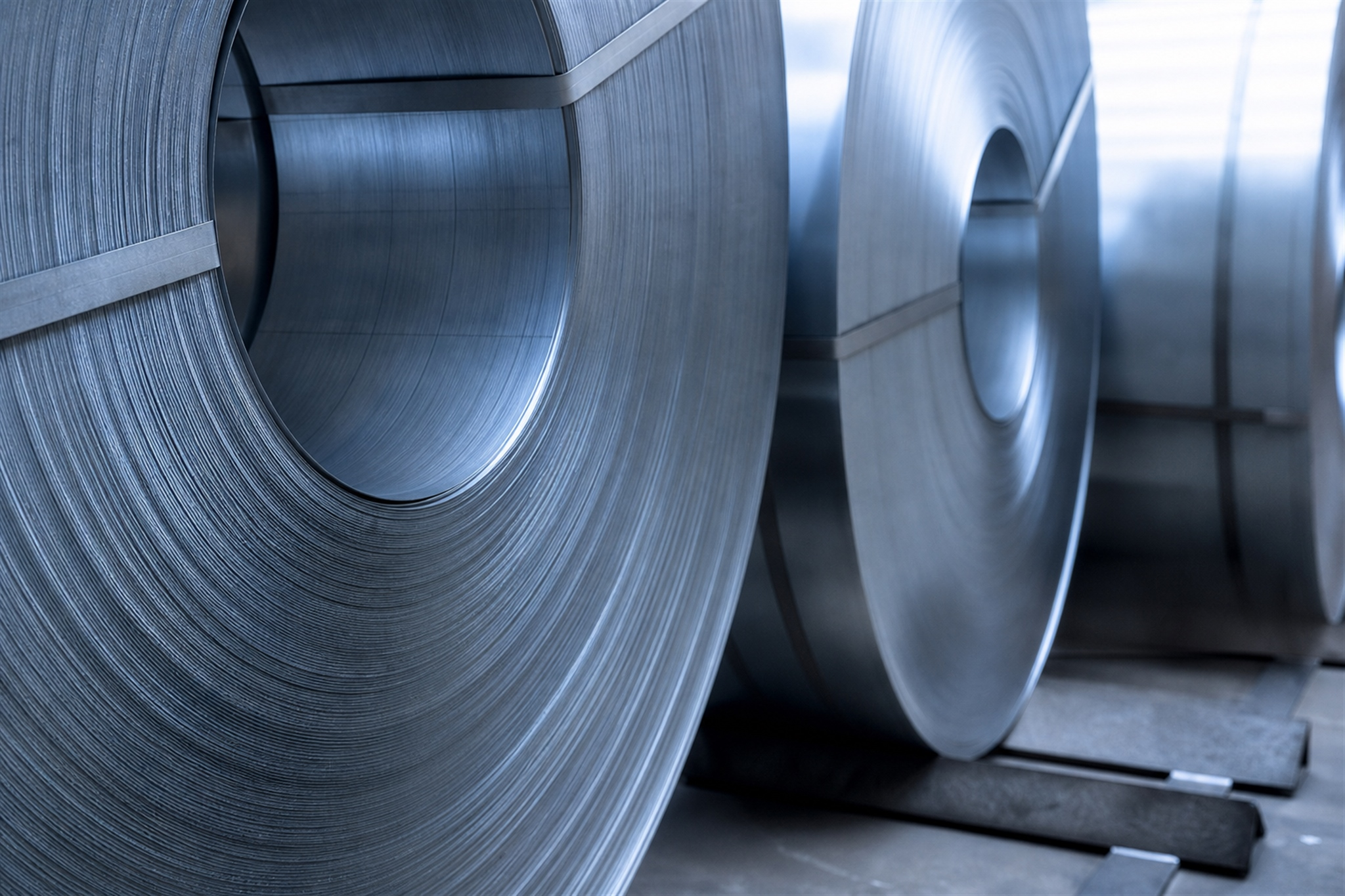
Ti-15V-3Al-3Cr-3Sn titanium foil represents a near-beta titanium alloy engineered for applications requiring the optimal balance of high strength, excellent formability, and microstructural stability. Developed for aerospace structural components, this alloy achieves tensile strengths exceeding 1050 MPa in the aged condition while maintaining elongation above 12% and fracture toughness values suitable for critical airframe structures. The microstructure and property stability of Ti-15V-3Al-3Cr-3Sn foil are governed by its unique alloy composition, thermomechanical processing history, and heat treatment parameters—factors that collectively determine the volume fraction, morphology, and distribution of alpha and beta phases.
1. Alloy Composition and Phase Equilibria
(1) Role of Individual Alloying Elements
Vanadium (15%): The dominant beta stabilizer, V suppresses the alpha-to-beta transformation temperature to approximately 880 degrees C (vs. 995 degrees C for pure Ti-6Al-4V), enabling full beta processing and solution treatment at lower temperatures. V provides solid solution strengthening to the beta phase and stabilizes the metastable beta structure essential for age hardening response.
Aluminum (3%): The primary alpha stabilizer and strength contributor through solid solution strengthening of the alpha phase. Al raises the alpha transus temperature and promotes alpha phase formation during cooling and aging. The 3% Al content is optimized to provide adequate alpha phase for strength without compromising formability.
Chromium (3%): A strong beta stabilizer that enhances hardenability and promotes uniform beta phase distribution during quenching. Cr synergizes with V to enable complete martensitic transformation during water quenching from the beta field, providing the supersaturated solid solution necessary for subsequent age hardening.
Tin (3%): A neutral alpha stabilizer that strengthens the alpha phase without significantly altering phase transformation temperatures. Sn refines the alpha precipitate morphology during aging, contributing to improved fracture toughness and fatigue resistance compared to Ti-6Al-4V.
(2) Phase Diagram and Transformation Behavior
The Ti-15V-3Al-3Cr-3Sn alloy exhibits a beta transus temperature of approximately 880-900 degrees C. Above this temperature, the alloy exists as a single-phase beta structure. Cooling through the transus initiates alpha precipitation, with the kinetics governed by cooling rate, prior beta grain size, and alloying element content. Slow cooling (furnace cooling) produces coarse alpha-plus-beta microstructure with maximum formability. Rapid cooling (water quenching) retains metastable beta and transforms to alpha-prime martensite, providing the starting condition for age hardening.
2. Microstructural Evolution Through Processing
(1) Hot Working and Forging
Hot working of Ti-15V-3Al-3Cr-3Sn is conducted in the alpha-plus-beta field (850-950 degrees C) or beta field (980-1020 degrees C) depending on the target microstructure. Beta-field forging followed by controlled cooling produces a Widmanstätten alpha morphology with interlacing alpha plates within transformed beta, providing excellent fracture toughness. Alpha-plus-beta field forging generates an equiaxed alpha microstructure within transformed beta matrix, offering superior formability and fatigue resistance.
(2) Rolling to Foil Gauge
Precision rolling of Ti-15V-3Al-3Cr-3Sn from forged billet to foil gauge (0.05-3.0 mm) requires multiple passes with intermediate annealing to control work hardening and maintain dimensional uniformity. Rolling reductions of 10-20% per pass with annealing at 700-800 degrees C in vacuum or argon atmosphere prevent alpha-case formation while restoring ductility. Final annealing produces a uniform microstructure with grain size ASTM 6-8 and consistent mechanical properties across the foil width.
(3) Heat Treatment and Age Hardening
Solution treatment at 850-900 degrees C (alpha-plus-beta field) followed by water quenching produces a fine alpha-plus-beta microstructure with high strength and good toughness. Aging at 500-550 degrees C for 4-8 hours precipitates fine alpha particles within the beta matrix, increasing tensile strength to 1050-1200 MPa. Over-aging at 600-650 degrees C reduces strength slightly (by 50-100 MPa) but significantly improves fracture toughness and stress corrosion resistance—a trade-off critical for damage-tolerant aerospace structures.
3. Microstructural Stability Under Service Conditions
(1) Thermal Stability
Ti-15V-3Al-3Cr-3Sn foil maintains microstructural stability during service exposure up to 350 degrees C. Prolonged exposure above 400 degrees C initiates alpha phase coarsening and beta phase decomposition, gradually reducing toughness while maintaining or slightly increasing strength. For applications requiring stability above 400 degrees C, beta titanium alloys such as Ti-10V-2Fe-3Al or Ti-15Mo offer superior high-temperature microstructural stability.
(2) Irradiation Stability
In nuclear and space applications, Ti-15V-3Al-3Cr-3Sn foil demonstrates acceptable irradiation stability up to fluences of 10^22 n/cm2 (E > 1 MeV). Irradiation-induced hardening increases yield strength by 15-25% with modest ductility reduction. Alpha phase precipitation at dislocation loops and void formation in the beta matrix are the primary microstructural changes, neither of which compromises structural integrity within design life requirements.
(3) Fatigue Microstructure Evolution
Under cyclic loading, Ti-15V-3Al-3Cr-3Sn foil develops persistent slip bands within alpha colonies after 10^4-10^5 cycles, serving as fatigue crack initiation sites. However, the fine alpha-plus-beta microstructure retards crack propagation compared to coarse Widmanstätten structures. Fatigue crack growth rates (da/dN) in the Paris regime are approximately 50% lower for fine-grained (ASTM 8) foil versus coarse-grained (ASTM 5) material at the same stress intensity factor range.
4. Property-Microstructure Relationships
Conclusion
The microstructure and stability of Ti-15V-3Al-3Cr-3Sn titanium foil are governed by a complex interplay of alloy composition, thermomechanical processing, and heat treatment parameters. The near-beta alloy design enables tailored microstructures ranging from equiaxed alpha-plus-beta (maximum formability) to martensitic alpha-prime (maximum strength), with microstructural stability maintained through 350 degrees C service exposure. Engineers leveraging Ti-15V-3Al-3Cr-3Sn foil must optimize processing and heat treatment to achieve the specific property balance required for each application, recognizing that strength, ductility, and toughness are intrinsically linked to microstructural morphology.
FAQ
Q1: What is the difference between Ti-15V-3Al-3Cr-3Sn and Ti-6Al-4V in terms of microstructure?
Ti-15V-3Al-3Cr-3Sn contains significantly higher vanadium (15% vs. 4%) and chromium (3% vs. 0%), producing a higher beta phase fraction and greater hardenability. This enables more extensive thermomechanical processing flexibility and higher strength potential through age hardening, while Ti-6Al-4V relies primarily on alpha-beta lamellar microstructure for its properties.
Q2: Can Ti-15V-3Al-3Cr-3Sn foil be welded without microstructural degradation?
Yes. Ti-15V-3Al-3Cr-3Sn foil can be welded by EBW or GTAW with matching filler wire. The weld zone experiences alpha-case formation and grain coarsening that reduce toughness by 10-15%. Post-weld heat treatment at 800 degrees C for 1 hour in vacuum restores approximately 90% of base metal toughness. Welded joints typically achieve 85-90% of base metal strength.
Q3: What is the shelf life of solution-treated Ti-15V-3Al-3Cr-3Sn foil?
Solution-treated and quenched Ti-15V-3Al-3Cr-3Sn foil retains its supersaturated metastable structure for up to 12 months at room temperature without significant precipitation. Storage above 60 degrees C accelerates natural aging, reducing the effectiveness of subsequent artificial aging treatments. For long-term storage, foil should be kept below 40 degrees C in a dry environment.
Contact Titanium Valley
Baoji Titanium Valley Titanium Nickel Zirconium Material Processing Co., Ltd. supplies Ti-15V-3Al-3Cr-3Sn (TC21) titanium foil with customized microstructures and mechanical properties, available in thicknesses 0.05-3.0 mm with EN 10204 3.1 certification and full microstructural characterization. Contact us for technical data and quotations:
References
Liu, Y., et al. Microstructural Evolution and Mechanical Properties of Ti-15V-3Al-3Cr-3Sn Alloy [J]. Materials Science and Engineering A, 2020, 789: 139612.
Zhang, H., Wang, L. Heat Treatment Optimization of Near-Beta Titanium Alloys for Aerospace Applications [J]. Journal of Materials Engineering and Performance, 2021, 30(5): 3456-3468.
ASM International. Titanium Alloy Database [M]. ASM Handbook Volume 4, 2020.