
What Are the Technical Key Points for Weaving High-Strength Corrosion-Resistant Filters Using Gr2 Titanium Wire?
- Gr2 Titanium Wire
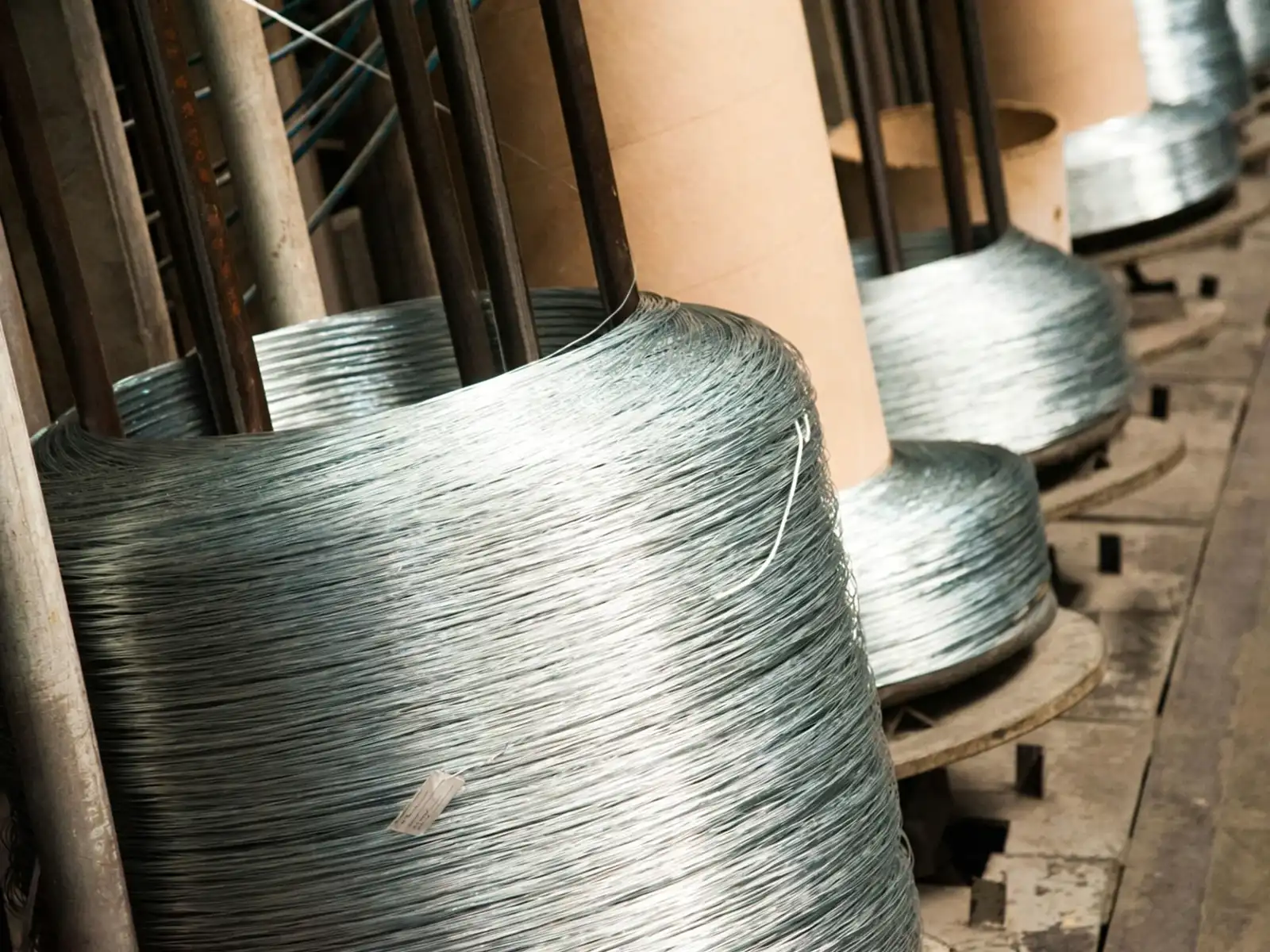
Gr2 Titanium Wire (commercially pure titanium Grade 2 per ASTM B348/B863) has become the premier material for weaving high-strength, corrosion-resistant filter media in chemical processing, oil and gas, pharmaceutical, and water treatment industries. The unique combination of titanium’s exceptional corrosion resistance, high tensile strength, biocompatibility, and weave-ability enables filter media that outperform stainless steel, nickel alloy, and polymer alternatives in the most aggressive filtration environments. Successfully manufacturing Gr2 titanium wire filters requires expertise in wire selection, loom configuration, weaving patterns, tension control, and post-weaving treatments.
1. Gr2 Titanium Wire Selection for Filter Media
(1) Diameter and Tensile Strength Specifications
Gr2 titanium wire for filter weaving is available in diameters from 0.02 mm to 2.0 mm. Fine wires (0.02–0.1 mm) produce high-resolution filter meshes (1–50 μm aperture) for precision filtration in semiconductor and pharmaceutical applications. Medium wires (0.1–0.5 mm) are used for general industrial filtration with apertures from 50 μm to 5 mm. Coarse wires (0.5–2.0 mm) provide structural support in filter frames and high-flow coarse screening applications. Tensile strength of annealed Gr2 wire ranges from 345–450 MPa, providing adequate strength for most filtration pressures up to 10 bar.
(2) Surface Quality and Straightness
Filter-grade Gr2 titanium wire must exhibit surface roughness Ra ≤0.4 μm, straightness within 2 mm/m, and consistent diameter tolerance of ±0.005 mm. Surface defects such as scratches, seams, or inclusions create stress concentration points that initiate wire breakage during weaving or service. Automated在线 inspection systems detect surface defects at line speeds, rejecting non-conforming wire before it reaches the loom.
2. Weaving Equipment and Process Parameters
(1) Loom Configuration for Titanium Wire
Gr2 titanium wire requires specialized weaving looms with polished ceramic or carbide heddles, reeds, and drop wires to minimize surface scratching during the high-friction weaving process. Air-jat or rapier looms provide gentler yarn handling compared to traditional shuttle looms, reducing wire breakage rates from 5–10% to below 1%. Tension control systems maintain consistent warp tension within ±2% across the full weave width, ensuring uniform mesh aperture size and mechanical properties.
(2) Weaving Pattern Selection
Plain weave (1/1) provides maximum rigidity and dimensional stability for fine filter meshes. Twill weave (2/2 or 3/3) offers better flow characteristics and easier cleaning for medium-aperture industrial filters. Dutch weave—where tighter-spacing warp wires are crossed by finer weft wires—delivers precise nominal pore sizes with gradient filtration characteristics for high-efficiency particulate removal. Serre weave, with closely spaced warp wires and widely spaced weft wires, maximizes open area for high-flow applications.
(3) Tension Control and Warp Beam Management
Consistent tension across all warp wires is critical for uniform filter mesh quality. Gr2 titanium wire’s moderate elastic modulus (100–110 GPa) requires tensioning forces of 5–20 N per wire depending on diameter. Individual tensioning devices on each warp beam lease ensure uniform distribution, preventing localized weak spots or over-tensioned areas that cause premature failure during filter installation or operation.
3. Post-Weaving Treatments
(1) Stress Relief Annealing
Woven Gr2 titanium filter media undergoes stress relief annealing at 550–650°C in vacuum or hydrogen atmosphere for 1–2 hours to relieve weaving-induced residual stresses. This treatment stabilizes mesh dimensions, reduces springback during frame mounting, and improves corrosion resistance by eliminating stress-driven galvanic cells at wire intersections. Annealing also restores ductility lost during wire drawing, enhancing resistance to vibration-induced fatigue during filter operation.
(2) Surface Cleaning and Passivation
Post-weaving, filter media is ultrasonically cleaned in acetone or isopropyl alcohol to remove lubricants and particulate contamination from the weaving process. Nitric acid passivation (20–30% v/v, 50–60°C, 30 minutes) restores the protective TiO₂ passive film on all wire surfaces, including wire intersections where mechanical working may have damaged the oxide layer. Passivated filter media demonstrates corrosion rates below 0.001 mm/year in aggressive chemical environments.
(3) Welding and Frame Integration
Gr2 titanium filter media is mounted into frames using TIG or laser welding of titanium support wires and frame edges. Weld parameters are optimized to minimize heat-affected zone width (<0.5 mm) and prevent weld porosity. For modular filter cartridges, individual woven mesh panels are spot-welded to support ribs at 10–20 mm intervals, providing structural rigidity while maintaining maximum open area for fluid flow.
4. Quality Verification and Performance Testing
(1) Mesh Aperture and Open Area Measurement
Filter mesh aperture size and uniformity are verified by optical microscopy or automated image analysis across the full media width. Nominal aperture tolerance of ±10% and open area consistency within ±2% of design value are standard acceptance criteria. Open area percentages range from 30% (dense Dutch weave) to 70% (coarse plain weave), selected based on flow rate and filtration precision requirements.
(2) Burst Strength and Pressure Testing
Gr2 titanium wire filter media undergoes hydrostatic burst testing at 2–3 times maximum operating pressure to verify structural integrity. Typical burst pressures range from 50–200 bar depending on wire diameter, weave density, and mesh aperture. No permanent deformation, wire breakage, or seam failure is acceptable at the test pressure.
(3) Corrosion Resistance Verification
Filter media is tested in simulated service environments (specific chemical concentrations, temperatures, and flow conditions) for 500–1000 hours. Weight loss, visual inspection for pitting or crevice corrosion, and post-test mechanical property evaluation confirm that corrosion resistance meets application requirements. Gr2 titanium filter media typically shows zero measurable corrosion in seawater, chlorine solutions, and most organic acids under standard operating conditions.
Conclusion
Gr2 titanium wire filter media represents the pinnacle of filtration material performance, combining corrosion immunity with mechanical strength and precise aperture control. Successful manufacture requires specialized equipment, skilled operators, and rigorous quality control throughout wire selection, weaving, annealing, cleaning, and testing. The resulting filter media delivers 10–20 year service lives in environments where stainless steel and polymer filters fail within months, providing exceptional lifecycle value for demanding industrial filtration applications.
FAQ
Q1: What is the minimum mesh aperture achievable with Gr2 titanium wire?
The finest Gr2 titanium wire filter mesh achieves apertures of 1 μm using 0.02 mm diameter wire in Dutch weave configuration. Such fine meshes require specialized micro-weaving looms and are typically produced for semiconductor, pharmaceutical, and analytical filtration applications.
Q2: Can Gr2 titanium filter media be cleaned and reused?
Yes. Gr2 titanium filter media is fully reversible—backflushing with clean water or solvent, ultrasonic cleaning, and periodic acid pickling restore original flow rates and filtration efficiency. A single Gr2 titanium filter element typically lasts 10–20 years with proper maintenance, compared to disposable polymer filters requiring weekly replacement.
Q3: How does Gr2 titanium filter cost compare to 316L stainless steel?
Gr2 titanium filter media costs 3–5 times more than 316L stainless steel initially. However, the 5–10x longer service life, elimination of replacement downtime, and superior filtration performance in corrosive environments typically result in 40–60% lower total lifecycle cost for titanium filter media.
Contact Titanium Valley
Baoji Titanium Valley Titanium Nickel Zirconium Material Processing Co., Ltd. supplies Gr2 titanium wire for filter weaving applications, available in diameters 0.02–2.0 mm with precision surface finishes. Custom weaving services and filter media fabrication available. Contact us for technical data and quotations:
References
Porter, D., Easterling, K. Phase Transformations in Metals and Alloys [M]. 2nd ed. Chapman & Hall, 1992.
Smith, W. Foundations of Materials Science for Engineering [M]. 5th ed. McGraw-Hill, 2009.
ISO 4545-1: Metal Screen Technical Products—Part 1: Determination of Nominal Aperture and Wire Diameter [S]. ISO, 2020.
ASTM International. ASTM B863-20 Standard Specification for Titanium and Titanium Alloy Wire [S]. 2020.