
Why Is UNS R60705 Zirconium Wire Detailed Explanation, From Material Selection to Practical Application Important?
- UNS R60705 Zirconium Wire
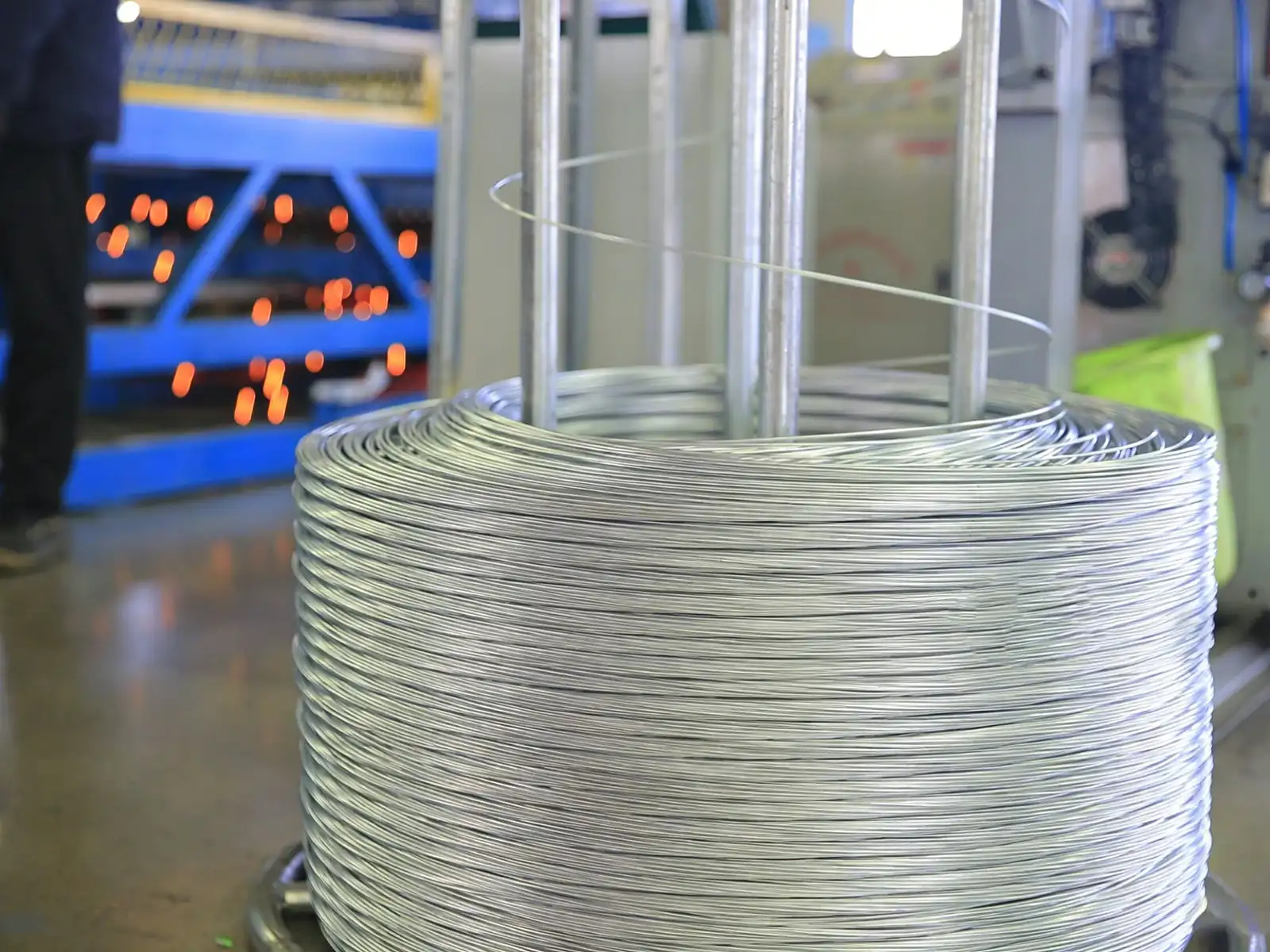
UNS R60705 zirconium wire is a high-strength zirconium-niobium alloy wire containing 2.0-3.0% niobium. Compared to pure zirconium, it offers superior mechanical properties and corrosion resistance. This material demonstrates exceptional value in nuclear power, chemical, medical, and aerospace fields, and is particularly suitable for extreme conditions such as strong acids, high temperatures, and high stress. From raw material smelting to precise wire drawing, every production step of UNS R60705 zirconium wire must be strictly controlled to ensure stable and reliable performance in practical applications. This article will systematically analyze the material properties, production processes, quality standards, and typical applications of this special alloy wire, helping engineers and purchasing decision-makers make more informed choices.
1. What Should You Know About Material Properties and Composition Analysis of UNS R60705 Zirconium Wire?
(1) What Should You Know About Core Alloy Components and Their Mechanisms of Action?
The chemical composition of UNS R60705 zirconium wire is ingeniously designed, with the addition of niobium being the key to its performance breakthrough. The total content of zirconium and hafnium forms the matrix, and the niobium content is controlled between 2.0-3.0%, a ratio verified through extensive engineering tests. The alloying strengthening effect of niobium increases the tensile strength of the material by more than 40% compared to pure zirconium, while maintaining good ductility. Hafnium content does not exceed 4.5% and, as a natural accompanying element of zirconium, contributes positively to corrosion resistance. Interstitial elements such as iron, carbon, oxygen, nitrogen, and hydrogen are strictly limited, ensuring material purity and processing stability.
(2) What Should You Know About Physical Performance Parameters and Engineering Significance?
The material has a density of 6.51 g/cm³, which is considered medium density among metals, providing sufficient strength without excessively increasing structural weight. Its melting point is approximately 1850℃, granting it excellent high-temperature stability. With an elastic modulus of about 95 GPa, the wire exhibits good elastic recovery capability, making it suitable for manufacturing elastic components and precision connectors. Its completely non-magnetic properties eliminate the risk of electromagnetic interference with precision instruments and nuclear magnetic equipment. The long-term service temperature can reach 350℃, with minimal performance degradation in high-temperature corrosive environments.
(3) Why Is Unique Advantages of Corrosion Resistance Important?
UNS R60705 zirconium wire surpasses titanium alloys and stainless steel in corrosion resistance. It shows excellent resistance to strong inorganic acids such as hydrochloric acid, sulfuric acid, and nitric acid, with an annual corrosion rate of less than 0.1 millimeters in boiling hydrochloric acid (approximately 20% concentration). Its corrosion resistance in humid chlorine environments is superior to Hastelloy, solving material challenges in the chlor-alkali industry. It does not undergo intergranular corrosion during long-term use in organic acids, acetic acid, formic acid, and similar media. It has outstanding resistance to pitting and crevice corrosion, performing stably in seawater and salt spray environments containing chloride ions. This comprehensive corrosion resistance is due to the self-repairing capability of its dense surface oxide film.
Table 1: Comparison of Key Performance Parameters of UNS R60705 Zirconium Wire
Performance indicators | UNS R60705 | Pure Zirconium R60702 | Titanium Gr.2 | 316L stainless steel |
Tensile Strength (MPa) | ≥ 550 | ≥ 380 | ≥ 540 | ≥ 520 |
Yield Strength (MPa) | ≥ 380 | ≥ 210 | ≥ 340 | ≥ 210 |
Elongation (%) | ≥ 16 | ≥ 20 | ≥ 20 | ≥ 40 |
Hydrochloric acid corrosion rate (mm/year) (20% boiling) | <0.05 | <0.08 | >1.0 | >5.0 |
Operating Temperature (C) | ≤ 350 | ≤ 260 | ≤ 300 | ≤ 200 |
2. What Should You Know About the Production Process Chain From Zirconium Rods to Precision Wire?
(1) What Should You Know About Vacuum Melting and Ingot Quality Control?
High-quality UNS R60705 zirconium wire starts with pure raw materials. Vacuum consumable arc remelting technology is used to repeatedly melt sponge zirconium and niobium additives in a vacuum or inert atmosphere more than three times, eliminating gas inclusions and composition segregation. The melting temperature is precisely controlled at around 2000 degrees Celsius to ensure uniform distribution of niobium. The cast ingots undergo ultrasonic testing to remove internal defects. Subsequently, they are subjected to homogenization heat treatment, holding at 1050 degrees Celsius for several hours to eliminate dendritic segregation, creating an ideal microstructure for subsequent processing.
(2) What Should You Know About Multi-pass Cold Drawing and Intermediate Annealing Process?
After the zirconium rods have their surface oxide layer removed through peeling or acid pickling, they enter the drawing process. Multi-pass progressive cold drawing is used, with each pass reducing the diameter by 15-25% to avoid cracking caused by work hardening. When the cumulative deformation reaches a certain level, an intermediate annealing must be performed, heating in a vacuum or inert atmosphere to 650-750℃, holding for 30-60 minutes to restore the material’s plasticity. Drawing dies are made of cemented carbide or diamond, with a surface roughness Ra value of less than 0.2 microns to ensure the surface quality of the wire. The entire process requires a dozen to even dozens of steps to draw zirconium rods with a diameter of several tens of millimeters down to ultra-fine wire of 0.06 millimeters.
(3) What Should You Know About Final Heat Treatment and Surface Treatment Technology?
The drawn wire material needs to undergo final annealing and shaping. The annealing temperature is determined according to the final use: welding wire products use soft annealing at 700-800℃ to achieve optimal plasticity; wire for structural components uses semi-hard annealing at 550-650℃ to balance strength and toughness. There are various surface treatment options: pickling to remove scale for a silver-white surface; mechanical polishing for a bright finish; electrochemical polishing for a mirror-like surface. Ultrafine medical wire also requires ultrasonic cleaning and dust-free packaging. Precision straightening equipment ensures a straightness of less than 1 mm/m, and cutting accuracy to specified lengths reaches ± 1 mm.
Table 2: Production process parameters for zirconium wires of different diameters (typical values)
Filament diameter range (mm) | Pulling and Lifting Path Sequence | Number of intermediate annealings | Final Annealing Temperature (C) | Main applications |
0.06-0.4 | 20-28 | 4-6 | 700-750 | Medical implant fixation wires, electronic precision components |
0.5-2.0 | 12-18 | 3-4 | 650-700 | Corrosion-resistant springs and connectors |
2.4-4.0 | 8-12 | 2-3 | 650-700 | Welding wire, standard parts |
5.0-8.0 | 5-8 | 1-2 | 600-650 | Electrodes, structural supports |
3. What Should You Know About Quality Standard System and Testing Verification Methods?
(1) What Should You Know About International Standards and Technical Specifications Requirements?
UNS R60705 zirconium wire follows strict international standards. The American ASTM B550 standard specifies detailed requirements for chemical composition, mechanical properties, and dimensional tolerances, serving as a market entry threshold in North America. The ASME SB550 standard is widely cited in pressure vessel and nuclear industry applications, adding requirements for corrosion testing and non-destructive inspection. The ISO 5832-3 standard focuses on biomedical applications, with stricter control of impurity elements, particularly limiting heavy metal content. These standards collectively form the basic framework for quality assurance, but in actual production, high-quality suppliers often implement even higher internal standards.
(2) What Should You Know About Chemical Composition and Mechanical Properties Testing?
Each batch of zirconium wire requires a comprehensive chemical analysis. The main alloy element content is measured using an inductively coupled plasma emission spectrometer, with an accuracy of up to 0.01%. Oxygen, nitrogen, and hydrogen elements are measured using an oxygen-nitrogen-hydrogen analyzer. It is crucial to control the oxygen content below 0.18%, as exceeding this limit can lead to material embrittlement. Mechanical performance tests include tensile tests, hardness tests, and bending tests. The tensile strength must reach above 550 MPa, the yield strength must be no less than 380 MPa, and the elongation must remain above 16%. For welding wire products, a welding performance evaluation is also required to inspect the composition and mechanical properties of the deposited metal.
(3) What Should You Know About Dimensional Accuracy and Surface Quality Control?
Diameter measurement is carried out using a laser micrometer, with real-time online monitoring, and an accuracy of ± 0.01 mm. For ultra-fine wire materials, dimensions are verified using an optical microscope or scanning electron microscope. Straightness is checked with a dedicated platform and a micrometer, ensuring that the deviation per meter does not exceed 1 mm. Surface quality inspection is performed using a magnifying glass or industrial endoscope, and defects such as cracks, folds, and scars are not allowed. Surface roughness is measured with a profilometer, and polished wire materials can achieve an Ra value of less than 0.1 microns. For nuclear-grade and medical products, ultrasonic flaw detection and eddy current testing are also required to ensure no internal inclusions or uneven structures.
4. Why Is Typical Application Cases in the High-end Industrial Field Important?
(1) Why Is Key Applications in the Nuclear Power Industry Important?
UNS R60705 zirconium wire plays an important role in nuclear reactors. The positioning grid of fuel assemblies uses this wire to make springs and supports, and its low neutron absorption cross-section does not affect nuclear reaction efficiency. In high-temperature water corrosion environments, its service life exceeds 15 years. The fastening bolts and pins of core structural components are made from UNS R60705 zirconium wire, enduring high temperatures, high pressure, and irradiation conditions. The tube bundle connections in the heat exchange system are welded with zirconium wire, with weld strength reaching over 90% of the base material. Compared with pure zirconium R60702, the high strength properties of UNS R60705 reduce component weight by 30%, improving the economic efficiency and safety margin of nuclear power plants.
(2) Why Is Corrosion-resistant Applications of Chemical Equipment Important?
Fasteners and seals made from UNS R60705 zirconium wire are used in electrolytic cells and chlorination reactors of the chlor-alkali industry, operating stably for long periods in wet chlorine gas and hypochlorite solutions. The agitator shafts and pump shafts in acetic acid production units use sealing rings wound with zirconium wire, solving the corrosion problem of organic acids. In hydrometallurgy, leaching tanks and electrolytic cells use anode baskets and filter screens woven from zirconium wire, combining corrosion resistance with high strength. Key components in petroleum and chemical hydrogenation reactors and pickling units are welded with zirconium welding wire, and the corrosion resistance of the welds is comparable to that of the base metal, preventing leakage accidents caused by weak weld points. These applications extend equipment maintenance cycles by 3-5 times and significantly reduce operation and maintenance costs.
(3) Why Is Medical Devices and Precision Instruments Applications Important?
The medical field has extremely high requirements for the biocompatibility and purity of materials. Orthopedic implant fixation wires and sutures use zirconium wire, which has no magnetic properties and is compatible with MRI scans, and its non-toxicity prevents rejection reactions. In the field of precision instruments, cantilevers of atomic force microscopes and elastic components of sensors are made of zirconium wire, whose non-magnetic and high elastic modulus characteristics ensure measurement accuracy. Corrosion-resistant springs and fixtures in semiconductor manufacturing equipment use zirconium wire to avoid ion contamination and improve chip yield.
Table 3: Comparison of Applications of UNS R60705 Zirconium Wire in Different Industries
Application field | Typical products | Key performance requirements | Service life (typical value) | Comparison of alternative materials |
Nuclear power industry | Fuel assembly springs, core fasteners | Low neutron absorption, high-temperature water corrosion | >15 years | Pure zirconium lacks sufficient strength, requiring a thicker design |
Chemical equipment | Welding wire, seals, pump shaft | Strong acids and strong bases, high-temperature corrosion | 8-12 years | Hastelloy costs twice as much |
Medical devices | Implant fixation thread, suture thread | Biocompatible, fatigue-resistant, non-magnetic | 5-10 years | Titanium wire has a relatively high magnetic susceptibility |
Precision instruments | Sensor elastic components, microscope cantilever | Non-magnetic, high elastic modulus, precision | More than 10 years | Magnetic interference from stainless steel |
How Should Material Selection Guide and Key Points for Supplier Evaluation?
What Should You Know About Choose the Appropriate Specifications According to Operating Conditions?
When selecting UNS R60705 zirconium wire, it is first necessary to clarify the usage environment. For conditions where the strong acidic medium concentration exceeds 20% and the temperature is higher than 80℃, this high-strength zirconium alloy must be used. For elastic components and load-bearing structural parts with high stress levels, the wire diameter should be determined based on strength calculations to avoid plastic deformation due to insufficient cross-section. Welding applications require selecting special wire specifications, with diameters of 0.8-3.0 mm being most common, and the surface should be bright and pickled. Ultra-fine medical wire with diameters of 0.06-0.4 mm must have a mirror-polished surface, and the impurity content should meet biomedical standards.
How Should Key Assessment Points of Supplier’s Technical Capability?
High-quality suppliers must have a complete production line. Vacuum melting furnaces ensure the purity of raw materials, multi-pass drawing equipment guarantees dimensional accuracy, and controllable-atmosphere annealing furnaces achieve stable performance. Advanced suppliers use world-class equipment and have an annual production capacity of several thousand tons, capable of meeting the demand for large-scale stable supply. Testing capability is another important indicator, and suppliers should be equipped with spectrometers, universal testing machines, roughness testers, and other equipment, capable of providing authoritative third-party test reports. The technical team should have experience in zirconium alloy processing and be able to provide customized material states and surface treatments.
What Should You Know About Quality Traceability and Certification System Requirements?
When purchasing UNS R60705 zirconium wire, a complete set of quality certification documents must be requested. The material certificate should include batch number, chemical composition, mechanical properties, dimensional inspection data, etc., in accordance with ASTM or ISO standard requirements. For nuclear-grade applications, quality assurance documents related to nuclear safety should be provided, including nondestructive testing reports and heat treatment curve records. Wire used for medical devices must comply with ISO 13485 medical device quality management system certification, and the material should have a biocompatibility test report. Supplier quality system certifications such as ISO 9001 are fundamental, while AS9100 aerospace quality system and PED pressure equipment directive certifications represent a higher level. Traceability requires that each batch of product has a unique identifier, enabling quick identification of the cause in case of issues.
5. What Is the Conclusion?
UNS R60705 zirconium wire, with the high strength and excellent corrosion resistance brought by niobium alloying, has become the preferred solution for material challenges in extreme conditions. From composition design to precision processing, from quality control to practical application, the professionalism in each link determines the reliability of the final product. Choosing a supplier with advanced production equipment, a complete quality system, and rich industry experience is the key to ensuring project success. With the rapid development of nuclear power, high-end chemical, and precision medical fields, the application value of UNS R60705 zirconium wire is increasingly evident, and a deep understanding of its characteristics and applications will help engineers make optimal decisions.
FAQ
Q1: What advantages does UNS R60705 zirconium wire have compared to pure zirconium R60702?
UNS R60705, by adding 2.0-3.0% niobium, has a tensile strength more than 40% higher than pure zirconium R60702, reaching 550 MPa, while maintaining good ductility. Under the same conditions, it can reduce material usage by 30% or withstand higher stress, making it particularly suitable for high-pressure, long-span structural components. Its corrosion resistance is comparable, but its mechanical properties are significantly optimized.
Q2: What are the special requirements for UNS R60705 zirconium wire used in medical devices?
Medical zirconium wire must comply with the ISO 13485 quality system and biocompatibility standards, with impurity elements such as iron, nickel, aluminum, and cadmium controlled below 10 ppm. The surface must be mirror-polished, with a roughness Ra <0.1 micrometers, free of scratches and particulate contamination. For ultra-fine specifications of 0.06-0.4 mm diameter, the tolerance must reach ± 0.005 mm, and evidence of sterile packaging and compatibility with irradiation sterilization must be provided.
Q3: How to verify the quality authenticity of UNS R60705 zirconium wire?
Request the material certificates provided by the supplier and verify whether the furnace batch number and chemical composition comply with ASTM B550 standards. Commission a third-party testing agency to recheck the composition, paying special attention to whether the niobium content is within the 2.0-3.0% range. Conduct tensile tests to verify mechanical properties; the tensile strength should be ≥ 550 MPa. For corrosion testing, the sample can be immersed in boiling hydrochloric acid (approximately 20% concentration) for 24 hours to observe whether the corrosion rate is less than 0.1 mm/year.
What Should You Know About Contact Us Immediately?
Baoji Titanium Valley Titanium-Nickel-Zirconium Materials Processing Co., Ltd. (Titanium Valley), as a professional UNS R60705 zirconium wire manufacturer, relies on vacuum self-consumption arc melting, multi-pass precision drawing, and controlled atmosphere annealing production lines to provide full-range zirconium-niobium alloy wires with diameters of φ0.06-8.0 mm. Diameter tolerance is ± 0.01 mm (with ultra-fine specifications up to ± 0.005 mm). Supply conditions cover annealed (soft) and half-hard states, and surface treatments include pickling, bright polishing, and electro-polishing, meeting the stringent requirements of the nuclear power industry, chemical corrosion protection, medical devices, and precision instruments.
We provide complete material certificates that comply with international standards such as ASTM B550, ASME SB550, and ISO 5832-3, including actual measured chemical compositions for each heat (niobium content 2.0-3.0% verified), tensile curves, metallographic reports, and eddy current/ultrasonic non-destructive testing records, achieving full-chain batch traceability. Whether you need nuclear-grade structural wire, chemical-specific welding wire, or medical ultra-fine polished wire, our technical team can provide comprehensive support from grade selection and welding parameter guidance to customized surface treatment. Please feel free to contact us via email at sales@titaniumvalleys.com to confirm specific requirements, obtain product samples, technical data packs, and detailed quotations.
References
- Chen Rongchang, Li Minghua. ‘Processing Technology and Application of Zirconium Alloy Materials.’ Metallurgical Industry Press, 2019.
- Wang Jianguo, Zhang Wei. ‘Evaluation Methods of Corrosion Resistance of Special Metal Materials.’ Chemical Industry Press, 2020.
- Liu Zhiqiang, Zhao Ming. ‘Research Progress on Zirconium Alloy Materials for Nuclear Power.’ Atomic Energy Science and Technology, 2021, 55(3): 412-420.
- Li Haitao, Chen Xiaodong. “Research on the Biocompatibility of Special Metal Materials for Medical Devices.” Chinese Journal of Medical Devices, 2022, 46(2): 128-134.