
How Do ASTM, EN, ISO, and AMS Standards for Gr5 Titanium Rods Compare?
- Gr5 Titanium Rods
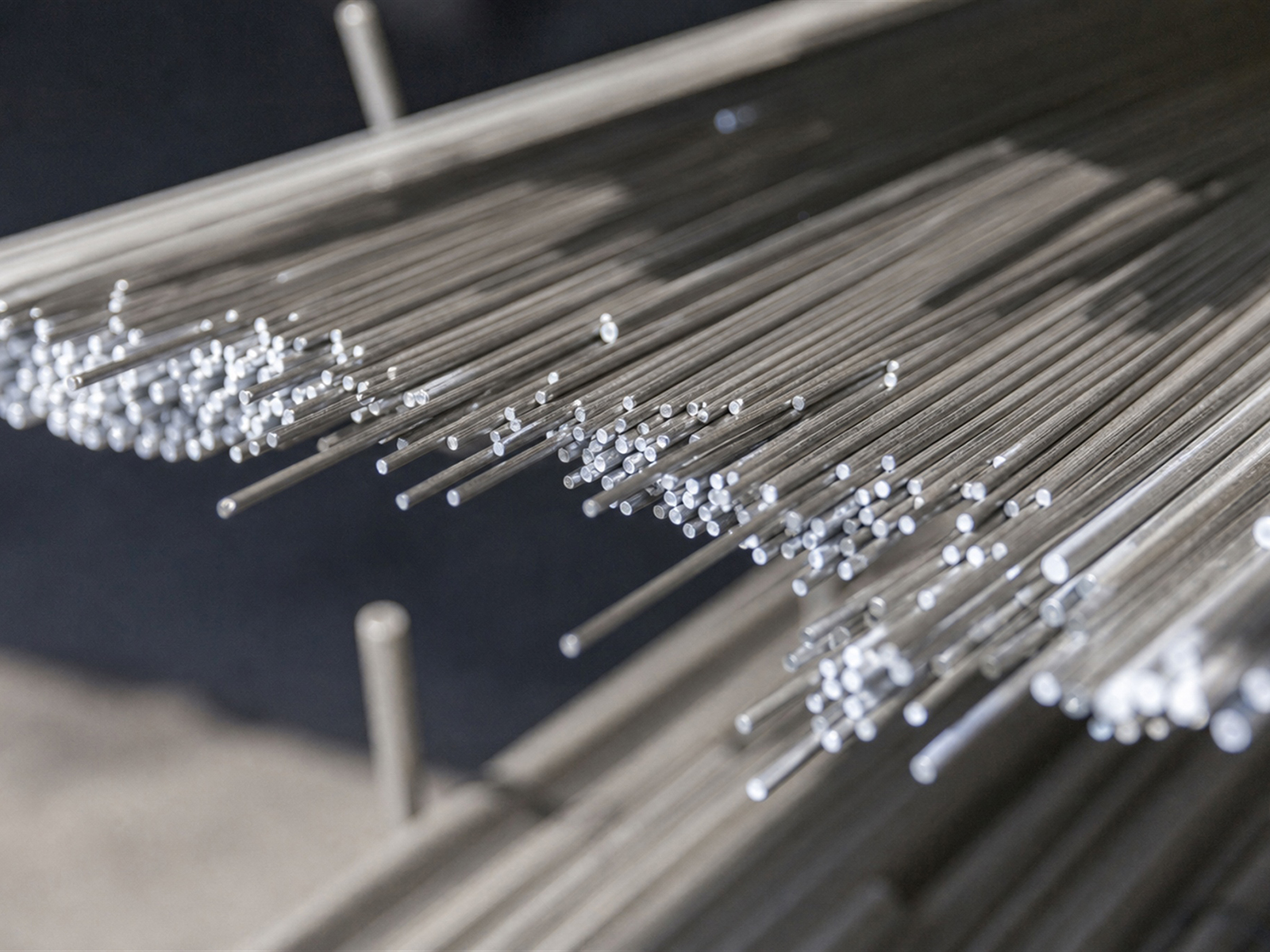
Gr5 titanium rod follows multiple international industry standard systems, the core of which is the American ASTM B348 Grade 5 standard, which stipulates the chemical composition, mechanical properties and manufacturing requirements of Ti-6Al-4V alloy. Europe implements the EN 3.7165 standard, Japan adopts the JIS H4650 SAT-64 specification, and Russia uses the GOST 19807 BT6 standard. The aerospace field also needs to comply with AMS 4928 certification, and medical implants need to meet ISO 5832-3 requirements. These standards range from alloy composition control (Al 5.5-6.75%, V 3.5-4.5%) to mechanical performance indicators (tensile strength ≥ 895MPa, yield strength ≥ 825MPa), to surface quality, dimensional tolerances and non-destructive testing methods, establishing a complete quality assurance system to ensure the reliability and consistency of materials under extreme working conditions.
1. What Should You Know About Detailed Explanation of ASTM B348 Standard System?
(1) What Should You Know About Chemical Composition Control Requirements?
ASTM B348 Grade 5 sets strict control ranges for the chemical composition of Ti-6Al-4V alloy. The aluminum element content needs to be maintained between 5.5% and 6.75%, as an alpha stabilizer to enhance the room temperature strength of the material; the vanadium element is controlled in the range of 3.5% to 4.5%, as a beta stabilizer to improve high temperature performance. The upper limit of oxygen content of 0.2% directly affects the toughness of the material, and the iron content needs to be less than 0.3% to prevent embrittlement. Carbon content ≤ 0.08%, nitrogen content ≤ 0.05%, and hydrogen content ≤ 0.015%. The individual limitations of these interstitial elements are the key to ensuring batch stability. The vacuum consumable smelting (VAR) process can effectively remove gases and volatile impurities to ensure that the purity of the alloy reaches the standard.
element | Content range | Functional role |
Al | 5.5-6.75% | Enhance room temperature strength, alpha phase stabilizer |
V | 3.5-4.5% | Improve high temperature performance, beta phase stabilizer |
O | ≤ 0.2% | Affects toughness and needs to be strictly controlled |
Fe | ≤ 0.3% | Excess can cause the material to become brittle |
C | ≤ 0.08% | Gap elements, individual limits |
N | ≤ 0.05% | Gap elements, individual limits |
H | ≤ 0.015% | Gap elements, individual limits |
(2) What Should You Know About Mechanical Property Classification Standards?
The standard stipulates that Gr5 titanium rods in different supply states have differentiated mechanical indicators. The annealed material has a minimum tensile strength of 895MPa, a yield strength of ≥ 825MPa, an elongation of more than 10%, and a hardness that usually does not exceed 320HB, making it suitable for subsequent machining. Hot-rolled retains high internal stress, and its strength can be increased by 15%-20% (stress relief annealing is required), making it suitable for load-bearing structural parts. In the cold-drawn state (Cold-drawn), the tensile strength can exceed 950MPa through cold deformation strengthening, but stress relief annealing is required to prevent processing deformation. The fatigue strength reaches 550MPa (conditional fatigue limit) under 107 rotational bending fatigue cycles, which makes the material perform well in alternating load environments.
(3) What Should You Know About Dimensional Tolerances and Inspection Specifications?
Diameter tolerances are controlled according to size segments: h9 tolerance zone is adopted for the range of φ8-30mm, h10 standard is adopted for φ30-100mm, and ± 1% deviation is allowed for large diameter rods (φ100-300mm). Length delivery is divided into three categories: fixed length, double length and indefinite length. Fixed length materials need to allow a +20mm deviation based on the nominal length, and a +5mm margin is added for each additional cutout. Straightness requires no more than 1.5mm bend per meter, and there must be no harmful defects such as cracks, folds, inclusions, etc. on the surface. Ultrasonic flaw detection must meet ASTM E213 standards to ensure that the internal tissue is uniform and dense.
2. What Should You Know About European and American Standards and International Benchmarking Systems?
(1) What Should You Know About EN 3.7165 Material Grade System?
The European standard numbers Ti-6Al-4V alloy as EN 3.7165, which is basically equivalent to ASTM in terms of chemical composition, but adds hydrogen content classification requirements. Class A materials have a hydrogen content of ≤ 0.009% and are suitable for deep-sea equipment; Class B materials have a hydrogen content of ≤ 0.015% and meet conventional industrial applications. The European standard places special emphasis on residual stress control, requiring the surface residual stress after annealing to be less than 150MPa and verified by X-ray diffraction method. The EN standard also stipulates the -196℃ low temperature impact toughness index, which is crucial for liquefied gas equipment and polar engineering.
(2) What Should You Know About ISO 5832-3 Medical Grade Certification?
The field of medical implants implements the ISO 5832-3 special standard, which improves biosafety requirements based on ASTM. The material is required to undergo ELI (Extra Low Interstitial) treatment, and the oxygen content is compressed to less than 0.13% to improve osseointegration performance. The surface roughness Ra value needs to be controlled within 0.4um, and microscopic defects are eliminated through electrochemical polishing. The standard also mandates cytotoxicity testing, hemolysis experiments and implantation reaction evaluation to ensure the material’s long-term compatibility with human tissue. Each batch of products must be accompanied by a material traceability report, recording the complete processing chain from raw materials to finished products.
(3) What Are the Differences in Aerospace AMS Specification Differences?
The AMS 4928 specification superimposes stringent aerospace requirements on civilian standards. The tensile strength is increased to 930MPa, the yield strength is as low as 860MPa, and the elongation remains 10%, achieving a balance between strength and toughness. Materials need to pass temperature cycle testing (similar requirements in the AMS 4928 standard) to verify dimensional stability under conditions of thermal expansion and contraction. The ultrasonic detection sensitivity is increased to the detectable level of 1mm defects, and C-scan imaging technology is used to establish a three-dimensional defect file. All bars must provide heat treatment furnace temperature curve records to ensure that the structural transformation is in line with expectations.
Standard system | Core differences | Application areas |
ASTM B348 | General industry standards, economy first | Chemical equipment, marine engineering |
EN 3.7165 | Enhance low temperature performance and stress control | European market, deep sea equipment |
ISO 5832-3 | Strict control over biosafety | Orthopedic implants, surgical instruments |
AMS 4928 | High reliability and full cycle traceability | Aero engines, aircraft structural parts |
3. What Should You Know About Technical Interpretation of Key Performance Indicators?
(1) What Should You Know About Tensile Strength and Yield Ratio Analysis?
The tensile strength of Gr5 titanium rod of 895MPa is derived from the synergistic strengthening mechanism of α+β dual-phase structure. The α phase provides basic strength and creep resistance, and the β phase gives the material good plasticity and fracture toughness. The ratio of yield strength to tensile strength (yield ratio) is stable at around 0.92. This high yield ratio allows the material to still have limited plastic deformation space after reaching the yield limit, making it suitable for structural designs with high safety factor requirements. Compared with the 485MPa tensile strength of pure titanium Gr2, Gr5 has increased by 85%, but the density has only increased by 2%, and the strength-to-weight ratio advantage is significant. Through aging treatment, the strength of local areas can reach 1100MPa, meeting the needs of ultra-high strength applications.
(2) What Should You Know About Fatigue Performance and Cycle Life?
The material’s rotational bending fatigue limit under 107 cyclic loads is 550MPa (conditional fatigue limit), which is approximately 61% of the tensile strength. This ratio is higher than most aluminum alloys and stainless steels. The fatigue crack growth rate is significantly affected by the microstructure: the equiaxed α structure (composed of equiaxed primary α and intergranular β) has the best resistance to crack initiation, while the basket structure (a braided structure composed of lamellar α and β) slows down the crack growth rate. Surface integrity has a huge impact on fatigue life. Stress concentration sources such as machining tool marks and corrosion pits can reduce fatigue strength by 30%-40%. Shot peening is used to form a 200-300um compressive stress layer on the surface, which can increase the fatigue life by 2-3 times.
(3) What Should You Know About High Temperature Durable Strength Performance?
Gr5 titanium rod can still maintain a tensile strength of 650MPa in an environment of 400℃, and the strength retention rate is about 60% at 500℃. High-temperature durability tests show that the material has a creep rupture time of more than 1, 000 hours under conditions of 450℃/300MPa, making it suitable for hot-end components such as aircraft engine compressor disks. The ordered structure of the α phase remains stable at high temperatures, while the β phase inhibits dislocation climbing through a solid solution strengthening mechanism. For every 0.05% increase in oxygen content, the high-temperature strength increases by about 30MPa but the plasticity decreases by 2%. The oxygen content needs to be accurately controlled according to the use temperature. When operating in an environment above 350℃ for a long time, you need to be alert to the embrittlement phenomenon caused by α₂ phase precipitation.
4. What Should You Know About Surface Condition Grading and Processing Adaptation?
(1) What Are the Differences in Differences in Process Between Black Leather Rod and Peeling Rod?
The surface of the hot-rolled black leather rod retains an oxide layer with a thickness of 0.1-0.3mm and a dark gray to black appearance. This state is suitable for subsequent large-volume forging or rough machining, with low material cost but large dimensional tolerance (± 0.5mm). The peeling rod removes the oxide layer through a centerless peeling process to expose the silver-white metal matrix. The surface roughness Ra≤ 3.2um and the dimensional accuracy is improved to ± 0.2mm. The peeling process removes 0.5-1.5mm of surface material, eliminates the decarburization layer and microcracks produced by hot rolling, and significantly increases the tool life of subsequent processing. For fine-sized bars with a diameter less than 30mm, they can be directly used for precision turning after peeling.
(2) What Are the Differences in Comparison of Accuracy Between Polishing Rod and Polishing Rod?
The turning rod adopts precision turning technology, removing 0.3-0.8mm of material in a single pass, the surface roughness reaches Ra 0.8-1.6um, and the dimensional accuracy is controlled within ± 0.05mm. This state is suitable for medium-precision shaft parts and fastener blanks, with high processing efficiency and controllable costs. After two processes of rough grinding and fine grinding, the polished rod has a final roughness of up to Ra 0.2um, a dimensional accuracy exceeding ± 0.01mm, and a surface hardness increased by 8%-12% due to grinding process hardening. High-end applications such as implant screws for medical devices and aerospace precision sensor shafts require polished rods to ensure dimensional consistency and surface integrity.
(3) What Should You Know About Surface Defect Detection Method?
The standard requires that there should be no harmful defects such as visible cracks, folds, scars, etc. on the surface. The depth of slight scratches allowed does not exceed 1/2 of the diameter tolerance, and the length of a single scratch is less than 50mm. Magnetic particle testing (MT) or penetrant testing (PT) is used to detect surface cracks with a sensitivity of 0.1mm. Ultrasonic oblique probe scanning can detect near-surface defects 3-5mm away from the surface. Products exported to the European and American markets are required to provide a 3.1B warranty, including chemical composition spectral analysis, tensile test report, non-destructive testing record and surface quality statement.
surface state | Roughness Ra (um) | Dimensional accuracy | Applicable scenarios |
black leather stick | >6.3 | ± 0.5mm | Forging blanks, rough machining |
peeling stick | 1.6-3.2 | ± 0.2mm | General machining |
Car light stick | 0.8-1.6 | ± 0.05mm | Shaft parts and fasteners |
polishing rod | ≤ 0.4 | ± 0.01mm | Medical implants, precision transmission parts |
5. What Should You Know About Quality Traceability and Certification System Construction?
(1) What Should You Know About Raw Material Smelting Record Traceability?
Each batch of Gr5 titanium rods starts with a unique code from the titanium sponge raw material, and records the electrode pressing parameters, the number of melting times in the vacuum consumable furnace (usually 2-3 times), and the cooling rate curve. The ingot formed by one-time smelting must undergo ultrasonic testing to confirm that there are no shrinkage cavities or loose defects before it can enter the billet forging process. The forging process records the initial forging temperature (1000-1100℃), final forging temperature (≥ 850℃), deformation amount and forging ratio. These parameters directly affect the grain size and microstructure uniformity. Before hot rolling, the β transformation temperature needs to be measured (typical reference value is about 995℃), and the rolling temperature should be controlled in the α + β two-phase region to avoid abnormal grain growth.
(2) What Should You Know About Heat Treatment Process Certification Requirements?
Annealing treatment is a key process for regulating tissue properties. The standard requires that the heating rate is ≤ 300℃/h, the temperature is maintained at 730-850℃ for 2-4 hours, and the furnace is cooled to below 500℃ and air-cooled. The annealing atmosphere needs to be protected by vacuum or inert gas to prevent hydrogen embrittlement and surface oxidation. Aging treatment requires first homogenization treatment at 950-1000℃ for 1 hour of water cooling, and then aging at 500-600℃ for 4-8 hours of air cooling to obtain the best strength and toughness ratio. For each heat treatment, a temperature measuring block must be placed to verify the uniformity of the furnace temperature (± 10℃), and the completion of the microstructure transformation must be confirmed through metallographic inspection. The heat treatment records are kept for no less than 15 years to meet the traceability requirements for the entire life cycle of aviation products.
(3) What Should You Know About Third-party Certification and Warranty Documentation?
Common third-party certifications in international trade include material inspection reports from TUV, SGS, Bureau Veritas and other institutions. The certification content covers chemical composition re-examination, mechanical property verification, grain size rating (ASTM E112 standard), and inclusion assessment. The 3.1 certificate specified in EN 10204 is issued by the manufacturer and contains inspection data but is not witnessed by a third party; the 3.2 certificate requires a third party to supervise the entire inspection process and stamp the certification seal. Medical-grade materials also need to provide FDA registration certificate, ISO 13485 quality system certification and biocompatibility test report. A complete quality assurance document system is a necessary condition for materials to enter the high-end supply chain.
6. What Is the Conclusion?
The industry standard for Gr5 titanium rods has formed a global system with ASTM B348 as the core and multi-national standards collaboration and mutual recognition. From precise control of chemical composition to hierarchical management of mechanical properties, from fine classification of surface conditions to full-process quality traceability, these standards together form the cornerstone of material reliability. Choosing standard products that meet the certification requirements of the target market and cooperating with the process capabilities and testing methods of professional suppliers can effectively avoid project risks, shorten the verification cycle, and reduce overall costs.
FAQ
Q1: What are the main differences between ASTM B348 Grade 5 and AMS 4928 standards?
AMS 4928 raises the lower limit of mechanical properties based on ASTM, adds temperature cycle testing and more stringent non-destructive testing requirements, and mandates heat treatment process recording. It is suitable for high-reliability fields such as aerospace and aerospace, while ASTM B348 covers a wider range of general industrial applications.
Q2: How to choose the appropriate surface condition of titanium rod?
Choose according to subsequent processing allowance and accuracy requirements: black leather rods are the most economical for rough machining or forging; peeled rods are used for general machining to balance cost and quality; precision shaft parts require polished rods to ensure dimensional accuracy; high-end applications such as medical implants must use polished rods to meet surface integrity requirements.
Q3: How to verify the fatigue performance of Gr5 titanium rod?
The fatigue limit under 107 cycles is measured through the rotating bending fatigue test, and the standard value is 550MPa. In practical applications, surface quality, stress concentration and the influence of environmental media also need to be considered. It is recommended to perform shot peening and optimize the structural design through finite element analysis to ensure that the safety factor meets the specification requirements.
7. What Should You Know About Get Certified Grade Gr5 Titanium Rods Now?
As a professional manufacturer and supplier of Gr5 titanium rods (Ti-6Al-4V), Baoji Titanium Valley Titanium Nickel and Zirconium Materials Processing Co., Ltd. is equipped with a vacuum consumable arc melting furnace, a continuous forging production line and a precision centerless grinding system, with an annual production capacity of 8, 000 tons, and can provide customized services for full-size rods of Φ6-300mm. The products fully comply with ASTM B348, AMS 4928, EN 3.7165 and ISO 5832-3 standards. They are available in black leather, peeled, polished and polished surface conditions. They come with a full set of EN 10204 3.1/3.2 quality assurance documents and third-party certification. They serve the global aerospace, medical equipment, chemical equipment and marine engineering fields. Welcome to send technical requirements to sales@titaniumvalleys.com to obtain selection suggestions and certification-level sample support.
References
- China Nonferrous Metals Industry Association. (2020). Compilation of national standards for titanium and titanium alloy rods and wires. Beijing: China Standards Press.
- Zhao Yongqing, Hong Quan, Ge Peng. (2015). Titanium alloy design and technology. Beijing: Chemical Industry Press.
- Zhou Lian, Zhang Weiping, Huang Xu. (2018). Titanium Alloy Materials Science and Technology. Beijing: Science Press.
- Li Baoan, Wang Xiangdong, Liu Wei. (2019). Titanium and titanium alloy processing and application technology manual. Beijing: Metallurgical Industry Press.