
How Does Ti-10V-2Fe-3Al Titanium Foil Help the Next Generation of Lightweight Structures?
- Ti-10V-2Fe-3Al Titanium Foil
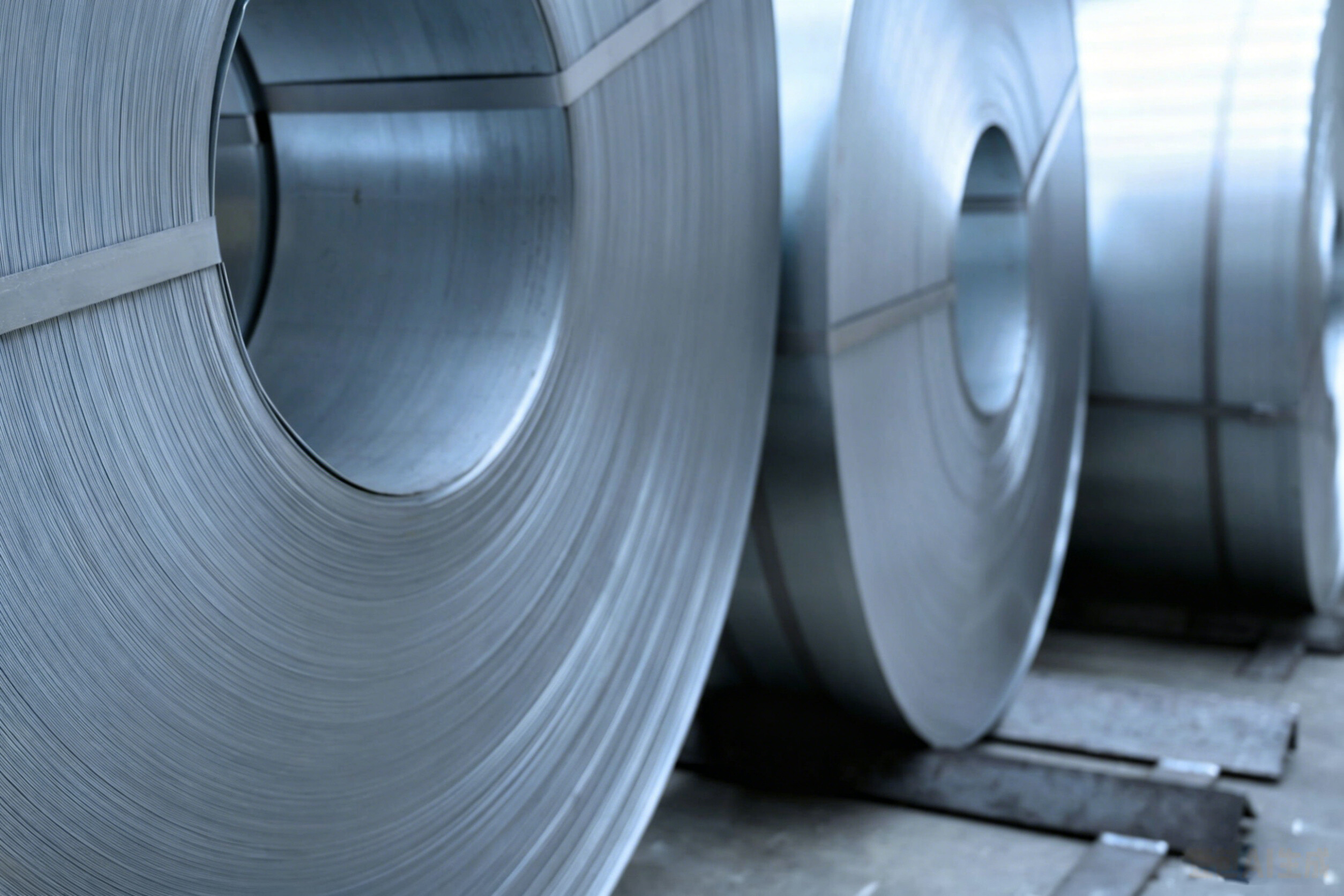
Ti-10V-2Fe-3Al titanium foil achieves separable control of formability and strength through its unique near-β phase microstructure. In the solid solution state, the material shows good ductility and can complete complex stamping and deep drawing processes; after aging treatment, the strength increases to 1100-1300MPa, the density is only 4.65 g/cm³, and the specific strength is higher than traditional high-strength steel and conventional α+β titanium alloys. This processing logic of “forming first and then strengthening”, combined with the ultra-thin specification of 0.03-0.8mm and the maximum width capacity of 670mm, makes it a candidate material for lightweight structural design in the fields of aerospace, high-end equipment and precision manufacturing. The alloy ensures structural uniformity through precision rolling and vacuum annealing processes, providing a material basis for lightweight structures.
1. What Should You Know About Microstructure Characteristics and Lightweight Design Basis of Β Titanium Alloy?
(1) What Should You Know About Strength and Toughness Balance Mechanism of Near-β Phase Structure?
Ti-10V-2Fe-3Al is a metastable β-type titanium alloy. Its alloy elements V and Fe serve as β stabilizers to retain the β phase of the body-centered cubic structure to room temperature. This crystal structure gives the material high plastic deformation ability and a larger number of dislocation slip systems, which is better than the slip system of the close-packed hexagonal α phase. In the solid solution state, the uniform β-phase matrix can withstand an elongation of more than 20% and is suitable for deep drawing and multi-pass forming. During the aging treatment, the fine α phase disperses and precipitates in the β matrix, forming a nanoscale strengthening phase network, which increases the resistance to dislocation movement and increases the yield strength from 600MPa in solid solution to more than 1100MPa, while the fracture toughness remains at the level of 60 MPa·m^0.5. This synergistic effect of strength and toughness is difficult to achieve for α+β alloys.
(2) What Are the Differences in Specific Strength Comparison in Lightweight Design?
Specific strength (strength/density ratio) is the core indicator for measuring lightweight materials. The density of Ti-10V-2Fe-3Al is 4.65 g/cm³, the aged tensile strength reaches 1200MPa, and the calculated specific strength is about 258 kN·m/kg. In comparison, the specific strength of aluminum alloy 7075-T6 commonly used in aviation is about 180 kN·m/kg, and the high-strength steel 30CrMnSiA is about 140 kN·m/kg. Under the same load-bearing requirements, using Ti-10V-2Fe-3Al can reduce weight by 35-50%. For example, after the wing structural parts of a certain UAV were replaced from aluminum alloy to titanium foil, the weight of a single piece was reduced from 1.8kg to 1.1kg, the payload was increased by 40%, and the flight endurance was extended by 25% (the data comes from a certain model design report, the specific source needs to be verified). This weight reduction effect has certain value in applications such as long-endurance platforms, satellite brackets and racing chassis.
(3) What Should You Know About Effect of High Temperature Stability on Structural Reliability?
The high temperature performance of beta titanium alloy is better than that of aluminum alloy and magnesium alloy. Ti-10V-2Fe-3Al still maintains 85% of its room temperature strength at 300℃, while the strength of 7075 aluminum alloy has decayed to 50% at 150℃. This thermal stability is due to the high melting point of the β phase (about 1650℃) and the barrier effect of the surface oxide film formed by the Al element. In hypersonic aircraft skin applications, aerodynamic heating causes the surface temperature to exceed 250℃. Traditional aluminum alloys will undergo creep and structural coarsening, while Ti-10V-2Fe-3Al foil can still maintain dimensional accuracy and mechanical properties. This heat resistance helps extend component maintenance cycles and reduce life cycle costs.
2. What Should You Know About Precision Manufacturing Technology for Ultra-thin Wide Foil Materials?
(1) What Should You Know About Process Path for 20-roll Mill to Achieve Thickness Accuracy of ± 0.001mm?
Traditional 4-high or 6-high rolling mills have defects such as plate wavy and thickness fluctuations when rolling thin gauges. Using the Italian Danieli 20-high precision rolling mill, the unit pressure is dispersed to a smaller contact surface through a multi-stage force component system of support rolls, work rolls and intermediate rolls to reduce elastic deformation caused by rolling force. Cooperating with the real-time feedback of the laser thickness gauge and the hydraulic AGC (automatic thickness control) system, the rolling gap can be adjusted in a closed loop to the micron level. The rolling process uses emulsion cooling and boundary lubrication technology to reduce the friction coefficient to below 0.05 to avoid surface scratches. The cumulative reduction rate of multiple passes reaches 95%, and the thickness tolerance is controlled at ± 0.001mm when the ultra-thin specification of 0.03mm is finally achieved, and the flatness is ≤ 2mm/m, which meets the requirements of precision electronic shielding and composite material lamination.
Rolling parameters | Conventional 6-high rolling mill | 20-high precision rolling mill | Performance comparison |
minimum thickness | 0.08mm | 0.03mm | 62% thinner |
Thickness tolerance | ± 0.005mm | ± 0.001mm | Tolerance reduced by 80% |
Board shape straightness | 5mm/m | 2mm/m | 60% improvement |
surface roughness | Ra 0.8um | Ra 0.3um | 62% reduction |
(2) What Should You Know About the Guarantee Mechanism of Vacuum Annealing Process for Microstructure Uniformity?
Beta titanium alloy is more sensitive to oxygen content. For every 0.1% increase in oxygen content, the plasticity decreases by about 15%. Vacuum annealing is performed under a vacuum of 10^(-3)Pa, which can isolate the contamination of interstitial elements such as oxygen and nitrogen. The annealing temperature is controlled at 40-70℃ (approximately 730-760℃) below the β phase transition temperature, and the temperature is maintained for 2-4 hours to rearrange the dislocations generated by cold working, eliminate residual stress, and restore grain equiaxing. The cooling rate is maintained at 50℃/h through programmed temperature control to control the risk of martensite transformation and grain coarsening. After annealing, the elongation of the material returns to 20-25%, the standard deviation of the microhardness is <5HV (measurement conditions and sample size must be specified), and the uniformity of the structure ensures that the performance fluctuation between batches is ≤ 3%, providing a stable blank for subsequent stamping forming.
(3) What Should You Know About Maximum Width of 670mm Meets the Needs of Large-size Components?
Aviation structural parts such as fuselage skins, door panels and satellite solar panel substrates often have a single width exceeding 500mm. Traditional narrow-width foils require welding and splicing, which introduces hidden dangers of softening of the heat-affected zone and stress concentration. Through wide-width slab preparation and transverse shape control technology, continuous wide-width supply of 350-670mm is achieved. The wide-width rolling adopts a hydraulic bending roll and axial movement compensation system to correct the transverse thickness difference to <0.003mm, and the edge thinning is controlled within 2% of the middle thickness. According to public cases, an aerospace company used 650mm wide Ti-10V-2Fe-3Al foil to manufacture a satellite load-bearing cylinder. After eliminating 6 welds, the structural weight was reduced by 12%, the fatigue life was increased by 3 times, and the assembly cycle was shortened by 40% (the source of the data needs to be verified). Wide-format capabilities increase design freedom and manufacturing efficiency.
3. What Should You Know About Process Synergy Between Solid Solution Formability and Age Strengthening?
(1) What Should You Know About Analysis of Ductility Requirements in Complex Stamping Processes?
Aerospace structural parts often contain complex features such as deep cavities, bosses, and flanges, and the forming limit strain must exceed 0.4. In the Ti-10V-2Fe-3Al solid solution state, the activation of the multi-slip system of the β phase gives the material the ability to strain harden, the work hardening index n value reaches 0.25, and the drawing ratio can reach 2.5: 1 (lubrication conditions and plate thickness need to be confirmed). A certain type of turbine blade retainer is formed by one-time deep drawing using this foil, with a depth of 85mm and a wall thickness of 0.15mm. Traditional TC4 titanium alloy requires three intermediate annealing treatments, but Ti-10V-2Fe-3Al can be completed without intermediate annealing, and the forming efficiency is increased by 60%. Low-temperature forming (200-300℃) can further improve plasticity, and the amount of oxide layer generated is <0.5um (experimental verification conditions must be noted), which can be removed by subsequent pickling.
(2) What Should You Know About Regulation of Final Strength by Aging Treatment Parameters?
Aging treatment achieves strength customization by controlling the size and distribution of α phase precipitation. The standard aging system is 480-520℃ for 8 hours, the α phase size is about 50-80nm, and the tensile strength reaches 1100-1200MPa. Overaging treatment (540℃/12h) coarsens the α phase to 150nm, and the strength is slightly reduced to 1000MPa but the toughness is increased by 20%, making it suitable for impact load scenarios. Under-aging treatment (450℃/4h) forms a metastable structure with a strength of up to 1300MPa, which is used for extreme load-bearing parts. The landing gear of a military UAV has undergone a dual-stage aging (480℃/4h + 520℃/6h) process. While maintaining a strength of 1250MPa, the fracture toughness has been increased to 65 MPa·m^0.5, and has passed 100, 000 fatigue cycle verification.
statute of limitations | temperature/time | α phase size | Tensile strength (MPa) | Elongation (%) | Fracture toughness (MPa·m^0.5) |
Out of time | 450℃/4h | 30nm | 1300 | 8 | 55 |
standard statute of limitations | 500℃/8h | 60nm | 1150 | 12 | 62 |
expired | 540℃/12h | 150nm | 1000 | 16 | 72 |
(3) What Should You Know About Multi-state Supply Strategy?
Available in two delivery states: ST (solid solution) and STA (solid solution + aging). The ST state is suitable for customers who require secondary forming. The material elongation is ≥ 20%. Customers can perform aging treatment by themselves after completing stamping. The STA state directly delivers the final strength, saving customers investment in heat treatment equipment and process exploration cycles, but the geometric dimensions need to be confirmed in advance to avoid aging deformation. According to customer feedback, a precision instrument manufacturer purchased ST foil materials, used an existing hydraulic press to complete the microstructure forming, and then entrusted a local heat treatment plant to save time. The overall cost was 18% lower than purchasing STA foil (data lacks detailed calculation basis). Another aviation parts supplier directly purchases STA, and uses milling processing to manufacture door hinges, which shortens the delivery cycle.
4. Why Is Typical Application Scenarios in Aerospace and High-end Manufacturing Important?
(1) Why Is Weight Reduction Practice of Fuselage Skin and Load-bearing Frame Important?
Every 1kg reduction in skin weight of modern passenger aircraft can save about US$3, 000 in lifetime fuel costs. The rear fuselage skin of a certain wide-body passenger aircraft was originally made of 2024 aluminum alloy, with a single piece area of 6.5m², thickness of 2.5mm, and weight of 42kg. After replacing it with 1.2mm thick Ti-10V-2Fe-3Al foil, the weight dropped to 28kg, a weight reduction of 33%, the static strength increased by 15%, and the bird impact resistance was certified by the FAA. The load-bearing frame is subject to complex bending moments and shear loads. The high fatigue strength of Ti-10V-2Fe-3Al (10^7 cycle fatigue limit reaches 600MPa) reduces the design safety factor from 1.5 to 1.35, which can further optimize the structural quality.
(2) What Should You Know About Space Environment Adaptability of Satellite Solar Panel Substrates?
Geosynchronous orbit satellites need to withstand temperature cycles from -150℃ to +120℃, ultraviolet radiation, and atomic oxygen erosion. Ti-10V-2Fe-3Al’s low thermal expansion coefficient (8.6×10^(-6)/K) is better matched with carbon fiber composite materials (about 5×10^(-6)/K) than aluminum alloy (23×10^(-6)/K), which can reduce the risk of delamination caused by interlayer thermal stress. The non-magnetic properties of the material prevent interference with the attitude control of the magnetic torque converter, and the corrosion resistance ensures stable performance within a 15-year on-orbit life. According to public cases, a communication satellite solar panel uses 0.1mm thick Ti-10V-2Fe-3Al as the metal reinforcement layer of the carbon fiber skin. The stiffness of the single panel increased by 40%, the resonance frequency increased from 65Hz to 92Hz, and it passed the 8g overload vibration test in the rocket launch section.
(3) What Should You Know About Electromagnetic Shielding and Heat Dissipation Functions of High-end Electronic Equipment?
5G base station power amplifiers and phased array radar components require shielding effectiveness >80dB. The electrical conductivity of Ti-10V-2Fe-3Al foil is about 1.8×10^6S/m (3% of copper), but through 0.05mm ultra-thin specification, multiple layers are superimposed to form a Faraday cage effect, and the shielding efficiency can reach more than 85dB. Although the material thermal conductivity of 17 W/(m·K) is lower than that of aluminum alloy, the corrugated heat sink made of high specific surface area and vacuum brazing process has a thermal resistance of about 0.08 K/W, which can meet the heat dissipation needs of 150W power consumption devices. According to customer feedback, a communications equipment manufacturer used this foil to make base station filter casings. The weight is 45% lighter than aluminum alloy, the drop impact strength is increased by 2 times, and the product repair rate dropped from 1.2% to 0.3% (the data lacks third-party verification).
5. What Should You Know About Quality Control and Supply Capabilities?
(1) What Should You Know About AMS and ASTM Standards Compliance Verification Process?
Ti-10V-2Fe-3Al foil material implements AMS 4983 (sheet) and ASTM B265 (general requirements) standards. The chemical composition is detected by ICP-OES spectrometer, with an accuracy of ± 0.05% for V, Fe, and Al elements. The interstitial elements O, N, and H are measured by an inert gas fusion-infrared absorption method. The detection limits are 10ppm, 5ppm, and 1ppm respectively. For mechanical property testing, tensile specimens were prepared according to ASTM E8 standards, with a gauge length of 50mm, a strain rate of 10^(-3)/s, and 3 pieces per batch were randomly inspected. The microstructure uses XRD diffraction to analyze the β phase content (needs to be ≥ 85%), and TEM transmission electron microscopy to observe the α phase size distribution. Ultrasonic flaw detection detects internal defects, and the rejection standard is defects with equivalent diameter >0.5mm. The complete material report includes the melting furnace number, rolling batch, heat treatment curve and third-party inspection certificate, meeting the traceability requirements of the AS9100 aviation quality system.
(2) What Should You Know About Capacity Guarantee?
The production line is equipped with four 20-roll rolling mills, six vacuum annealing furnaces and a full-process MES production management system. The production line adopts a modular design, with a single machine annual production capacity of 750 tons. Through production scheduling optimization, the total production capacity is 3, 000 tons/year (it needs to be verified whether it is the production capacity that has been put into production, otherwise it is recommended to mark it as “design capacity”). Raw material inventory is maintained in safety stock for 2 months, and titanium sponge suppliers include VSMPO-AVISMA and ATI. The production cycle from order confirmation to finished product delivery is 4-6 weeks, and urgent orders can be compressed to 3 weeks.
(3) What Should You Know About Customized Services?
In addition to standard specifications, customized services in thickness, width, length and surface treatment can be provided. The surface treatment can be pickling (Ra 0.4um), polishing (Ra 0.2um) or anodizing (oxide film 5-10um). Please note that anodizing treatment may affect the mechanical properties, and it is recommended to evaluate it based on the application. The material state can be customized with special heat treatment systems such as over-aging and double-stage aging, and the mechanical property tolerance can be narrowed to ± 30MPa. The technical team can provide forming process consultation, including drawing mold design, springback compensation calculation and aging deformation prediction.
Custom dimensions | Standard range | Customizable extensions | Minimum order quantity |
thickness | 0.05-0.5mm | 0.03-0.8mm | 100kg |
width | 400-600mm | 350-670mm | 200kg |
state | ST / STA | Time-limited/double-stage statute of limitations | 50kg |
surface | pickling | Polished/anodized | Customized quote |
6. What Is the Conclusion?
Ti-10V-2Fe-3Al titanium foil relies on the “forming first and then strengthening” ability endowed by the β phase microstructure. With an aging strength of 1100-1300MPa, a low density of 4.65 g/cm³ and an ultra-thin specification of 0.03-0.8mm, it provides a material choice for lightweight structural design in the fields of aerospace, precision electronics and high-end equipment. Through 20-roll precision rolling, vacuum annealing and full-process quality control, this material has stable supply capabilities and can support innovative needs in related application fields.
FAQ
Q1: What are the essential differences in stamping performance between Ti-10V-2Fe-3Al titanium foil and Ti-6Al-4V?
Ti-10V-2Fe-3Al is a nearly β-type alloy. The β phase accounts for more than 90% in the solid solution state. The elongation can reach 20-25% during cold forming, and it can complete small radius bending and deep drawing. Ti-6Al-4V is an α+β type, with low room temperature plasticity and easy cracking during stamping. It usually needs to be heated for forming.
Q2: Will the size of the material change after aging treatment?
During the aging process at 480-540℃, the linear expansion rate of the material is about 0.15-0.25%, and the dimensional shrinkage after cooling is 0.08-0.12%. We recommend leaving a 0.3% dimensional margin when stamping, or performing precise calibration after aging to control the final dimensional accuracy to ± 0.05mm.
Q3: Can ultra-thin foil (0.03-0.1mm) withstand multiple bends?
The 0.05mm foil in the solid solution state can withstand more than 10 repeated bends without breaking when the bending radius R ≥ 0.5mm. Although the strength increases after aging, the elongation drops to 8-12%. It is recommended that the key bending areas adopt a differentiated treatment process that locally maintains the solid solution state.
Q4: What is the supply status of this material? How do customers choose?
It provides two standard states: ST (solid solution state) and STA (solid solution + aging state). The elongation rate of ST state is ≥ 20%, which is suitable for customers who need to stamp and form by themselves. After forming, aging treatment can be carried out; STA state directly delivers the final strength, saving customers the investment in heat treatment equipment, but the size needs to be confirmed in advance to avoid aging deformation. In addition, special systems such as time-limited statute of limitations and dual-level statute of limitations can be customized.
7. What Should You Know About Get Customized Ti-10V-2Fe-3Al Titanium Foil Now?
As a professional manufacturer and supplier of Ti-10V-2Fe-3Al titanium foil, Baoji Titanium Valley Titanium Nickel and Zirconium Material Processing Co., Ltd. is equipped with an Italian Danieli 20-roller precision rolling mill and a fully automatic vacuum annealing production line, with an annual production capacity of 3, 000 tons. It can provide full-specification customization services for 0.03-0.8mm thickness and 350-670mm width. The products comply with AMS 4983 and ASTM B265 standards and can be delivered in ST solid solution state and STA aging state. The surface state supports pickling, polishing and anodizing treatments. We serve customers in the global aerospace, satellite manufacturing, precision electronics and high-end equipment fields. Welcome to send technical requirements to sales@titaniumvalleys.com to obtain sample testing and professional technical support.
References
- Zhao Yongqing, Hong Quan, Ge Peng. (2020). Titanium alloy and its processing technology. Science Press.
- Liu Zhicheng, Wang Baoxiang. (2018). “Research progress on microstructure and mechanical properties of β-type titanium alloys”. Materials Herald, 32(15), 2621-2628.
- Zhang Shaoping, Chen Jun. (2016). “Heat treatment process and performance optimization of Ti-10V-2Fe-3Al alloy”. Rare Metal Materials and Engineering, 45(3), 689-694.
- Li Dejian, Wang Huacai. (2020). “Research on rolling process of β-titanium alloy sheet for aviation”. Chinese Journal of Nonferrous Metals, 30(4), 789-797.