
Gr5 Titanium Rod or Gr2 Titanium Rod, Which One Is Better?
- Gr5 Titanium rod
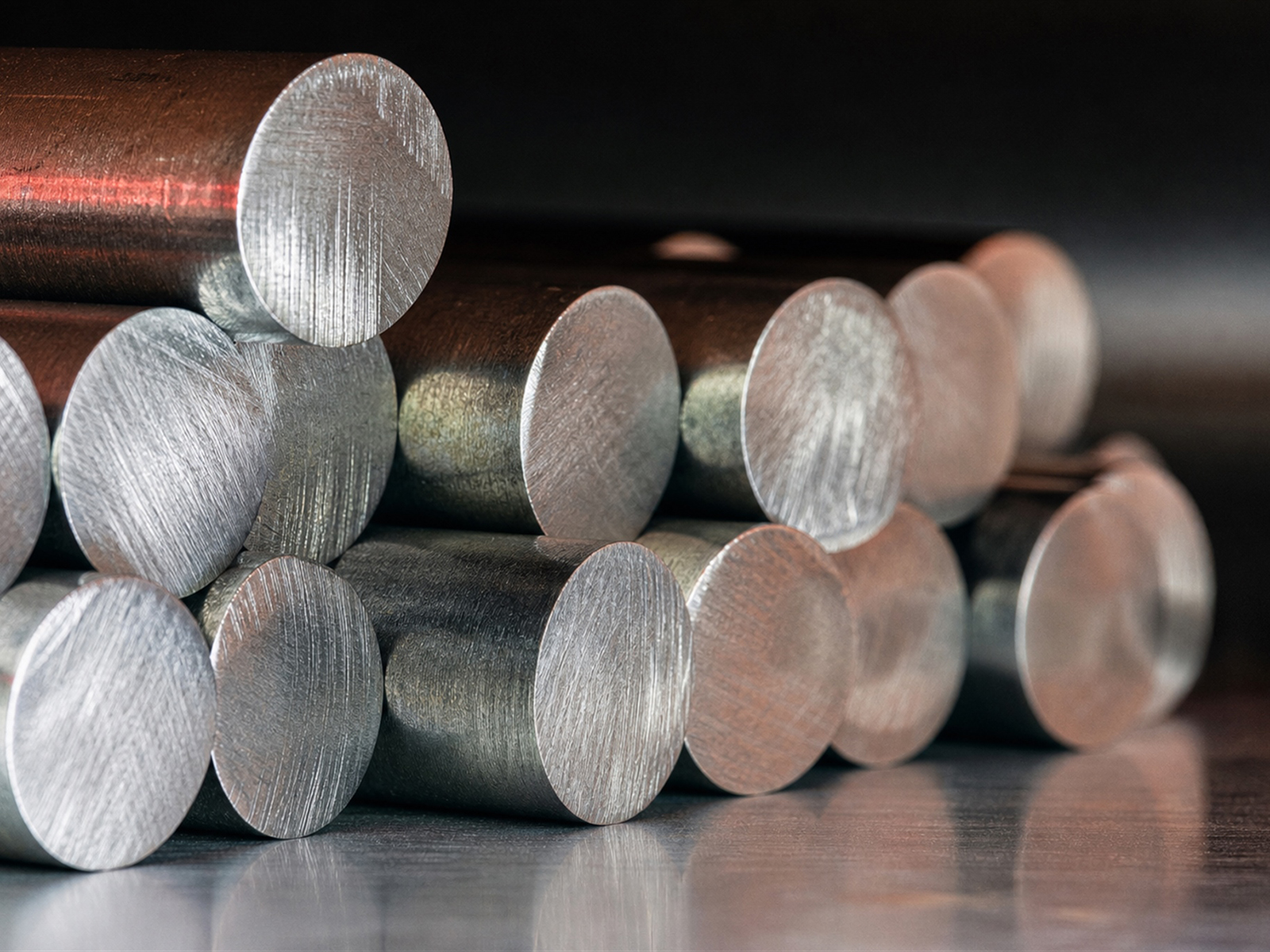
The choice of Gr5 or Gr2 titanium rod depends on the specific application requirements. Gr2 titanium rod is industrial pure titanium with excellent corrosion resistance and good processing performance. It is suitable for chemical anti-corrosion, marine engineering and other scenarios that do not require high strength but focus on corrosion resistance. The price is relatively economical and it is the most widely used commercial pure titanium grade. Gr5 titanium rod (Ti-6Al-4V) is a titanium alloy with high strength, low density and good high-temperature performance. It is suitable for aerospace, high-performance racing and other fields that require a high strength-to-weight ratio. However, the price is higher and the corrosion resistance is slightly inferior to pure titanium. In short, if your project prioritizes corrosion resistance and cost-effectiveness, Gr2 is the ideal choice; if you are looking for ultimate strength and lightweight, Gr5 is even better.
1. What Are the Differences in Essential Differences in Material Composition and Microstructure?
(1) What Should You Know About Characteristics of Pure Titanium Gr2 Titanium Rod?
The titanium content of Gr2 titanium rod reaches more than 99.2%, which is industrial pure titanium with single α phase structure. This high-purity composition makes the internal lattice arrangement of the material regular, and the oxygen content is controlled below 0.25%. The basic strength is improved through the gap strengthening mechanism of the oxygen element. The material density is 4.51 g/cm³ and has been remelted at least twice during the vacuum melting process to ensure that impurity elements such as iron (≤ 0.30%) and carbon (≤ 0.08%) are maintained within strict limits. This composition ratio allows the surface of the Gr2 titanium rod to spontaneously form a dense TiO2 oxide film with a thickness of approximately 5-20 nanometers. This passivation layer has self-healing capabilities and can be quickly regenerated even after scratches, which is the source of its excellent corrosion resistance.
(2) What Should You Know About Alloying Design of Gr5 Titanium Rod?
Gr5 titanium rod adopts Ti-6Al-4V formula, containing 6% aluminum and 4% vanadium as alloy elements. Aluminum acts as an α-phase stabilizer to improve the material’s oxidation resistance and reduces density; vanadium acts as a β-phase stabilizer to enhance high-temperature strength and hardenability. This dual-phase (α+β) microstructure exhibits a layered structure in the annealed state, giving the material excellent comprehensive mechanical properties. The density is about 4.43 g/cm³, which is slightly lower than Gr2, but the tensile strength can reach more than 895 MPa, which is 2.6 times that of Gr2 (340 MPa). The cost of alloying is an increase in electrochemical activity. In some highly corrosive environments, alloy elements may become corrosion-sensitive points, causing its corrosion resistance to be inferior to that of pure titanium.
(3) What Should You Know About Effect of Crystal Structure on Performance?
Pure titanium Gr2 maintains a simple hexagonal close-packed (HCP) lattice with clear grain boundaries and limited slip systems, which gives the material good plastic deformation ability and excellent cold working formability. In a low temperature environment of -253℃, the HCP structure still maintains toughness and will not undergo brittle transition. In contrast, in the dual-phase structure of Gr5 titanium rods, the α phase provides strength and the β phase provides plasticity. The coordinated deformation mechanism of the two-phase interface allows the material to maintain 80% strength retention at high temperatures (above 300℃). However, this complex structure is sensitive to heat treatment, and improper cooling rate may lead to uneven structure and affect fatigue performance.
2. What Are the Differences in Comparison of Mechanical Properties and Working Load Suitability?
Performance indicators | Gr2 titanium rod | Gr5 titanium rod | Typical application differences |
Tensile strength (MPa) | ≥ 340 | ≥ 895 | Gr2 is suitable for medium and low loads, Gr5 can withstand high stress |
Yield strength (MPa) | ≥ 275 | ≥ 828 | Gr5 for structural load-bearing parts |
Elongation (%) | ≥ 20 | ≥ 10 | Gr2 has stronger processing deformation ability |
Modulus of elasticity (GPa) | 103 | 113.8 | Gr5 has higher rigidity and less deformation |
Specific strength (kN·m/kg) | 75 | 202 | Gr5 has obvious advantages in lightweight |
(1) What Are the Differences in the Application Logic Behind the Intensity Difference?
The 340 MPa tensile strength of Gr2 titanium rods meets non-limiting load conditions such as chemical stirring shafts and heat exchanger tube bundles. Its elongation of more than 20% allows the material to be bent, stamped and other cold working operations during the installation process. A chemical company uses φ80mm Gr2 titanium rods in a hydrochloric acid storage tank stirring device. No breakage or obvious deformation occurred during ten years of operation, verifying its reliability in corrosive environments. The high specific strength of Gr5 titanium rods makes it the first choice for aviation fasteners and aircraft landing gear components. About 15% of the structural weight of the Boeing 787 fuselage is composed of titanium alloys, of which Gr5 dominates. While a single piece can withstand several tons of tensile force, it is more than 40% lighter than steel.
(2) What Should You Know About Fatigue Performance and Dynamic Load Response?
Under cyclic loading conditions, Gr5 titanium rods exhibit better fatigue limits. Standard tests show that the fatigue strength of Gr5 after 10⁷ cycles is about 50% of the static strength (this data needs to be consulted with caution, the actual typical ratio is usually between 30% and 40%), while that of Gr2 is about 40%. This means that in vibrating equipment and reciprocating mechanisms, Gr5 can withstand higher frequency stress fluctuations without crack expansion. A deep-sea sampling equipment on an offshore platform originally used Gr2 titanium rods to make the drive shaft. Surface cracks appeared after 18 months in a high-frequency vibration environment. After being replaced with Gr5 material, it has been running continuously for more than 36 months without abnormality, which confirms the durability advantages of alloy materials under dynamic working conditions.
(3) What Should You Know About Effect of Temperature Range on Strength Retention?
The strength retention rate of Gr2 titanium rods exceeds 80% at 300℃ and can withstand high temperatures of 400℃ in the short term. However, long-term exposure will cause the oxide layer to thicken and the surface to harden. A high-temperature reactor in a petrochemical plant uses Gr2 titanium rods as stirring paddles. After five years of continuous operation in a 280℃ medium, the core performance of the material is stable, and only an oxide layer of about 0.2mm is formed on the surface, which can be restored by polishing. Gr5 titanium rods can serve for a long time in an environment of 450℃. The synergistic effect of its α phase and β phase inhibits high-temperature creep. The aeroengine compressor disc is made of Gr5 material, with an operating temperature of 350℃. The dimensional change after 10, 000 hours of operation is controlled within 0.05%, meeting precision fit requirements.
3. What Should You Know About Environmental Adaptability Analysis of Corrosion Resistance?
(1) What Should You Know About Seawater and Chloride Environmental Performance?
The corrosion rate of Gr2 titanium rods in seawater is as low as 0.0025 mm/year, which is much lower than the 0.1 mm/year of 316L stainless steel. A seawater desalination plant uses Gr2 titanium rods to manufacture multi-effect evaporator heat exchange tubes. The seawater flow rate reaches 3 m/s and the chloride ion concentration is 19, 000 ppm. After twelve years of continuous operation, the tube wall thinning is less than 0.03 mm, and the oxide film is intact without pitting corrosion. This is due to the extremely low electronic conductivity of the passivation layer formed by titanium in a chloride environment, which blocks the electrochemical corrosion process. Although Gr5 titanium rods are also resistant to seawater corrosion, in crevice environments or stress concentration areas, aluminum and vanadium alloy elements may cause local galvanic corrosion. The Gr5 connector of an offshore drilling platform showed corrosion marks at the flange gap. After analysis, the fastening force was too large, which caused the passivation film to rupture and was not repaired in time.
(2) What Are the Differences in Differences in Stability in Acidic and Alkaline Media?
corrosive media | Gr2 titanium rod corrosion resistance | Gr5 titanium rod corrosion resistance | Recommended scenarios |
10% hydrochloric acid (room temperature) | Corrosion resistance, corrosion rate <0.127 mm/year (Note: This data is applicable to low concentration at normal temperature, corrosion acceleration at high temperature or high concentration) | Use with caution, passivation is required | Gr2 is used in storage tanks and pipelines |
30% sulfuric acid (80℃) | Excellent, can be used for a long time | Good, avoid high temperatures | Gr2 is preferred for chemical reactors |
10% sodium hydroxide | Completely corrosion-resistant | Completely corrosion-resistant | Either |
Oxidizing acid (nitric acid) | Excellent, passivation film enhancement | Excellent | Precision cleaning equipment |
The fermentation tank cleaning system of a pharmaceutical company needs to withstand a mixture of 5% nitric acid and 2% hydrofluoric acid. The spray pipeline made of Gr2 titanium rods has been running without corrosion for eight years. However, the surface roughness of the Gr5 samples initially tried increased after six months, and all were eventually replaced with Gr2 materials. This case illustrates that in a strongly oxidizing mixed acid environment, pure titanium is more chemically inert than alloy materials.
(3) What Should You Know About Stress Corrosion Cracking Susceptibility?
Gr2 titanium rods have extremely high resistance to stress corrosion cracking (SCC), and sudden fractures rarely occur even under the combined action of tensile stress and corrosive media. A condenser in a nuclear power plant uses Gr2 titanium rod bundles, which have withstood the double test of cyclic thermal stress and seawater corrosion. Within thirty years of operation, not a single tube bundle has failed due to SCC. There is a risk of SCC in Gr5 titanium rods in high-temperature and high-pressure water containing chloride, especially in the welding heat-affected zone. The residual tensile stress superimposed on the corrosive medium may induce cracks. A leak occurred at the weld of the hydraulic system pipeline of an aviation company. An investigation found that the Gr5 material caused SCC in the methanol-water mixture. The problem was eliminated after the Gr2 material was switched to and the welding process was optimized.
4. What Should You Know About Processing and Manufacturing Costs and Supply Chain Considerations?
(1) What Should You Know About Raw Material Prices and Procurement Cycles?
The raw material cost of Gr2 titanium rods is about 30-40% lower than that of Gr5. The global production capacity is sufficient. The annual output of industrial clusters such as Baoji Titanium Valley in China exceeds 20, 000 tons. Regular specifications φ8-φ200 mm can be supplied from stock, and the delivery cycle is usually within two weeks. A water treatment equipment factory purchased 200 φ50×3000 mm Gr2 titanium rods. It only took ten days from order placement to delivery, supporting urgent project needs. Due to the complex ratio of alloy elements and stricter production process requirements, Gr5 titanium rods are 50-80% more expensive than Gr2, and large-size forged rods (such as φ200 mm and above) are mostly customized and the delivery cycle may be extended to 6-8 weeks, increasing inventory costs and project risks.
(2) What Are the Differences in Comparison of Machining Performance?
Gr2 titanium rods have a small tendency to work harden, and chips are easily broken during turning and milling. The recommended cutting speed is 60-80 m/min, and the tool life is about 70% of that of processed steel. A machining factory uses carbide tools to process φ100 mm Gr2 titanium rods. The processing time for a single piece is 45 minutes, and the tool replacement cycle processes 200 pieces. Due to its high strength and poor thermal conductivity (approximately 1/7 of steel), Gr5 titanium rods have a cutting temperature of over 800℃ and rapid tool wear. High-pressure cooling and low rotational speed (30-50 m/min) strategies are required. The time required to process parts of the same size increases by 40%, and tool costs increase by 60%. Aerospace parts processing companies usually equip Gr5 titanium rods with special equipment and coated tools, further pushing up manufacturing costs.
(3) What Should You Know About Welding Process and Quality Control?
Both materials can be welded using conventional welding methods such as TIG and MIG, but Gr2 titanium rods are more tolerant of welding parameters. Gr2 usually can reach more than 90% of the strength of the base metal without heat treatment after welding (but for thick plates or complex structures, stress relief treatment is recommended), and the corrosion resistance of the weld is equivalent to that of the base metal. The butt welds of φ60 mm Gr2 titanium rods in a chemical pipeline were tested by X-ray, and the first-level pass rate reached 98%. Welding of Gr5 titanium rods requires strict control of oxidation, and the purity of the protective gas is required to be above 99.99%. It is recommended to perform annealing at 500-600℃ after welding to eliminate residual stress, otherwise the toughness of the weld area may decrease. When medical device companies manufacture Gr5 titanium rod orthopedic implants, the defective rate in the welding process was initially as high as 12%. By introducing a vacuum welding chamber and programmed heat treatment, the scrap rate was reduced to 3%, but the equipment investment increased by about 2 million yuan.
5. Why Is Accurate Matching of Industry Application Scenarios Important?
(1) What Should You Know About the Home of Chemical and Marine Engineering?
Gr2 titanium rods occupy more than 80% of the chemical anti-corrosion market. Typical applications include: electrolytic cell anodes in the chlor-alkali industry, heat exchange tube bundles in alkali production equipment, and extraction tower stirring shafts in hydrometallurgy. A large chlor-alkali plant uses φ120 mm Gr2 titanium rods to make the cathode frame of the electrolytic cell. It has been running for fifteen years in an environment where saturated brine and chlorine gas coexist. It only needs regular cleaning of the deposited salt layer, and there is no corrosion damage to the body. In the marine field, the riser system of deep-sea oil platforms, the reverse osmosis membrane shell of seawater desalination, and the seawater pipelines of ships are all made of Gr2 materials. A seawater circulation pump uses a Gr2 titanium rod shaft with a flow rate of 5 m/s. After eight years of continuous operation in a sand abrasive environment, the wear of the shaft diameter is only 0.08 mm, which is far lower than the design redundancy.
(2) What Should You Know About the Ultimate Challenge of Aerospace?
Gr5 titanium rod is the core material of aeroengine, fuselage structure and landing gear. Each Airbus A350 aircraft uses about 70 tons of titanium materials, of which Gr5 accounts for more than 60%. The application parts include engine fan blades, wing connectors, and hydraulic actuators. The main pillar of the landing gear of a certain type of fighter jet is made of φ180 mm Gr5 forged rods. A single piece can withstand an impact load of 80 tons. It is 35% lighter than steel and has a fatigue life of 30, 000 take-off and landing cycles. In the aerospace field, the stiffeners of rocket fuel tanks and satellite antenna brackets also rely on the high specific strength of Gr5. The interstage structure of the SpaceX Falcon rocket uses a large number of Gr5 titanium rod welded frames to achieve an optimal balance between structural weight and strength.
(3) What Should You Know About Special Requirements for Medical and Precision Instruments?
Medical-grade Gr2 titanium rods (which must meet ASTM F67 standards) have become the first choice for orthopedic implants due to their good biocompatibility, non-magnetic properties, and X-ray transparency. Artificial hip stems, spinal fusion cages, and dental implants are mostly processed using Gr2. Although the elastic modulus of Gr2 titanium rods (103 GPa) is higher than human bone tissue (10-30 GPa), the porous structure design can effectively reduce the overall stiffness and avoid the stress shielding effect. Ten-year follow-up data from a tertiary hospital shows that the implantation success rate of bone plates made of Gr2 titanium rods reaches 98.7%, with no metal ion precipitation or allergic reactions. Although Gr5 titanium rods are stronger, they may produce artifacts in the MRI environment, and excessive rigidity can easily lead to bone resorption, limiting clinical application. Precision instruments, such as non-magnetic fixtures of semiconductor manufacturing equipment and rotating targets of vacuum coating machines, preferentially use Gr2 to avoid magnetic interference.
(4) What Should You Know About Emerging Needs for Environmental Protection and New Energy?
Desulfurization and denitrification equipment is faced with high-temperature flue gas and corrosive droplets. The spray pipes and demister skeletons made of Gr2 titanium rods can withstand the acidic environment of pH 2-3. The Gr2 components in the wet desulfurization tower of a coal-fired power plant have been in operation for twelve years without replacement records. The anode plate of the water electrolysis hydrogen production device and the bipolar plate of the proton exchange membrane fuel cell also rely on the corrosion resistance and conductivity of Gr2. A hydrogen energy company tested the Gr2 titanium rod electrode for continuous electrolysis in an alkaline electrolyte for 5, 000 hours, and the voltage attenuation was less than 3%, verifying the long-term stability. Safety valves and cooling pipes of new energy vehicle power batteries have begun to use Gr2 titanium rods to improve lightweight and ensure fire safety. Although the cost is higher than aluminum alloy, it is gradually becoming popular in high-end models.
6. How Should Quantitative Evaluation Model for Selection Decision-making?
(1) What Should You Know About Whole Life Cycle Cost Calculation?
Assume that a chemical project needs to purchase 100 φ80×3000 mm titanium rods with a design life of 20 years. Compare the economics of Gr2 and Gr5:
Gr2 scheme:
- Material unit price: ¥350/kg × 118 kg/piece = ¥41, 300/piece
- Total material cost: ¥4, 130, 000
- Processing fee (turning, welding): ¥15, 000/piece × 100 = ¥1, 500, 000
- 20-year maintenance cost (surface cleaning): ¥200, 000
- Total:¥5, 830, 000
Gr5 scheme:
- Material unit price: ¥550/kg × 115 kg/piece = ¥63, 250/piece
- Total material cost: ¥6, 325, 000
- Processing fee (special tool, heat treatment): ¥25, 000/piece × 100 = ¥2, 500, 000
- 20-year maintenance cost (no significant advantage): ¥200, 000
- Total:¥9, 025, 000
The corrosive environment of this project is normal temperature salt spray, the load coefficient is <0.5, and Gr2 fully meets the technical requirements. Using Gr5 will cost an extra ¥3, 195, 000 (54.8%), with no performance gain, and the economy is obviously unreasonable.
(2) What Should You Know About Performance Margin and Safety Factor?
The riser of an offshore platform needs to withstand an axial tensile force of 800 kN, the safety factor is 2.0, and the material yield strength is required to be ≥ 400 MPa (calculated based on cross-sectional area). The Gr2 yield strength of 275 MPa is not satisfied, so the cross-section needs to be increased or Gr5 (yield 828 MPa) needs to be used. If Gr2 is used, the specification of φ120 mm is required and the weight is 177 kg/m; if Gr5 is used, φ70 mm is sufficient and the weight is only 71 kg/m, which is a 60% weight reduction and saves the support structure cost by about ¥500, 000/piece. In this case, although Gr5 has high material cost, it reduces the overall cost through lightweight, making it the best choice. This shows that the selection needs to comprehensively consider stress levels, space constraints, and supporting costs, rather than simply comparing unit prices.
(3) What Should You Know About Supply Chain Stability and Risk Assessment?
A precision instrument manufacturer requires 50 tons of Gr2 titanium rods annually. The supplier can guarantee monthly rolling supply, with an inventory turnover period of 30 days and a capital occupation of approximately ¥2 million. If you switch to Gr5, due to the long customization cycle, you need to place an order three months in advance and prepare two months’ supply. The inventory capital occupied will increase to ¥6 million, and the financial cost will increase significantly. In addition, the price of Gr5 is affected by fluctuations in the aviation market. From 2019 to 2020, due to the suspension of Boeing 737 production, the price of Gr5 fell by 18%, while the price of Gr2 was stable in the ± 5% range. For general industries with stable batch sizes, Gr2’s supply chain resilience and price predictability constitute important competitive advantages and reduce corporate operating risks.
7. What Is the Conclusion?
Gr2 titanium rods and Gr5 titanium rods each have their own areas of expertise, and there is no absolute advantage or disadvantage. Gr2 dominates the chemical, marine, environmental protection and other corrosion protection markets with its excellent corrosion resistance, excellent processability and high cost performance; Gr5 has become an irreplaceable material for aerospace and high-end equipment with its extremely high specific strength and high temperature resistance. The key to selection is to accurately match the working condition requirements: Gr2 is preferred for corrosive environments, Gr5 is selected for extreme loads, and only by taking into account the full life cycle cost and supply chain stability can the optimal balance of technology and economy be achieved.
FAQ
Q1: Can Gr2 titanium rods replace 316L stainless steel for use in seawater environments?
Absolutely. The corrosion resistance of Gr2 titanium rods in seawater far exceeds that of 316L, the corrosion rate is only 1/40 of it, and it can serve for a long time without cathodic protection. Although the initial cost is 30% higher, there is no need to replace it within the 20-year lifespan, and the overall economy is better than stainless steel.
Q2: Why does Gr5 titanium rod crack easily after welding?
The main reasons are oxygen and nitrogen pollution caused by poor protection during the welding process, and residual stress caused by excessive cooling rate. An argon drag shield needs to be used to protect the back of the weld, and annealing at 550℃ x 2 hours after welding can effectively avoid cracks.
Q3: Is Gr2 titanium rod in stock for small batch purchase?
Gr2 titanium rods with regular specifications such as φ10-φ100 mm are usually in stock, and the minimum order quantity is 10 pieces for shipment. Special size or surface treatment requirements may require 2-3 weeks for customization. It is recommended to confirm the delivery date with the supplier in advance.
8. What Should You Know About Consult Baoji Titanium Valley’s Professional Team Immediately?
As a leading company in high-end titanium processing in China, Baoji Titanium Valley has an annual production line of 20, 000 tons of titanium rods and a complete quality system, and can provide customized services for Gr2 and Gr5 full specifications of titanium rods. Whether you are looking for a reliable titanium rod manufacturer, titanium bar supplier or titanium processing factory, our technical team is ready to provide you with selection support and fast delivery. Contact us: sales@titaniumvalleys.com to obtain professional material application solutions.
References
- “Titanium and Titanium Alloy Materials Manual”, compiled by the Titanium, Zirconium and Hafnium Branch of China Nonferrous Metals Industry Association, third edition 2021
- “Research on the Application of Commercial Pure Titanium in Marine Engineering”, Li Minghua, Zhang Wei, Wang Lei, “Chinese Journal of Corrosion and Protection”, 2020, Volume 40, Issue 3, Pages 215-222
- “Microstructure, Properties and Aeronautical Application of Ti-6Al-4V Alloy”, Zhang Weiguo, Liu Qiang, Chen Zhigang, “Journal of Aeronautical Materials”, 2019, Volume 39, Issue 2, Pages 1-12
- “Material Selection Principles and Economic Analysis of Titanium Materials for Industrial Use”, Wang Jianjun, Li Hua, “Progress in Titanium Industry”, 2022, Volume 39, Issue 2, Pages 45-50