
Why Is the Main Advantages of Using Gr5 Titanium Foil in Manufacturing Important?
- Gr5 Titanium Foil
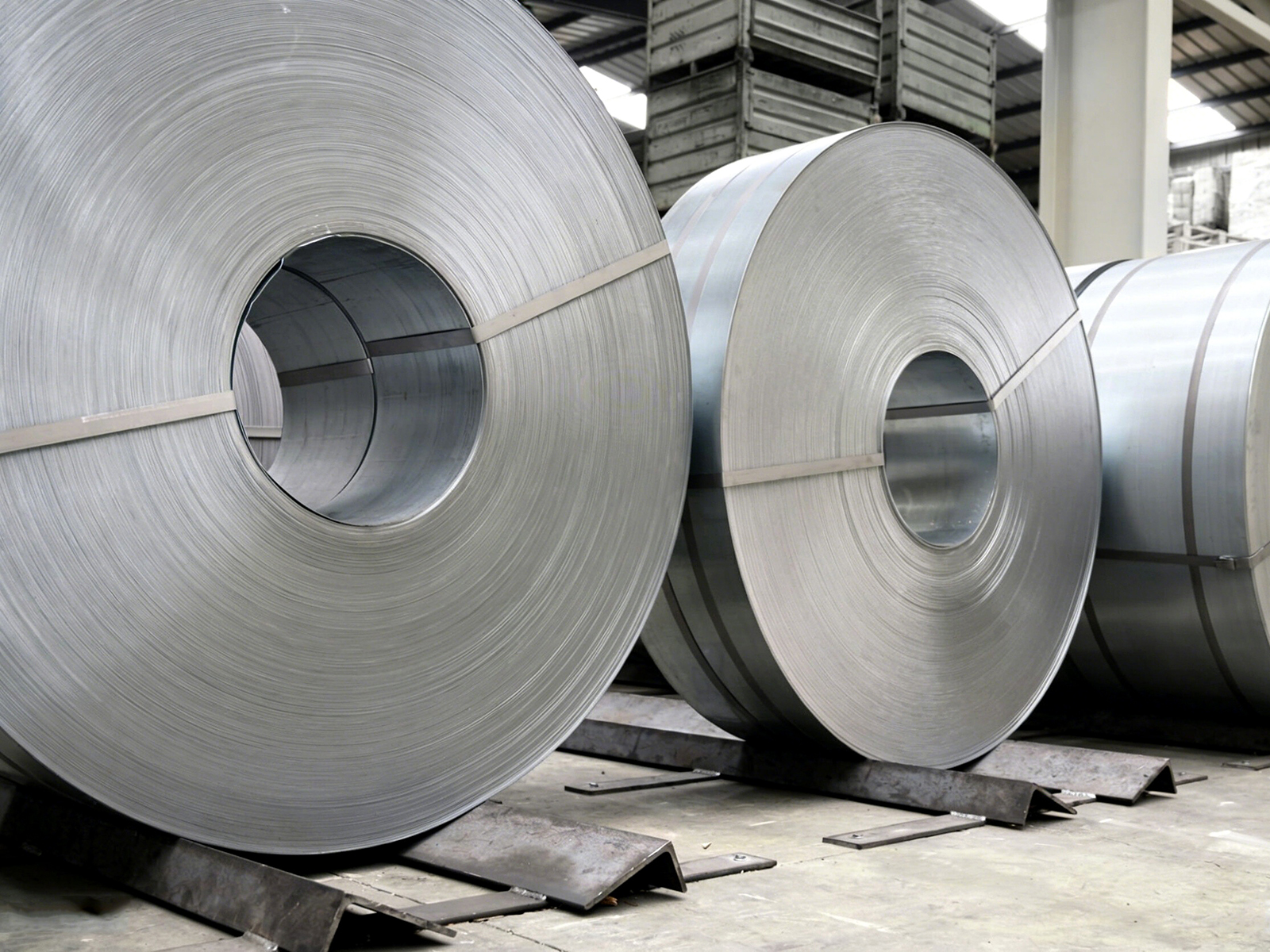
In the field of modern high-end manufacturing, material selection directly affects the upper limit of product performance. Gr5 titanium foil (Ti-6Al-4V), as a representative of α-β dual-phase titanium alloys, is widely used in aerospace, new energy, medical devices, and other fields due to its high specific strength, good corrosion resistance, and high-temperature stability. Compared with traditional pure titanium materials, Gr5 titanium foil can reach a tensile strength of over 895 MPa, has a density of approximately 60% that of steel, and can be used long-term in environments up to 300℃. This combination of material properties makes it a feasible solution to the “lightweight yet high-load” dilemma. Particularly in ultra-thin specifications of 0.03-0.8mm, it can still maintain stable mechanical properties and processing precision, meeting the requirements of applications such as precision electronic shielding, battery thermal management, and aerospace honeycomb structures.
1. What Should You Know About Material Characteristics and Performance Fundamentals of Gr5 Titanium Foil?
(1) What Should You Know About Α-β Duplex Alloy Structure?
Ti-6Al-4V stabilizes the α phase through aluminum and strengthens the β phase through vanadium, forming a synergistically enhanced microstructure. This dual-phase structure endows the material with both toughness and strength, with a yield strength exceeding 825 MPa, higher than that of Gr2 pure titanium (275 MPa). The vacuum annealing process helps ensure a uniform distribution of phase boundaries, preventing localized brittleness and making the ultra-thin foil less prone to cracking during stamping, bending, and other processing operations.
(2) What Should You Know About High Specific Strength Supports Lightweight Design?
Gr5 titanium foil with a density of 4.43 g/cm³ has a strength-to-weight ratio superior to most high-strength steels and aluminum alloys. In aerospace structural applications, replacing stainless steel can reduce weight by more than 40%, while also increasing load-bearing capacity by 30%. This characteristic is practically significant for weight-sensitive equipment such as drone fuselages and satellite brackets, potentially translating into extended endurance or increased payload.
(3) What Should You Know About Wide Temperature Range Stability Adapts to Extreme Working Conditions?
The material can maintain mechanical performance stability in the range of -100℃ to 300℃, with a melting point of approximately 1604-1660℃. It does not undergo brittle transition at low temperatures and exhibits outstanding creep resistance at high temperatures. This enables Gr5 titanium foil to be suitable for temperature-crossing applications such as engine heat shields and cryogenic equipment linings, offering a clear advantage compared to aluminum alloys, which significantly soften above 200℃.
2. What Should You Know About Precision Manufacturing Processes and Material Performance Release?
(1) What Should You Know About Difficulties in Cold Rolling Processing and Multi-Pass Rolling Strategies?
Ti-6Al-4V titanium alloy experiences severe work hardening and significant springback during cold processing, which imposes high requirements on the rolling process. To address these difficulties, a 20-roll precision rolling mill with a tension control system is used, and the billet is processed to 0.03 mm through a stepwise thinning strategy. The reduction per pass is precisely controlled at 5-8%, combined with real-time thickness feedback (accuracy ± 0.001 mm), which can reduce edge cracking and thickness fluctuations when rolling high-strength materials. Compared with a traditional 4-roll mill, the 20-roll configuration shortens the roll gap contact arc length by 60%, and the unit pressure distribution is more uniform, helping to improve the yield of ultra-thin specifications.
(2) What Should You Know About Vacuum Annealing Achieves Control of Structural Uniformity?
Annealing in a vacuum environment of 10⁻³ Pa can eliminate cold working stresses while promoting α and β phase recrystallization. The temperature profile is controlled in three stages: preheating (500℃ held for 30 min), holding (750-790℃ maintained for 2 hours to achieve phase transformation), and cooling (furnace cooling to 300℃ followed by air cooling). The typical annealing temperature for Ti-6Al-4V is usually 700-800℃. Excessively high annealing temperatures (such as 880℃) are close to the β phase transformation point (about 995℃) and can easily cause grain coarsening. Therefore, the annealing temperature for precision-processed foil is generally controlled at 750-790℃. This heat treatment path controls the grain size to 15-25 um and maintains an elongation above 10%, leaving deformation margin for subsequent deep processing.
(3) What Should You Know About Surface Treatment and Cleanliness Control?
The ultrasonic cleaning system can remove rolling oil and metal dust, reducing the residual carbon content to below 50 ppm. After acid pickling and passivation, a dense oxide film (2-5 nm thick) is formed, which both maintains the metal’s luster and enhances corrosion resistance. For electromagnetic shielding applications, a matte sandblasted surface (roughness Ra 0.4-0.8 um) can be customized to improve electromagnetic wave absorption efficiency; for medical-grade products, mirror polishing (Ra ≤ 0.1 um) is used to meet the biocompatibility requirements of implants.
Process step | Key parameters | Quality impact |
Cold Rolling | Reduction rate 5-8% per pass, 20-roll configuration | Thickness accuracy ± 0.001mm, reduces edge cracking |
Vacuum annealing | 750-790℃ × 2h, vacuum degree 10⁻³ Pa | α and β phases are uniform, elongation ≥ 10% |
Surface treatment | Ultrasonic cleaning, acid pickling and passivation | Carbon residue <50ppm, oxide film 2-5nm |
3. Why Is the Technical Value Embodied in Core Application Areas Important?
(1) What Should You Know About Aerospace, Balancing Load Bearing and Weight Reduction?
In the honeycomb sandwich structure, 0.05mm thick Gr5 foil is used as the skin, combined with an aluminum honeycomb core to achieve a lightweight composite panel with a compressive strength of 3.5 MPa and an areal density of 2.8 kg/m². The engine nacelle insulation layer uses multilayer foil laminates, taking advantage of the material’s low thermal conductivity (7.5 W/m·K) and high melting point to protect the internal structure under 1200℃ gas erosion. The satellite solar panel support is formed by stamping 0.3mm foil, reducing the weight of a single piece by 35% compared to aluminum alloy while increasing stiffness by 20%.
(2) Why Is New Energy, Thermal Management and Corrosion-Resistant Applications Important?
In power battery packs, 0.1mm titanium foil is used as a thermal pad. Although its thermal conductivity is lower than that of copper or aluminum, it has strong resistance to electrolyte corrosion, which can prevent electrochemical failure caused by long-term immersion. Hydrogen fuel cell bipolar plates are formed by laser welding 0.08mm foil, with a surface contact resistance of less than 10 mΩ·cm². They can operate for 5000 hours at 80℃ and 100% humidity without significant performance degradation. Photovoltaic module frames use 0.5mm foil bent into shape, with wind pressure resistance up to 2400 Pa and no corrosion in coastal salt fog environments for 30 years.
(3) What Should You Know About Electronics Manufacturing, High-Frequency Shielding and Precision Connections?
The 5G base station filter housing uses 0.03mm ultra-thin foil, achieving a shielding effectiveness of 90 dB (1-10 GHz frequency range), and its non-magnetic property can reduce signal interference. The semiconductor device vacuum chamber lining uses 0.2mm foil, with a surface outgassing rate of <1×10⁻¹⁰ Pa·m³/s, and combined with low magnetic permeability (μr≈1.0005) meets the requirements of a precision lithography environment. The stiffening plate of the flexible circuit board uses 0.15mm foil, capable of bending to a radius of 3mm without cracking, and achieves ± 0.02mm dimensional accuracy with laser cutting.
Application scenario | Typical specifications | Key Performance Indicators |
Aerospace honeycomb structure | 0.05mm × 500mm | Compressive strength 3.5 MPa, surface density 2.8 kg/m² |
Fuel cell bipolar plate | 0.08mm × 350mm | Contact resistance <10 mΩ·cm² |
Electromagnetic shielding cavity | 0.03mm × 400mm | Shielding effectiveness 90dB @ 1-10GHz |
4. What Should You Know About Batch Production Stability and Quality Control?
(1) What Should You Know About Full-process Dimensional Tolerance Control?
The laser thickness gauge monitors the rolling process in real time, with a feedback cycle of less than 0.1 seconds, automatically adjusting the hydraulic roll gap to compensate for thermal expansion errors. Tension sensors detect the stress distribution of the strip to prevent central waviness or edge warping. Before the final slitting, the material passes through a leveling machine for straightening (elongation rate 0.5-1.5%), ensuring that 670mm wide material has a flatness of ≤ 2mm/m. The Statistical Process Control (SPC) system analyzes thickness deviation trends, with the Cpk value remaining stable above 1.67.
(2) What Should You Know About Mechanical Performance Batch Consistency Verification?
Ten tensile test specimens are randomly sampled from each batch, with the standard deviation of tensile strength controlled within 15 MPa and elongation fluctuation <2%. Metallographic examination confirms grain size at levels 8-9, with the volume fraction of β phase maintained at 10-15%. Hardness testing is conducted using the Vickers indentation method (HV 10), with hardness variation within the same batch ≤ 20 HV. Fatigue testing (stress ratio R=0.1, frequency 20 Hz) shows that the material has a fatigue life exceeding 10⁷ cycles at a stress level of 400 MPa.
(3) What Should You Know About Surface Quality and Cleanliness Management?
The online defect detection system (resolution 0.05mm) identifies surface defects such as scratches and dents, and automatically removes non-conforming products. Slitting and packaging are completed in a cleanroom (ISO Class 7) environment to prevent secondary contamination. After pickling, the residual acid content is less than 5 ppm (tested by ion chromatography) to prevent potential subsequent corrosion. Resistivity testing (165-175 μΩ·cm) indirectly verifies composition uniformity, and if it deviates from the standard value by ± 5%, a composition re-inspection process is initiated.
Quality dimension | Control Standard | Verification method |
Thickness tolerance | ± 0.001 mm | Laser Thickness Measurement SPC Analysis |
Mechanical properties | Standard deviation of strength ≤ 15 MPa | Tensile test (n≥ 10) |
Surface defect | No scratches >0.05mm | Online Visual Inspection |
5. What Are the Differences in Performance Comparison and Material Selection Basis?
(1) What Should You Know About Performance Improvement of Gr5 Relative to Pure Titanium?
Gr2 pure titanium has an elongation of up to 30%, but its tensile strength is only 345 MPa, making it difficult to withstand high-stress loads. Gr5 titanium foil enhances its strength by about 160% through alloying, with its fatigue limit rising from 150 MPa to 500 MPa, making it suitable for cyclic load conditions. High-temperature creep tests show that Gr5 deforms less than 0.5% under 300℃ and 200 MPa stress for 1000 hours, while Gr2 deforms more than 2% under the same conditions, indicating a significant difference in structural stability.
(2) What Are the Differences in Comparison with High-strength Steel and Aluminum Alloy?
High-strength steel of the same strength grade (such as 42CrMo) has a density of 7.85 g/cm³. Gr5 can reduce the weight by 44%, and its corrosion resistance is more than 10 times stronger, eliminating the need for surface coating. 7075 aluminum alloy (T6 condition) has a density of 2.81 g/cm³, a yield strength of approximately 505 MPa, and its high-temperature performance drops sharply above 150℃. Nickel-based high-temperature alloys have excellent heat resistance, but their density reaches 8.2 g/cm³ and they are relatively expensive, making them less economical.
(3) What Should You Know About Applicability Under Special Working Conditions?
In offshore engineering, titanium foil has a corrosion rate of <0.005 mm/year in seawater with a chloride concentration of 20, 000 ppm, while stainless steel may experience pitting under the same conditions. In the biomedical field, titanium alloy orthopedic implants have an osseointegration rate of 95%, whereas cobalt-chromium alloys carry the risk of metal ion release. Vacuum electron beam welding environments require materials with extremely low outgassing rates, and titanium foil is about two orders of magnitude better than aluminum alloys.
6. What Is the Conclusion?
Gr5 titanium foil, through the systematic integration of material design, process innovation, and quality control, has achieved multidimensional performance characteristics in strength, weight, and durability. It holds certain technical value in areas such as structural weight reduction in aerospace, thermal management in new energy, and precision shielding in electronics manufacturing. With the improvement of manufacturing equipment accuracy and cost optimization, this material is transitioning from niche high-end applications to large-scale industrial production, becoming one of the key basic materials supporting the upgrading of advanced manufacturing.
FAQ
Q1: What are the differences between Gr5 titanium foil and pure titanium foil in forming and processing?
Gr5, due to its high strength and relatively low elongation (10% vs 30% for pure titanium), requires an increased fillet radius during cold stamping (recommended ≥ 3 times the material thickness) and control of the deformation speed to avoid cracking. The hot forming temperature window is 800-900℃, and argon protection is needed to prevent oxidation.
Q2: How can the flatness of Gr5 foil with an ultra-thin specification of 0.03mm be ensured?
Apply 0.5-1.5% plastic elongation through the tension leveling machine to eliminate waves caused by internal stress. For 670mm wide products, segmented tension control is used in conjunction with a laser flatness inspection system to ensure flatness ≤ 2mm/m, meeting the requirements of precision die-cutting and lamination processes.
Q3: What key points should be noted regarding the material during the welding process?
TIG or laser welding must be used, with strict argon protection (purity ≥ 99.99%) to prevent hydrogen-induced cracking. The welding heat input should be controlled between 0.8-1.2 kJ/mm, as excessive heat can cause grain coarsening and reduce toughness. After welding, stress-relief annealing at 300℃ for 2 hours is required to restore the joint performance to more than 85% of the base material.
What Should You Know About Contact Us Immediately?
As a professional manufacturer and supplier of Grade 5 (Ti-6Al-4V) titanium foil, Titanium Valley, relying on a 20-roll precision mill, vacuum annealing furnace, and full-process Statistical Process Control (SPC) system, can provide customized Gr5 titanium foil products with a thickness of 0.03-0.80 mm and a width of 15-680 mm. Thickness accuracy is controlled within ± 0.001 mm, tensile strength remains stable above 895 MPa, and surface finishes include bright, matte sandblasted, and mirror-polished, meeting the stringent requirements of aerospace, new energy, electromagnetic shielding, and medical device industries.
We provide complete material certificates that comply with international standards such as ASTM B265, AMS 4911, ISO 5832-3, including batch-by-batch measured chemical compositions, tensile curves, metallographic reports, and online defect detection records, ensuring batch consistency with Cpk ≥ 1.67. Whether you need bulk supply of standard specifications or customized material solutions tailored to specific forming processes and service conditions, our technical team can offer comprehensive support from material selection advice and forming parameter optimization to batch traceability. You are welcome to contact us via email at sales@titaniumvalleys.com to obtain product samples, technical data packages, and detailed quotations.
References
- Liu Jianrong, Wang Qingjiang. Research on Cold Rolling Process and Microstructure Properties of Ti-6Al-4V Titanium Alloy Foil [J]. Rare Metal Materials and Engineering, 2021, 50(3): 876-882.
- Zhang Yonggang, Li Miaoqian. Forming Technology and Applications of Titanium Alloy Thin Plates for Aviation [M]. Beijing: National Defense Industry Press, 2020.
- Zhao Yongqing, Hong Quan, Ge Peng. Metallographic Atlas of Titanium and Titanium Alloys [M]. Changsha: Central South University Press, 2019.
- Wang Jinyou, Ma Jimin, Zhu Zhishou. Titanium Alloys for Aviation [M]. Shanghai: Shanghai Science and Technology Press, 2017.
- Li Chenggong, Tian Rongzhang. Titanium Alloy Materials and Their Applications [M]. Beijing: Metallurgical Industry Press, 2018.