
Why Choose Gr4 Titanium Rods for High-intensity Applications?
- Gr4 Titanium Rods
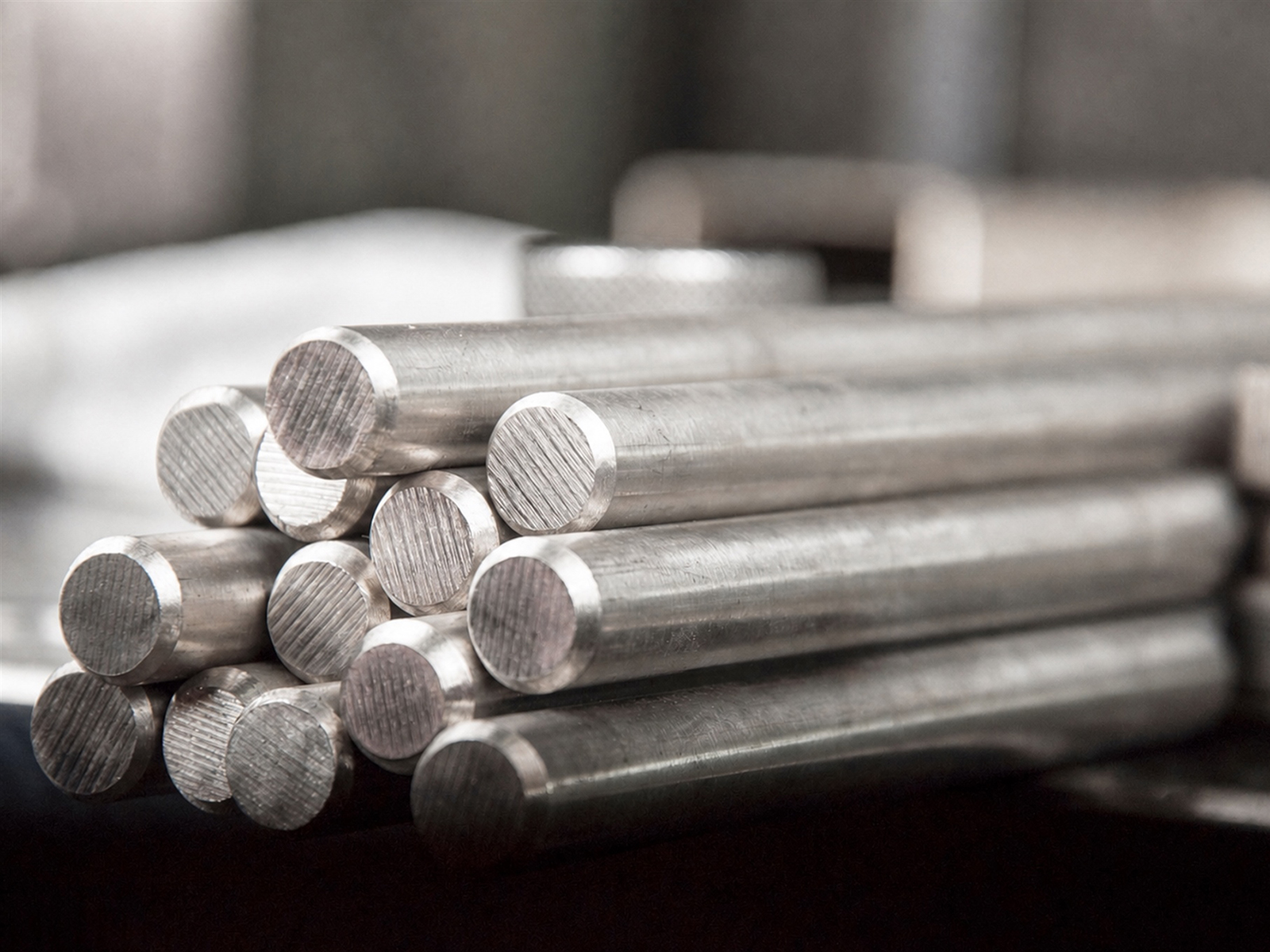
In the field of modern engineering, material selection directly determines the service life and operating costs of equipment. Gr4 titanium rods (ASTM Grade 4), as the highest strength grade among commercially pure titanium, have become an ideal choice for high-strength application scenarios such as aerospace, marine engineering, and chemical equipment due to their tensile strength of 485-550 MPa, excellent corrosion resistance, and the advantage of a density of only 4.51 g/cm³. Compared with carbon steel or stainless steel, Gr4 titanium rods provide a longer service life while maintaining high strength, significantly reducing maintenance frequency, and are particularly suitable for conditions requiring resistance to cyclic loading, corrosive media, and stringent lightweight requirements. This material not only meets performance demands under extreme conditions but also provides a reliable guarantee for the manufacturing of complex structural components through excellent machinability and welding compatibility.
1. Why Is Mechanical Performance Advantages of Gr4 Titanium Rods Important?
(1) What Should You Know About Tensile Strength and Yield Strength Performance?
The tensile strength of Gr4 titanium bars reaches a range of 485-550 MPa, and the yield strength is usually in the range of 380-430 MPa (according to ASTM B348 standard). This value far exceeds that of Gr1 and Gr2 commercially pure titanium. In load-bearing structural applications, high yield strength means that the material can withstand greater working stress without permanent deformation. Many chemical equipment support frameworks, connectors of offshore platforms, and secondary load-bearing structures of aircraft require materials that provide sufficient strength reserve while maintaining lightweight characteristics.
(2) What Should You Know About Fatigue Performance and Long-term Reliability?
High cyclic load environments impose strict requirements on the fatigue performance of materials. Gr4 titanium bars have an excellent fatigue limit, typically reaching 40-50% of tensile strength, which allows them to perform well in reciprocating components, vibrating equipment, and fluctuating pressure pipelines. Compared with carbon steel, stainless steel also experiences a reduction in fatigue strength in corrosive environments, whereas Gr4 titanium bars can maintain stable mechanical properties, reducing the risk of sudden failures caused by material fatigue.
(3) What Should You Know About Low-temperature and High-temperature Strength Retention Rate?
Within the temperature range of -196℃ to 300℃, Gr4 titanium rods exhibit stable mechanical properties. The material does not experience brittle fracture in low-temperature environments (within the range above -196℃), and the rate of strength decrease at high temperatures is lower than that of ordinary steel. This temperature adaptability makes it a preferred material for low-temperature storage tanks, heat exchangers, and high-temperature chemical reactors, especially in working conditions with frequent temperature fluctuations, where it can prevent material failure caused by thermal stress.
2. Why Is Corrosion Resistance Characteristics and Adaptation to the Application Environment Important?
(1) What Should You Know About Corrosion Resistance Mechanism in Marine Environments?
Corrosion type | Carbon steel performance | 316 Stainless Steel Performance | Gr4 Titanium Rod Performance |
Complete corrosion by seawater | Severe erosion and ulcer | Prone to crevice corrosion | Almost no corrosion under normal conditions |
Chloride ion stress corrosion | rapid cracking | Prone to stress corrosion cracking | Full resistance |
Marine atmospheric corrosion | The rust layer keeps peeling off | Local damage to the surface passivation film | The passivation film has strong self-healing properties |
The dense oxide film formed on the surface of Gr4 titanium rods is only a few nanometers thick, yet it can provide a lasting protective barrier. In applications such as seawater pumps, subsea pipelines, and ship fasteners, this self-passivating feature eliminates the need for maintenance of corrosion-resistant coatings, and cases of service life of up to 30 years without replacement are not uncommon.
(2) What Should You Know About Chemical Media Tolerance Range?
Gr4 titanium rods maintain a stable passivation state in strongly oxidizing acids such as nitric acid, aqua regia, and in a wet chlorine environment. When this material is used in components such as chemical storage tanks, reactor agitator shafts, and pipelines for corrosive fluids, the maintenance cycle of the equipment can be extended by 2-3 times. It should be noted that in reducing acids, hydrochloric acid is much more corrosive to titanium than sulfuric acid. For example, a 10% hydrochloric acid solution already has a relatively high corrosion rate at room temperature, whereas a 10% sulfuric acid solution may still be acceptable. Specific evaluations should be conducted based on actual working conditions.
(3) What Should You Know About Stress Corrosion Cracking Resistance?
Chloride environments are the ‘nemesis’ of stainless steel, but Gr4 titanium rods have a natural immunity to stress corrosion cracking caused by chloride ions. In high-chlorine environments such as seawater desalination plants, chlor-alkali industrial equipment, and swimming pool circulation systems, load-bearing components made from Gr4 titanium rods do not have to worry about the risk of sudden fracture, which is especially important for safety-critical equipment.
3. What Should You Know About Lightweight Design and Cost-Benefit Analysis?
(1) What Are the Differences in Density Comparison and Weight Reduction Effect?
Material Type | Density (g/cm³) | Relative density | Rate of weight loss at equal intensity |
Q235 Carbon Steel | 7.85 | 1.74 times | Benchmark |
316 stainless steel | 7.98 | 1.77 times | Benchmark |
Gr4 Titanium Rod | 4.51 | 1.00 times | About 42% |
In fields such as aerospace fasteners, racing car suspension components, and portable medical devices, every reduction of 1 kilogram in weight can bring significant benefits. The weight reduction achieved by Gr4 titanium rods while ensuring strength lowers transportation costs, reduces energy consumption, and enhances operational flexibility, with these hidden benefits often exceeding the price difference of the materials.
(2) What Should You Know About Life-cycle Cost Accounting?
Although the initial purchase price of Gr4 titanium rods is higher than that of ordinary steel, considering a 30-year service life, their advantages are evident: carbon steel pipelines need to be replaced every 3-5 years, stainless steel equipment requires major repairs every 10 years, while titanium equipment is almost maintenance-free. According to statistics from a certain offshore platform case, after replacing stainless steel fasteners with Gr4 titanium rods, the ten-year maintenance cost was reduced by 68%, and downtime losses decreased by more than one million US dollars.
(3) What Should You Know About Ease of Transport and Installation?
During on-site assembly of large chemical equipment, the weight of components directly affects the difficulty of hoisting and the construction period. Components made of Gr4 titanium rods with the same strength grade weigh only 57% of steel, which increases the load per lift, reduces the labor intensity for construction personnel, and is especially advantageous in logistics-constrained scenarios such as remote islands and plateau areas.
4. What Should You Know About Machinability and Manufacturing Adaptability?
(1) What Should You Know About Hot Working and Cold Working Characteristics?
Gr4 titanium bars exhibit good hot workability in the temperature range of 800-950℃ and can be formed into complex shapes through forging and hot rolling processes. In the annealed state, the elongation remains above 15%, supporting precision dimension control processes such as cold drawing and cold rolling (elongation will decrease after cold working). This processing flexibility allows manufacturers to produce hexagonal bars, square bars, and profiles with special cross-sections according to drawing requirements, meeting the needs of precision machining.
(2) What Should You Know About Welding Performance and Joint Quality?
Processes such as tungsten inert gas (TIG) welding and plasma welding can achieve welded joints with strength close to that of the base material, with weld tensile strength reaching over 90% of the base material. In on-site construction of chemical pipelines and pressure vessel manufacturing, the good weldability of Gr4 titanium rods eliminates the risk of heat-affected zone embrittlement. For thick, large cross-section, or complex components, post-weld stress relief treatment may be required, but under normal circumstances, complex heat treatment procedures are not needed, which is extremely valuable in constrained environments such as offshore platforms and field operations.
(3) What Should You Know About Machining Parameter Optimization?
Processing method | Recommended parameters | Cutting tool material | Precautions |
Turning | Cutting speed 60-80 m/min | Cemented Carbide YG8 | Fully cool to prevent sticking to the blade |
Milling | Feed rate 0.1-0.2mm/tooth | Coated cemented carbide | Avoid the formation of keratomas |
Drilling | Rotation speed 500-800 rpm | Cobalt high-speed steel | Intermittent feed and chip removal |
Although titanium has a relatively high cutting force, efficient machining can be achieved by reasonably selecting tool geometry angles and cutting parameters. With modern CNC equipment combined with specialized tools, by optimizing parameters, the machining efficiency of Gr4 titanium rods can approach the level of stainless steel, no longer posing a bottleneck in mass production.
5. Why Is Industry Application Cases and Material Selection Strategies Important?
(1) Why Is Applications in the Aerospace Field Important?
After using Gr4 titanium bars for components such as aircraft landing gear pins, engine mounts, and fasteners, an 8-15% weight reduction is achieved while ensuring strength. For a certain type of commercial airliner, the titanium substitution scheme (using Gr4 pure titanium) reduces weight by 120 kg per flight, potentially saving about $800, 000 in fuel costs over a 20-year operational period. Comprehensive conditions such as high altitude, low temperature, repeated loads, and corrosive atmospheres have verified the reliability of Gr4 titanium bars.
(2) Why Is Application of Marine Engineering Equipment Important?
The high-pressure pump shafts of desalination plants, subsea Christmas tree fasteners, and ship propeller shafts are made of Gr4 titanium bars. According to literature, after 15 years of service, inspection shows a corrosion depth of less than 0.05mm (under normal seawater temperature and flow conditions). A certain offshore wind power platform uses titanium connectors to replace super duplex stainless steel. Although the initial investment increases by 18%, it eliminates the need for underwater maintenance every five years, significantly improving overall economic efficiency.
(3) Why Is Chemical and Environmental Protection Equipment Applications Important?
After adopting Gr4 titanium rods for chlor-alkali electrolyzer anode hangers, components inside the waste acid recovery tower, and sewage treatment aeration pipes, the continuous operation time of the equipment increased from 18 months to over 60 months. A pharmaceutical company reported that using titanium mixing shafts eliminated the risk of stainless steel ion contamination, increased the product qualification rate by 2.3 percentage points, and the indirect value created far exceeded the material cost difference.
(4) Why Is Applications in Precision Instruments and Electronics Industry Important?
Semiconductor equipment brackets, internal frameworks of MRI equipment, and enclosures for precision sensors require non-magnetic materials with high dimensional stability. Gr4 titanium rods have a magnetic permeability close to vacuum (about 1.00005) and a thermal expansion coefficient of only 8.6×10⁻⁶/K. These characteristics ensure that precision instruments maintain calibration accuracy over the long term, making them irreplaceable in fields such as medical diagnostics and scientific research.
(5) How Should Key Factors in Material Selection Decision?
When evaluating whether to choose Gr4 titanium rods, the following factors need to be considered: whether the working stress exceeds 350 MPa (to avoid exceeding the yield strength), whether chlorides or oxidizing media are present, whether the expected service life of the equipment is more than 15 years, whether weight reduction brings additional value, and whether maintenance costs account for a high proportion. When more than three of the above conditions are met, Gr4 titanium rods can usually provide the optimal overall cost-performance ratio.
6. What Is the Conclusion?
Gr4 titanium bars (ASTM Grade 4) provide engineers with a reliable choice for extreme conditions through a perfect combination of high strength, excellent corrosion resistance, and lightweight characteristics. With a strength range of 485-550 MPa, they meet high load requirements; comprehensive corrosion resistance eliminates maintenance burdens; a density of 4.51 g/cm³ offers weight reduction advantages; and good machinability and weldability reduce manufacturing difficulty. In terms of total lifecycle cost, Gr4 titanium bars often demonstrate better economic efficiency than traditional materials, making them particularly suitable for high-value applications such as aerospace, marine engineering, and chemical corrosion protection.
FAQ
Q1: How should Gr4 titanium bars and Gr2 titanium bars be selected for high-strength applications?
The tensile strength of Gr4 is about 200 MPa higher than that of Gr2 (Gr2 typically 345 MPa, Gr4 550 MPa). Gr4 is preferred when the design stress exceeds 350 MPa or when a smaller cross-sectional size is required. If the working stress is relatively low but extremely high corrosion resistance is required, the higher purity of Gr2 may be more suitable, and an evaluation should be made based on the specific load and medium conditions.
Q2: Can Gr4 titanium bars be used in a concentrated sulfuric acid environment?
At room temperature, Gr4 titanium rods maintain good corrosion resistance in dilute sulfuric acid with a concentration below 5%. However, when the concentration exceeds 10% or the temperature is above 60℃, the corrosion rate increases significantly, and in 80% sulfuric acid, the corrosion rate is extremely high. In strongly reducing acid environments, it is recommended to conduct immersion tests for verification, or consider materials such as tantalum or zirconium, which are more resistant to reducing media.
Q3: How to verify whether the mechanical properties of Gr4 titanium rods meet the standard?
Regular suppliers should provide a Material Test Certificate (MTC), including actual measured data such as tensile strength, yield strength, elongation, and traceability information of the heat number. For critical applications, it is recommended to perform spot checks with ultrasonic testing and metallographic structure inspection to ensure there are no internal cracks and that the grain size is uniform, meeting the requirements of ASTM B348 or AMS 4928 standards (Note: the standard for bars is AMS 4928, and the standard for plates is AMS 4904).
What Should You Know About Contact Us?
Baoji Titanium Valley Titanium Nickel Zirconium Material Processing Co., Ltd., as a professional manufacturer and supplier of Gr4 titanium bars (ASTM B348 Grade 4), has an Italian Danieli rolling production line with an annual output of 20, 000 tons, providing precision machining, custom sizes, and large-scale stable supply services. Our products are certified to the ASTM B348 standard, meeting the high-end manufacturing needs worldwide. For technical consultation or sample testing, please contact: sales@titaniumvalleys.com
References
- Zhao Yongqing, Ge Peng. Titanium and Titanium Alloys. Chemical Industry Press, 2019.
- China Nonferrous Metals Industry Association Titanium, Zirconium, and Hafnium Branch. “Titanium Material Application Technology Manual.” Metallurgical Industry Press, 2021.
- Xi Zhengping, Tang Huiping. ‘Titanium Alloys and Their Processing Technology.’ Central South University Press, 2020.
- Liu Zhenqiu. ‘Application and Maintenance of Titanium Materials in Chemical Equipment.’ China Machine Press, 2018.