
Why Is Gr12 Titanium Rod Performance Characteristics and Application Areas Important?
- Gr12 Titanium Rod
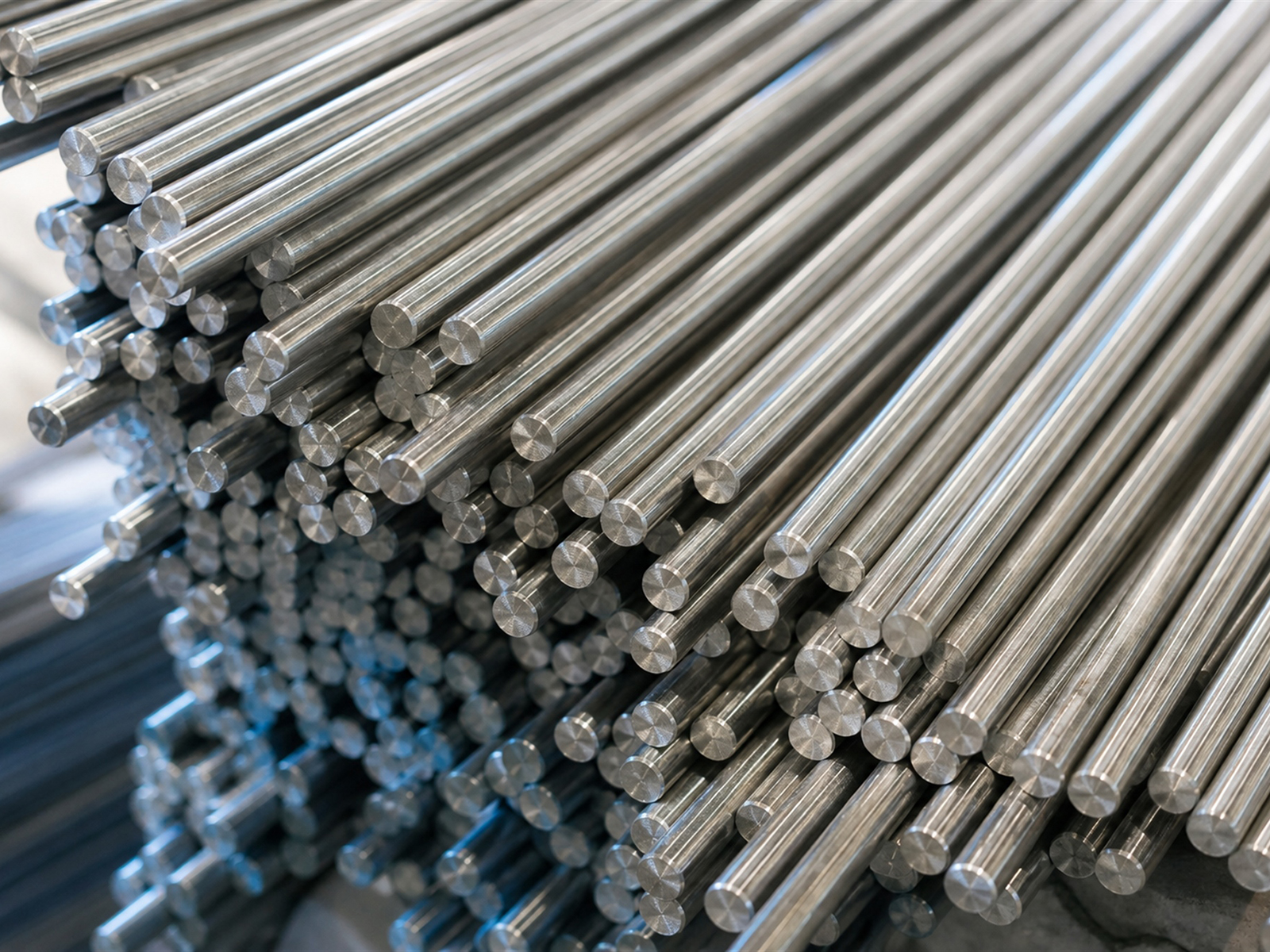
Gr12 titanium alloy bars (Ti-0.3Mo-0.8Ni) are a near-α type corrosion-resistant titanium alloy. By adding molybdenum and nickel, their resistance to crevice corrosion and corrosion by reducing media is significantly improved. Compared with industrial pure titanium, they have higher strength while maintaining excellent weldability and machinability, and are widely used in chemical equipment, seawater desalination, environmental desulfurization, and precision manufacturing. After vacuum annealing and precise length processing, the alloy bars exhibit stable dimensional accuracy and uniform mechanical properties, making them particularly suitable for pressurized structural components and long-life equipment under complex corrosive conditions. For high-end manufacturing enterprises seeking equipment reliability and operating cost control, Gr12 titanium bars provide an ideal choice that balances performance and cost-effectiveness.
1. Why Is Material Characteristics and Technical Advantages of Gr12 Titanium Alloy Rod Important?
(1) What Should You Know About Alloy Composition Design and Microstructure Control?
The core components of Gr12 titanium alloy include 0.2% to 0.4% molybdenum and 0.6% to 0.9% nickel. This precise proportion creates a stable strengthening effect in the α-phase matrix. Molybdenum can enhance the stability of the passive film of the alloy in reducing acids (such as sulfuric acid and hydrochloric acid), while nickel significantly suppresses the tendency for hydrogen embrittlement, which is crucial for the safety of equipment in hydrogen-permeating environments. After vacuum self-consumable melting, the internal oxygen content of the alloy is controlled below 0.25%, and the hydrogen content is below 0.015%, ensuring that the material does not undergo brittle fracture under complex stress conditions.
(2) What Should You Know About Mechanical Properties and Machinability?
This alloy rod has a tensile strength of over 483 MPa, a yield strength of over 345 MPa, and an elongation maintained above 20% in the annealed state. This strength-ductility balance allows it to meet the requirements of pressure-bearing structures while being easy to machine and form in both hot and cold conditions. Compared with high-strength titanium alloys such as TC4, the machinability of Gr12 is improved by about 30%, effectively reducing tool wear and processing time in mass production. The heat treatment uses the annealed state, with uniform grain size, eliminating forging stress, and ensuring that performance deviations between different batches are controlled within ± 3%.
(3) What Should You Know About Welding Performance and Connection Stability?
When argon arc welding or inert gas shielded welding is used, the weld metal of Gr12 titanium rods matches more than 95% of the mechanical properties of the base metal, and the tensile strength of the joint is not less than 90% of that of the base metal. The welding heat-affected zone is narrow, grain coarsening is slight, and post-weld heat treatment is not required, allowing direct use. These excellent welding characteristics make it the preferred material for the manufacture of complex pipeline systems, pressure vessels, and heat exchangers, significantly reducing on-site installation difficulty and the risk of welding defects.
2. What Should You Know About Corrosion Resistance Mechanism of Gr12 Titanium Alloy in Extreme Corrosive Environments?
(1) What Should You Know About Pitting and Crevice Corrosion Protection in Chloride Environments?
In chlorinated media, the surface of Gr12 titanium alloy can rapidly form a dense TiO2 passive film with a thickness of about 3-7 nm, which remains stable even in a wide pH range of 2-12. The addition of molybdenum increases the repair rate of the passive film in crevices or low-oxygen areas by more than 40%, effectively inhibiting the expansion of pitting caused by localized acidification. Long-term immersion tests in 3.5% NaCl solution show that its pitting potential is about 200 mV higher than that of commercially pure titanium, indicating that its service life can be extended 2-3 times in high-salinity environments such as seawater desalination and offshore platforms.
(2) What Should You Know About Improvement of Corrosion Resistance in Reductive Acidic Media?
Traditional stainless steel is prone to uniform corrosion in dilute sulfuric acid or hydrochloric acid, with an annual corrosion rate of several millimeters. The Gr12 titanium alloy, through the synergistic effect of molybdenum and nickel, reduces the corrosion rate in reducing media to below 0.05 mm/year. Experimental data indicate that in a 10% sulfuric acid (60℃) environment, the corrosion rate of this alloy is about 1/50 that of 316L stainless steel. This corrosion resistance allows the maintenance cycle of key components such as chemical reaction vessels and pickling equipment to be extended from 3 years to over 10 years, significantly reducing downtime and maintenance costs.
(3) What Should You Know About Stress Corrosion Cracking and Hydrogen Embrittlement Resistance?
In high-temperature, high-pressure chlorinated solutions, materials are prone to stress corrosion cracking (SCC) when subjected to tensile stress. The nickel content in Gr12 titanium alloy has been optimized, raising its SCC threshold stress to over 70% of its tensile strength, far above the 50% critical value for ordinary titanium alloys. At the same time, the nickel element reduces the diffusion rate of hydrogen in the titanium lattice, lowering the hydrogen embrittlement sensitivity index to below 0.15 (about 0.4 for pure titanium), ensuring long-term safe operation in hydrogen-permeating environments such as hydrogenation reactors and electrolytic cells.
3. Why Is Analysis of Typical Application Scenarios in the High-End Manufacturing Field Important?
(1) What Should You Know About Equipment Manufacturing for the Chemical and Petrochemical Industry?
Key Components of Reactors and Pressure Vessels
Gr12 titanium bars are commonly used to manufacture reactor flanges, fasteners, and agitator shafts with a pressure rating of less than 16 MPa. Their excellent resistance to crevice corrosion solves the issue of localized corrosion on flange sealing surfaces. A certain chlor-alkali plant used this material to manufacture the anode frames of electrolytic cells. After 8 years of service under conditions of 80℃ and a chloride ion concentration of approximately 100, 000 ppm, tests showed a corrosion depth of less than 0.3 mm, whereas the original stainless steel frames needed replacement after just 3 years.
Tube bundle and tube sheet of the heat exchange system
In chloride-containing cooling water systems, Gr12 titanium tube bundles have better corrosion resistance than copper-nickel alloys and a density of only 57% that of steel, reducing the total equipment weight by more than 30%. After a petrochemical company’s seawater cooler adopted tube bundles made of this material, no leakage accidents occurred during 15 years of operation, and maintenance costs were saved by more than 2 million yuan.
Corrosive medium transport pipeline
When used to transport media such as sulfuric acid, nitric acid, and acetic acid with concentrations of 5%-30%, the corrosion allowance of Gr12 titanium pipelines can be designed at 0.1 mm/10 years (based on conditions of temperatures below 60℃ and flow rates less than 2 m/s), allowing the pipeline design wall thickness to be reduced by 20%, ensuring both safety and material savings. Welded joints use automatic argon arc welding, and after radiographic testing (RT) and penetrant testing (PT), the first-pass weld acceptance rate exceeds 98%.
(2) What Should You Know About Ocean Engineering and Seawater Desalination Systems?
Seawater Desalination Evaporator and Condenser
In multi-stage flash (MSF) and multiple-effect distillation (MED) plants, the evaporator tube bundles need to withstand long-term exposure to seawater at 80-120℃. Under these conditions, Gr12 titanium tubes have a corrosion rate of less than 0.01 mm/year and excellent vibration fatigue resistance, with a service life of over 25 years. After a large seawater desalination plant in the Middle East adopted this material, the system’s uptime increased from 92% to 98.5%.
Offshore platform structural components and fastening systems
Bolt connections in the ocean splash zone are subjected to long-term combined effects of salt spray and stress, causing ordinary steel components to break within 2 to 3 years. After using Gr12 titanium alloy bolts in combination with ceramic washers, no loosening or corrosion failure occurred during a 20-year maintenance period, reducing maintenance costs by 80%.
Subsea Pipeline Cathodic Protection System Accessories
Under the action of cathodic protection current, traditional metals are prone to hydrogen embrittlement, whereas the low hydrogen embrittlement sensitivity of Gr12 titanium alloy makes it an ideal choice for sacrificial anode connectors. For a certain subsea oil pipeline project, connectors made of this material were used, and after 10 years, potential tests showed that the protection effect was still better than the design criteria (design criterion: protection potential -850 mV vs. Ag/AgCl).
(3) Why Is Key Applications of Energy and Environmental Protection Equipment Important?
Flue Gas Desulfurization System of Coal-Fired Power Plant
The shaft of the slurry circulation pump and the spray pipe in the wet desulfurization device need to resist corrosion from gypsum slurry with a pH of 4-6. The Gr12 titanium shaft, after surface polishing treatment with a roughness of Ra ≤ 0.8 um, shows wear of less than 0.5 mm after 5 years of operation, whereas the nickel-based alloy shaft needs to be replaced after 2 years. In a retrofit project of a certain power plant, compared with the solution using nickel-based alloy, although the initial investment for titanium increased by 15%, the total life cycle cost was reduced by 40%.
Nuclear power plant cooling water system
After the secondary circuit condenser tube sheet adopted Gr12 titanium alloy, its resistance to stress corrosion meets the requirements of nuclear safety level 1 equipment. The material’s performance remains stable under irradiation, produces few neutron activation products, and has low decommissioning costs. A nuclear power unit using tube sheets made of this material (thickness about 50 mm, cooling water temperature about 30℃) has been in operation for 12 years with no recorded cases of corrosion leakage.
Wastewater Treatment and Zero Discharge System
The heating tubes of the high-salinity wastewater evaporative crystallizer need to withstand extreme conditions with Cl⁻ concentrations exceeding 100, 000 ppm. Gr12 titanium tubes demonstrate corrosion resistance comparable to that of tantalum in this environment, but at only 1/8 of the cost of tantalum. After adopting this material in a zero-discharge project in a chemical industrial park, the evaporator has been able to operate continuously for 3 years without acid cleaning, maintaining thermal efficiency above 95% of the design value.
(4) What Should You Know About Precision Manufacturing and Medical Devices Field?
Aerospace fasteners and structural components
In aircraft hydraulic systems, fuel pipelines, and other areas, Gr12 titanium alloy bolts combine the advantages of light weight and corrosion resistance. Compared with steel fasteners, they reduce weight by 55% and exhibit excellent stress corrosion resistance in aviation kerosene environments. After being used in the drive system of a certain helicopter model, the maintenance interval was extended from 500 hours to 1200 hours.
Medical implant processing blanks
Although the biocompatibility of Gr12 titanium alloy is slightly lower than that of medical pure titanium, its higher strength makes it suitable for manufacturing orthopedic surgical instruments, dental tools, and other instruments that temporarily come into contact with the human body. After electropolishing treatment, the surface roughness can reach Ra 0.2 um, meeting the cleanliness requirements of medical devices.
Semiconductor Manufacturing Equipment Components
The corrosive chemical delivery pipelines in etching machines and cleaning equipment require materials that are resistant to strong acids and bases and do not release metal ions that could contaminate wafers. Gr12 titanium pipes, after ultrasonic cleaning and ultrapure water passivation, have a metal ion release of less than 1 ppb under strong acid conditions, meeting the metal contaminant control requirements for 12-inch wafer processing.
4. How Should Selection Strategies and Quality Control of Gr12 Titanium Alloy Rods?
(1) How Should Selection of Material Specifications Under Different Working Conditions?
Application scenario | Recommended diameter range | Surface condition | Heat treatment condition | Key Performance Indicators |
Chemical plant pipeline welding | Φ10-50 mm | Surface finish (Ra ≤ 3.2) | Annealed state | Tensile strength ≥ 483 MPa, elongation ≥ 20% |
Seawater pump shaft | Φ50~150 mm | Polished state (Ra ≤ 0.8) | Annealed state | Tensile strength ≥ 520 MPa, hardness ≤ HBW200 |
Pressure vessel fasteners | Φ20-80 mm | Black Skin State / Pickled State | Annealed state | Yield strength ≥ 345 MPa, impact toughness ≥ 55 J (Charpy V-notch) |
Precision machining | Φ8-30 mm | Fine grinding state (Ra ≤ 1.6) | Annealed state | Straightness ≤ 0.5 mm/m, roundness ≤ IT7 (based on a 50 mm diameter reference) |
(2) What Should You Know About Quality Traceability System and Testing Standards?
Control of ingredient uniformity
Each batch is subjected to multi-point inspection using a spectrometer, with Mo and Ni content deviations controlled within ± 0.05%. Gap elements such as oxygen, nitrogen, and hydrogen are precisely measured using the inert gas fusion method to ensure batch stability. A precision manufacturing company consecutively purchased 12 batches of Gr12 titanium rods, with a composition fluctuation coefficient (CV) of only 1.8%, far below the industry standard level of 5%.
Mechanical performance consistency verification
Samples are taken from each batch for tensile, impact, and hardness tests, while also providing grain size photos and metallographic reports. For bars with a diameter greater than 80 mm, ultrasonic testing is added to ensure there are no internal cracks, inclusions, or other defects. The inspection report includes the furnace batch number and smelting records, enabling full-process traceability.
Dimensional Accuracy and Surface Quality
Use a coordinate measuring machine to inspect straightness and roundness, with a tolerance grade reaching h9. Surface roughness is randomly checked using a portable roughness tester. For medical device bars, the roughness must reach Ra≤ 0.4 um. A certain Japanese electronics company requires the outer diameter tolerance of 60 mm bars to be ± 0.05 mm. After 72 hours of continuous production verification, the pass rate reached 99.2%.
(3) What Should You Know About Cost Optimization Strategies in Bulk Purchasing?
Customized specifications reduce secondary processing
According to the final product dimensions required by the customer, we provide customized cutting services, cutting standard 6-meter bars into 0.5 to 3 meters as needed, increasing material utilization from the traditional 75% to 92%. A certain chemical equipment manufacturer has an annual consumption of about 50 tons; after adopting this method, they save about 150, 000 yuan per year on titanium material costs.
Long-term cooperative inventory management model
For customers with an annual usage of over 5 tons, a VMI (Vendor Managed Inventory) model is implemented, setting up a dedicated inventory area in the customer’s factory, and settlement is made based on actual usage, which ensures timely supply and reduces the customer’s capital occupancy. A certain seawater desalination engineering company shortened its procurement cycle from 45 days to 7 days through this model.
Performance upgrade replaces high-cost materials
Under certain operating conditions, Gr12 titanium alloy can replace nickel-based alloy C-276 or super stainless steel 254SMO, reducing material costs by 30% to 50% while offering better machinability. In an acid washing tower renovation project of a petrochemical company, after using Gr12 titanium pipes to replace Hastelloy, the equipment investment decreased by 1.8 million yuan, and the corrosion performance met the 20-year design life requirement.
5. What Is the Conclusion?
Gr12 titanium alloy bars, with precise alloy composition design and advanced manufacturing processes, achieve an excellent balance between corrosion resistance, mechanical strength, and processing adaptability. Their outstanding performance in chloride environments, reducing acid media, and stress corrosion conditions makes them a core material choice for high-end equipment manufacturing in chemical, marine, and energy industries. Through full-process quality control and customized technical services, this material can effectively balance equipment reliability and cost-effectiveness, providing solid assurance for safe operation under complex conditions.
FAQ
Q1: Compared with pure titanium, how much longer can Gr12 titanium alloy last in a seawater environment?
In high chloride environments such as seawater desalination or offshore platforms, the crevice corrosion and pitting resistance of Gr12 titanium alloy is approximately 40% higher than that of commercially pure titanium, and its actual service life can be extended from 15 years for pure titanium to more than 25 years. The synergistic effect of molybdenum and nickel allows the passive film to repair more quickly in crevice areas, significantly reducing the risk of localized corrosion.
Q2: When purchasing Gr12 titanium bars in bulk, how can the consistency of performance across different batches be ensured?
Choose manufacturers certified by ISO 9001 and request chemical composition, mechanical property test reports, and heat treatment curve records for each batch. Key indicators such as Mo and Ni content deviations should be controlled within ± 0.05%, and tensile strength fluctuations should not exceed ± 3%. It is recommended to sign long-term supply agreements and have the supplier establish dedicated batch files to ensure batch stability.
Q3: In chemical equipment containing sulfuric acid, can Gr12 titanium alloy completely replace Hastelloy?
In a dilute sulfuric acid environment (concentration <30%, temperature <80℃), the corrosion resistance of Gr12 titanium alloy is comparable to that of Hastelloy C-276, but its cost is only 20%-25% of the latter. However, under concentrated sulfuric acid (>70%) or high-temperature strong oxidizing conditions, the use of tantalum or high-nickel alloys is still recommended. Specific material selection should be based on corrosion condition assessment considering the medium concentration, temperature, and stress state.
6. What Should You Know About Call to Action?
Baoji Titanium Valley Titanium-Nickel-Zirconium Materials Processing Co., Ltd., as a professional manufacturer and supplier of Gr12 titanium alloy bars, has an advanced production line with an annual output of 20, 000 tons of titanium bars and a complete quality traceability system. We provide high-quality products that meet ASTM B348 standards and comprehensive technical support services to customers in precision manufacturing, chemical corrosion protection, and marine engineering worldwide. For detailed technical specifications, customized quotations, or sample testing, please contact: sales@titaniumvalleys.com
References
- Zhang Wenyu, Li Miaoquan. Corrosion Resistance of Titanium Alloys and Their Application in the Chemical Industry [M]. Beijing: Chemical Industry Press, 2019.
- Zhao Yongqing, Qu Henglei. Application and Development of Titanium and Titanium Alloys in Marine Engineering [J]. The Chinese Journal of Nonferrous Metals, 2021, 31(6): 1523-1538.
- Wang Jinyou, Li Jianming. Study on the Microstructure and Properties of Corrosion-Resistant Titanium Alloy Gr12[J]. Rare Metal Materials and Engineering, 2020, 49(8): 2756-2762.
- Liu Zhijian, Zhang Xiaoming. Application and Failure Analysis of Titanium Alloy in Petrochemical Equipment [J]. Corrosion Science and Protection Technology, 2019, 31(4): 381-388.