
Why Choose Nickel 200 Wire in Industrial Applications?
- Nickel 200 Wire
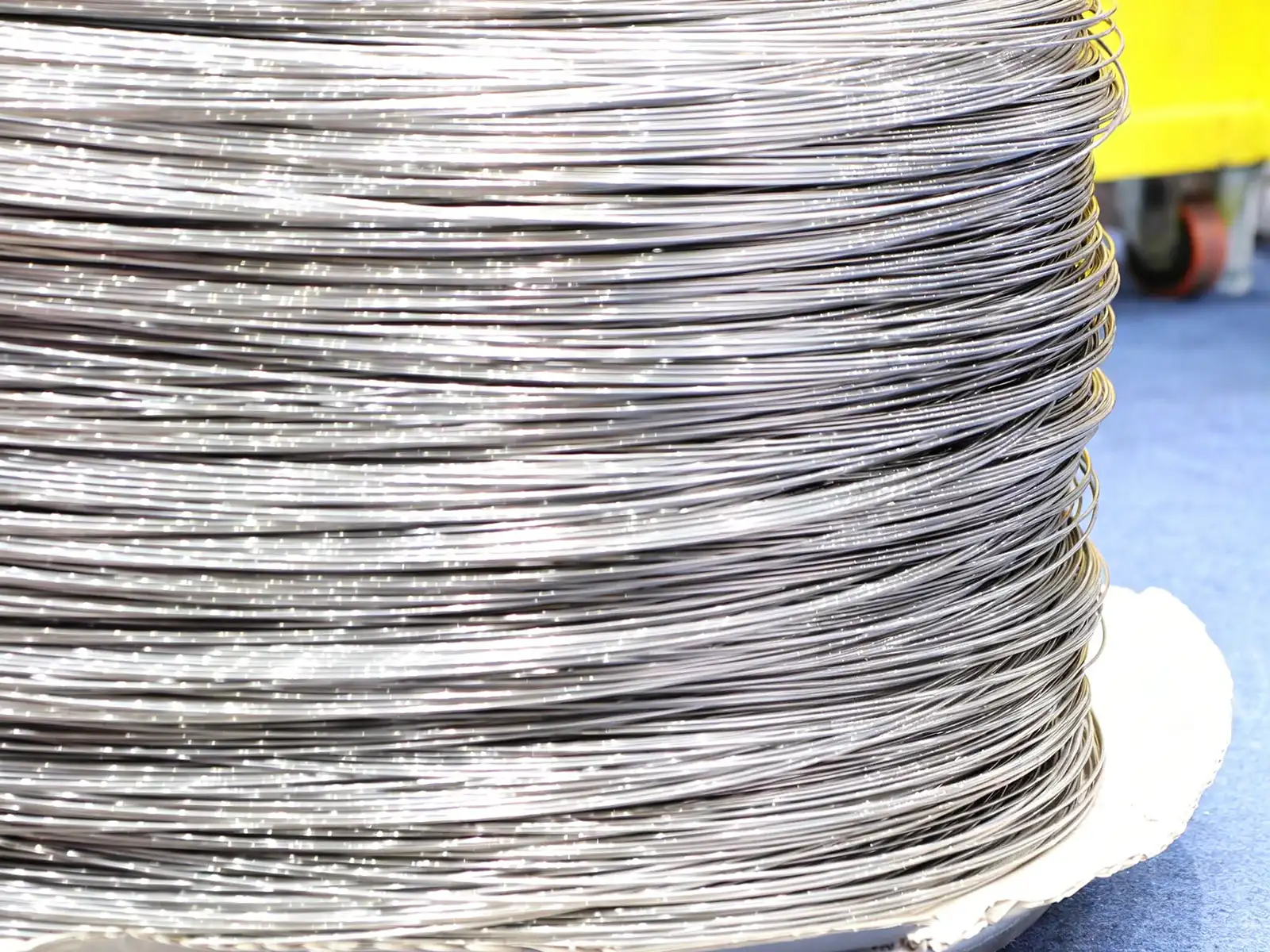
In modern industrial production, the choice of materials is directly related to equipment lifespan, production efficiency, and product quality. Nickel 200 nickel wire, as a high-purity industrial pure nickel material, has wide applications in the chemical, electronics, medical, and high-temperature operation fields. The following provides an objective analysis from the aspects of material properties, application value, processing performance, and data comparison for material selection reference.
1. Why Is Material Properties and Industrial Advantages of Nickel 200 Nickel Wire Important?
(1) What Should You Know About High Purity Ensures Process Stability?
The nickel content of Nickel 200 nickel wire is not less than 99.5% (Ni Co≥ 99.5%), with strict control over impurity elements: iron content ≤ 0.10%, copper content ≤ 0.10%, sulfur content ≤ 0.005%. In applications such as electrolysis and electroplating where high purity of the medium is required, this high-purity feature can effectively prevent the material from contaminating the process medium, making it suitable for industries such as semiconductor manufacturing, food, and pharmaceuticals.
(2) What Should You Know About Good Corrosion Resistance?
This material has good corrosion resistance in strong alkaline solutions, making it suitable for environments such as the chlor-alkali industry and caustic soda production. Nickel 200 wire also performs stably in reducing acidic media. In chloride environments such as seawater and salt spray, its corrosion resistance is superior to that of ordinary stainless steel. The passivation film mechanism of nickel allows it to form a protective layer in various chemical environments, which helps extend the service life of equipment.
(3) What Should You Know About Moderate Electrical and Thermal Conductivity?
The resistivity of Nickel 200 nickel wire is approximately 9.5×10⁻⁸ Ω·m (specific grade standards need to be verified), and its thermal conductivity is about 60 W/(m·K). In applications such as battery current collectors, conductive leads, heating elements, and transformer coils, it offers stronger corrosion resistance while maintaining good electrical conductivity, but it should be noted that its electrical conductivity is lower than copper, approximately 40% that of copper.
2. Why Is Practical Application Value in Different Industrial Fields Important?
(1) What Should You Know About Chemical and Chlor-Alkali Industry?
In chlor-alkali production, the anode and cathode materials of the electrolyzer need to withstand long-term corrosion from high-concentration alkaline solutions. Electrode mesh made of Nickel 200 wire has a longer service life in caustic soda solutions. After using this material for filter mesh and heat exchanger components, the equipment maintenance intervals are extended. Its high-purity characteristics help prevent product contamination and meet the quality standards of chemical products.
(2) What Should You Know About Electronics and Battery Industry?
In lithium battery manufacturing, current collector materials need to balance conductivity and chemical stability. Nickel 200 nickel wire has good welding performance and stable chemical characteristics, and can be used to reduce internal resistance and improve charge-discharge efficiency. In the field of electronic components, applications such as transformer coils, resistor elements, and heating wires benefit from this material’s non-magnetic properties and high-temperature resistance, helping ensure reliable equipment operation. The semiconductor industry has strict requirements for non-magnetic materials, and Nickel 200 nickel wire can be one of the choices for precision electronic equipment.
(3) What Should You Know About Medical Devices Field?
Medical guidewires, stents, and precision springs have high requirements for the biocompatibility, corrosion resistance, and mechanical properties of materials. Nickel 200 wire has characteristics such as non-toxicity, non-magnetic properties, and resistance to body fluid corrosion, and can be used in some non-implantable medical devices. It should be noted that for implantable medical devices, nickel-titanium alloy or stainless steel is more commonly used. Its good plasticity makes it easier to process and shape, and mechanical properties with tensile strength ≥ 350 MPa and elongation ≥ 30% can meet the usage requirements of most medical devices.
3. What Should You Know About Processing Performance and Custom Features of Nickel 200 Nickel Wire?
(1) What Should You Know About Excellent Hot and Cold Working Performance?
The elongation of Nickel 200 nickel wire can reach over 30%, with moderate hardness (85-95 HB), performing well in various processing methods such as multiple passes of cold drawing, bending forming, stamping, and welding. After professional heat treatment (such as stress-relief annealing), the material’s internal stress is released, the microstructure becomes more uniform, balancing strength and toughness. This processability helps reduce manufacturing difficulty and material waste.
(2) What Should You Know About Diversified Surface Treatment Options?
Different application scenarios have different requirements for surface conditions: bright surfaces are suitable for electronic components and decorative parts with high appearance requirements; semi-bright surfaces are suitable for general industrial applications; pickled surfaces can remove surface oxide layers and provide a clean welding base; polished surfaces have lower surface roughness and are suitable for precision medical instruments and high-cleanliness environments. Users can choose according to their actual needs.
(3) What Should You Know About Specification Customization Capability?
Nickel 200 wire is usually supplied in the form of fine wire, with common diameters ranging from 0.05mm to 10mm. For larger diameters (such as φ4mm to φ200mm), it generally falls under the category of rods or tubes, so the product form needs to be specified. Tolerances can be controlled within ± 0.01mm, and lengths can be customized from 300mm to 6000mm. Special shapes, such as square wire or hexagonal wire, can also be produced. This flexibility helps to meet a variety of equipment and process requirements.
Specifications | Common range | Accuracy grade |
Diameter range | 0.05mm – 10mm (thin wire) | ± 0.01mm |
Length selection | 300mm – 6000mm | Customizable |
Straightness | ≤ 1mm/m (measurement conditions need to be specified) | High precision |
Form of supply | Coiled / Straight Stripe | Choose as needed |
4. What Are the Differences in Performance Data Comparison and Material Selection Basis?
(1) What Should You Know About Key Mechanical Performance Indicators?
The mechanical properties of Nickel 200 wire in the soft state are relatively balanced: tensile strength ≥ 350 MPa, yield strength ≥ 130 MPa, elongation ≥ 30%. This indicates that the material can withstand a certain amount of mechanical stress while also possessing good machinability, making it suitable for making components that require repeated bending, stretching, or impact.
(2) What Should You Know About Physical Properties and Temperature Adaptability?
Density 8.90 g/cm³, melting point 1453-1455℃; its high-temperature characteristics make it suitable for applications such as furnace components and high-temperature fasteners. With a moderate coefficient of thermal expansion, it maintains good dimensional stability during temperature changes. At low temperatures, the material does not undergo brittle transition and still retains good toughness, making it suitable for working environments with a wide temperature range.
(3) What Are the Differences in Comparison with Other Materials?
Compared to 304 stainless steel, Nickel 200 wire has stronger alkali resistance and its service life in chlor-alkali environments can be extended several times. Compared to pure copper wire, nickel wire has advantages in corrosion resistance and high-temperature performance, but its electrical conductivity is relatively low. It should be noted that pure copper can also have certain alkali corrosion resistance under some conditions, so it should not be completely dismissed.
Performance indicators | Nickel 200 Nickel Wire | 304 stainless steel wire | Pure copper wire |
Nickel content | ≥ 99.5% | 8-10% | 0% |
Alkali corrosion resistance | Excellent | general | General (available under certain conditions) |
Conductivity | Good (about 40% of copper) | Poor | Excellent |
Non-magnetic | Completely non-magnetic | weak magnetism | Non-magnetic |
High temperature resistance | 1453℃ | 800℃ | 1085℃ |
5. How Should Material Selection Suggestions and Technical Support?
(1) How Should Material Selection Considerations?
Nickel 200 wire is not suitable for use in high-temperature oxidizing acids (such as hot nitric acid) or sulfur-containing atmospheres above 315℃, as this may lead to oxidation or sulfur brittleness failure. It is recommended for use in reducing or neutral media and alkaline environments. For high-strength, high-wear, or implantable medical applications, it is recommended to consider other nickel-based alloys.
(2) What Should You Know About Quality Assurance?
Starting from the raw material nickel ingots, each step-from cold drawing, heat treatment, surface treatment to final inspection-requires quality monitoring. Chemical composition analysis should meet standards such as ASTM B161 and GB/T 5235, mechanical performance testing confirms indicators like strength and elongation, dimensional accuracy inspection ensures tolerance requirements, and surface quality checks ensure there are no oxidation, cracks, or burrs. Suppliers should provide complete material certificates and test reports.
Quality Certification | Standard system | Applicable market |
Chemical composition analysis | ASTM B161 | North American market |
Mechanical performance testing | JIS H 4551 | Japanese market |
Material Certificate | EN 10204 3.1 | European market |
Dimensional accuracy inspection | GB/T 5235 | Asian market |
6. What Is the Conclusion?
Nickel 200 wire, with its high purity of ≥ 99.5%, excellent resistance to alkaline corrosion, moderate electrical and thermal conductivity, and good hot and cold workability, demonstrates clear application value in the fields of chlor-alkali chemical industry, electronic batteries, medical devices, and high-temperature industries. Its completely non-magnetic characteristic and stable mechanical performance across a wide temperature range make it a reliable material choice for working conditions that demand high medium purity and corrosion resistance. When selecting materials, attention should be paid to the redox properties of the service medium and the temperature limits-the material performs exceptionally well in reducing, neutral, and alkaline environments, but is not suitable for high-temperature oxidizing acids or sulfur-containing atmospheres above 315℃. Overall, Nickel 200 wire achieves a good engineering balance between corrosion resistance and workability, effectively extending equipment maintenance cycles and reducing life-cycle costs, making it a pure nickel material solution worth prioritizing in high-end industrial manufacturing.
FAQ
Q1: Is Nickel 200 wire suitable for use in high-temperature oxidizing environments?
It is not recommended to use in high-temperature oxidizing acids or sulfur-containing atmospheres with temperatures exceeding 315℃. It is suitable for use in reducing or neutral media and alkaline environments.
Q2: How can we ensure that the purchased Nickel 200 wire meets quality requirements?
Vendors are required to provide complete material certifications (such as EN 10204 3.1), chemical composition analysis reports, and mechanical property test reports. It is recommended to obtain small batch samples for verification before bulk procurement.
Q3: What should be paid attention to when welding Nickel 200 wire?
The surface needs to be cleaned before welding, and welding should be avoided in sulfur-containing environments. It is recommended to use argon arc welding or resistance welding processes, control the welding heat input, and perform stress relief treatment promptly after welding.
What Should You Know About Contact Us Immediately?
As a professional manufacturer and supplier of Nickel 200 wire, Titanium Valley relies on a full-process quality control system and precision drawing production lines to provide customized nickel wire products with diameters ranging from 0.05 to 10 mm and a tolerance of ± 0.01 mm. The surface finishes include bright, semi-bright, pickled, and polished options, meeting the diverse needs of chemical corrosion protection, electronic components, medical devices, and other fields. We provide complete material certificates and test reports that comply with international standards such as ASTM B161, GB/T 5235, and EN 10204 3.1. Whether you need standard specification bulk supply or customized material solutions for special operating conditions, our technical team can provide comprehensive support from material selection recommendations and processing guidance to batch traceability. Please contact us via email at sales@titaniumvalleys.com to obtain product samples, technical data, and detailed quotation information.
References
- Handbook of Nickel and Nickel Alloy Materials, Metallurgical Industry Press, 2021
- “Corrosion-Resistant Metal Materials Application Technology,” Chemical Industry Press, 2019
- Wang Zhenhua, Analysis of the Application of Nickel-Based Alloys in Chemical Equipment, Chemical Equipment and Piping, 2018, 55(3): 45-49
- Liu Jianguo, Study on the Corrosion Behavior of Pure Nickel Materials in the Chlor-Alkali Industry, Corrosion Science and Protection Technology, 2020, 32(5): 523-528