
Why Is Gr1 Titanium Wire Used in Aerospace, Medical, and Precision Manufacturing Applications?
- Gr1 Titanium Wire
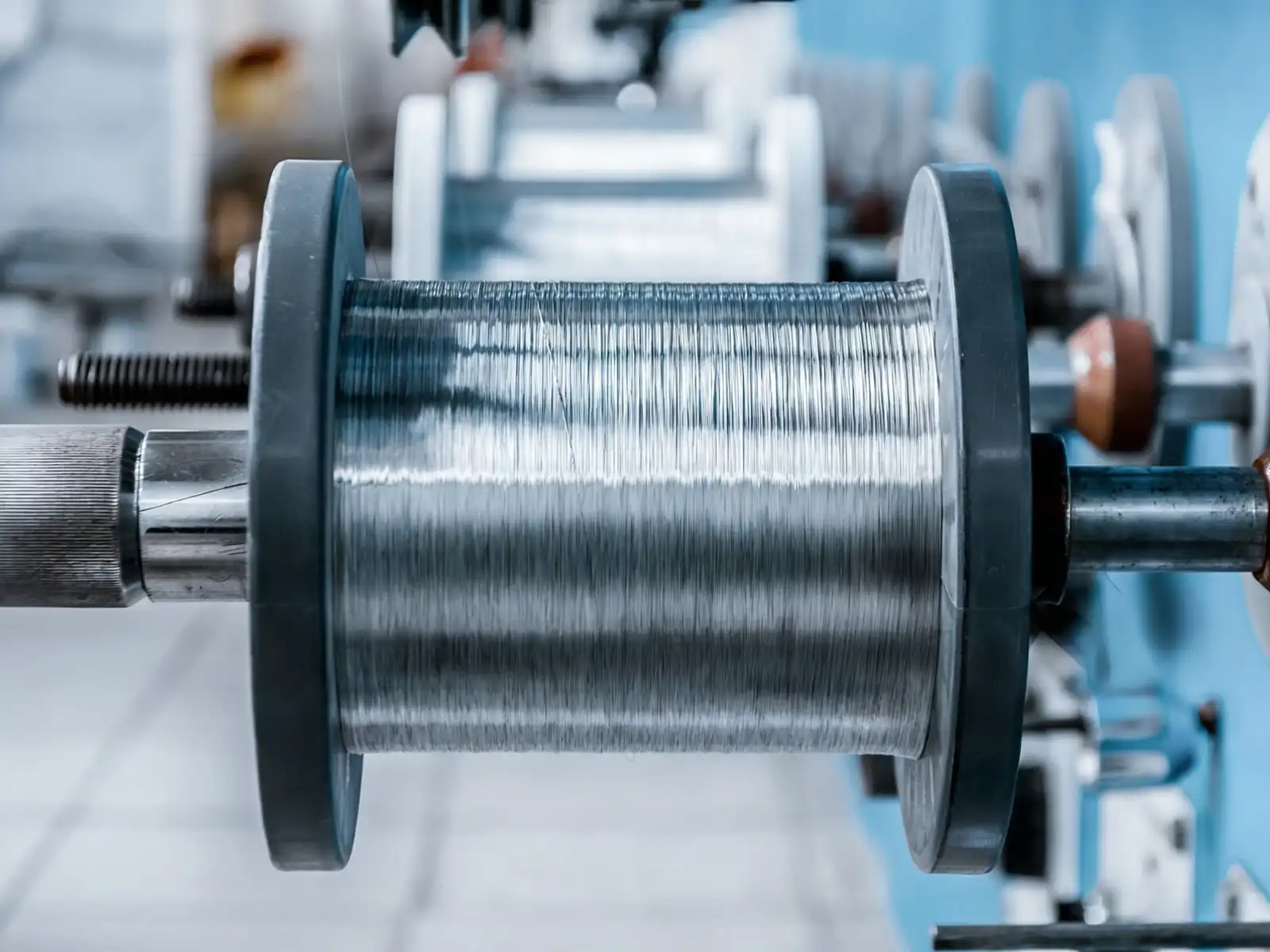
In the global high-end manufacturing industry chain, an inconspicuous filament material is changing the industry rules. Gr1 Titanium Wire is the purest wire material among industrial pure titanium. With a titanium content of more than 99.5%, excellent plasticity and biocompatibility, it has become an irreplaceable key material in the fields of aviation medical, precision electronics and chemical anti-corrosion. From Boeing 787 fuselage connectors to pacemaker wires, from semiconductor manufacturing equipment to marine engineering fasteners, the cost structure and performance boundaries of this kind of diameter 0.06 mm to 10 mm annual growth rate of 12% to 28%. For American aerospace medical companies, German precision manufacturers, Japanese electronics industries, and Korean battery industries, understanding the technical nature and application logic of Gr1 Titanium Wire has become a core proposition for seizing the initiative in industrial upgrading.
1. Why can Gr1 titanium wire become the ?technical standard? for high-end manufacturing?
(1) Purity determines the material logic of performance ceilings
The core competitiveness of Gr1 Titanium Wire comes from its strict composition control system. Titanium content ?99.5%, oxygen content ?0.18%, iron content ?0.20%. This extremely low impurity level directly determines the three basic properties of the material: annealed tensile strength ?240 The MPa elongation rate is ?20%, allowing the material to withstand complex deformations while maintaining structural integrity; its stable resistivity and excellent structural rigidity ensure the packaging stability and anti-electromagnetic interference capabilities of precision electronic components; the vacuum melting process completely eliminates the risk of hydrogen embrittlement, which is crucial for aerospace components that need to withstand the -253?C liquid hydrogen environment.
(2) Stability advantages in multi-physics environment
The difference in material performance under complex working conditions often determines the entire life cycle cost of the equipment. The corrosion rate of Gr1 Titanium Wire in seawater is less than 0.003 mm/year, which is only 1/20 of that of 316L stainless steel; in a chemical environment containing chloride ions, its passivation film can self-repair, avoiding the risk of pitting corrosion and perforation; the extremely low magnetic susceptibility (weak paramagnetism) makes it the first choice for highly biocompatible metal wires in nuclear magnetic resonance equipment and magnetic levitation systems; -253 ? to 300 The long-term operating temperature range of ? covers all working conditions from liquid hydrogen storage to industrial steam.
(3) Unique value in the biomedical field
The biocompatibility of medical-grade Gr1 Titanium Wire that complies with ISO 5832-2 standards comes from the chemical inertness of the surface titanium oxide film and human tissue fluid. The ultra-fine specifications with a diameter of 0.2 mm are used for minimally invasive surgical sutures. The surface roughness of 10 microns avoids bacterial adhesion, and the nickel-free release characteristics completely eliminate the risk of allergies. In applications such as cardiac stent braiding and dental orthodontic archwires, the elastic modulus of the material (103 GPa) is much higher than human bone (approximately 10~30 GPa), but it can be matched through structural design to significantly reduce the stress shielding effect.
2. Specification system and performance grading logic of Gr1 Titanium Wire
(1) Application layering behind diameter specifications
The industry divides Gr1 Titanium Wire into four functional areas: ultra-fine specifications (0.06~0.4 mm) mainly serve precision fields such as electronic packaging and sensor leads, and its tensile strength needs to reach a semi-hard state (380~480 MPa) to ensure processing stability; welding specifications (0.8~3.0 mm) follow the ASTM B863 standard, and the stability of the molten pool of ERTi-2 wire in argon arc welding requires straightness ? 2 mm/1000 mm; structural specifications (0.5~6.0 mm) are used in the manufacture of springs and fasteners, and the hardness after hardening reaches 220~260 HV; customized specifications (6.5~10.0 mm) require continuous rolling process, and the ovality is controlled within 0.15~0.2 mm.
(2) Quantitative impact of surface treatment on performance
Different surface conditions directly change the friction coefficient and fatigue life of the material. The fatigue strength of the pickled surface (Ra?0.8 ?m) is increased by 25%, which is suitable for chemical anti-corrosion applications; the bright drawn surface (Ra?0.4 ?m) is achieved through the roller die cold drawing process; the matte surface is increased by sandblasting to increase roughness and improve coating adhesion, and is often used for parts that require subsequent anodization.
(3) Matching of material state and mechanical properties
The annealed (M) material has passed the 650~700 ? insulation + furnace cooling process, and the grain size is stable at 50~80 ?m, provides the best cold working performance, suitable for deep drawing, bending and other forming processes; semi-hard state (Y2) controls the amount of cold drawing deformation to reach 30~50%, balancing strength and plasticity, and is used for elastic components that require a certain stiffness; hard state (Y) material undergoes 60~80% cold deformation, with a yield ratio of more than 0.85, but the elongation is reduced to 8%, and is only used for structural parts that no longer deform.
3. Five major technical variables that affect Gr1 Titanium Wire purchasing decisions
(1) Cost game between dimensional accuracy and yield
High-precision Gr1 Titanium Wire with a diameter tolerance controlled at ?0.01 mm, although the unit price is 20~30% higher than ordinary products, can reduce material loss by 50% in applications such as precision weaving and microelectronics welding. The ovality index is particularly critical: when the wire passes through the automatic wire feeding mechanism, ovality >0.3 mm will cause material jamming and shutdown, while products controlled within 0.15 mm can achieve continuous production for more than 100 hours. Straightness has a more direct impact on welding quality. A straightness of 2 mm/1000 mm can make the offset of the argon arc welding pool
(2) The implicit value of batch stability
Continuous wire with a single roll weight of >100kg and no intermediate solder joints can avoid frequent material changes in automated production lines and increase overall equipment efficiency (OEE) by 12-18%. Batch fluctuations in chemical composition directly affect weld performance: when the oxygen content fluctuates >0.03%, the impact toughness of the welded joint will have a standard deviation of 20%; iron content fluctuations >0.05% will cause the resistivity to change by more than 8%, affecting the performance consistency of electronic components. Production lines with an automation rate of >90% use a closed-loop control system to control the batch deviation of these key indicators within 2%.
(3) The compliance value of traceability systems
The complete EN 10204-3.1 material certificate includes 12 key data such as furnace batch number, chemical composition spectral analysis, measured mechanical properties, and grain size rating. For the aerospace supply chain, these data need to be kept for at least 25 years to deal with potential quality traceability; the medical device field requires biocompatibility test reports, including ISO 10993 series test results such as cytotoxicity, sensitization, and blood compatibility; RoHS and REACH compliance statements for the EU market have become mandatory documents for export.
(4) Dynamic balance between delivery cycle and inventory cost
Standard specifications (such as 1.0 mm, 2.0 mm bright wire) usually have 2-5 tons of spot inventory and can be delivered in 3-5 days; non-standard specifications (such as 0.15 mm ultra-fine wire, 8.0 mm large-diameter wire) require customized production scheduling, and the delivery cycle is extended to 4-6 weeks. Customers who adopt the VMI (Vendor Managed Inventory) model can reduce safety stock by 40% by sharing demand forecast data while ensuring emergency orders can be responded to within 48 hours. For strategic customers with annual demand >10 tons, suppliers usually establish dedicated inventory pools and provide price locking mechanisms.
(5) Premium space for technical service capabilities
Suppliers that provide application engineering support have obvious competitive advantages: they optimize the composition of the welding wire for welding application customers (finely controlling the content of interstitial elements such as oxygen and iron) to increase penetration stability by 30%; customize the surface roughness (Ra 0.1~0.3 ?m) for medical customers to improve cell adhesion performance; design special annealing curves for electronic customers to control the resistivity temperature coefficient at ?50 ppm/?C. Although these technical services increase the overall cost by 5 to 8%, they can shorten the customer’s product development cycle by 3 to 6 months and reduce the trial production failure rate by 30%.
4. Gr1 Titanium Wire application trends in major global markets
(1) North American market: high-value applications driven by aerospace medicine
The demand for Gr1 Titanium Wire in the U.S. market shows an obvious bimodal distribution: the aerospace field focuses on 1.6~3.0 mm welding wire, which is used for TIG welding of titanium alloy structural parts. The annual demand is about 450 tons, and the unit price is 85-120 US dollars/kg; the medical device field prefers 0.2~0.5 mm ultra-fine specifications, which are used in implant weaving and minimally invasive devices. The annual demand is about 180 tons, and the unit price is as high as 200-350 US dollars/kg. The FDA’s DMF (drug master file) filing requirements for medical titanium materials allow suppliers with a complete quality traceability system to obtain a 30% premium.
(2) European market: emerging demand for hydrogen energy and carbon neutrality
Germany’s Industry 4.0 strategy promotes the upgrading of precision manufacturing. The demand for ultra-precision titanium wire with a diameter tolerance of ?0.005 mm has increased by 35% annually. It is mainly used for fuel cell bipolar plate welding and hydrogen compressor seals. The EU’s “Hydrogen Energy Strategy” plans to build 40GW of electrolyzer capacity by 2030, which will drive the demand for hydrogen embrittlement-resistant Gr1 Titanium Wire to more than 1,200 tons/year. Offshore wind power projects in Norway, the Netherlands and other countries use anti-corrosion cages woven with titanium wire to protect submarine cables. A single project consumes 10-15 tons.
(3) Asia-Pacific market: large-scale application of electronics and new energy
Japan’s precision electronics industry uses 0.06~0.1 mm ultra-fine titanium wire for MEMS sensor packaging and flexible circuit board stiffeners. It has extremely high requirements for surface cleanliness (particles
5. Six-dimensional evaluation model for selecting Gr1 Titanium Wire suppliers
(1) Generational differences in technology in production equipment
Italy’s Danieli continuous rolling production line represents the current highest level in the industry. Its GCC short stress rolling mill (5543+4334 layout) is arranged alternately horizontally/vertically to make titanium alloy deformation more uniform, and the ovality is controlled within 0.15 mm, which is 50% higher than traditional equipment. The induction heating system cooperates with the trolley furnace to achieve precise temperature control of 700?C (?5?C), eliminating the problem of grain coarsening caused by uneven heating. The online inspection system integrates laser diameter measurement, eddy current flaw detection, and surface visual inspection. The data sampling frequency reaches 1000Hz, which can eliminate defective sections in real time and increase the yield rate to 98.5%. The large-scale production line with an annual production capacity of 5,000 tons can reduce unit manufacturing costs by 30 to 40%.
(2) Source advantages of raw material control
Suppliers that use their own titanium sponge or strategically cooperate with large titanium factories can control residual elements such as chlorine and magnesium from the source. The three-time vacuum consumable arc melting (VAR) process can reduce the hydrogen content to <0.003%, completely avoiding the risk of hydrogen embrittlement. Ultrasonic flaw detection of ingots covers 100% to ensure that there are no inclusions, looseness and other metallurgical defects. Some high-end suppliers use electron beam cooled bed furnace (EBCHM) refining to further reduce the oxygen content to 0.12%, providing a material basis for medical-grade applications.
(3) Accumulation depth of process database
Enterprises with more than 10 years of experience in titanium processing usually have accumulated more than 500 sets of process parameter databases, covering optimal annealing curves, cold drawing pass allocation, and surface treatment parameters for different batches and specifications. This tacit knowledge has shortened the new product development cycle by 60%, and the first batch of product qualification rate has reached more than 85%. Some leading companies have developed finite element simulation models that can predict the impact of different process parameters on tissue performance and reduce trial and error costs by 70%.
(4) Rigid implementation of the quality management system
Industry-specific quality system certifications such as AS9100D (aviation), ISO 13485 (medical), IATF 16949 (automotive), etc. require the establishment of a full-process traceability mechanism from raw materials to finished products. Key processes such as vacuum annealing and precision drawing require MSA (Measurement System Analysis) and SPC (Statistical Process Control), and the Cpk value needs to be ? 1.67. Service capabilities such as third-party witness inspection and on-site manufacturing supervision are indispensable for high-reliability applications. The standardized implementation of annual internal audits and management reviews reflects the maturity of the company’s quality culture.
(5) Continuous investment in R&D and innovation
Suppliers that have set up materials research and development laboratories can carry out in-depth research such as microstructure analysis (SEM/TEM), texture testing (EBSD), corrosion electrochemical testing, etc., and provide customers with material selection and process optimization suggestions. Cooperate with industry, academia and research institutions in universities and research institutions to accelerate the development of new products: such as developing low-modulus beta titanium wires for orthopedic implants and high-strength titanium wires for deep-sea exploration. The quantity and quality of patents (proportion of invention patents) are objective indicators of innovation capabilities. Leading companies usually have more than 15 core patents.
(6) Supply chain response flexibility
Suppliers who establish regional warehousing centers (in the United States, Germany, and Japan) can achieve rapid localized delivery and shorten the logistics cycle from 30 days to 7 days. Provide flexible supply models such as JIT (Just in Time) and VMI (Vendor Managed Inventory) to help customers reduce inventory capital occupation by 30 to 50%. Suppliers with small batch customization capabilities (minimum order quantity 50kg) can serve the diverse needs of scientific research institutions and start-up companies. Although emergency response mechanisms (such as 72-hour expedited orders) have a premium of 15~20%, they have irreplaceable value for critical projects.
in conclusion
As a benchmark product of high-purity industrial titanium materials, Gr1 Titanium Wire has a technical value that far exceeds that of traditional metal wires. From material purity, performance stability to supply chain capabilities, every technical detail is reshaping the cost structure and competitive landscape of high-end manufacturing. Facing the rapid evolution of aviation medical, hydrogen energy chemical industry, precision electronics and other fields, choosing suppliers with advanced equipment, complete systems and continuous innovation capabilities has become a strategic choice for enterprises to build core competitiveness. Only by deeply understanding the nature of materials and matching application requirements can we take the initiative in the reconstruction of the global industrial chain.
FAQ
Q1: How to choose between Gr1 Titanium Wire and Gr2 titanium wire in practical applications?
Gr1 Titanium Wire has higher purity (Ti?99.5%), the best plasticity and corrosion resistance, and is suitable for high-demand scenarios such as medical implants and precision welding. Gr2 titanium wire has slightly higher strength but slightly lower plasticity, and is more suitable for structural applications such as chemical pipelines and heat exchangers. Gr1 is preferred in the medical and aviation fields, and Gr2 can be chosen for chemical equipment by weighing the cost.
Q2: Why is the price of ultra-fine specification (0.06~0.2 mm) titanium wire much higher than that of regular specifications?
Ultra-fine titanium wire requires multiple passes of precision cold drawing (usually >15 passes), with a wire breakage rate as high as 30~40%, and extremely high equipment accuracy requirements (drawing die accuracy ?0.002 mm). Surface quality control is difficult and requires dust-free workshop production. Low raw material utilization and high technical barriers jointly push up costs, making the unit price reach 3 to 5 times that of conventional specifications.
Q3: How to verify whether Gr1 Titanium Wire meets medical grade standards?
Check whether ISO 5832-2 material certificate and ISO 10993 series biocompatibility test reports are provided, including cytotoxicity and sensitization test results. Check the furnace batch number traceability, the oxygen content should be ?0.18%, and the iron content should be ?0.20%. The surface roughness Ra should be ?0.4 ?m and there should be no visible defects. Regular suppliers will provide FDA DMF registration numbers or EU CE certification documents.
Contact Baoji Titanium Valley today for a customized solution
As China’s leading Gr1 Titanium Wire manufacturer and supplier, Baoji Baoji Titanium Valley Titanium Nickel Zirconium Material Processing Co., Ltd. has an Italian Danieli production line and a complete quality system with an annual production capacity of 5,000 tons, serving global aerospace medical and precision manufacturing customers. Provide full specification customization from 0.06~10 mm, EN 10204-3.1 certification and 48-hour technical response. Send your requirements immediately to sales@titaniumvalleys.com to obtain professional application solutions and competitive quotations.
References
Zhao Yongqing, Wu Zhengping, Yang Guanjun. Titanium alloy and its processing technology[M]. Beijing: Science Press, 2010.
Zhang Jinxiang, Li Defu, Liu Wei. Heat treatment process of titanium and titanium alloys[M]. Beijing: Chemical Industry Press, 2015.
Wang Shixiong, Cai Gang, Zhang Anfeng. Research progress of biomedical titanium alloys [J]. Materials Herald, 2012, 26(1): 1-5.
Xiao Yang, Chen Lin, Liu Zhiqiang. Titanium alloy materials and applications for aviation[M]. Beijing: National Defense Industry Press, 2017.