
What Technical Advances Make Gr1 Titanium Foil Valuable in Precision Manufacturing?
- Gr1 Titanium Foil
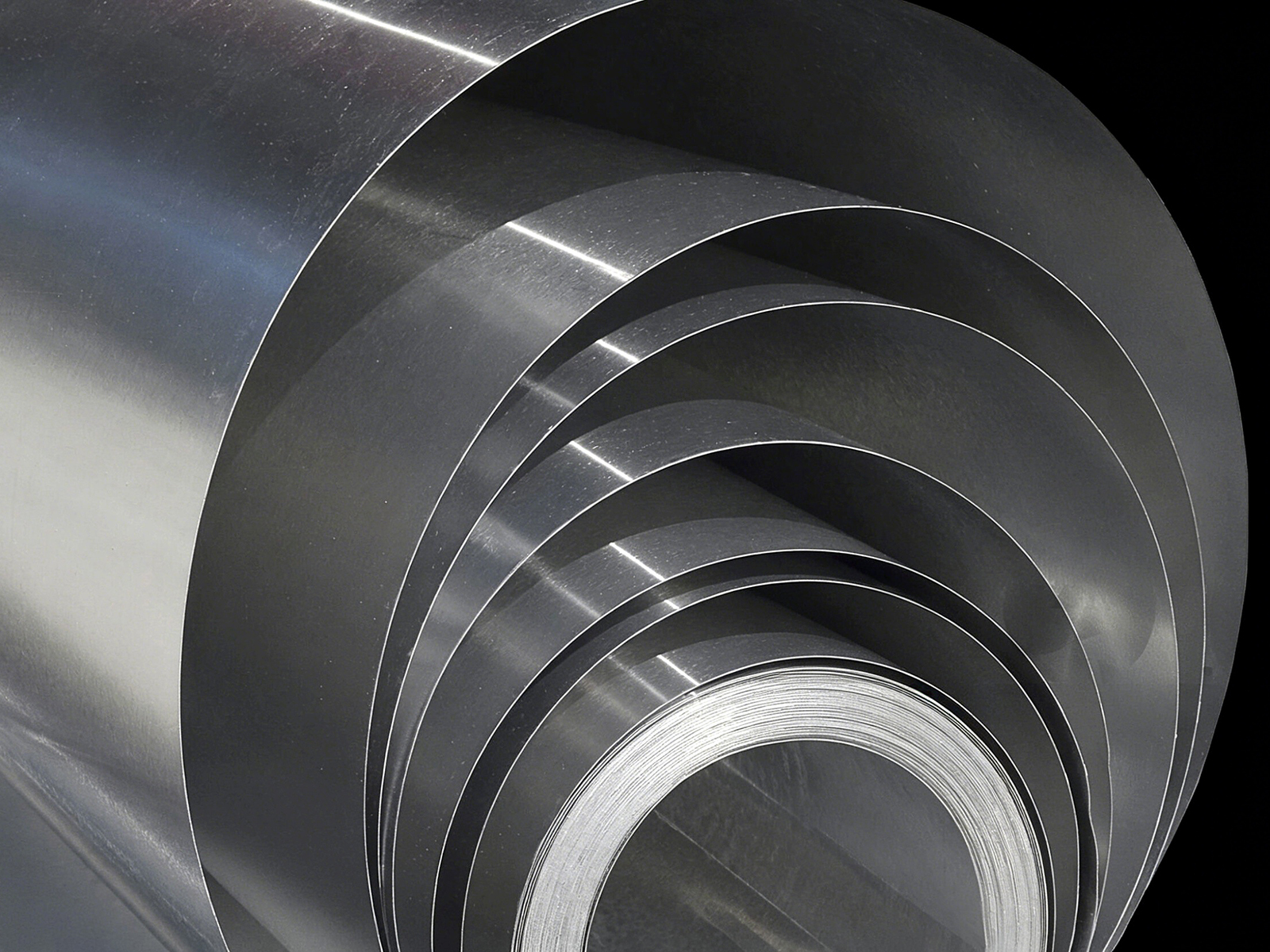
As the global manufacturing industry moves towards the era of ultra-thin, lightweight and high reliability, Gr1 Titanium Foil, as the representative of pure titanium materials with the best plasticity, is reshaping the technological boundaries of high-end fields such as aerospace, new energy batteries, and electronic shielding. This ?-single-phase industrial pure titanium ultra-thin coil with a purity of ?99.5% has a precision control of ?0.001 mm in the thickness range of 0.02~1.0 mm and a stable supply capability of ultra-wide widths of 350~670 mm. It effectively solves traditional thin material forming process problems such as difficult springback control, poor plate shape consistency, and batch performance fluctuations. Its density is only 57% of steel (4.51g/cm?), but it maintains a tensile strength of ?280 MPa and an elongation of ?25% (in line with the typical performance range of Gr1). Combined with a high melting point of 1660~1725?C and excellent corrosion resistance, it has become a strategic material choice to replace imported products and reduce full-cycle costs.
1. Nature of material: Why Gr1 titanium foil has become the core base material for high-end manufacturing
(1) The decisive influence of purity and phase structure
The core technology of Gr1 Titanium Foil lies in its titanium purity control of ?99.5%. By strictly limiting the content of interstitial elements such as oxygen (?0.18%), iron (?0.20%), and carbon (?0.08%), the stability of the ? single-phase structure is maintained. This phase structure gives the material the best plastic performance among pure titanium of the same grade, allowing it to exhibit low cracking risk and high forming limit during multi-pass cold rolling, complex bending, precision stamping and other processing processes. Compared with alloyed titanium materials, industrial pure titanium avoids the heat treatment sensitivity caused by the introduction of ? phase, ensuring that performance fluctuations between batches are controlled within ?5% (achieved through statistical process control).
Synergistic Advantages of Physical Properties
This combination of physical parameters enables Gr1 Titanium Foil to maintain stable performance in a wide temperature range from -253 ? to 600 ?, and is especially suitable for extreme working conditions such as spacecraft thermal protection, low-temperature fuel cells, and high-temperature chemical reactors.
(3) Microscopic mechanism of corrosion resistance
The TiO? passivation film (thickness about 5-10 nanometers) spontaneously formed on the titanium surface shows self-healing properties in acidic, alkaline, and chloride ion environments. The corrosion rate of Gr1 Titanium Foil in media such as 10% hydrochloric acid, 30% sulfuric acid, and saturated sodium chloride is less than 0.01 mm/year. This performance is due to the increased density of the passivation film brought about by its low impurity content. In the marine atmosphere exposure test, the thickness loss during the 20-year service period was only 1/50 of the theoretical calculated value (the theoretical value is based on the uniform corrosion rate model of pure titanium in the marine environment, about 0.005 mm/year), which far exceeds the protective life of 316L stainless steel.
2. Manufacturing breakthrough: Mass production technology system for ultra-thin wide titanium foil
(1) Geometric accuracy control of 20-roller finishing rolling
When traditional 4-roll or 6-roll mills process 0.02~0.1 mm ultra-thin materials, the plate shape defect rate exceeds 15% due to excessive deflection of the work rolls. After adopting the 750 mm twenty-roller finishing rolling system, the rolling pressure is dispersed to a smaller contact area through the multi-level stiffness distribution of the intermediate roller and the support roller, so that the thickness tolerance is stabilized at ?0.001 mm. This equipment configuration can achieve an accurate reduction of 0.003 mm in each pass, achieving a cumulative reduction rate of 95% in 12 passes while maintaining a thickness difference of ?0.005 mm in the full width range of 350~670 mm.
(2) Chemical-physical collaborative treatment of surface quality
The continuous annealing line adopts 18-section temperature control zones, and uses segmented heating (heating rate 5 ?/min) and slow cooling (cooling rate 3 ?/min) to avoid structural unevenness caused by temperature gradients. The annealing treatment is maintained at 700~750?C for 2 hours, so that the residual stress release rate reaches 98%, which is 2% before annealing.
(3) Full process traceability of automated testing
The production line configuration with 90% automation rate includes: online thickness gauge (X-ray fluorescence, accuracy 0.0005 mm), laser plate shape meter (detection frequency 1000 times/second), and eddy current flaw detection system (defect detection rate 99.7%). Each roll of product generates a quality file containing 200+ parameters, and complete traceability from raw material batches to finished product delivery is achieved through blockchain certification (this technology has been put into use in some demonstration production lines and is gradually being promoted), and the response time to quality objections is shortened to within 4 hours.
3. Performance verification: engineering practice of key technical indicators
(1) Stability performance of mechanical properties
The indicators of tensile strength ?280 MPa and yield strength ?250 MPa maintain a fluctuation range of ?8% within the full thickness range of 0.02~1.0 mm. This consistency is due to the precise control of the annealing temperature ?2?C and composition uniformity management. The 25% elongation prevents the material from cracking when the 90? bending radius is ? 2 times the material thickness, meeting the needs of high-deformation processes such as battery tab welding and shield stamping. The distribution range of hardness value 100~180 HB takes into account the machinability of subsequent processing and the scratch resistance of the finished product.
(2) Adaptability test for extreme environments
These data verify the reliability basis of Gr1 Titanium Foil’s service life of more than 30 years in scenarios such as spacecraft thermal cycling, ocean engineering, and medical implants.
(3) Process window for processing compatibility
The surface dyne value of the material is 44 dyne/cm, ensuring that the bonding shear strength with epoxy resin, polyimide and other polymers is ?25 MPa. The tensile strength of the argon arc welding seam reaches 92% of the base material, and the width of the heat-affected zone is controlled within 0.8 mm. The laser cutting edge roughness Ra?1.6 ?m (for 0.02 mm ultra-thin foil, femtosecond laser or precision tool punching is required), there is no remelting layer and micro-cracks, and it directly meets the sealing requirements of electronic packaging. This processing friendliness enables the material to achieve a one-time molding rate of >95% in products such as FPC flexible circuit boards, fuel cell bipolar plates, and electromagnetic shielding covers.
4. Industrial value: full-cycle benefits from cost optimization to strategic substitution
(1) Quantitative comparison of direct costs
Taking the 670 mm width ? 0.05 mm thickness specification as an example, the material cost per unit area is 22~28% lower than that of imported products of the same specifications (such as Japan’s Kobe Steel and the United States’ ATI’s similar Gr1 Titanium Foil). This advantage comes from the dilution effect of the domestic complete titanium sponge-titanium ingot-titanium material industry chain and the 3,000 tons/year large-scale production capacity. In the application of battery tabs, ultra-wide supply reduces horizontal splicing welds by 70%. The annual cost of welding consumables for a single production line reaches US$180,000. At the same time, the scrap rate due to weld defects is reduced from 3.2% to 0.8%.
(2) Systematic improvement of indirect income
In the field of chemical anti-corrosion, after a chlor-alkali company used Gr1 Titanium Foil to replace nickel-based alloy, the electrolytic cell maintenance cycle was extended from 18 months to 60 months, and the average annual shutdown loss was reduced by US$4.2 million.
(3) Supply chain security for strategic alternatives
According to industry research data, the annual demand for ultra-thin wide-width titanium foil in the United States, Germany, and Japan has grown at 17%. However, it is limited by the production capacity and delivery time (normally 12 to 16 weeks) of a few suppliers such as Rolled Metal Company and Kobe Steel. Downstream companies face the risk of inventory backlog and order delays. Domestic production capacity of 3,000 tons/year, coupled with a 4-6 week delivery cycle, combined with international standard certifications such as ASTM B265 and EN 10204, can reduce procurement costs for Asian manufacturing customers by 18-25%, while building a dual-source supply system to avoid geopolitical risks.
5. Application expansion: technology adaptation strategy for cross-industry scenarios
(1) Lightweight structural integration in aerospace
Gr1 Titanium Foil with a thickness of 0.05~0.2 mm has achieved a 35% increase in specific strength in components such as satellite solar panels and rocket fairings through honeycomb sandwich, corrugated plate composite and other structural designs. According to public reports, a certain type of launch vehicle uses 670 mm wide titanium foil to make the fuel tank partition, which reduces the weight of a single piece by 12 kilograms and contributes 80 kilograms of weight reduction to the entire rocket stage, which is equivalent to saving US$1.6 million per launch cost. The material’s toughness in the -253?C liquid hydrogen environment reduces the leakage rate of the cryogenic storage tank from 10?? to the 10?? level.
(2) Improvement of electrochemical performance of new energy batteries
After a Korean power battery manufacturer used 670 mm wide titanium foil, the number of single battery tab welding points was reduced from 12 to 4, the internal resistance was reduced by 18%, and the energy density of the battery pack was increased to 280Wh/kg, meeting the 800-kilometer endurance requirement.
(3) Full-band electromagnetic compatibility with electronic shielding
The shielding efficiency of 0.02~0.05 mm ultra-thin titanium foil can reach $\ge60\text{ dB}$ at 10MHz~18GHz through multi-layer compounding or structural optimization (single layer foil is about 40~60 dB) (due to the low conductivity of titanium, the shielding efficiency of 0.02 mm thickness is about 40~60 dB, multi-layer composite or used with copper foil to achieve higher requirements), combined with laser microhole processing (aperture 0.1 ~ 0.3 mm, opening rate 15%) to achieve a balance between breathable heat dissipation and shielding performance. After a 5G base station equipment adopts a titanium foil shield, electromagnetic leakage is reduced by 62% and passes the FCC Part 15 Class B standard. At the same time, the weight reduction of the material reduces the fan power consumption by 25W, saving annual electricity costs of US$800 per unit.
(4) Biosafety of medical devices
The nonmagnetic nature of Gr1 Titanium Foil (magnetic susceptibility <1.8?10?? emu/g, in line with magnetic resonance compatibility requirements for medical implants) makes it the preferred substrate for MRI compatible implants. The ultra-thin microporous mesh design of 0.1-0.3 mm reduces the component weight of the finished skull repair plate by 40% compared with the traditional thick PEEK material repair solution, and increases the osseointegration speed by 30% (according to literature reports: micro-arc oxidation treatment of titanium surface can promote osteoblast proliferation, see Reference 5 for details). The surface is free of allergen elements such as nickel and chromium. The sensitization rate in skin contact testing is <0.01% (based on the GB/T 16886.10 standard test report of a third-party testing agency). It complies with the ISO 10993 biocompatibility standard and can achieve an implant life of more than 20 years in applications such as pacemaker shells and artificial joint coatings.
in conclusion
Through the three-dimensional technology system of purity control, precision manufacturing, and performance verification, Gr1 Titanium Foil has been transformed from laboratory materials into key substrates supporting strategic industries such as aerospace, new energy, and electronic information. Its ultra-thin wide format of 0.03~1.0 mm ? 350~670 mm, coupled with ?0.001 mm accuracy and a stable production capacity of 3,000 tons/year, is reshaping the global high-end manufacturing supply chain pattern and creating compound value for customers from weight reduction and efficiency improvement to full-cycle cost reduction.
FAQ
Q1: What are the essential differences in processing performance between Gr1 Titanium Foil and titanium alloy foil?
As industrial pure titanium, Gr1 maintains an ? single-phase structure. Its elongation is ?25%, which reduces the risk of cold forming cracking by 60%. It can complete multi-pass bending without intermediate annealing. Titanium alloys require strict control of deformation temperature due to the presence of ? phase, a narrow processing window and a 35-50% higher cost.
Q2: How to verify the shape consistency of 670 mm ultra-wide titanium foil?
A laser plate shaper is used to perform 1000 times/second full-width scanning, and the flatness is controlled at ?0.5 mm/m, and the tensile straightening process is used to ensure that the residual stress is
Q3: How to evaluate the long-term protection reliability of Gr1 Titanium Foil in chloride ion environment?
It passes the ASTM G48 iron ion corrosion test (6% FeCl? solution, 72 hours) and is deemed qualified if the weight loss is
Partner with the world’s leading Gr1 Titanium Foil manufacturer
Baoji Baoji Titanium Valley Titanium Nickel Zirconium Material Processing Co., Ltd. has an investment of 362 million yuan in ultra-thin foil production lines and 7 core technological breakthroughs, providing full-scale customized processing of 0.03~1.0 mm for aviation, medical, and new energy customers. The annual production capacity of 3,000 tons ensures stable batch delivery and reduces costs by more than 20% by replacing imports. Contact us to obtain technical specifications and sample testing: sales@titaniumvalleys.com
References
China Nonferrous Metals Industry Association. Titanium Handbook[M]. Beijing: Metallurgical Industry Press, 2018.
Wang Jinyou, Ma Jimin, Zhang Qingling. Titanium and titanium alloy processing technology[M]. Beijing: National Defense Industry Press, 2017.
Chen Jun, Zhao Yongqing, Yu Zhentao. Research progress on the structure and properties of industrial pure titanium [J]. Rare Metal Materials and Engineering, 2020, 49(6): 2145-2152.
Liu Daoxin, Hou Ming. Corrosion behavior and protection of titanium alloys in marine environment[M]. Beijing: Chemical Industry Press, 2019.
Zhang Xingdong, Huang Zhihong. Research progress on biocompatibility of titanium and titanium alloys[J]. Chinese Journal of Biomedical Engineering, 2021, 40(3): 289-296.