
What Advantages Do Gr4 Titanium Rods Show in Tensile Strength, Fatigue Resistance and Practical Applications?
- Gr4 Titanium Rod
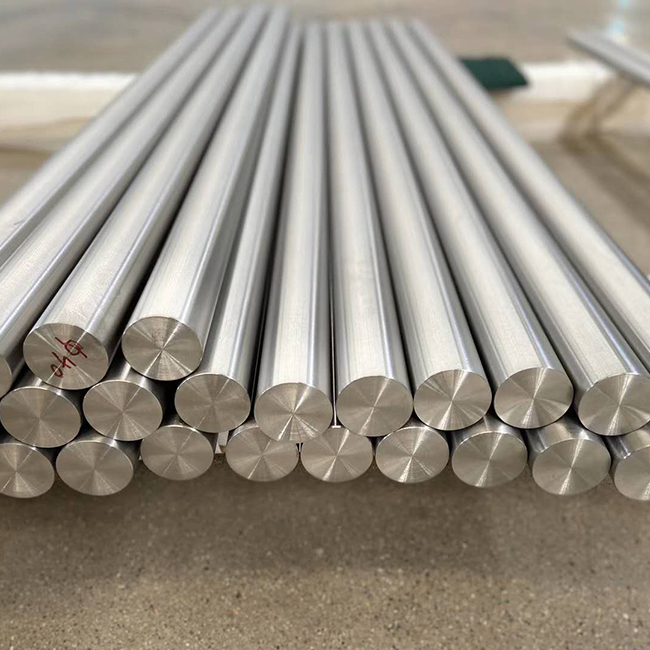
Gr4 titanium rods carry the highest strength among all commercially pure titanium grades. Its minimum tensile strength hits 550 MPa, minimum yield strength reaches 483 MPa, and minimum elongation stands at 15%. Manufacturers control oxygen content below 0.30% to gain interstitial strengthening effects. Gr4 titanium rods keep all natural merits of pure titanium including great corrosion resistance, reliable weldability and sound biocompatibility. Meanwhile, the material delivers load-bearing capacity close to structural steel. Its density only reaches 4.50 g/cm³, nearly 57% of steel weight. This paper fully explains core mechanical indexes of Gr4 titanium rods, performance changes under different temperatures, performance comparisons against other materials, and real application cases in chemical industry, offshore engineering, medical devices and aerospace fields. The content delivers complete material selection references for industrial engineers.
1 Core Mechanical Indexes of Gr4 Titanium Rods: Performance Benchmark of Highest-Strength Commercially Pure Titanium
1.1 Tensile Strength and Yield Strength: Breakthrough in Strength Limits
Gr4 titanium rods hold minimum tensile strength of 550 MPa. ASTM B348 sets its minimum 0.2% offset yield strength at 483 MPa. Gr2 titanium rods only reach 345 MPa minimum tensile strength. Gr4 gains about 60% higher strength over Gr2. Controlled oxygen content below 0.30% creates this strength advantage. Oxygen atoms boost lattice strength via interstitial strengthening mechanisms. High-stress components such as mixing shafts of chemical reactors and connecting parts of offshore platforms adopt Gr4 titanium rods for sufficient safety margins.
1.2 Ductility and Fracture Toughness: Balanced Strength and Plasticity
Gr4 titanium rods rank top in strength among pure titanium products, yet still maintain minimum elongation of 15% and minimum area reduction of 28%. Such ductility stops cracks during cold working and forming processes. Parts requiring bending, stretching or thread cutting fully rely on this balance between strength and toughness. Precision structural parts of medical devices also gain dual guarantees from Gr4’s excellent machining performance and high tensile strength. Its single-phase alpha microstructure creates uniform micro deformation and lowers risks of stress concentration.
1.3 Hardness and Wear Resistance
Gr4 titanium rods show Brinell hardness between 190 HB and 240 HB. This hardness level delivers acceptable wear resistance under friction conditions. The material cannot match hardness of quenched steel, but titanium’s naturally low friction coefficient supports stable performance for guide rails of precision instruments and sealing surfaces of chemical equipment valves. Moderate hardness also brings easy machining. Lathe turning and milling work proceed smoothly without fast blade wear seen in superhard alloys.
1.4 Fatigue Performance
Gr4 titanium rods deliver fatigue strength around 340 MPa. The material retains complete structural integrity after 10⁷ cyclic load cycles. This value far exceeds Gr2’s 250 MPa fatigue strength, so Gr4 fits parts under alternating stress loads. Fasteners for aircraft fuselages, shafts of seawater pumps and load-bearing components of artificial joints work for long service cycles. Gr4’s high fatigue strength becomes the key factor to guarantee component reliability. Its shear strength sits around 390 MPa, which further supports use in high-stress connection structures.
2 Temperature Impacts on Mechanical Properties of Gr4 Titanium Rods: Service Performance from Cryogenic to Medium-High Temperatures
2.1 Performance from Room Temperature to Medium Temperature
Gr4 titanium rods keep stable mechanical properties between room temperature and 260 °C, and work safely for long-term operation. The material bears short-term service loads from 260 °C to 300 °C, yet engineers need to evaluate actual stress levels first. Heat exchanger tube bundles in chemical plants and heating pipelines for petrochemical facilities run long-term under medium temperature environments. Gr4 titanium rods stay stable below 260 °C. Elongation remains above 12% within this temperature range to handle stress shifts from thermal expansion and contraction.
2.2 Rules of Strength Decline under High Temperatures
Gr4 titanium rods lose obvious strength once temperatures rise above 300 °C. Factories never use this material for continuous operation over 300 °C. High temperatures speed up dislocation movement and reduce the material’s ability to resist deformation. Carbon steel loses strength much faster under the same temperature. Gr4 titanium rods maintain relatively good load-bearing capacity within 300 °C. Engine brackets for aerospace products and fasteners for high-temperature chemical equipment need Gr4 rods for long-term use below 260 °C or short-term exposure below 300 °C.
2.3 Stable Low-Temperature Toughness
Titanium materials never turn brittle under low temperatures, and this acts as one core advantage of titanium. Gr4 titanium rods retain sound toughness and ductility at -50 °C and even liquid nitrogen temperature of -196 °C. This feature carries critical value for LNG equipment, deep-sea exploration devices and polar research instruments under extreme cold environments. The material’s impact toughness barely drops under low temperatures, which eliminates risks of brittle fractures in cold working conditions. Relevant research proves Gr4 titanium still maintains high elongation rates under cryogenic temperatures. Stable performance across all temperature zones cuts material selection work for factories dealing with multiple temperature ranges.
3 Performance Comparison Between Gr4 Titanium Rods and Other Materials: Why Choose Gr4?
3.1 Comparison with Lower-Grade Commercially Pure Titanium
Gr4 titanium rods represent the strongest grade of commercially pure titanium. Its tensile strength runs roughly 130% higher than Gr1, 60% higher than Gr2 and 20% higher than Gr3. Different oxygen content levels create such strength gaps. Gr4 sets maximum oxygen content at 0.30%, Gr1 limits oxygen below 0.18%, Gr2 below 0.25%, and Gr3 below 0.35%. Higher oxygen content slightly lowers ductility, yet Gr4 still meets minimum 15% elongation to cover most forming processes. All pure titanium grades show similar corrosion resistance against seawater, acid and alkaline liquids. Engineers pick Gr1 or Gr2 to control costs for low-stress anti-corrosion parts, and select Gr4 for high-stress structural components to gain larger safety factors.
| Performance Index | Gr1 Titanium Rod | Gr2 Titanium Rod | Gr4 Titanium Rod |
|---|---|---|---|
| Minimum Tensile Strength (MPa) | ≥ 240 | ≥ 345 | ≥ 550 |
| Minimum Yield Strength (MPa) | ≥ 138 | ≥ 275 | ≥ 483 |
| Minimum Elongation (%) | ≥ 24 | ≥ 20 | ≥ 15 |
| Maximum Oxygen Content (%) | ≤ 0.18 | ≤ 0.25 | ≤ 0.30 |
| Typical Brinell Hardness (HB) | 100 ~ 140 | 130 ~ 170 | 200 ~ 240 |
3.2 Comparison with Stainless Steel
316L stainless steel delivers tensile strength between 485 MPa and 550 MPa, close to Gr4 titanium rods. Its density hits 8.0 g/cm³, equal to 1.77 times titanium density. Gr4 titanium rods cut component weight by nearly 43% for lightweight projects. Gr4 titanium rods resist stress corrosion cracking far better than stainless steel under chloride-rich environments. Shafts of seawater pumps and fasteners for coastal facilities achieve service lives 5 to 10 times longer than stainless steel alternatives. Stainless steel carries magnetic signals that create interference for precision instruments and medical devices. Gr4 titanium rods own non-magnetic features to avoid such problems. Titanium brings higher upfront material costs, yet total expenses drop after counting maintenance and replacement fees over the full service cycle.
3.3 Specific Strength Comparison with Aluminum Alloy
7075 aluminum alloy reaches tensile strength of 570 MPa, slightly higher than Gr4 titanium rods, with yield strength around 500 MPa. The alloy loses massive strength under corrosive environments. Gr4 titanium rods own specific strength (strength divided by density) of roughly 122 MPa·cm³/g, which beats 7075 aluminum alloy. This value means Gr4 titanium rods bear heavier loads with the same component weight. Titanium outperforms aluminum alloys in corrosion resistance and high-temperature performance. Aluminum alloy parts for chemical plants and offshore engineering need anodizing or coating protection, while Gr4 titanium rods work well under bare surfaces. Aluminum alloys deliver better thermal conductivity for heat dissipation components in electronics, yet titanium’s non-magnetic property and strong corrosion resistance carry extra value for special scenarios. Engineers judge strength demands, weight limits, environmental adaptability and overall costs before final material selection.
4 Process Optimization and Quality Assurance for Gr4 Titanium Rods
4.1 Vacuum Melting and Chemical Composition Control
Manufacturers use high-purity titanium sponge as raw materials to produce Gr4 titanium rods. Two or multiple vacuum arc remelting (VAR) cycles produce uniform ingots with controlled impurity levels. Factories lock oxygen content between 0.25% and 0.30%. Oxygen levels below this range lead to insufficient strength, while excess oxygen raises brittleness. Iron content stays below 0.20%, hydrogen below 0.015%, carbon below 0.08%, and nitrogen below 0.05%. Strict iron content control prevents brittle phase formation and weakened corrosion resistance. Tight hydrogen limits eliminate delayed cracking from hydrogen embrittlement. Such raw material quality control acts as the core step to balance high strength and high toughness.
4.2 Hot Working and Microstructure Control
Forging and hot rolling form the core processes to adjust mechanical performance of Gr4 titanium rods. Manufacturers control deformation temperatures below beta transition points and adjust deformation volumes to refine grain structures. This process lifts both strength and toughness. Stress relief annealing follows hot working steps to remove residual stress and stabilize internal microstructures. Annealing parameters directly affect final elongation rates. Over-annealing creates coarse grains and lower strength, while incomplete annealing triggers cracks during later machining. Ultrasonic flaw detection spots internal microcracks and inclusions to guarantee defect-free finished rods before delivery.
4.3 Surface Treatment and Dimensional Precision
Precision grinding and centerless grinding raise dimensional accuracy and surface quality of Gr4 titanium rods to meet strict precision machining standards. Centerless grinding finishes Gr4 titanium rods to h9 tolerance class, a critical standard for automatic CNC feeding lines. Pickling processes clear surface oxide scales and create even surface roughness, which improves welding quality and coating adhesion for follow-up work. Complete surface integrity strongly influences fatigue performance. Tiny microcracks or surface scratches form stress concentration points and shorten service life under cyclic loads. Strict dimensional and surface control makes Gr4 titanium rods the top choice for precision electronic equipment supports and semiconductor production fixtures.
5 Application Requirements and Core Value of Gr4 Titanium Rods Across All Industries
5.1 Chemical Anti-Corrosion Equipment: Dual Guarantees of Corrosion Resistance and Mechanical Strength
Chemical reactors, storage tanks and pipelines face combined impacts from internal pressure, temperature fluctuations and corrosive media during operation. Mixing shafts, fasteners and flanges made from Gr4 titanium rods satisfy both strength and anti-corrosion standards. Gr4 titanium rods show extremely low uniform corrosion rates inside chloride-containing acid media, and never develop stress corrosion cracks. Stainless steel cannot match this advantage. Alternating stress from flowing media requires materials with strong fatigue resistance. Gr4 titanium rods deliver 340 MPa fatigue strength and maintain full structural integrity after long cyclic loads. Parts made of Gr4 titanium rods serve 3 to 5 times longer than stainless steel alternatives in heavy corrosion environments including chlor-alkali factories, hydrometallurgy workshops and acetic acid production lines.
5.2 Offshore Engineering: Top Material Choice for Chloride Corrosion Resistance
Seawater carries chloride concentrations up to 19,000 ppm. Ordinary stainless steel easily develops local crevice corrosion and faces high risks of stress corrosion cracking. Gr4 titanium rods show extremely low corrosion rates inside 3.5% sodium chloride solution, far better than stainless steel. The material also resists seawater corrosion fatigue, so manufacturers widely adopt Gr4 rods for offshore components. Mooring connecting pieces of offshore platforms, high-pressure pump shafts for seawater desalination plants and bearing sleeves of ship propellers sit submerged in seawater year-round. These parts bear wave impact and tidal cyclic loads, and Gr4’s high tensile strength and chloride resistance fully match working conditions. Titanium tube bundles inside seawater desalination heat exchangers resist chloride erosion 3 to 5 times better than cupronickel alloys.
5.3 Medical Devices: Balanced Biocompatibility and Mechanical Matching
Gr4 titanium rods own excellent biocompatibility without risks of dissolved alloy elements and reliable mechanical strength. The material fits non-implant and non-load-bearing medical devices such as equipment supports and main structures of surgical tools. Gr4 titanium rods carry elastic modulus around 110 GPa, a value between human cortical bone (10 ~ 30 GPa) and stainless steel (around 200 GPa). This property distributes external loads evenly. Main structures of precision medical devices demand outstanding machining performance. Gr4 titanium rods turn into ideal dimensional accuracy and smooth surface finish after lathe processing and surface treatment. Surgical instruments such as bone drills and bone saws bear instant impact force from high-speed cutting, and Gr4’s impact toughness fully handles such loads.
5.4 Aerospace Industry: High Specific Strength and Lightweight Structure Design
Fuselage connecting parts, landing gear components and engine hanging brackets set strict standards for material specific strength and fatigue resistance. Gr4 titanium rods deliver minimum tensile strength of 550 MPa and low density of 4.50 g/cm³. The material cuts component weight by over 40% for key load-bearing positions. Aerospace fasteners, hydraulic pipe connectors and structural supports adopt Gr4 titanium rods. The material meets high-stress load requirements and satisfies lightweight design rules for aircraft. Gr4 titanium rods find wide use in airframe and aircraft engine components, and also serve offshore and chemical processing sectors. Flying temperatures drop to -55 °C at high altitudes, and Gr4’s stable low-temperature toughness secures full structural safety. Solar panel brackets on spacecraft bear huge overload forces during launch and extreme temperature differences in space. Gr4’s balanced strength and toughness plus stable thermal performance guarantee smooth mission operation. Its non-magnetic feature fits support frames of precision gyroscopes without creating signal interference for navigation systems.
Conclusion
Gr4 titanium rods hold the highest strength grade among all commercially pure titanium products. The material creates perfect balance between strength and ductility with minimum tensile strength of 550 MPa and minimum elongation of 15%, plus natural outstanding corrosion resistance of pure titanium. Its combined advantages of non-magnetic property, low density (4.50 g/cm³) and stable performance under all temperature ranges make Gr4 titanium rods a key material option for chemical anti-corrosion projects, offshore engineering, medical devices and aerospace manufacturing. Strict chemical composition control, optimized hot working procedures and precise surface finishing fully release the mechanical potential of Gr4 titanium rods. Factories gain multiple benefits by selecting Gr4 titanium rods: lighter components, lower total costs, simplified material management and improved product reliability. The material delivers long-term stable service performance under harsh working environments.
FAQ
1 How to choose between Gr4 titanium rods and Gr2 titanium rods based on mechanical performance?
Gr4 titanium rods carry minimum tensile strength of 550 MPa while Gr2 only reaches 345 MPa. Gr4’s minimum yield strength hits 483 MPa against Gr2’s 275 MPa, so Gr4 holds roughly 60% higher overall strength. Engineers select Gr4 for high-stress structural parts and projects requiring large safety factors, including high-pressure chemical vessels, offshore platform connectors and aerospace fasteners. Gr2 titanium rods offer better ductility with minimum elongation of 20%, compared to Gr4’s 15%. Gr2 fits deep drawing forming, complex bending work and anti-corrosion parts under medium loads. Gr2 brings better economic value for low-stress working conditions with frequent forming steps. Gr4 acts as the first choice for heavy corrosion and high-stress environments to guarantee long-term component reliability.
2 How much mechanical performance loss do Gr4 titanium rods show under high temperatures?
Gr4 titanium rods work safely for long-term continuous service below 260 °C and suit medium-temperature chemical equipment. The material bears short-term operation loads between 260 °C and 300 °C. Factories never deploy Gr4 rods for any process above 300 °C. Engineers select titanium alloys such as Ti-6Al-4V (Gr5 titanium rods) for projects needing stable performance at higher temperatures.
3 How to verify mechanical performance of Gr4 titanium rods meets official standards?
Qualified suppliers provide Material Test Certificates (MTC) that fully comply with ASTM B348 standards. Standard tensile tests follow ASTM E8 procedures to measure tensile strength, yield strength and elongation rates. Brinell or Rockwell hardness testers complete hardness inspections. Charpy impact tests evaluate material impact toughness. All test data links back to original furnace batch numbers for full traceability. Ultrasonic flaw detection finds hidden internal defects and confirms complete material integrity.
Cooperate with Baoji Titanium Valley
Baoji Titanium Valley Titanium Nickel Zirconium Material Processing Co., Ltd. runs advanced Danieli rolling production lines imported from Italy. Our factory produces 20,000 tons of high-precision titanium rods every year and fully follows ASTM B348 specifications. As a professional supplier of Gr4 titanium rods, we provide customized dimensional solutions and stable bulk supply capacity. All products pass 100% ultrasonic flaw detection, and we issue EN 10204 3.1 material test certificates for all orders. Send inquiries to our sales team: sales@titaniumvalleys.com
References
- ASTM International. ASTM B348 – 19: Standard Specification for Titanium and Titanium Alloy Bars and Billets[S]. West Conshohocken: ASTM International, 2019.
- Ladhani Metal Corporation. Gr4 Titanium Rod Product Data [EB/OL]. 2025.
- MakeItFrom.com. Grade 2 Titanium vs. Gr4 Titanium Rod [EB/OL].
- Purcek G, Saray O, Kul O, et al. Effect of commercial purity levels on the mechanical properties of ultrafine-grained titanium[J]. Materials Science and Engineering A, 2011, 528(6): 2303 – 2308.
- Li Miaoquan, Wang Kelu. Research on the Relationship Between Mechanical Properties and Microstructure of Commercially Pure Titanium[J]. Rare Metal Materials and Engineering, 2019, 48(5): 1523 – 1529.