
What Are the Deep Drawing and Wire Spinning Processing Techniques for Nickel 201 Foil?
- Nickel 201 Foil
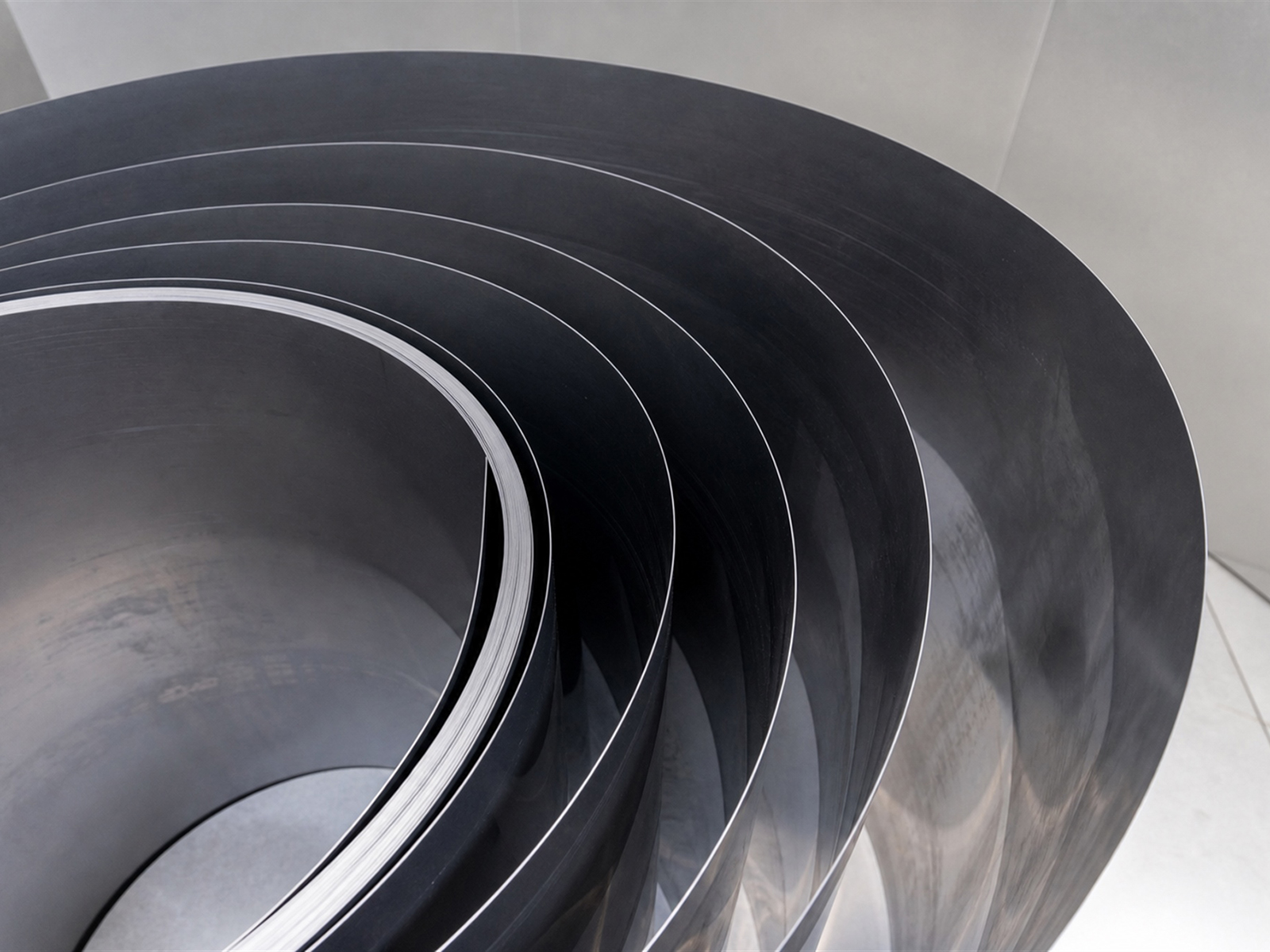
Nickel 201 Foil, a low-carbon (C ≤0.02%) high-purity nickel material conforming to ASTM B160 specifications, offers exceptional formability for deep drawing and wire spinning operations. Its ultra-low carbon content eliminates carbide precipitation risks during elevated-temperature forming, while maintaining excellent ductility and consistent mechanical properties across wide thickness ranges. This combination makes Nickel 201 foil the material of choice for complex-shaped components in chemical processing equipment, electronic enclosures, and precision wire products where corrosion resistance and manufacturability are equally critical.
1. Deep Drawing Processing of Nickel 201 Foil
(1) Material Formability and Annealing Requirements
Annealed (M temper) Nickel 201 foil exhibits elongation values exceeding 45%, providing exceptional formability for deep drawing operations. The low carbon content ensures that no carbide precipitation occurs during forming, maintaining uniform corrosion resistance throughout the drawn component. For draws exceeding 30% reduction in thickness, intermediate annealing at 700–850°C in hydrogen or vacuum atmosphere restores ductility and prevents work-hardening-induced cracking. Typical annealing cycles involve heating at 5–10°C/min, soaking for 30–60 minutes depending on foil thickness, and controlled cooling at 10–30°C/hour to minimize residual stress.
(2) Lubrication and Die Design for Deep Drawing
Deep drawing of Nickel 201 foil requires specialized lubrication systems to minimize friction between the foil, punch, and die surfaces. Polymer-based or graphite-dispersed oil lubricants provide effective separation while avoiding contamination of subsequent processing steps. Die angles of 6–8 degrees and punch corner radii of 1.5–3 times foil thickness optimize material flow and reduce thinning at critical bend regions. Multi-stage drawing with incremental reductions of 15–25% per pass prevents excessive thinning and tearing, with intermediate annealing between stages for deep draws exceeding 50% total reduction.
(3) Springback Control and Dimensional Accuracy
Nickel 201 foil exhibits moderate springback during deep drawing due to its elastic modulus of approximately 180 GPa and yield ratio of 0.35–0.45. Overbending techniques and compensating punch geometry account for springback angles of 1–3 degrees depending on foil thickness and draw depth. For precision components requiring tight tolerances (±0.05 mm), post-drawing leveling or press quenching operations restore dimensional accuracy. Modern CNC press brakes with closed-loop force control achieve consistent bend angles across production batches.
2. Wire Spinning and Drawing of Nickel 201
(1) Wire Drawing Process Parameters
Nickel 201 wire is produced by drawing annealed rod or thick foil through progressively smaller tungsten carbide or diamond dies. Drawing speeds of 3–8 m/s with multi-stage reduction (total reduction 60–80%) produce wire diameters from 0.1 to 6.0 mm. Intermediate annealing at 650–800°C between drawing passes restores ductility and prevents work-hardening-induced fracture. Lubrication with zinc soap or polymer-based drawing compounds reduces friction coefficients to 0.08–0.12, extending die life and improving surface finish.
(2) Surface Quality and Diameter Tolerance Control
Precision wire spinning requires diameter tolerances within ±0.005 mm for wires below 1.0 mm and ±0.01 mm for larger diameters. Online laser micrometers provide real-time diameter monitoring with automatic speed adjustment to maintain target dimensions. Surface roughness targets of Ra ≤0.2 μm are achieved through polished drawing dies and clean lubrication systems. Wire surfaces are inspected by automated eddy current systems detecting surface defects down to 10 μm in size at production line speeds.
(3) Mechanical Property Tailoring Through Cold Work
The mechanical properties of Nickel 201 wire can be precisely tuned by controlling the degree of cold work during drawing. Partially drawn wire (20–40% reduction) retains good ductility for subsequent forming operations, while heavily drawn wire (60–80% reduction) achieves tensile strengths exceeding 700 MPa with elongation of 5–10%. For spring applications, intermediate annealing at controlled temperatures produces Y+M temper conditions with optimized combinations of strength and formability.
3. Advanced Processing Techniques
(1) Hydroforming of Nickel 201 Foil Components
Hydroforming enables complex three-dimensional shapes to be formed from Nickel 201 foil blanks using high-pressure fluid (typically oil or water) instead of traditional mechanical punches. This process achieves uniform wall thickness distribution, eliminates springback, and produces components with superior surface finish. Hydroformed Nickel 201 components are used in chemical reactor internals, custom heat exchanger plates, and architectural cladding where corrosion resistance and aesthetic appearance are both important.
(2) Electromagnetic Forming for High-Speed Production
Electromagnetic forming utilizes intense pulsed magnetic fields to accelerate Nickel 201 foil blanks into die cavities at velocities exceeding 200 m/s. This non-contact forming method eliminates tool wear, enables formation of geometries impossible with conventional stamping, and produces components with refined microstructures that enhance mechanical properties. Applications include precision electrical contacts, EMI/RFI shield enclosures, and miniature sensor housings.
(3) Roll Forming for Continuous Profiles
Roll forming passes Nickel 201 foil through successive stands of contoured rolls that progressively bend the strip into the target cross-sectional profile. This continuous process produces long lengths of consistent profile with excellent surface quality and dimensional repeatability. Roll-formed Nickel 201 profiles are used in bus bars, electrical grounding straps, chemical processing equipment trim, and custom architectural elements where corrosion resistance and aesthetic finish are required.
4. Quality Control and Inspection
(1) Dimensional Verification
All formed Nickel 201 components undergo dimensional verification using calibrated measuring instruments. Critical dimensions are checked with digital calipers, micrometers, or coordinate measuring machines (CMM) with accuracy better than ±0.002 mm. For high-volume production, automated optical inspection systems verify dimensions at production line speeds, rejecting non-conforming parts in real time.
(2) Surface Integrity Assessment
Surface quality inspection includes visual examination under standardized lighting, profilometry for roughness measurement, and non-destructive testing (eddy current or ultrasonic) for subsurface defect detection. Formed components are examined for cracks, wrinkles, orange peel texture, and surface scratches that could compromise corrosion resistance or aesthetic appearance.
(3) Corrosion Resistance Validation
Post-forming corrosion resistance is verified through salt spray testing per ASTM B117 (minimum 500 hours with no white corrosion products), copper sulfate-sulfuric acid pickling tests per ASTM A262 Practice E, and electrochemical impedance spectroscopy in relevant service environments. Formed components must demonstrate corrosion resistance equal to or exceeding that of the base material, confirming that forming and annealing processes have not degraded protective properties.
Conclusion
Nickel 201 foil offers exceptional versatility for deep drawing and wire spinning operations, combining outstanding formability with maintained corrosion resistance. The ultra-low carbon content eliminates carbide precipitation risks, while controlled annealing between forming stages preserves ductility for complex shapes. Advanced processing techniques including hydroforming, electromagnetic forming, and roll forming expand the range of achievable geometries and performance characteristics. With rigorous quality control ensuring dimensional accuracy, surface integrity, and corrosion resistance, Nickel 201 foil components meet the demanding requirements of chemical processing, electronics, and precision manufacturing industries.
FAQ
Q1: How many intermediate annealing cycles are needed for deep drawing Nickel 201 foil?
For draws exceeding 30% thickness reduction, one intermediate anneal is typically required. For reductions above 60%, two or more annealing cycles may be necessary. The exact number depends on foil thickness, draw geometry, and the required final mechanical properties. Visual inspection for cracking and springback measurement provide practical indicators of when annealing is needed.
Q2: Can Nickel 201 wire be drawn to diameters below 0.1 mm?
Yes, Nickel 201 wire can be drawn to diameters as small as 0.025 mm using precision drawing equipment with polished diamond dies and clean lubrication systems. Ultra-fine wire requires reduced drawing speeds (1–3 m/s), frequent intermediate annealing, and careful tension control to prevent breakage. Specialized drawing machines with multi-block capstans and automatic take-up systems maintain consistent tension throughout the drawing process.
Q3: What surface finish can be achieved on deep-drawn Nickel 201 components?
Deep-drawn Nickel 201 components typically achieve surface finishes of Ra 0.4–0.8 μm, depending on die surface quality, lubrication, and drawing parameters. Polished dies and optimized lubrication can produce mirror-like surfaces with Ra ≤0.2 μm suitable for architectural or visible applications. Post-forming polishing or electropolishing further improves surface finish when required.
Contact Titanium Valley
Baoji Titanium Valley Titanium Nickel Zirconium Material Processing Co., Ltd. manufactures and supplies high-purity Nickel 201 foil and wire conforming to ASTM B160 specifications. We offer deep drawing grade material with optimized annealing conditions, precision wire drawing services, and custom forming support. Contact us for technical data and quotations:
References
Kalpakjian, S., Schmid, S.R. Manufacturing Engineering and Technology [M]. 8th ed. Pearson, 2021.
ASM International. ASM Handbook, Volume 14B: Metalworking: Bulk Forming [M]. ASM International, 2002.
Smith, W.F. Foundations of Materials Science and Engineering [M]. 6th ed. McGraw-Hill, 2019.
ASTM International. ASTM B160-2020 Standard Specification for Nickel and Nickel Rods and Bars [S]. 2020.