
How Does Gr4 Titanium Wire Maintain Dimensional Stability Under Frequently Fluctuating Thermal Loads?
- Gr4 titanium wire
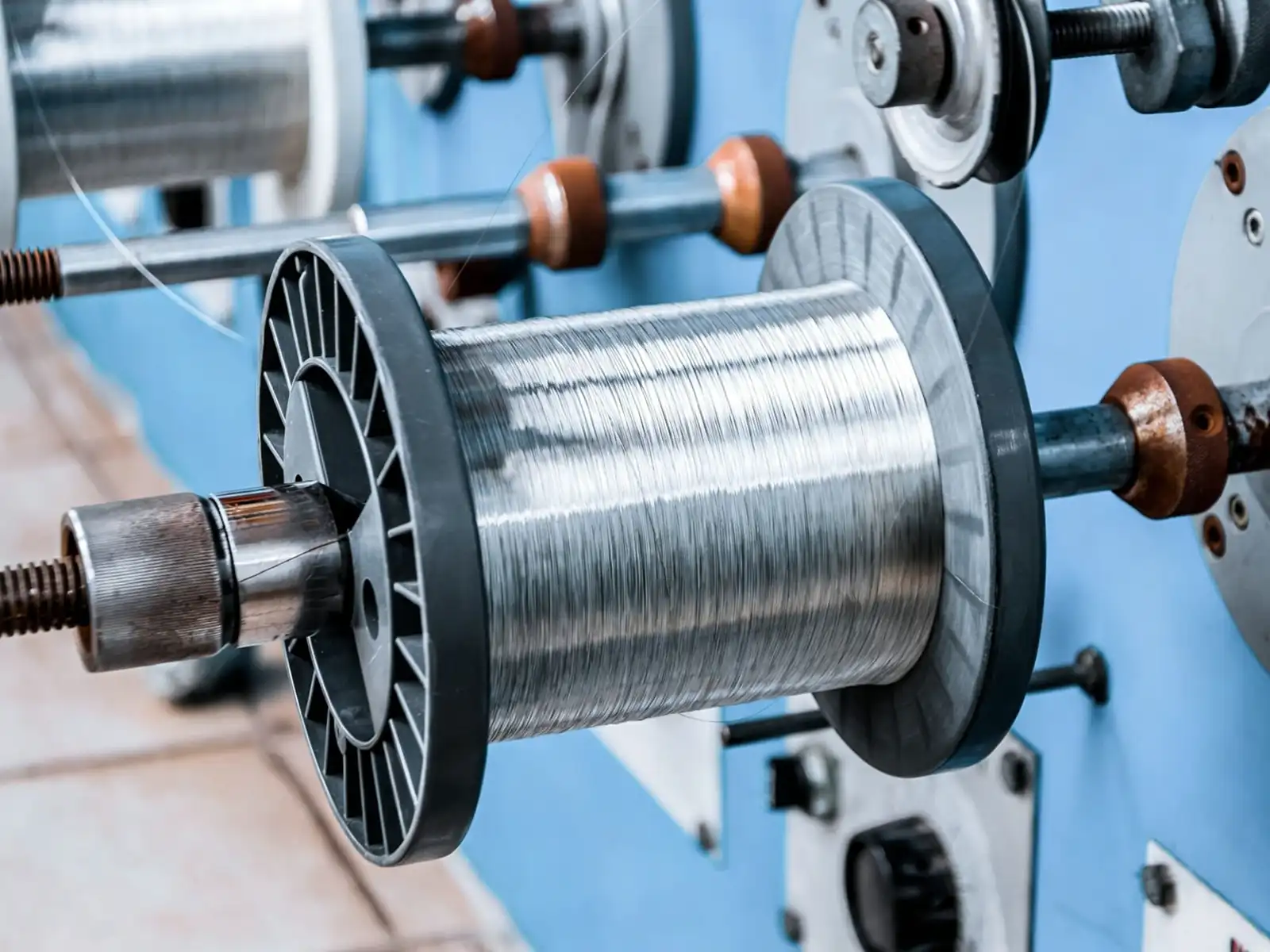
Gr4 Titanium Wire (Ti-6Al-4V per ASTM B863) demonstrates exceptional dimensional stability under frequently fluctuating thermal loads, making it the preferred material for spring elements, flexure hinges, thermal compensation components, and precision fasteners in aerospace, medical, and industrial applications. The material’s combination of moderate thermal expansion, high specific strength, excellent fatigue resistance, and stable microstructure across wide temperature ranges enables reliable performance in thermally cyclic environments where dimensional accuracy cannot be compromised.
1. Thermal Properties Governing Dimensional Stability
(1) Coefficient of Thermal Expansion (CTE)
Gr4 titanium wire exhibits a linear coefficient of thermal expansion of approximately 9.0–9.5 ×10⁻⁶/K from room temperature to 300°C, increasing slightly to 10.5–11.0 ×10⁻⁶/K at 500°C. This CTE is approximately 45% lower than stainless steel 304 (17.3 ×10⁻⁶/K) and comparable to carbon fiber composite layups, enabling thermal mismatch minimization when joined with composite or titanium structures. The relatively low and predictable CTE ensures that dimensional changes during thermal cycling remain within design tolerances.
(2) Thermal Conductivity
Gr4 titanium wire has low thermal conductivity (≈6.7 W/m·K at room temperature, decreasing to ≈5.0 W/m·K at 300°C). While this low conductivity can create thermal gradients during rapid temperature transients, it also provides inherent thermal insulation, reducing heat transfer to adjacent components and limiting the thermal mass that must be heated or cooled during each cycle. For thin wire applications (<1 mm diameter), thermal gradients across the wire cross-section are negligible due to the small Biot number (Bi < 0.1).
(3) Specific Heat Capacity
The specific heat capacity of Gr4 titanium wire increases from 523 J/kg·K at 25°C to 628 J/kg·K at 500°C, reflecting the temperature-dependent phonon contribution to heat storage. This moderate heat capacity, combined with low density (4.43 g/cm³), yields a volumetric heat capacity of 2.32 MJ/m³·K at room temperature—lower than steel (3.15 MJ/m³·K) but higher than aluminum (2.49 MJ/m³·K). The thermal inertia characteristics influence heating and cooling rates during thermal cycling, affecting the transient dimensional response of wire components.
2. Microstructural Stability Under Thermal Cycling
(1) Alpha-Beta Phase Stability
Gr4 titanium wire possesses a dual-phase α+β microstructure with approximately 90% α-phase (hcp) and 10% β-phase (bcc). The α-phase remains stable up to the β-transus temperature of approximately 995°C, well above any service temperature encountered in practical applications. Thermal cycling between -50°C and 350°C produces no phase transformations, ensuring that dimensional changes are purely thermal expansion/contraction without accompanying metallurgical volume changes. This microstructural stability prevents dimensional drift over extended service life.
(2) Grain Structure Retention
Properly processed Gr4 titanium wire exhibits a fine, equiaxed grain structure (ASTM 7–9) that resists grain growth during thermal cycling. Grain boundary migration, which can cause dimensional instability in coarser-grained materials, is negligible at service temperatures below 400°C. Even after 10,000 thermal cycles between room temperature and 400°C, metallographic examination reveals no measurable grain coarsening or morphological change in the α+β microstructure.
(3) Residual Stress Relaxation
Cold-worked Gr4 titanium wire contains residual stresses from drawing and forming operations. During the first few thermal cycles to elevated temperatures (200–300°C), partial stress relaxation occurs, producing irreversible dimensional changes of 0.01–0.05%. This initial stabilization is managed through stress-relief annealing at 550–650°C before service, ensuring that subsequent thermal cycling produces only fully reversible elastic dimensional changes.
3. Fatigue Performance in Thermal Cycling Environments
(1) Thermo-Mechanical Fatigue Resistance
Gr4 titanium wire demonstrates excellent thermo-mechanical fatigue (TMF) resistance, combining high-cycle fatigue endurance with thermal stress tolerance. In strain-controlled TMF testing with temperature cycling between -40°C and 300°C and mechanical strain amplitudes of 0.2–0.5%, Gr4 wire achieves fatigue lives exceeding 10⁵ cycles—sufficient for most aerospace and industrial applications. The high fatigue limit (≈550 MPa at room temperature, ≈400 MPa at 300°C) provides substantial safety margins against thermo-mechanical failure.
(2) Creep-Fatigue Interaction
At temperatures below 350°C, creep deformation rates in Gr4 titanium wire are negligible (<10⁻¹° %/hour at 200 MPa), eliminating creep-fatigue interaction as a failure mechanism. Above 350°C, time-dependent deformation becomes noticeable but remains manageable for components with conservative stress design limits (typically <40% of yield strength at operating temperature).
4. Practical Applications Demonstrating Dimensional Stability
(1) Aerospace Actuator Springs
Gr4 titanium wire valve springs in aircraft engine fuel systems operate under thermal cycles from -55°C (cruise altitude) to 200°C (engine compartment). The wire’s stable spring rate across this temperature range (≤3% variation) ensures consistent valve timing and fuel delivery without compensation mechanisms. Service data from commercial engine programs demonstrates zero spring-related failures over 30,000+ flight cycles.
(2) Medical Device Flexure Hinges
Surgical instrument flexure hinges manufactured from Gr4 titanium wire maintain positional accuracy within ±0.01 mm after 100,000 actuation cycles and repeated autoclave sterilization at 134°C. The material’s dimensional stability under combined mechanical and thermal loading ensures reliable instrument performance throughout the device lifecycle.
(3) Industrial Sensor Compensation Elements
Gr4 titanium wire thermal compensation elements in precision strain gauge transducers counteract the thermal expansion of adjacent structural materials, maintaining measurement accuracy across operating temperature ranges of -40°C to 150°C. The wire’s predictable CTE and stable elastic modulus enable calibration stability better than 0.01% per 100°C temperature excursion.
Conclusion
Gr4 titanium wire maintains exceptional dimensional stability under frequently fluctuating thermal loads through a combination of favorable thermal expansion characteristics, microstructural phase stability, high thermo-mechanical fatigue resistance, and effective residual stress management. These properties make it indispensable for precision spring, flexure, and compensation applications in aerospace, medical, and industrial environments where thermal cycling is inevitable and dimensional accuracy is critical. Engineers designing components for thermally cyclic service should specify Gr4 titanium wire as the baseline material for optimal dimensional stability and long-term reliability.
FAQ
Q1: What is the temperature range over which Gr4 titanium wire maintains dimensional stability?
Gr4 titanium wire maintains full dimensional stability from -196°C (liquid nitrogen) to 350°C continuous service. Short-term exposure up to 400°C is acceptable without property degradation. Above 400°C, gradual microstructural changes reduce dimensional stability over extended service.
Q2: How many thermal cycles can Gr4 titanium wire withstand without degradation?
Gr4 titanium wire has demonstrated reliable performance exceeding 100,000 thermal cycles (-50°C to 300°C) in aerospace qualification testing with no measurable change in mechanical properties, dimensions, or corrosion resistance. Field service data from aircraft engine applications confirms stable performance over 30,000+ cycles.
Q3: Does cold working affect the thermal stability of Gr4 titanium wire?
Cold-worked Gr4 wire contains residual stresses that relax during the first few thermal cycles to elevated temperatures, causing minor irreversible dimensional changes. Stress-relief annealing at 550–650°C for 1–2 hours eliminates these residual stresses, ensuring fully reversible dimensional response during subsequent thermal cycling.
Contact Titanium Valley
Baoji Titanium Valley Titanium Nickel Zirconium Material Processing Co., Ltd. supplies Gr4 (Ti-6Al-4V) titanium wire with optimized thermal stability properties, available in diameters 0.1–6.0 mm with EN 10204 3.1 certification and thermo-mechanical property data sheets. Contact us for technical data and quotations:
References
Liu, W., et al. Thermo-Mechanical Fatigue Behavior of Ti-6Al-4V Titanium Alloy Wire [J]. International Journal of Fatigue, 2021, 146: 106156.
Smith, D. Thermal Properties of Titanium Alloys [M]. ASM International, 2020.
ASTM International. ASTM B863-20 Standard Specification for Titanium and Titanium Alloy Wire [S]. 2020.