
What Are the Chemical Composition and Advantages of TB13 Titanium Alloy Rod?
- TB13 Titanium Alloy Rod
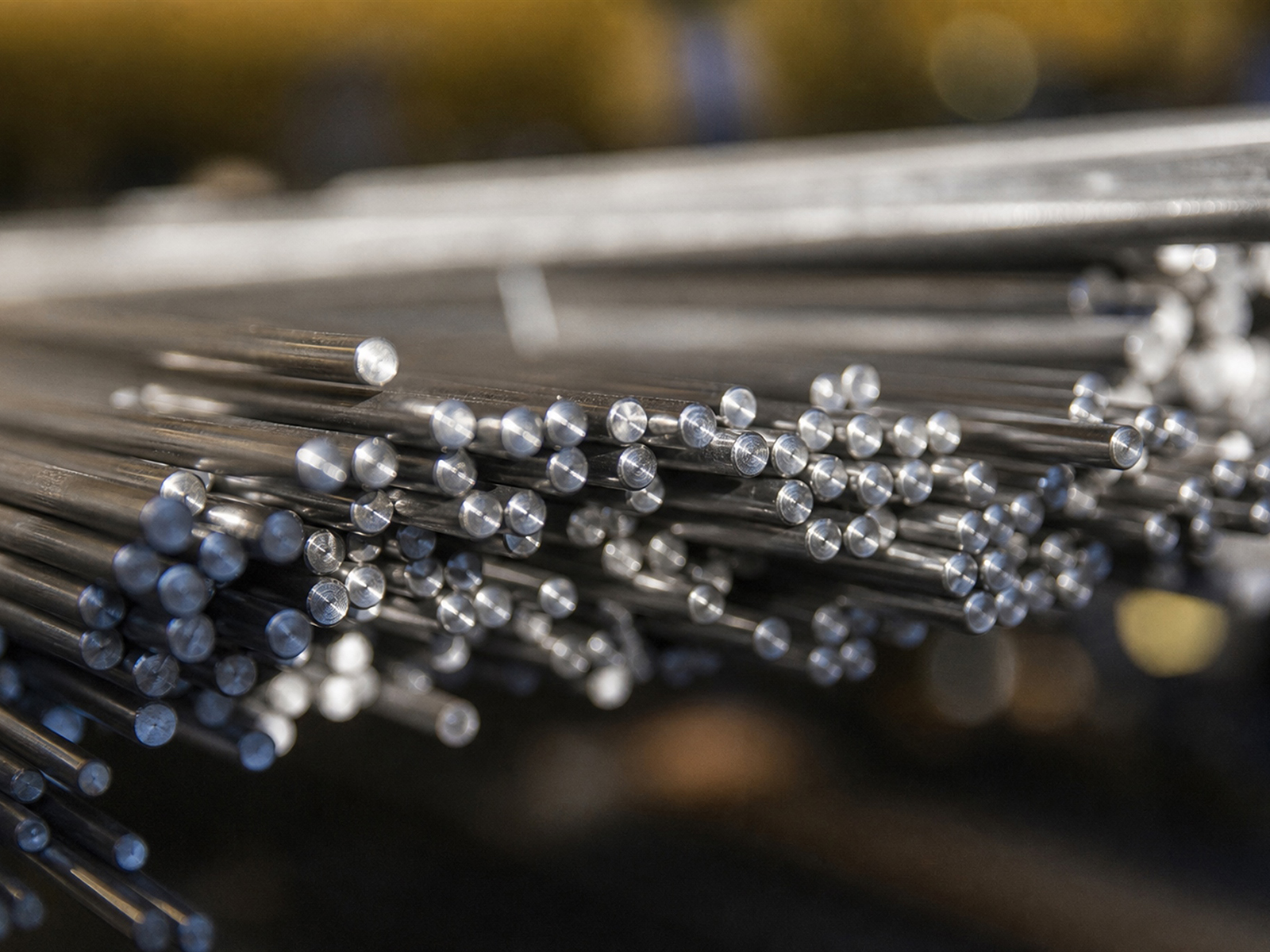
TB13 titanium alloy (Chinese GB standard designation, equivalent to Ti-5Al-2.5Sn-2Zr-4Mo-4Cr per Chinese national standards), is a high-strength alpha-beta titanium alloy specifically engineered for aerospace structural applications requiring exceptional strength, fracture toughness, and fatigue resistance. Developed in China for military and civil aerospace programs, TB13 represents one of the most advanced commercially available titanium alloys, offering mechanical properties that surpass Ti-6Al-4V (Gr5) while maintaining good corrosion resistance and fabricability. This article details the chemical composition, microstructural characteristics, mechanical properties, and competitive advantages of TB13 Titanium Alloy Rod.
1. Chemical Composition and Alloy Design
(1) Element-by-Element Breakdown
TB13 titanium alloy contains the following elements within specified ranges: Aluminum (Al) 4.5-6.0% – alpha stabilizer providing solid solution strengthening and phase stability; Tin (Sn) 2.0-3.0% – neutral element that strengthens the alpha phase without significantly affecting the beta transus temperature; Zirconium (Zr) 2.0-4.0% – neutral strengthening element that refines microstructure and improves fracture toughness; Molybdenum (Mo) 3.5-5.0% – beta stabilizer enabling solution treatment and age hardening; Chromium (Cr) 3.0-5.0% – beta stabilizer that enhances hardenability and high-temperature strength; Iron (Fe) <= 0.30% – unavoidable impurity that provides minor solid solution strengthening; Oxygen (O) <= 0.20% – interstitial element contributing to strength but limited to maintain ductility; Hydrogen (H) <= 0.015% -严格控制以防止氢脆; Carbon (C) <= 0.08%; Nitrogen (N) <= 0.05%; Silicon (Si) <= 0.05%; Balance: Titanium (Ti).
(2) Alloy Design Philosophy
The TB13 composition is carefully balanced to achieve optimal alpha-beta phase fraction and distribution. The combined Mo and Cr beta stabilizer content (6.5-10%) provides sufficient hardenability for solution treating and aging responses, while the Sn and Zr neutral strengtheners enhance strength without degrading corrosion resistance or weldability. This multi-element design approach distinguishes TB13 from simpler alloys like Ti-6Al-4V, enabling superior mechanical property combinations.
2. Microstructural Characteristics
(1) Phase Composition and Morphology
In the solution-treated and aged condition, TB13 titanium alloy exhibits a lamellar-plus-network alpha microstructure with dispersed beta phase islands. The alpha phase (hcp) constitutes approximately 70-75% volume fraction and provides corrosion resistance and creep resistance. The beta phase (bcc) accounts for 25-30% and contributes to strength and toughness. Fine alpha precipitates within the beta matrix (50-200 nm) generated during aging provide precipitation strengthening, while the alpha network at prior beta grain boundaries impedes crack propagation.
(2) Grain Size Control
TB13 titanium alloy rod is manufactured through controlled forging and rolling with final annealing to achieve ASTM grain size 5-8 (approximately 25-60 um). Finer grain sizes (ASTM 7-8) maximize fracture toughness and fatigue strength, while coarser grains (ASTM 5-6) provide improved creep resistance at elevated temperatures. Grain size is controlled through final deformation temperature, reduction ratio, and annealing parameters.
3. Mechanical Properties
4. Competitive Advantages
(1) Strength Comparison with Ti-6Al-4V (Gr5)
TB13 titanium alloy achieves tensile strengths 15-20% higher than solution-treated and aged Ti-6Al-4V (1250 MPa vs. 1050-1100 MPa), with correspondingly higher yield strength and fatigue limit. This strength enhancement enables weight reductions of 10-15% in structural components without compromising safety factors, directly translating to improved fuel efficiency and payload capacity in aerospace applications.
(2) Fracture Toughness and Damage Tolerance
Despite its higher strength, TB13 maintains fracture toughness values (K1c = 75-85 MPa.sqrt(m)) comparable to or exceeding those of Ti-6Al-4V (K1c = 65-75 MPa.sqrt(m) in high-strength conditions). The Sn and Zr additions refine the microstructure and impede crack propagation, providing superior damage tolerance for critical aerospace structures where crack growth resistance is essential.
(3) Elevated Temperature Performance
TB13 titanium alloy retains strength at temperatures up to 350-400 degrees C, with creep resistance superior to Ti-6Al-4V above 300 degrees C. The Sn and Zr elements stabilize the microstructure against coarsening at elevated temperatures, maintaining mechanical property integrity in engine and aft-section applications where temperatures exceed the capability of conventional alpha-beta alloys.
(4) Corrosion Resistance
TB13 titanium alloy exhibits corrosion resistance comparable to Ti-6Al-4V in most environments, including seawater, chlorine-containing solutions, and oxidizing acids. The Sn and Zr additions do not degrade the protective oxide film formation, and the alloy maintains corrosion rates below 0.001 mm/year in boiling magnesium chloride solution (ASTM E-Cell test), confirming excellent resistance to chloride stress corrosion cracking.
5. Applications
(1) Aerospace Structural Components
TB13 titanium alloy rod and forgings are used for aircraft landing gear components, wing spar fittings, fuselage frames, engine pylons, and high-load fasteners. The alloy’s high strength-to-weight ratio enables significant weight savings in primary structure applications where every kilogram reduction improves fuel efficiency and range.
(2) Military Aviation and Defense
TB13 titanium alloy is extensively used in Chinese military aircraft programs, including fighter jet structural components, missile launchers, and armor-piercing weapon bodies. The alloy’s high strength and impact resistance make it ideal for defense applications requiring maximum performance in constrained weight envelopes.
(3) High-Performance Industrial Applications
Beyond aerospace, TB13 titanium alloy serves racing bicycle frames, golf club components, precision instrument parts, and chemical processing equipment operating under high stress and corrosive conditions. The alloy’s combination of strength, corrosion resistance, and biocompatibility expands its applicability into medical implant and sporting goods markets.
Conclusion
TB13 titanium alloy represents a significant advancement over conventional Ti-6Al-4V in strength, fracture toughness, and elevated temperature performance, achieved through a carefully balanced multi-element composition incorporating Al, Sn, Zr, Mo, and Cr. Its superior mechanical properties combined with good corrosion resistance and fabricability make it the material of choice for critical aerospace structural applications where weight savings, structural integrity, and long-term reliability are paramount. As manufacturing capabilities for TB13 titanium alloy rod expand and costs decrease, adoption is expected to grow across both military and civil aerospace programs.
FAQ
Q1: How does TB13 compare to Ti-10V-2Fe-3Al in terms of strength?
Both alloys achieve similar peak tensile strengths (1150-1250 MPa). TB13 offers superior fracture toughness and corrosion resistance due to Sn and Zr additions, while Ti-10V-2Fe-3Al provides slightly better formability and lower cost. Selection depends on whether toughness or formability is the primary design driver.
Q2: Is TB13 titanium alloy weldable?
Yes. TB13 titanium alloy can be welded by GTAW, EBW, and laser welding with matching filler material. Proper shielding and post-weld heat treatment are required to maintain weld zone properties. Welded joints typically achieve 85-90% of base metal strength.
Q3: What is the availability and lead time for TB13 titanium alloy rod?
TB13 titanium alloy rod is available from qualified Chinese manufacturers with annual production capacity exceeding 5,000 tons. Standard diameters (10-100 mm) have 4-6 week lead times. Custom sizes and specialized heat treatments require 8-12 weeks. International shipping adds 2-4 weeks depending on destination.
Contact Titanium Valley
Baoji Titanium Valley Titanium Nickel Zirconium Material Processing Co., Ltd. supplies TB13 titanium alloy rod with EN 10204 3.1 certification, full mechanical property test reports, and customized heat treatment services. Standard and custom diameters 10-300 mm available. Contact us for material data sheets and quotations:
References
GB/T 3620.1-2016. Titanium and Titanium Alloy Forgings and Forging Stock [S]. Standardization Administration of China, 2016.
Liu, J., et al. Mechanical Properties of TB13 Titanium Alloy for Aerospace Applications [J]. Materials Science and Engineering A, 2021, 808: 140912.
ASM International. Titanium Alloy Database [M]. ASM Handbook Volume 4, 2020.