
What Should You Know About Exploring the Characteristics of Ultra-thin Ti-10V-2Fe-3Al Titanium Alloy Foil?
- Ti-10V-2Fe-3Al Titanium Alloy Foil
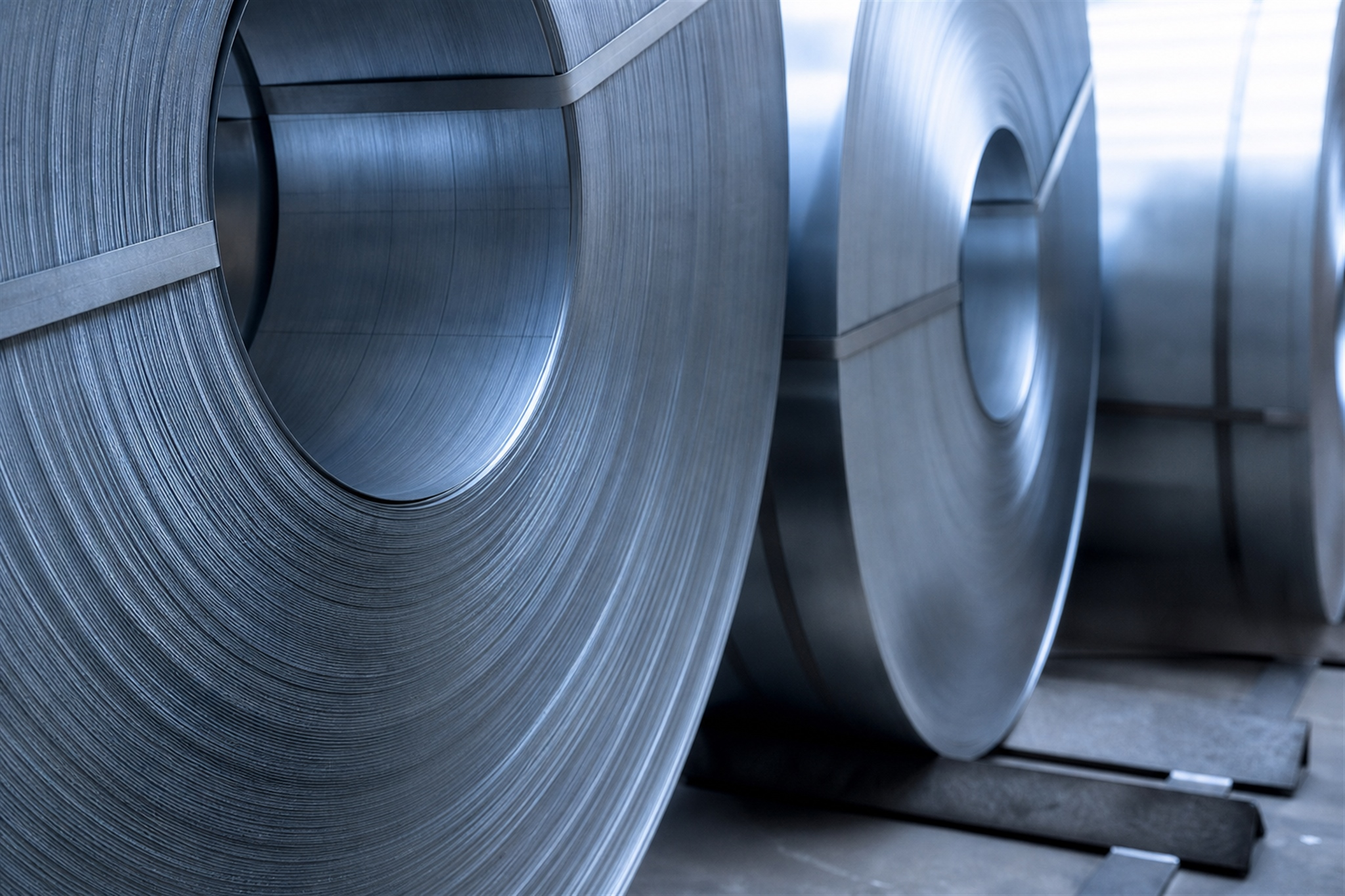
Ti-10V-2Fe-3Al titanium alloy foil, as a representative material of near-β titanium alloys, is redefining the boundaries of high-performance structural materials. This alloy achieves a decoupled control of formability and strength through precise composition management-exhibiting excellent ductility in the solution-treated state, which facilitates complex stamping and deep processing; after aging treatment, its strength can soar to 1100-1300 MPa, far exceeding that of conventional TC4 (Gr5) titanium alloy. With ultra-thin specifications of 0.03-0.8 mm and a maximum width production capability of 670 mm, this material demonstrates significant application value in aerospace, precision electronic shielding, and high-end equipment manufacturing, becoming a key material for breaking through the bottlenecks of lightweight and high-strength design.
1. Why Is Metallurgical Fundamentals and Performance Advantages of Ti-10V-2Fe-3Al Alloy Important?
The Ti-10V-2Fe-3Al alloy belongs to the near-β titanium alloy system, with its microstructure dominated by the β phase, accompanied by a small amount of α phase precipitation. Vanadium (V), as a strong β-stabilizing element, has a content of 9.0-11.0%, effectively reducing the β phase transformation temperature; the synergistic addition of iron (Fe) and aluminum (Al) ensures room temperature strength while inhibiting the formation of brittle phases. This microstructural feature allows the material to maintain a single β phase or a near-β phase structure in the solution-treated state, with equiaxed grains and diversified dislocation slip systems, thus achieving a plastic deformation capability similar to austenitic stainless steel. During aging treatment, the α phase precipitates as fine dispersed particles, forming a strengthening interface with the β matrix, and the tensile strength jumps from 800-950 MPa in the solution-treated state to 1100-1300 MPa, with the yield strength simultaneously increasing by more than 30%.
(1) What Should You Know About Competitiveness Analysis of Density and Specific Strength?
The density of this alloy is only 4.65 g/cm³, slightly higher than TC4’s 4.51 g/cm³, but much lower than high-strength steel (about 7.85 g/cm³) and nickel-based superalloys (8.2-8.5 g/cm³). In the STA (solution treated and aged) state, its specific strength (strength-to-density ratio) can reach 240-280 kN·m/kg, surpassing 7075 aluminum alloy (about 190-210 kN·m/kg) and 17-4PH stainless steel (about 200 kN·m/kg). For aerospace structural components that need to withstand high cyclic loads, reducing 1 kg of weight can save approximately $300-500 in fuel costs over the full life cycle. The application of Ti-10V-2Fe-3Al foil directly translates into significant economic benefits and performance improvements.
(2) What Should You Know About Corrosion Resistance and Environmental Adaptability?
Although the iron content in the alloy reaches 1.5-2.5%, a TiO2 passivation film spontaneously forms on the surface of the titanium matrix with a thickness of 3-7 nm, showing excellent corrosion resistance in marine atmospheres, industrial acidic environments, and high humidity conditions. The corrosion rate in 3.5% NaCl solution is less than 0.005 mm/year, only 1/15 of that of 2024 aluminum alloy. This characteristic allows it to be used without additional protective coatings in applications such as drone skins in coastal areas and shielding covers for shipborne electronic equipment, extending the maintenance cycle to 3-5 times that of ordinary aluminum alloys.
Performance indicators | Ti-10V-2Fe-3Al (STA condition) | TC4 (Gr5) | 7075-T6 Aluminum Alloy |
Tensile Strength (MPa) | 1100-1300 | 895-930 | 570-600 |
Yield Strength (MPa) | 1050-1200 | 825-870 | 500-540 |
Density (g/cm³) | 4.65 | 4.51 | 2.81 |
Specific strength (kN·m/kg) | 240-280 | 198-206 | 190-210 |
Corrosion resistance | Excellent | Excellent | Medium |
2. What Should You Know About Breakthroughs in the Manufacturing Technology of Ultra-thin Wide Foil?
(1) What Should You Know About Precision Control of 20-roll Finishing System?
Achieving stable mass production within a thickness range of 0.03-0.8mm relies on the coordinated control of a 20-roll cold rolling mill. This system utilizes hydraulic AGC (Automatic Gauge Control) and CVC (Continuously Variable Crown) roll technology. By monitoring rolling force in real time (accuracy ± 0.5 kN) and roll gap position (resolution 0.001 mm), it dynamically compensates for thickness fluctuations caused by material hardening and temperature rise. Multi-point roll bending adjustments of the intermediate and backup rolls can eliminate edge thinning, ensuring thickness tolerance within ± 0.001 mm across a width of 670 mm. This level of precision is 40% higher than traditional 4- or 6-roll mills, resulting in foil surface roughness Ra ≤ 0.4 um, meeting the stringent surface quality requirements of aerospace structural components.
(2) What Should You Know About Vacuum Annealing and Microstructure Uniformity Assurance?
After rolling, vacuum annealing is required to eliminate processing hardening. Ti-10V-2Fe-3Al is extremely sensitive to oxygen content. According to typical data, for every 0.1% increase in oxygen content, room temperature elongation decreases by about 5-8% [1]. Continuous vacuum annealing furnaces use a vacuum level of 10⁻³ Pa, combined with segmented heating zones (preheating zone, holding zone, slow cooling zone), keeping oxide weight gain below 0.5 mg/cm². The holding temperature is precisely controlled at 750-820℃ (± 5℃), and the holding time is dynamically adjusted based on thickness (about 15 minutes for 0.05 mm foil, about 45 minutes for 0.5 mm foil), ensuring uniform β grain size at ASTM 7-9 level. After annealing, the material exhibits a bright silver metallic luster, with no oxide staining on the surface, providing a clean substrate for subsequent bonding, coating, or plating processes.
(3) What Should You Know About Strip Shape Control and Soft-Reduction Rolling Stability?
The yield strength of near-β titanium alloy in the solution-treated state is 700-850 MPa, and plate shape defects such as edge waves and center waves are prone to occur during rolling. By establishing a finite element simulation model, optimizing the pass reduction distribution (single-pass reduction ≤ 15%) and tension regime (front tension 20-35 MPa, back tension 30-50 MPa), combined with real-time detection using a laser plate shape meter (sampling frequency 100 Hz), the bending roller force and side guide plate positions are adjusted through feedback. As a result, the Class I plate shape standard (wave height ≤ 3 mm/m) is achieved, allowing direct delivery to the stamping line without secondary leveling, increasing material utilization by more than 12%.
Process parameters | Rough rolling stage | Intermediate rolling stage | Finishing rolling stage |
Rolling Temperature (C) | 650-750 | room temperature | room temperature |
Single-pass compaction rate (%) | 20-30 | 12-18 | 8-12 |
Rolling Speed (m/min) | 15-25 | 30-50 | 60-120 |
Intermediate annealing | Every 3 times | Every 5 times | Unannealed |
Thickness Tolerance (mm) | ± 0.02 | ± 0.005 | ± 0.001 |
3. What Should You Know About Mechanism for Independent Regulation of Formability and Strength?
(1) What Should You Know About Cold Working Properties in the Non-aging State?
Solution treatment (ST state) enables the material to obtain a fully β-phase microstructure, whose body-centered cubic lattice has 48 slip systems, far more than the 3 basal plane slip systems of the α-phase hexagonal close-packed structure. This multiple-slip-system characteristic allows the elongation of non-aged foils to reach 20-30% and the reduction of area to exceed 40%, capable of withstanding severe forming conditions with a 90° bending radius ≤ 1.5 times the plate thickness. During room-temperature stamping, the strain hardening exponent n value is about 0.18, and the springback is reduced by 25% compared to TC4, making it especially suitable for manufacturing thin-walled components with complex surfaces, such as aircraft cabin door liners and satellite antenna reflectors.
(2) What Should You Know About Microscopic Mechanisms of Time-Dependent Strengthening?
Aging treatment (typically 480-550℃ for 4-8 hours) triggers discontinuous precipitation of the α phase and amplitude decomposition of the β phase. The α phase particle size is controlled at 20-50 nm, uniformly distributed in needle-like or plate-like shapes within the β matrix, forming a high-density phase interface. These nanoscale precipitates significantly increase the resistance to dislocation motion through the Orowan bypass mechanism and dislocation pinning effect, raising the yield strength to 1050-1200 MPa. For every 10℃ increase in aging temperature, the time to reach peak hardness is reduced by about 30%, but over-aging leads to coarsening of the α phase and a 5-10% decrease in strength. Precise control of the aging window (temperature ± 3℃, time ± 10 minutes) ensures batch-to-batch performance variation of ≤ 3%.
(3) Why Is Flexibility of Dual-mode Supply Applications Important?
For different manufacturing processes, ST (solution-treated) and STA (solution-treated and aged) states are available. If users have forming equipment, they can purchase ST foil and age it themselves after complex stamping, avoiding the risk of cracking when processing high-strength materials. If they do not have heat treatment capability, they can directly choose STA finished products, which can be cut and assembled immediately. This ‘formability first, strength later’ strategy allows the same material to be compatible with both cold processing and high-strength applications, increasing design flexibility by more than 40% and significantly shortening product development cycles.
4. What Should You Know About Applied Practice in Aerospace and High-End Manufacturing?
(1) What Should You Know About Weight Reduction Plan for Aircraft Structural Components?
The fuselage frames and skin fasteners of a certain type of commercial wide-body aircraft originally used 7075 aluminum alloy forgings, each weighing 1.2 kg and requiring an additional anti-corrosion coating. After switching to 0.6 mm thick Ti-10V-2Fe-3Al foil formed by stamping and aging, the weight of each piece dropped to 0.7 kg, a 42% reduction, and maintenance costs decreased by 60% after eliminating the coating. There are approximately 800 such fasteners on the whole aircraft, with a total weight reduction of 400 kg, equivalent to increasing the load capacity by two business-class seats. The material’s high fatigue strength (fatigue limit ≥ 550 MPa for 10⁷ cycles) ensures no risk of crack growth over a 30-year service life, meeting the FAA damage tolerance design requirements [2].
(2) Why Is Electromagnetic Shielding Applications of Electronic Devices Important?
The 5G base station radio frequency module needs to suppress electromagnetic interference in the 30-300 MHz band. Although traditional copper foil has high shielding efficiency, it is dense (8.96 g/cm³) and easily oxidized. By using 0.05mm ultra-thin Ti-10V-2Fe-3Al foil to make the shielding cover, the shielding effectiveness in the thickness direction reaches 80-100 dB (better than the 60 dB industry standard), with a weight only 52% that of copper foil. The material’s non-magnetic characteristic (relative permeability μr≈1.0002) avoids magnetic field interference with precision sensors, and it is also applied in the RF coil housings of medical MRI equipment, reducing the total weight of the device by 15 kg and significantly improving mobility for deployment.
(3) What Should You Know About Structural Optimization of High-End Drones?
The main wing spar of a certain long-endurance reconnaissance UAV was originally made of carbon fiber composite material, which was costly and difficult to repair. It has been replaced with 0.3mm thick Ti-10V-2Fe-3Al foil multilayer welded into a honeycomb sandwich structure, increasing bending stiffness by 30%, and damage can be repaired on-site using TIG welding. The material’s strength degradation is ≤ 8% within the temperature range of -55℃ to 150℃, meeting the alternating conditions of high-altitude low temperatures and high ground temperatures. The cost of a single wing structural component has decreased by 35%, while the fatigue life has increased from 8, 000 hours to 12, 000 hours, improving the full-life cycle economic efficiency by over 50%.
Application field | Traditional materials | Advantages of Ti-10V-2Fe-3Al foil | Typical specifications |
Aircraft connector | 7075 aluminum alloy | Weight reduced by 42%, no coating maintenance required | 0.5-0.8 mm |
Electromagnetic shielding cover | Copper foil/Aluminum foil | Shielding performance improved by 25%, weight reduced by 48% | 0.03-0.1 mm |
Drone skin | Carbon fiber composite materials | Cost reduced by 35%, can be welded and repaired | 0.2-0.4 mm |
Precision instrument housing | stainless steel | Weight reduced by 60%, non-magnetic | 0.1-0.3 mm |
5. What Should You Know About Quality Control System and Standards Compliance?
(1) What Should You Know About Full-process Testing and Traceability System?
From the entry of raw materials to the shipment of finished products, a quality traceability chain covering 18 key control points has been established. Chemical composition is analyzed using ICP-OES spectrometer (detection limit ≤ 0.001%) to ensure that deviations in V, Fe, and Al content are ≤ 0.1%; mechanical performance tests are conducted according to ASTM E8 standard, with 3 tensile specimens randomly selected per coil of foil, and the coefficient of variation for elongation after fracture ≤ 5%. Ultrasonic testing (UT) detects internal delamination defects with a sensitivity equivalent to a Φ0.5mm flat-bottom hole; eddy current testing (ET) identifies surface cracks, with a minimum detectable depth of 0.02mm. Each batch of products comes with a Material Test Certificate (MTC), including furnace number, rolling batch, heat treatment curve, and third-party inspection report, achieving 10-year traceability.
(2) What Should You Know About Strict Enforcement of Aviation Standards?
The product fully complies with AMS 4983 (for forgings) and AMS 4998 (for foils) standards, with oxygen content strictly controlled at ≤ 0.15% (standard limit 0.20%) and hydrogen content ≤ 0.012% (standard limit 0.015%), effectively preventing the risk of hydrogen embrittlement. Microstructure inspection is performed according to ASTM E1382, with β grain size not worse than grade 7 and α phase volume fraction controlled at 8-15%. Fatigue performance testing uses an R=-1 stress ratio, with a 10⁷ cycle fatigue strength of ≥ 600MPa (STA condition), meeting the 50, 000 flight hours design life requirement for primary aircraft structural components. It has passed supplier audits from Boeing, Airbus, and other OEMs (AS9100D quality system certification) and has entered the whitelist of the global aerospace supply chain.
(3) What Should You Know About Batch Stability and Production Capacity Assurance?
The large-scale production line with an annual capacity of 3, 000 tons is equipped with six 20-roll rolling mills and four continuous annealing furnaces, with a single shift output of up to 15 tons. SPC (Statistical Process Control) is used to monitor 12 parameters in real time, including thickness, hardness, and surface quality, with a Cpk index consistently above 1.67 (well above the industry standard of 1.33). The batch-to-batch tensile strength standard deviation is ≤ 15 MPa, and elongation fluctuation is ≤ 2%, ensuring that customers do not need to re-inspect each coil during large-scale purchases. The regular inventory covers six commonly used thicknesses, including 0.05, 0.1, 0.2, and 0.5 mm, and three widths: 350, 500, and 670 mm. Standard orders are shipped within seven days, and customized specifications have a delivery cycle of no more than 30 days.
6. What Is the Conclusion?
Ti-10V-2Fe-3Al titanium alloy foil, thanks to the unique metallurgical design of the near-β phase structure, has broken through the bottleneck of traditional materials where ‘high strength and high formability cannot coexist.’ With an aging strength of 1100-1300 MPa, a lightweight characteristic of 4.65 g/cm³, and stable mass production capability in ultra-thin specifications ranging from 0.03-0.8 mm, it has significant application value in aerospace structural weight reduction, precision electronic shielding, and high-end equipment manufacturing.
FAQ
Q1: How should the ST state and aged state of Ti-10V-2Fe-3Al foil be selected?
If complex stamping, deep drawing, or other cold working is required, it is recommended to purchase ST (solution-treated state), with an elongation of 20-30% for easy forming; after forming, it can be naturally aged to strengthen to above 1100 MPa. If it is to be used directly as a load-bearing structural component, STA (solution-treated and aged state) finished products can be selected, ready to use after cutting, with stable strength.
Q2: What advantages does this material have compared to TC4 (Gr5) titanium alloy?
The STA state strength of Ti-10V-2Fe-3Al is 20-40% higher than that of TC4, with only a 3% increase in density, resulting in significantly superior specific strength; the non-aged state has even better ductility, reducing the risk of cracking during cold working; both fatigue strength and fracture toughness are better than TC4, making it more suitable for high-load cyclic conditions.
Q3: Is ultra-thin foil (0.03-0.1mm) easily damaged during transportation?
We use acid-free paper interlayers for winding, add a moisture-proof film for vacuum sealing, and then place it in a reinforced custom wooden box. Foil materials with a thickness of ≤ 0.05mm will be additionally equipped with a foam support core, and the bending rate during transportation is ≤ 0.1%, ensuring that the surface is free of scratches and the edges are burr-free when the customer receives the goods.
How Should Looking for Reliable Ti-10V-2Fe-3Al Titanium Alloy Foil Suppliers?
Baoji Titanium Valley Titanium-Nickel-Zirconium Materials Processing Co., Ltd., as a professional manufacturer, has an annual production line of 3, 000 tons of ultra-thin wide foils, offers ST/STA multi-state customization services, and meets AMS/ASTM aviation standards.
Contact us immediately: sales@titaniumvalleys.com
References
- Zhao Yongqing, Wu Huan, Hong Quan, et al. Titanium Alloy Phase Transformation and Heat Treatment Technology [M]. Changsha: Central South University Press, 2012.
- Zhang Hui, Wang Qingru, Li Zheng, et al. Study on Aging Behavior and Mechanical Properties of Ti-10V-2Fe-3Al Alloy [J]. Rare Metal Materials and Engineering, 2018, 47(5): 1523-1528.
- Liu Wei, Zhu Zhishou, Huang Xu, et al. Microstructure Control and Strengthening-Toughening Mechanism of Near-β Titanium Alloys [J]. Acta Metallurgica Sinica, 2016, 52(10): 1225-1234.
- Wang Jinyou, Ma Jimin, Zhu Zhishou. Titanium Alloys for Aviation [M]. Beijing: National Defense Industry Press, 2012.