
What Is Gr2 Titanium Foil? Why Is It Widely Used?
- Gr2 titanium foil
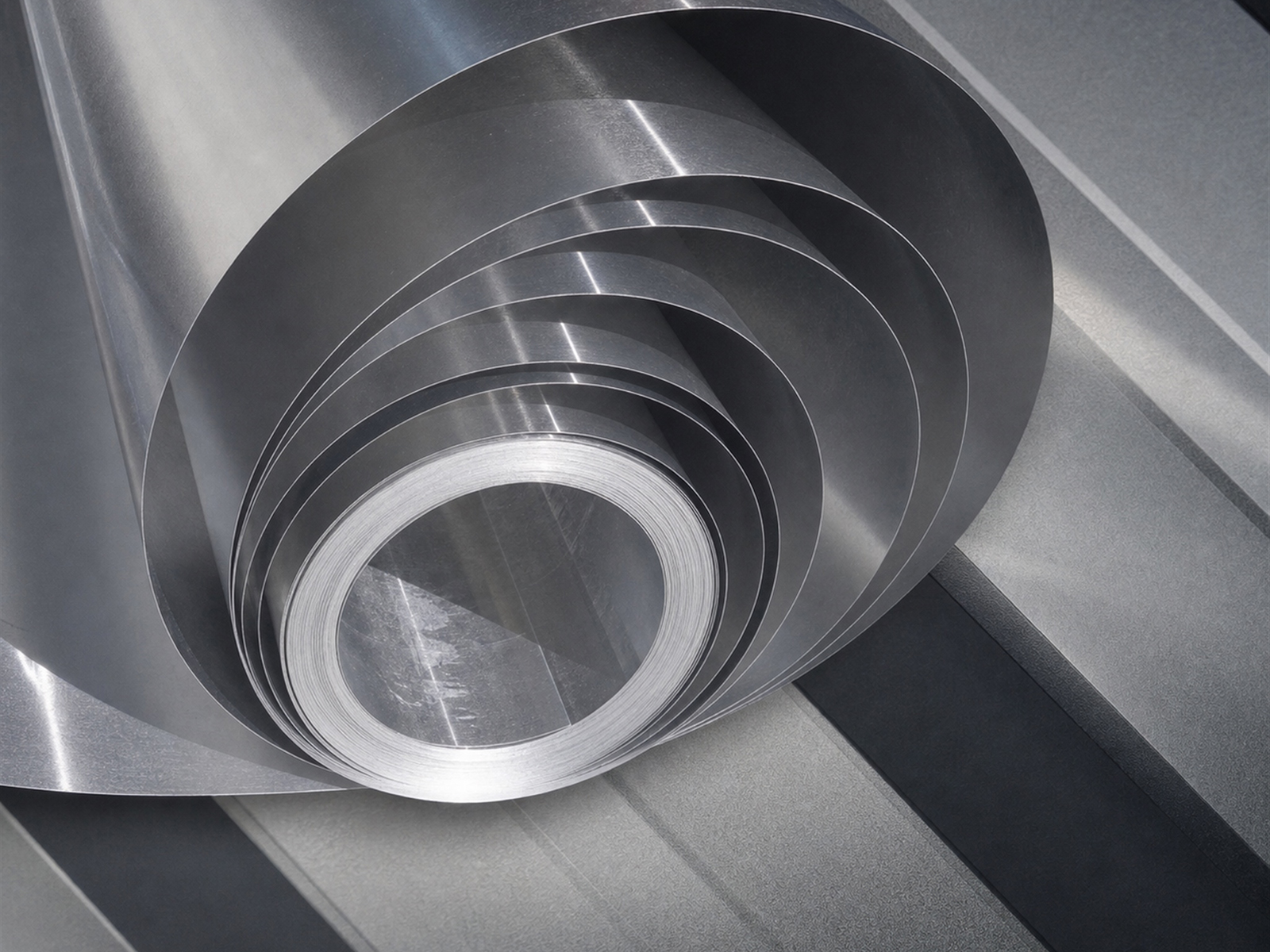
Gr2 titanium foil is an ultra-thin metal sheet made from Grade 2 pure titanium material, usually with a thickness ranging from 0.01mm to 0.5mm. As a representative grade of commercial pure titanium, Gr2 titanium foil combines excellent corrosion resistance, good formability, and moderate strength properties. This material demonstrates outstanding application value in aerospace, medical devices, electronics manufacturing, and chemical equipment fields. Its wide application stems from its unique physical and chemical properties: low density (about 4.5g/cm³), excellent biocompatibility, strong resistance to seawater and acid-alkali corrosion, as well as good weldability and cold-working performance, meeting diverse industrial application needs.
1. What Should You Know About Material Properties and Technical Specifications of Gr2 Titanium Foil?
(1) What Should You Know About Chemical Composition and Purity Standards?
The chemical composition of Gr2 titanium foil is strictly controlled, with titanium content usually reaching over 99.2% and oxygen content kept below 0.25%, while impurities such as iron, carbon, and nitrogen are strictly limited. This high purity ensures excellent corrosion resistance and stable mechanical properties. Compared with the Gr1 grade, Gr2 has slightly higher strength, with a tensile strength of 345-480 MPa and elongation maintained above 20%. This balance makes it the most popular choice of titanium foil for industrial applications.
(2) Why Is Analysis of Physical Performance Advantages Important?
Gr2 titanium foil exhibits a unique combination of physical properties: a thermal conductivity of approximately 15.6 W/(m·K), an electrical resistivity close to 0.56 uOhm.m, and a linear expansion coefficient of 8.6×10⁻⁶/K. The material maintains stable performance within a temperature range of -253℃ to 600℃, without undergoing brittle transition. Its magnetic susceptibility is extremely low, classifying it as a weakly paramagnetic material, a characteristic that is of significant value in medical imaging equipment and precision electronics.
(3) What Should You Know About Machinability and Surface Quality?
The modern titanium foil production process has overcome multiple technical bottlenecks, achieving the stable mass production of ultra-thin, wide titanium foil. Through precision cold rolling technology and surface treatment processes, the surface roughness of Gr2 titanium foil can be controlled between Ra 0.2-0.8 um. The material exhibits good cold bending performance and tensile forming capability, allowing for complex processing such as stamping, bending, and deep drawing, meeting the stringent requirements of precision component manufacturing.
Performance indicators | Typical values of Gr2 titanium foil | Test standard |
Tensile strength | 345-480 MPa | Room temperature tensile test |
Elongation | ≥ 20% | 50mm standard focal length |
Hardness | 140-200 HV | Vickers hardness |
Density | 4.51 g/cm³ | Drainage density test |
Melting point | 1668℃ | Differential Thermal Analysis |
2. Why Is Application Scenarios of Global Core Markets Important?
(1) What Should You Know About Air Medical Demand in North America and Europe?
The demand for Gr2 titanium foil in the U.S. aerospace and medical fields continues to grow, with an annual growth rate of about 8-12%. Titanium foil is used in aircraft structural components to make fireproof panels, hydraulic system seals, and heat exchanger parts, taking advantage of its lightweight and high-temperature resistance. Medical device manufacturers use Gr2 titanium foil to produce implant shells, surgical instruments, and dental restoration materials, whose biocompatibility has been FDA certified. Europe’s high-end manufacturing sector applies titanium foil to proton exchange membrane bipolar plates in hydrogen storage systems, promoting the achievement of carbon neutrality goals.
(2) What Should You Know About Precision Electronics and Energy Industries of Japan and Korea?
The precision electronics manufacturing industry in Japan uses Gr2 titanium foil for current collector materials in lithium-ion batteries and components for semiconductor equipment. The excellent corrosion resistance of titanium foil extends battery cycle life, and its ultra-thin specifications reduce the overall weight of batteries. The South Korean power battery industry widely uses titanium foil as battery casing and tab materials, with an annual consumption exceeding 800 tons. Its stable performance in high-temperature electrolyte environments significantly enhances battery safety.
(3) What Should You Know About Opportunities for Industrial Upgrading in Emerging Markets?
In the process of industrial upgrading in India, chemical equipment manufacturing companies have begun using Gr2 titanium foil to replace traditional stainless steel materials for manufacturing corrosion-resistant heat exchangers and reactor linings. Vietnam’s electronics manufacturing industry, taking on the transfer of international production capacity, has seen an annual growth rate of 25% in demand for precision titanium foil. A common characteristic of these markets is the pursuit of high-cost-performance quality materials, and Gr2 titanium foil has become the first choice due to its moderate cost and reliable performance.
3. What Should You Know About Advanced Production Technology and Quality Assurance System?
(1) What Should You Know About Technological Breakthroughs in Automated Production Lines?
The modernization of titanium foil production has overcome seven key technical challenges: stable rolling control of ultra-thin specifications, maintenance of flatness accuracy of wide plates, online surface quality inspection, dynamic adjustment of winding tension, optimization of annealing process parameters, edge crack prevention technology, and finished product slitting accuracy control. The fully automated production line achieves continuous production from ingot casting to finished foil. The equipment uses a multi-roll mill configuration, with precise control of single-pass reduction within 0.01 mm and finished product thickness tolerance controlled within ± 0.005 mm.
(2) What Should You Know About Full-process Quality Control System?
The quality assurance system covers the entire process of raw material inspection, process monitoring, and finished product testing. Raw material ingots undergo dual inspection using spectroscopic analysis and ultrasonic flaw detection to eliminate compositional deviations and internal defects. During production, laser thickness gauges, surface defect detection systems, and online hardness monitoring devices are used, with real-time data fed back to the central control system. Finished products undergo tensile testing, metallographic analysis, corrosion resistance testing, and surface roughness measurement, with a batch pass rate consistently above 99.5%.
(3) What Should You Know About International Certification and Standards Compliance?
The production facility has obtained ISO 9001 quality management system and AS9100 aerospace quality system certifications. Products comply with international material standards such as ASTM B265 and AMS 4902, and meet the EU RoHS environmental directive and REACH regulation requirements. Medical-grade titanium foil is certified under the ISO 13485 medical device quality management system, and the material’s biocompatibility meets the ISO 10993 series standards. A comprehensive quality traceability system can track all information of each batch of products from raw materials to delivery.
4. Why Is In-depth Analysis of Applications in Different Industries Important?
(1) What Should You Know About the Key Role in the Aerospace Field?
Aerospace engine fuel systems use Gr2 titanium foil to make flexible pipelines and corrugated compensators, able to withstand temperature fluctuations from -55℃ to 200℃ and high-frequency vibrations. Satellite thermal control systems use multilayer titanium foil insulation structures, with a single layer thickness of 0.025mm, and vacuum coating is applied to enhance radiative properties. Aircraft cabin fireproof partitions use titanium foil composite materials, reducing weight by 40% compared to aluminum alloys and extending fire resistance time by 50%. These applications fully utilize the lightweight, corrosion-resistant, and high-temperature stable characteristics of titanium foil.
(2) Why Is Innovative Applications in the Healthcare Industry Important?
Orthopedic implants use Gr2 titanium foil to make the outer covering material of hip and knee joints, with surface microstructures that promote bone tissue integration. Cardiovascular stents are mostly made of titanium alloys such as Ti-6Al-4V or nickel-titanium alloys, while Gr2 titanium foil is more commonly used in surgical instruments and implant housings. In the field of dental restoration, titanium foil abutment materials, after anodic oxidation treatment, display a natural tooth color, with excellent aesthetics and biocompatibility. The lining of medical instrument sterilizers uses titanium foil, which withstands repeated high-temperature steam sterilization.
(3) What Should You Know About Breakthroughs in New Energy and Electronics Manufacturing?
The bipolar plates on both sides of the proton exchange membrane of hydrogen fuel cells are stamped from ultra-thin titanium foil, with a flow channel depth of 0.5 mm and contact resistance below 10 mΩ·cm². The anode current collector of lithium-ion batteries uses titanium foil with a thickness of 0.01 mm, increasing energy density by 5-8%. The plasma reaction chamber of semiconductor manufacturing equipment is lined with titanium foil, resistant to hydrofluoric acid and chlorine corrosion. Flexible printed circuit board substrate laminated with titanium foil achieves stable connections for bendable electronic devices.
Application field | Typical products | Titanium foil specifications | Core Advantage |
Aerospace | Fuel piping system | 0.05-0.2mm | Lightweight and corrosion-resistant |
Medical devices | Orthopedic implants | 0.1-0.3mm | Biocompatibility |
new energy battery | Lithium battery current collector | 0.01-0.05mm | Stable conductivity |
Chemical equipment | Heat exchanger sheets | 0.3-0.5mm | Resistant to strong acids and bases |
Electronics Manufacturing | Semiconductor chamber | 0.08-0.15mm | Plasma-resistant |
5. How Should Buying Guide and Technical Support Services?
(1) How Should Key Considerations for Specification Selection?
Selecting Gr2 titanium foil requires a comprehensive evaluation of the application environment and performance requirements. Thickness specifications range from 0.01mm to 0.5mm, with ultra-thin sheets (0.01-0.05mm) suitable for electronic packaging and battery manufacturing, while medium and thick sheets meet the needs of chemical equipment and medical devices. In terms of width, standard products can reach up to 1200mm, but the width of ultra-thin titanium foil (thickness ≤ 0.05mm) is usually limited, so narrow-width customization is recommended. Surface finishes are classified as bright, matte, and pickled, selected according to subsequent processing. Annealed (soft) and cold-worked (hard) conditions correspond to different forming and processing requirements.
(2) What Should You Know About Introduction to Customized Processing Capabilities?
Professional titanium foil manufacturers provide precision slitting, surface treatment, and special packaging services. Laser cutting accuracy reaches ± 0.02mm, meeting the production of complex-shaped parts. Anodizing treatment can form oxide films in various colors with a thickness of 5-25um, enhancing wear resistance and decorative appeal. Nitrogen-filled vacuum packaging is used to prevent oxidation and scratches during transportation. The technical team offers material selection advice and application process consultation.
(3) What Should You Know About Supply Chain Stability Assurance?
Establish a complete supply chain system from raw material procurement to finished product delivery. Establish long-term cooperation with sponge titanium manufacturers, maintaining raw material inventory for more than three months of usage. The production plan adopts JIT lean management, with a delivery cycle of 7-15 days for standard specification products and 20-30 days for custom products. The logistics network covers major industrial regions worldwide, cooperating with international freight forwarders to ensure timely delivery. Provide complete documentation such as material certificates, test reports, and quality assurance certificates.
6. What Is the Conclusion?
Gr2 titanium foil, with its excellent corrosion resistance, good processing performance, and biocompatibility, has become an indispensable key material in the aerospace, medical, precision electronics, and new energy industries. With the global manufacturing upgrade and the development of clean energy, market demand continues to expand. Choosing suppliers with advanced production technology and a complete quality system can ensure a stable and reliable supply of products and professional technical support, providing a solid material foundation for product innovation and industrial development.
FAQ
Q1: What is the main difference between Gr2 titanium foil and Gr1 titanium foil?
The oxygen content of Gr2 titanium foil is slightly higher than that of Gr1, with a tensile strength reaching 345-480 MPa, about 30% higher than Gr1, yet it still maintains good ductility and corrosion resistance. Its cost is more competitive, making it the most cost-effective choice for industrial applications.
Q2: How can ultra-thin titanium foil avoid damage during processing?
Using a dedicated vacuum adsorption workbench and protective film covering, replacing mechanical shearing with laser or chemical etching, controlling the operating environment humidity at 40-60%, and wearing powder-free gloves during operation, these measures can effectively reduce the processing loss rate of ultra-thin titanium foil.
Q3: Can Gr2 titanium foil be used for seawater desalination equipment?
Gr2 titanium foil demonstrates excellent resistance to chloride ion corrosion in seawater environments and is widely used in heat exchangers and pump components of multi-stage flash and reverse osmosis seawater desalination devices. Under normal operating conditions, the material can have a service life of over 20 years, with maintenance costs much lower than those of other metal materials.
What Should You Know About Contact Us Immediately?
As a professional manufacturer and supplier of Gr2 titanium foil, Titanium Valley has world-class automated production lines and a full-process quality management system. Our precision processing capabilities and technical service team can provide you with customized material solutions. You are welcome to contact us via email at sales@titaniumvalleys.com to obtain product samples, technical information, and quotation details.
References
- China Nonferrous Metals Industry Association Titanium-Zirconium-Hafnium Branch. Handbook of Titanium and Titanium Alloy Materials. Beijing: Metallurgical Industry Press, 2021.
- Wang Xiangdong, Zhu Zhishou, Zhao Yongqing. Research Progress on Titanium Alloys for Aviation[J]. Journal of Aeronautical Materials, 2020, 40(3): 1-15.
- Li Ming, Zhang Xingdong. Study on the Biocompatibility of Medical Titanium Alloys [J]. Chinese Journal of Biomedical Engineering, 2022, 41(2): 189-197.
- Global Battery Alliance Research Center. Development Report on Key Materials Technology for New Energy Batteries [R]. Beijing: China Chemical and Physical Power Industry Association, 2023.