
What Should You Know About Gr12 Titanium Alloy Bars, a Comprehensive Interpretation of the ASTM Standard System They Comply With?
- Gr12 Titanium Alloy Bars
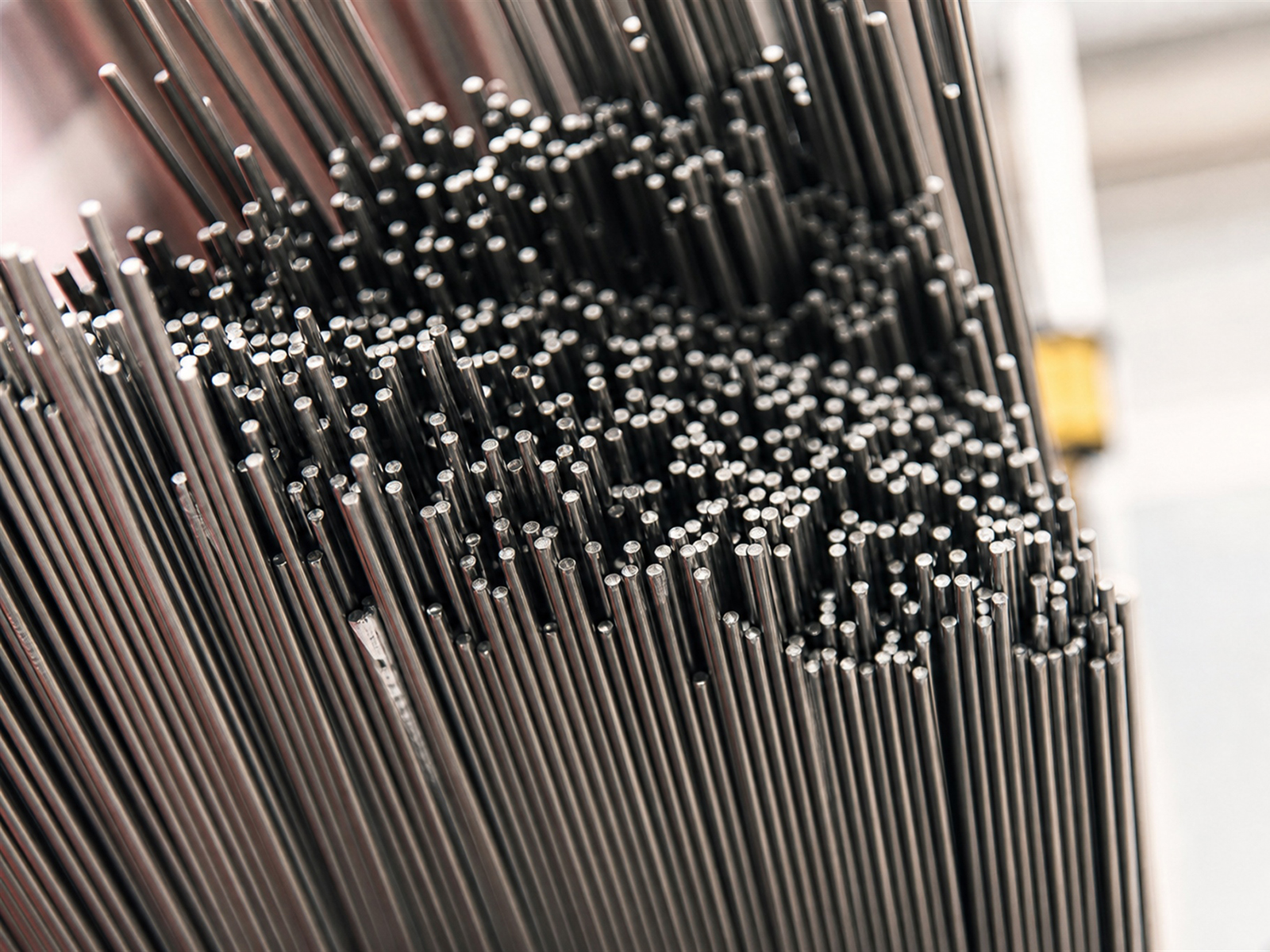
As an important corrosion-resistant titanium alloy material, Gr12 titanium alloy bar must follow a strict international standard system in its production and application. According to the specifications formulated by the American Society for Testing and Materials (ASTM), Gr12 titanium bars mainly comply with ASTM B348, a standard specifically stipulating the technical requirements for titanium and titanium alloy bars and billets. In addition, Gr12 titanium bars must also meet related standards such as ASTM B381 (for forgings) and ASTM F67 (materials for surgical implants, when used in the medical field). These standards cover multiple dimensions, including chemical composition, mechanical properties, dimensional tolerances, surface quality, and testing methods, ensuring the reliability and consistency of Gr12 titanium bars under harsh conditions in chemical, marine engineering, energy, and other fields. Understanding these standard systems is of important guidance for purchasers in acceptance, designers in material selection, and manufacturers in quality control.
1. What Should You Know About ASTM B348 Standard, Core Technical Specifications of Gr12 Titanium Rod?
ASTM B348 is a fundamental standard for the production of titanium and titanium alloy bars, covering the entire process from raw materials to finished product delivery, providing an authoritative basis for quality control of Gr12 titanium bars.
(1) Why Is Scope of Standard Application and Definition of Material Grades Important?
The ASTM B348 standard applies to titanium alloy bars produced by processes such as hot rolling, forging, and cold drawing, and covers various forms including round bars, square bars, and hexagonal bars. Grade 12 titanium bar is explicitly defined in this standard as the UNS R53400 alloy, with a nominal composition of Ti-0.3Mo-0.8Ni, and belongs to the near-alpha corrosion-resistant titanium alloys. The standard specifies the technical requirements for bars of all sizes, ranging from diameters of 6mm to over 200mm, ensuring that products of different sizes have the same performance benchmarks. For precision machining applications, the standard also particularly specifies the technical requirements for different surface finishes, such as polished and turned finishes, to meet the strict surface quality demands of industries like aerospace and precision instruments.
(2) What Should You Know About Chemical Composition Control Requirements?
ASTM B348 sets strict range limits for the chemical composition of Gr12 titanium bars. The molybdenum content is controlled between 0.20% and 0.40%, and the nickel content is 0.60%-0.90%. The precise ratio of these two alloying elements is key to Gr12 achieving excellent corrosion resistance. The standard also sets maximum limits for impurity elements: iron ≤ 0.30%, oxygen ≤ 0.25%, carbon ≤ 0.08%, nitrogen ≤ 0.05%, and hydrogen ≤ 0.015%. These strict composition controls ensure that the material demonstrates stable resistance to pitting and crevice corrosion in complex environments such as reducing acids and chloride-containing media. High-end products typically use a three-time vacuum arc remelting (VAR) process to keep composition deviations near the median of the standard range, further enhancing batch-to-batch consistency.
(3) What Should You Know About Mechanical Performance Indicator System?
The standard specifies that Grade 12 titanium rods in the annealed condition must have a minimum tensile strength of 483 MPa, a yield strength of ≥ 345 MPa, and an elongation of ≥ 18%. These properties give it higher strength than commercially pure titanium (Gr1-Gr4) while maintaining good ductility and weldability. Mechanical performance tests must be conducted in accordance with ASTM E8, with clear specifications for sampling locations, specimen dimensions, tensile rates, and other parameters. For large-diameter rods exceeding 100 mm, the standard requires multi-point sampling to ensure uniform properties between the core and surface of the rod. This comprehensive performance control system effectively prevents the risk of equipment failure caused by local performance fluctuations.
2. Why Is Collaborative Application of Related ASTM Standards Important?
Gr12 titanium bars, in different application scenarios, need to be comprehensively evaluated in combination with multiple ASTM standards to form a complete quality assurance system.
(1) What Should You Know About Supplementary Role of ASTM B381 Forged Fittings Standard?
When Gr12 titanium bars are used for forging, they must simultaneously meet the requirements of the ASTM B381 standard. This standard is specifically formulated for titanium alloy forgings, setting special criteria for microstructure uniformity, grain size, and ultrasonic testing levels. Forged Gr12 bars need to undergo strict deformation control and heat treatment to ensure the elimination of casting defects. The ultrasonic testing requirements specified by the standard can detect internal microcracks, inclusions, and other potential issues, making it particularly suitable for safety-critical components such as pressure equipment and nuclear pipelines. The combined application of both standards ensures that Gr12 titanium bars possess excellent corrosion resistance while meeting the usage requirements of high-reliability structural components.
(2) What Should You Know About ASTM E112 Grain Size Evaluation Standard?
The corrosion resistance and mechanical properties of titanium alloys are closely related to their microstructure. The ASTM E112 standard provides a standard method for measuring grain size. Gr12 titanium rods typically have a grain size no coarser than grade 5, and fine and uniform grain structures can improve the overall performance of the material. In actual production, by controlling forging temperature, deformation amount, and annealing processes, the grain size can be optimized to grades 7-9, significantly enhancing the material’s durability under cyclic stress and corrosion fatigue environments. The application of this standard ensures the performance stability of Gr12 titanium rods in long-term service environments such as marine engineering and chemical equipment.
(3) What Should You Know About ASTM E1417 and ASTM E2375 Non-Destructive Testing Standards?
For Gr12 titanium bars used in high-end applications, comprehensive nondestructive testing is required. ASTM E1417 specifies the liquid penetrant inspection method for detecting surface-opening defects, while ASTM E2375 defines the specific parameters and acceptance criteria for ultrasonic testing. These testing standards can identify internal defects larger than 0.5 mm in diameter, ensuring that the internal quality of the bars meets the stringent requirements of fields such as medical devices and aerospace. Advanced manufacturing companies typically use automated ultrasonic scanning systems to achieve 100% full-length inspection and implement digital records for quality traceability.
3. What Should You Know About Dimensions and Tolerances Specified in ASTM Standards?
Precise size control is the foundation for Gr12 titanium rods to meet the requirements of precision machining, and the ASTM standards provide detailed technical specifications in this regard.
(1) What Should You Know About Diameter Tolerance Classification System?
According to ASTM B348, the diameter tolerances of bars are divided into two levels based on different application scenarios: standard tolerance and precision tolerance. Standard tolerance is suitable for general industrial use, with bars under 50mm in diameter allowed a deviation of ± 0.38mm; precision tolerance, on the other hand, is aimed at high-end manufacturing, with deviations tightened to ± 0.13mm. For cold-drawn polished bars, the standard also specifies stricter tolerance levels, reaching ± 0.05mm, to meet the clamping accuracy requirements of automated processing equipment. This grading system balances cost control and performance requirements, allowing purchasers to choose the appropriate precision level based on actual working conditions.
(2) What Should You Know About Length and Straightness Requirements?
The standard stipulates that the standard delivery length of Gr12 titanium bars is 1000-6000mm, and fixed-length sizes need to be specifically indicated when ordering. The straightness requirement is that the curvature per meter of length does not exceed 2mm, which is particularly important for the installation of long pipeline systems. Exceeding the straightness limit can increase installation stress and is prone to causing stress corrosion cracking in corrosive environments. By using a process that combines rotary straightening and tension straightening, the straightness can be controlled within 1mm/m, meeting the requirements for precision assembly.
(3) What Should You Know About Surface Quality Standards?
ASTM B348 sets clear evaluation standards for the surface quality of Gr12 titanium bars. Slight scale is allowed on the surface in the hot-rolled state, but cracks, folds, heavy scale, and other defects are not permitted. The surface roughness Ra of the cold-drawn polished state must be ≤ 1.6 um, and mechanical damage such as scratches and dents is not allowed. For high-purity application scenarios, the standard also specifies technical requirements for pickling and passivation to ensure that the surface is free of residual contaminants. These detailed surface quality specifications effectively prevent surface defects from becoming sources of corrosion.
Size items | Standard tolerance | Precision tolerance | Application scenario |
Diameter Φ6-50mm | ± 0.38mm | ± 0.13mm | Chemical Pipe Fittings / Precision Shafts |
Diameter Φ50-100mm | ± 0.50mm | ± 0.20mm | Heat Exchanger Tube Sheet/Flange |
Straightness | 2mm/m | 1mm/m | Long Pipeline / Precision Assembly |
Surface Roughness (Polished State) | Ra ≤ 3.2 um | Ra ≤ 1.6 um | Sealing Surface / Cleaning Equipment |
4. What Should You Know About Standard Compliance Verification and Quality Traceability System?
To ensure that Gr12 titanium rods meet ASTM standards, it is necessary to establish a full-process quality control and traceability mechanism from raw materials to finished products.
(1) What Should You Know About Raw Material Inspection and Furnace Batch Management?
The production of ASTM-standard Gr12 titanium bars begins with strict raw material inspection. Each batch of titanium sponge and intermediate alloys undergoes spectral analysis, chemical analysis, and hydrogen, nitrogen, and oxygen testing to confirm that the composition meets standard requirements before charging. A heat number management system is used to correspond raw materials, smelting parameters, forging processes, and heat treatment records with the final product. This traceability system can quickly identify problem areas and take corrective measures in the event of quality disputes, meeting the quality management requirements of high-risk industries such as nuclear power and aerospace.
(2) What Should You Know About Process Inspection and Key Process Control?
Mandatory process inspection points are set at key processes such as forging, rolling, and heat treatment. Ultrasonic testing must be conducted after forging to eliminate internal defects; during rolling, dimensional accuracy and surface quality are monitored; for annealing heat treatment, temperature curves and holding times must be recorded to ensure uniform microstructure. Statistical process control (SPC) methods are used to monitor process parameter fluctuations in real time, keeping performance deviations between batches within ± 3%. This refined process control is the core assurance for achieving stable compliance with ASTM standards.
(3) What Should You Know About Finished Product Inspection Report and Third-Party Certification?
Each batch of Gr12 titanium bars must be accompanied by a complete Mill Test Certificate (MTC) at the time of shipment, including all data on chemical composition, mechanical properties, and nondestructive testing results. For export products or high-end applications, it is usually required to obtain witness test reports from third-party certification organizations (such as TÜV or Lloyd’s Register). These authoritative certification documents can accelerate project acceptance processes and reduce the technical risks for buyers. The application of a digital quality traceability platform allows customers to scan the product identification code and access all test data and production history of the batch in real time.
Test items | Execution Standard | Testing frequency | Basis for judgment |
Chemical composition | ASTM E1447 | Per batch of furnace | ASTM B348 Composition Table |
Stretching performance | ASTM E8 | Each batch | Rm ≥ 483 MPa, Rp0.2 ≥ 345 MPa, A ≥ 18% |
Ultrasonic testing | ASTM E2375 | 100% Full Inspection | Flat-bottom hole Φ1.5mm equivalent not displayed |
Grain size | ASTM E112 | Spot check | Not coarser than level 5 |
Surface quality | ASTM B348 | 100% visual inspection | No cracks, folds, or thick skin |
5. Why Is Common Problems and Countermeasures in Standard Applications Important?
In the actual procurement and usage process, correctly understanding and applying ASTM standards can avoid many technical disputes and quality risks.
(1) What Should You Know About Identification and Response to Standard Version Updates?
ASTM standards are updated periodically to reflect the latest technological advances. The purchase contract for Gr12 titanium bars must specify the standard version number (e.g., ASTM B348-2023). Different versions may have differences in tolerance requirements, testing methods, etc., and using an outdated version may lead to acceptance disputes. It is recommended that the purchaser indicate in the tender documents that ‘the latest valid version shall apply’ and require the supplier to provide a declaration of standard compliance. Manufacturing enterprises should establish a standard change management process to promptly update process documents and inspection specifications, ensuring that products always meet the current standard requirements.
(2) What Should You Know About Additional Technical Requirements Under Special Working Conditions?
The standard ASTM B348 is mainly intended for conventional industrial applications. For special scenarios such as nuclear power, deep-sea, and ultra-high purity, supplementary technical provisions need to be added on the basis of the standard. Gr12 titanium bars for marine engineering may require additional seawater corrosion simulation tests; materials for medical devices need to meet biocompatibility standards; hydrogen energy equipment must undergo hydrogen embrittlement sensitivity evaluation. These additional requirements should be clearly specified in the procurement contract, and the supplier should provide special testing reports. Professional manufacturers usually have the technical capability and testing resources to handle special working conditions and can provide customized certification services.
(3) What Should You Know About Mutual Recognition of Standards and International Equivalence?
There is a certain correspondence between the US ASTM standards, European EN standards, and Japanese JIS standards, but they are not completely equivalent. For Gr12 titanium bars in international trade, buyers may sometimes require compliance with multiple standard systems at the same time. In such cases, a detailed comparison and analysis of the standards is needed to identify the strictest technical specifications as the basis for production. Adopting the internationally recognized ‘dual certification’ strategy can meet different market access requirements and also enhance product competitiveness. Strong manufacturing enterprises usually obtain multiple qualifications simultaneously, such as US ASME, EU PED, and China’s special equipment manufacturing licenses, achieving unrestricted supply in the global market.
Types of technical disputes | Common reasons | Preventive measures | Response strategy |
Dimensional tolerance exceeded | Measurement methods are not standardized | The contract specifies the measurement standards and ambient temperature | Third-party arbitration testing |
Performance data controversy | Sampling location difference | Take multiple samples according to ASTM standards | Sample Retest Verification |
Disagreement on Surface Quality Evaluation | Differences in standard understanding | Provide physical sample for reference | Expert Review Confirmation |
Issues with the recognition of inspection reports | Certification of Testing Agencies | Choose a CNAS/ILAC accredited laboratory | Supplement authoritative agency testing |
6. What Is the Conclusion?
The ASTM standard system for Gr12 titanium bars centers on ASTM B348, supplemented by several specialized standards such as ASTM B381, ASTM E112, and ASTM E1417, collectively forming a comprehensive technical specification covering chemical composition, mechanical properties, dimensional tolerance, and surface quality. This standard system not only ensures the reliable performance of Gr12 titanium bars in harsh corrosive environments but also provides a unified technical language for global procurement and multi-industry applications. A deep understanding of the technical connotations and application points of these standards can help purchasers select materials accurately, designers use materials rationally, and manufacturers maintain stable material control.
FAQ
Q1: In addition to ASTM B348, what other standards does Gr12 titanium rod need to comply with?
In addition to the basic ASTM B348 bar standard, forged parts must comply with ASTM B381, medical applications must meet ASTM F67 or ISO 5832-2, and welding performance should refer to AWS A5.16 standard. Special industries such as nuclear power also need to meet ASME SB-348 certification requirements.
Q2, How Can We Verify Whether the Gr12 Titanium Bars Provided by the Supplier Truly Comply with ASTM Standards?
Verify that the batch number on the material certificate is consistent with the physical identification, and require submission of a test report from a CNAS-accredited laboratory; conduct a third-party re-inspection if necessary. Check whether the chemical composition and mechanical property data are within the range specified by the standards, and the ultrasonic test report should clearly state the test grade and evaluation criteria.
Q3: What is the difference between annealed and cold-worked Gr12 titanium bars in ASTM standards?
Annealed state (Annealed) has undergone complete heat treatment, with uniform structure, stress release, standard-specified mechanical properties, and optimal corrosion resistance, making it suitable for direct use. Cold-worked state has higher strength but reduced plasticity, usually used as intermediate material that requires further processing. ASTM B348 mainly specifies the technical indicators for the annealed state.
7. What Should You Know About Looking for Manufacturers of Gr12 Titanium Rods That Meet ASTM Standards?
Baoji Titanium Valley Titanium Nickel Zirconium Material Processing Co., Ltd. (Titanium Valley), as a professional high-end rare metal processing supplier, is equipped with Italian Danieli rolling production lines and a full-process quality control system, with an annual titanium rod output of over 20, 000 tons. Our products fully comply with international standards such as ASTM B348. We provide customized specifications and complete testing and certification services. For inquiries, please contact: sales@titaniumvalleys.com
References
- ASTM International. (2023). ASTM B348-23: Standard Specification for Titanium and Titanium Alloy Bars and Billets. Beijing: China Standards Press.
- Wang Yongqiang, Li Minghui. (2015). Titanium Alloys: Technical Guide (2nd edition). Beijing: Chemical Industry Press.
- Zhang Wei, Chen Zhigang. (2018). Progress in the Application of Titanium Alloys in the Energy Industry. Materials Science and Engineering, 36(3), 305-315.
- Liu Jianguo, Zhao Zhiqiang, Sun Lihua. (Eds.). (2010). Handbook of Titanium Alloy Material Properties. Beijing: Metallurgical Industry Press.