
Why Choose Nickel 201 Foil for Working in Environments Above 300°C?
- Nickel 201 Foil
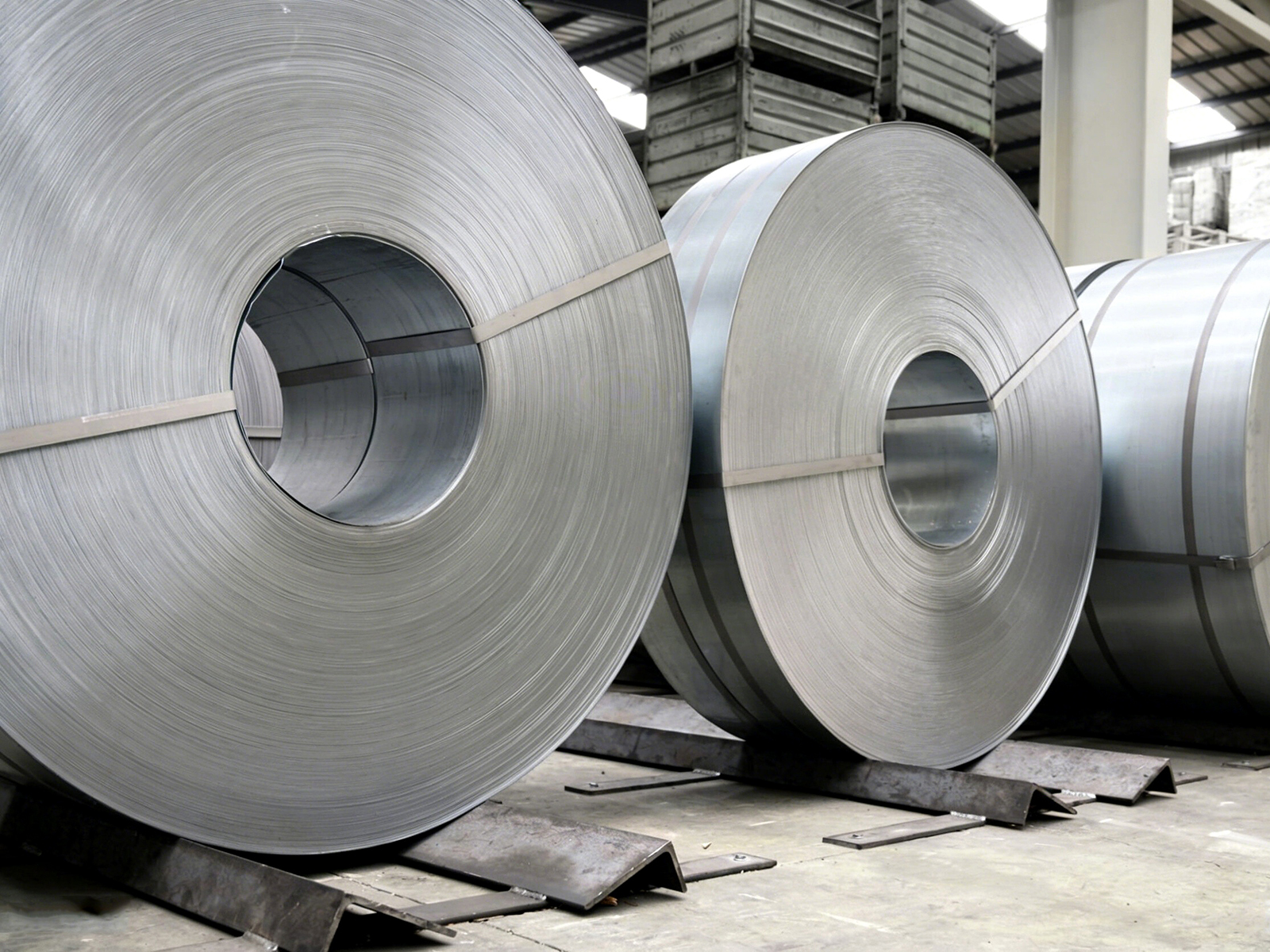
Nickel 201 Foil, a low-carbon (C ≤0.02%) high-purity nickel conforming to ASTM B160 specifications, is uniquely suited for continuous service in environments exceeding 300°C. Its exceptional high-temperature strength, oxidation resistance, corrosion immunity in caustic and reducing environments, and dimensional stability make it the preferred material for heat exchangers, chemical processing equipment, furnace components, and thermal management systems operating in severe thermal conditions. Understanding the material science behind Nickel 201’s high-temperature performance enables engineers to confidently specify this alloy for demanding thermal applications.
1. High-Temperature Oxidation Resistance
(1) Protective NiO Scale Formation
At temperatures above 300°C in oxidizing atmospheres, Nickel 201 foil forms a dense, adherent NiO surface scale that acts as a diffusion barrier, slowing further oxygen ingress to the underlying metal. The parabolic oxidation kinetics follow the equation: Δm² = kp × t, where Δm is weight gain per unit area, kp is the parabolic rate constant, and t is exposure time. For Nickel 201 at 400°C in air, kp ≈ 1 ×10⁻¹² g²/cm⁴·s, yielding an oxidation rate of less than 0.01 mm/year—essentially negligible for engineering design purposes. This oxidation resistance persists up to approximately 700°C, beyond which accelerated scale growth and spallation begin.
(2) Effect of Low Carbon Content on High-Temperature Stability
The ultra-low carbon content (≤0.02%) of Nickel 201 prevents carbide precipitation at grain boundaries during prolonged exposure above 300°C. In standard Ni200 (C ≤0.15%), nickel carbide (Ni₃C) forms at grain boundaries above 400°C, creating chromium-depleted zones that are susceptible to intergranular attack in corrosive environments. Nickel 201 eliminates this vulnerability, maintaining uniform corrosion resistance throughout the elevated-temperature service life.
2. Mechanical Properties at Elevated Temperatures
(1) Strength Retention Above 300°C
Nickel 201 foil retains significant mechanical strength at temperatures where many materials soften dramatically. At 300°C, tensile strength remains at approximately 85% of room-temperature value; at 500°C, it retains about 70%. Yield strength at 300°C exceeds 200 MPa in annealed condition, providing adequate load-bearing capacity for pressure vessel and structural applications. This strength retention is critical for components subjected to mechanical stress in thermal environments, such as heat exchanger tubes, furnace trays, and thermal expansion joints.
(2) Creep Resistance
Creep deformation becomes significant above 0.4 × Tm (melting temperature in Kelvin) for pure metals. For Nickel 201 (Tm ≈ 1728 K), this threshold is approximately 690°C. Below 600°C, creep rates are negligibly small (<10⁻¹° %/hour at 100 MPa), making Nickel 201 suitable for long-duration service at temperatures up to 500°C under moderate stress. For applications above 600°C, nickel-chromium-iron alloys (such as Inconel 600 or 601) offer superior creep resistance but at significantly higher cost.
(3) Thermal Fatigue Resistance
Components experiencing cyclic thermal loading (such as heat exchangers undergoing startup/shutdown cycles) require materials with high thermal fatigue resistance. Nickel 201 foil exhibits thermal fatigue lives exceeding 10,000 cycles (room temperature to 500°C) without crack initiation, attributed to its moderate thermal expansion coefficient (13 ×10⁻⁶/K) and high ductility (elongation >30% at room temperature, >15% at 500°C). These properties minimize thermal stress accumulation during temperature transients.
3. Corrosion Resistance in High-Temperature Environments
(1) Caustic and Alkali Service
Nickel 201 foil is virtually immune to corrosion in caustic environments at temperatures up to the boiling point of the solution. In concentrated NaOH (50%) at 150°C, corrosion rates are below 0.001 mm/year, making it the material of choice for caustic evaporators, digesters, and alkali storage tanks. The low carbon content prevents sensitization and intergranular corrosion in hot caustic solutions, a failure mode that affects standard austenitic stainless steels.
(2) Reducing Acid Environments
In non-oxidizing acids such as hydrochloric and sulfuric acid at elevated temperatures, Nickel 201 provides better resistance than 304/316 stainless steels. While not suitable for concentrated acids above 100°C, dilute HCl (<5%) and H₂SO₄ (<10%) solutions at temperatures up to 150°C can be handled by Nickel 201 with acceptable corrosion rates of 0.1–0.5 mm/year. For more aggressive acid conditions at elevated temperatures, nickel-molybdenum alloys (Hastelloy B-series) should be considered.
(3) Molten Salt and Flux Resistance
Nickel 201 foil resists attack by molten salts, fluxes, and glass melts at temperatures above 600°C. This property is exploited in glass manufacturing equipment, metal heat treatment furnaces using salt bath nitrating, and chemical processing involving molten alkali hydroxides. The material’s wetting resistance to molten salts facilitates cleaning and extends equipment service life between maintenance shutdowns.
4. Processing and Fabrication at Elevated Temperatures
(1) Forming and Annealing
Nickel 201 foil can be cold formed to complex shapes at room temperature with moderate springback. For severe forming operations exceeding 30% reduction, intermediate annealing at 700–850°C in hydrogen or vacuum atmosphere restores ductility. Final annealing after forming relieves residual stresses and optimizes corrosion resistance.
(2) Welding Considerations
GTAW and autogenous laser welding of Nickel 201 foil produce sound joints with corrosion resistance equal to the base material when proper shielding is maintained. Post-weld annealing at 700–800°C restores properties in the heat-affected zone. Welding consumables should match the low carbon content of the base material to prevent sensitization in elevated-temperature service.
Conclusion
Nickel 201 foil stands as the optimal material for continuous service above 300°C where corrosion resistance, mechanical strength, and thermal stability must coexist. Its low-carbon composition prevents sensitization, its NiO surface scale provides outstanding oxidation resistance, and its retained strength and ductility at elevated temperatures ensure structural integrity under thermal loading. For chemical processing, heat exchange, furnace construction, and thermal management applications operating above 300°C, Nickel 201 foil delivers proven, reliable performance that justifies its selection over less capable and less expensive alternative materials.
FAQ
Q1: What is the maximum continuous service temperature for Nickel 201 foil?
Nickel 201 foil can be used continuously at temperatures up to 700°C in air and up to 900°C in inert or reducing atmospheres. Above 700°C in oxidizing environments, accelerated oxidation and scale spallation reduce service life. For temperatures above 900°C, nickel-based superalloys such as Inconel 600 or 601 are recommended.
Q2: How does Nickel 201 differ from Nickel 200 for high-temperature applications?
The primary difference is carbon content: Nickel 201 limits carbon to ≤0.02% versus ≤0.15% for Nickel 200. This low carbon content prevents carbide precipitation and intergranular corrosion during prolonged exposure above 400°C in corrosive environments. For clean, dry, high-temperature service below 400°C, both grades perform identically.
Q3: Can Nickel 201 foil be used in sulfur-containing atmospheres at high temperature?
Nickel 201 has good resistance to sulfur-containing atmospheres at temperatures up to 500°C. Above 600°C, sulfidation rates increase significantly. For severe sulfidation environments, nickel-chromium alloys (such as Inconel 600) with chromium-derived protective scales provide superior resistance.
Contact Titanium Valley
Baoji Titanium Valley Titanium Nickel Zirconium Material Processing Co., Ltd. supplies high-purity Nickel 201 foil conforming to ASTM B160 specifications, available in thicknesses 0.05–3.0 mm for high-temperature applications. EN 10204 3.1 certification and high-temperature property data sheets available. Contact us for technical data and quotations:
References
Colburn, R., et al. High-Temperature Corrosion of Nickel and Nickel-Based Alloys [J]. Corrosion Science, 2019, 158: 108112.
ASM International. ASM Handbook, Volume 11: Failure Analysis and Prevention [M]. ASM International, 2002.
ASTM International. ASTM B160-20 Standard Specification for Nickel and Nickel Rods and Bars [S]. 2020.