
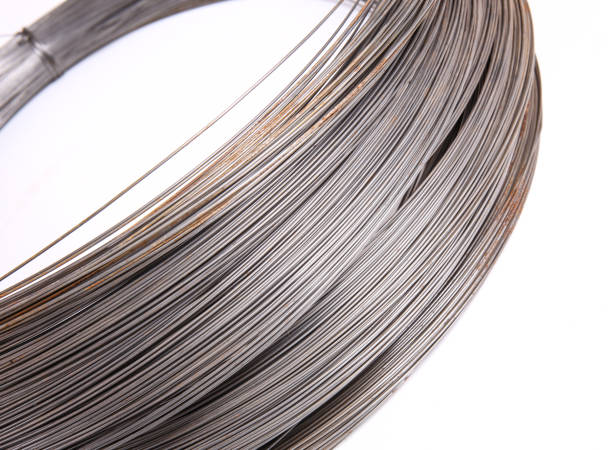
ASTM B550 zirconium wire has excellent material properties. It works well in harsh chemical and nuclear applications. Core features include strong corrosion resistance to hydrochloric acid, sulfuric acid, and wet chlorine. It has good mechanical properties with balanced strength and ductility. It has very low magnetism (weak paramagnetism), so it causes no magnetic interference for precision instruments and medical devices. It shows stable high-temperature performance. R60702/R60704 can work long-term at ≤400℃. R60705 can work long-term at ≤450℃. It also has a self-healing oxide film for protection. Different grades (R60702 pure zirconium, R60704 zirconium-tin alloy, R60705 zirconium-niobium alloy) cover general corrosion protection to high-strength structural uses. These properties make ASTM B550 zirconium wire irreplaceable in chemical equipment, nuclear reactor parts, medical devices, and electronics. It outperforms stainless steel and titanium alloys in specific extreme environments.
1. Chemical Composition and Grade System of Zirconium Wire Under ASTM B550
1.1 Main Zirconium Alloy Grades in the Standard
ASTM B550 defines multiple zirconium and zirconium alloy grades. Each grade optimizes for specific uses. R60702 is commercial pure zirconium. It has hafnium ≤4.5% and oxygen ≤0.16%. It suits general corrosion-resistant uses. R60704 is zirconium-tin alloy. It adds 1.0%–2.0% tin to boost corrosion resistance in high-temperature water. R60705 (Zr-705) has 2.0%–3.0% niobium. It is a high-strength zirconium-niobium alloy. Its tensile strength is 20%–30% higher than pure zirconium. Its yield strength is 30%–40% higher than pure zirconium. It keeps excellent corrosion resistance. It works best for nuclear fuel assemblies and high-stress chemical equipment.
1.2 Industrial Importance of Impurity Control
Strict control of impurities directly affects corrosion resistance and processing stability. Keep iron below 0.20%. Too much iron forms brittle intermetallic compounds. These reduce ductility and cause local corrosion. Keep carbon below 0.05% to avoid carbide precipitation and intergranular corrosion risk. R60702 has oxygen ≤0.16%. R60704/R60705 have oxygen ≤0.18%. Oxygen increases strength, but excess oxygen makes the material brittle and hurts cold workability. Keep nitrogen and hydrogen (interstitial elements) below 0.025% and 0.005% to prevent hydrogen embrittlement and nitride precipitation. Hafnium is a natural companion of zirconium. They share similar chemistry, but their neutron absorption cross-sections differ. So strict separation is needed for nuclear use. High-purity zirconium wire uses vacuum arc remelting (VAR) and electron beam melting (EB). These methods control impurities precisely. They ensure batch stability and traceability.
1.3 Links Between Composition and Performance
Chemical Composition of Different ASTM B550 Zirconium Wire Grades
| Grade | Zr+Hf (min, %) | Nb | Sn | Fe | O | C | Key Features |
|---|---|---|---|---|---|---|---|
| R60702 | 99.2 | – | – | ≤0.20 | ≤0.16 | ≤0.05 | Pure zirconium, excellent corrosion resistance |
| R60704 | 97.5 | – | 1.0–2.0 | ≤0.20 | ≤0.18 | ≤0.05 | Better corrosion resistance in high-temperature water |
| R60705 | 95.5 | 2.0–3.0 | – | ≤0.20 | ≤0.18 | ≤0.05 | High strength + excellent corrosion resistance |
Niobium in R60705 strengthens the alloy. It raises tensile strength to 550–690 MPa, while pure zirconium only reaches 380–550 MPa. Tin in R60704 stabilizes the passive film. It slows corrosion greatly in high-temperature water above 300℃. These alloy designs keep good workability while meeting higher mechanical load and harsher corrosion needs.
2. Mechanical Properties and Workability: Physical Basis for Precision Uses
2.1 Balanced Strength and Ductility
Typical Mechanical Properties of Annealed Zirconium Wire (ASTM B550)
| Grade | Tensile Strength (MPa) | Yield Strength (MPa, min) | Elongation (%, min) |
|---|---|---|---|
| R60702 | 380–550 | ≥207 | ≥16 |
| R60704 | 415–585 | ≥240 | ≥14 |
| R60705 | 550–690 | ≥380 | ≥14 |
ASTM B550 zirconium wire covers a wide strength range by grade and annealing state. Annealed R60702 pure zirconium wire has tensile strength of 380–450 MPa and elongation ≥20%. It suits deep drawing, bending, and winding. Half-hard state uses controlled cold work. Strength rises to 500–600 MPa, with elongation at 10%–15%. It balances strength and formability. Annealed R60705 zirconium-niobium alloy wire has tensile strength of 550–690 MPa and elongation of 16%–20%. This high strength and toughness fit springs, high-pressure seals, and nuclear fuel rod end plugs. It fixes pure zirconium’s weaknesses: thin wire breaks easily, long pieces bend easily, and it deforms under high pressure. It expands zirconium’s use in structural parts.
2.2 Hot/Cold Workability and Microstructure Control
Zirconium has a hexagonal close-packed (HCP) structure. It has limited plasticity at room temperature, but proper heat treatment and processing give good workability. Hot working works at 600–850℃. The material flows well for heavy rolling and drawing. Cold working limits single-pass deformation to 15%–25% to avoid cracking from over-hardening. Annealing (580–750℃, vacuum or inert gas) removes work stress and refines grains to ASTM 7–9 levels. It creates a uniform microstructure. Continuous rolling lines use precise temperature control and gradual multi-pass deformation. They mass-produce zirconium wire from 0.06 mm to 10.0 mm. Diameter tolerance reaches ±0.01 mm. Surface roughness Ra ≤0.8 μm. It meets strict needs for automated welding and precision electronic leads.
2.3 Industrial Standards for Surface Quality and Dimensional Accuracy
Common Specifications and Applications of ASTM B550 Zirconium Wire
| Diameter (mm) | Supply Form | Typical Tolerance | Main Applications |
|---|---|---|---|
| 0.06–0.4 | Coil | ±0.005 | Precision electronic leads, medical guidewires |
| 0.5–2.0 | Coil/Straight Rod | ±0.01 | Welding wire, chemical fasteners |
| 2.0–5.0 | Coil/Straight Rod | ±0.02 | Springs, shaft parts |
| 5.0–10.0 | Straight Rod | ±0.03 | High-pressure valve stems, nuclear structural parts |
Surface treatment directly affects performance. Pickled surface removes scale and has a silver-gray finish. It suits later machining. Bright surface uses chemical or electrolytic polishing. It has high smoothness, less fluid resistance, and less particle buildup. It works for high-cleanliness semiconductor and pharmaceutical equipment. Electroplated lubricant (like copper coating) improves drawability, prevents die sticking, and raises yield for ultra-thin wire. Straightness matters for automated feeding. Straight zirconium rod uses multi-roll straightening and tension control. Straightness reaches 1 mm/m. It ensures accuracy for robotic welding and CNC machining.
3. Corrosion Resistance: Core Advantage Over Ordinary Metals
3.1 Strong Resistance to Strong Acids
ASTM B550 zirconium wire outperforms stainless steel and titanium alloys in inorganic acids. In boiling 35% hydrochloric acid, 316 stainless steel corrodes at over 100 mm/year. Titanium alloy fails completely. Zirconium wire corrodes at less than 0.1 mm/year. This comes from a dense ZrO₂ passive film on zirconium’s surface. The film is only 5–10 nm thick but highly stable. In sulfuric acid, zirconium stays stable in 70% concentration at boiling point. Stainless steel suffers severe intergranular corrosion here. Zirconium wire also resists nitric acid, phosphoric acid, and organic acids (acetic, oxalic, citric). It becomes the first choice for chemical reactors, distillation column internals, and heat exchanger tubes. It extends equipment life to 15–20 years.
3.2 Pitting and Crevice Corrosion Resistance in Chloride Environments
Chloride ions easily cause pitting and crevice corrosion in stainless steel, leading to sudden leaks. ASTM B550 zirconium wire resists chloride naturally. It stays stable in saturated sodium chloride solution, wet chlorine gas, and hypochlorite solution. In desalination plants, stainless steel parts need replacement every 2–3 years. Zirconium wire filters and nozzles last over 10 years. Zirconium’s passive film does not break locally in chloride. It repairs faster than it damages. This solves frequent failure problems in petrochemical chlorine wastewater treatment, chlor-alkali electrolysis, and marine engineering. It cuts maintenance downtime costs by up to 70%.
3.3 Self-Healing Oxide Film for Long-Term Protection
Zirconium’s corrosion resistance depends on its self-healing oxide film. If scratched or worn, fresh zirconium reacts with oxygen or water in milliseconds to reform a protective ZrO₂ film. This film has low oxygen ion diffusion, blocking corrosive media from reaching the base metal. It keeps reliability under cyclic stress, erosion, and thermal cycling. Stainless steel’s chromium oxide film fails in chloride and reducing acids. Titanium’s oxide film is unstable in reducing environments. Zirconium wire achieves maintenance-free service in hydrometallurgy (sulfuric acid leaching tanks), pharmaceutical equipment (fermenter stirrers), and environmental devices (desulfurization tower spray systems).
Corrosion Resistance at a Glance: Zirconium vs Titanium vs Tantalum
| Environment | Zirconium (R60702) | Titanium (Gr2) | Tantalum |
|---|---|---|---|
| Boiling 35% Hydrochloric Acid | Excellent (<0.1 mm/year) | Fails | Excellent |
| Room-Temperature 10% Sulfuric Acid | Excellent | Good | Excellent |
| Wet Chlorine (Room Temperature) | Excellent | Poor (ignition risk) | Excellent |
| Boiling 65% Nitric Acid | Good | Excellent | Excellent |
| 3.5% NaCl Solution | Pitting immune | Locally sensitive | Pitting immune |
4. High-Temperature Stability and Special Physical Properties
4.1 Temperature Range and High-Temperature Corrosion Behavior
ASTM B550 zirconium wire works stably over a wide temperature range. It works down to -196℃ (liquid nitrogen) without low-temperature brittleness, fitting cryogenic equipment. R60702/R60704 run long-term at ≤400℃. R60705 runs long-term at ≤450℃. Mechanical properties stay stable, and corrosion rates stay low. In 300℃ high-temperature high-pressure water (like pressurized water reactor primary loop), zirconium alloy oxidation weight gain follows cubic law. Corrosion rate is much lower than stainless steel’s exponential increase. It can handle short-term temperatures up to 600℃ with inert gas protection to avoid oxide film thickening and performance loss. Nuclear power plants use zirconium alloy cladding tubes under high temperature, high pressure, and strong radiation for years. This proves its excellent high-temperature stability. In chemical high-temperature acid conditions (180℃ concentrated phosphoric acid, 200℃ organic acid synthesis), zirconium wire heating coils and reactor internals run maintenance-free for long periods. Key nuclear property: zirconium has a thermal neutron absorption cross-section of ~0.18 barn, much lower than titanium (6.1 barn) and stainless steel (>3 barn). This makes it the standard material for nuclear fuel cladding and guide tubes.
4.2 Non-Magnetic Property for Precision Applications
Zirconium is paramagnetic, with permeability close to 1. Its very low magnetism is irreplaceable in many high-end fields. In MRI machines, zirconium wire medical devices (surgical clips, catheter stents) do not create artifacts or affect imaging. Precision NMR spectrometer parts need strict non-magnetic materials. Zirconium fasteners and springs ensure measurement accuracy. Aerospace navigation systems use non-magnetic materials near magnetic compasses. Zirconium wire meets this strict requirement. Precision electronics use zirconium fixtures in demagnetization furnaces and vacuum coating equipment to avoid magnetic interference. Defense underwater detection equipment and degaussing ship parts use zirconium wire to fix stainless steel’s magnetic stealth problem. This property builds a technical barrier for ASTM B550 zirconium wire in non-magnetic critical uses.
4.3 Biocompatibility and Medical-Grade Certification
Some ASTM B550 zirconium wire grades pass biocompatibility tests and meet ISO 10993 medical device standards. Zirconium’s chemical inertness prevents ion release in the human body. It has no cytotoxicity, sensitization, or genotoxicity. In dentistry, zirconium wire replaces orthodontic steel wire to avoid nickel allergy. Orthopedic implants (bone screw wires, fixation clips) use zirconium. Its elastic modulus (~95 GPa) matches human bone to reduce stress shielding. Minimally invasive surgical tools (biopsy forceps wires, catheter reinforcement wires) need high strength, corrosion resistance, and flexibility. Zirconium wire meets all these. It outperforms titanium alloys in some body fluids (gastric acid, blood). It gains an edge in high-end medical devices.
5. Weldability and Joining Technology
5.1 Key Points for Inert Gas Shielded Welding
ASTM B550 zirconium wire has good weldability, but it easily absorbs oxygen, nitrogen, and hydrogen at high temperatures. Strict protection is needed. Tungsten inert gas (TIG) welding is the first choice. Use high-purity argon (≥99.99%) as shielding gas and backside purge gas to prevent oxidation and nitriding at high temperatures. Choose welding current by wire diameter: 60–80 A for 1.0 mm wire, 120–160 A for 2.4 mm wire. Use DC straight polarity for stable arcs. Clean thoroughly before welding: degrease with acetone or ethanol, remove oxide film by pickling or grinding to keep weld metal pure. Cover the weld pool and high-temperature zone fully with shielding gas. Let it cool below 150℃ before exposure to air to avoid weld brittleness from high-temperature oxidation. Coiled wire with automatic feeding enables efficient welding for zirconium equipment. Weld tensile strength reaches 85%+ of base metal. Corrosion resistance stays unchanged.
5.2 Challenges and Solutions for Dissimilar Metal Joining
Zirconium joins stainless steel, titanium, and nickel alloys in composite equipment. Direct fusion welding forms brittle intermetallic compounds. Explosion welding creates a solid-state bond via high-speed impact. It forms a wavy interface with high bond strength and no brittle phases. Transition layer welding uses tantalum or niobium as intermediate materials. It reduces interface stress and composition changes. Mechanical joining (threads, flanges) is simple and reliable, but check galvanic corrosion risk. Zirconium is cathodic to stainless steel. Stainless steel anodic corrosion speeds up. Use insulating gaskets or coatings. Zirconium-titanium composite wire (diffusion bonded) offers a new path for dissimilar metal welding. Field tests show joint failure rate <0.5%. It works in chemical heat exchangers and desalination plants, better than traditional dissimilar metal joints.
5.3 Weld Quality Control and Inspection Standards
Common Welding Defects in Zirconium Wire and Prevention
| Defect | Cause | Prevention |
|---|---|---|
| Porosity | Impure shielding gas, hydrogen in base metal | Use high-purity argon, vacuum anneal to remove hydrogen |
| Oxidation Discoloration | Oxygen contamination at high temperatures | Expand shielding area, extend purge time |
| Cracks | Hydrogen embrittlement, stress concentration | Control hydrogen <25 ppm, post-weld annealing |
| Inclusions | Poor pre-weld cleaning | Strict cleaning before welding, clean between multi-layer passes |
Weld quality checks include visual inspection (gold or silver color is good; blue-black means over-oxidation), non-destructive testing (X-ray, ultrasonic), mechanical tests (tensile, bend), and corrosion resistance tests. Nuclear-grade welds need hydrogen analysis (≤25 ppm), grain size check (≥Grade 5), and radiation performance assessment (elongation retention ≥80% after radiation). Complete process documents and welder certification (like ASME IX) ensure weld quality.
6. Typical Application Cases
ASTM B550 zirconium wire succeeds in many high-end fields. Key cases follow:
1. Chemical heat exchanger: A large sulfuric acid plant uses R60702 zirconium wire as welding wire for shell-and-tube heat exchangers. It runs 12 years non-stop at 180℃ concentrated sulfuric acid with no leaks. Corrosion rate <0.05 mm/year. Stainless steel exchangers fail every 2 years from perforation.
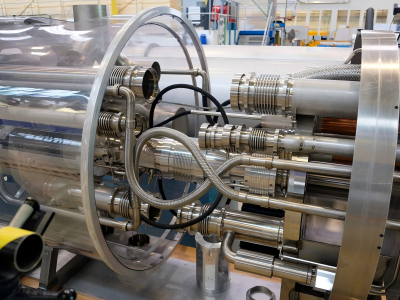
2. Nuclear fuel assembly: R60705 zirconium-niobium alloy wire makes pressurized water reactor fuel rod end plugs and guide tubes. It withstands 4 fuel cycles (~72 months) under high temperature, high pressure, and strong neutron radiation. Hydrogen stays <25 ppm. Grain size remains Grade 7. No hydrogen embrittlement or abnormal radiation growth.
3. Medical device: An international medical company uses 0.2 mm diameter R60702 zirconium wire for implantable nerve stimulation electrode leads. Animal and clinical tests confirm no corrosion or breakage after 10 years in the human body. Impedance stays stable. No MRI artifacts. It outperforms traditional platinum-iridium alloy.
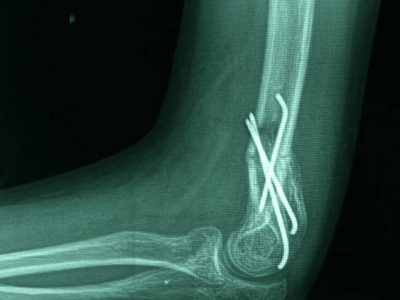
4. Electronic sputtering target: High-purity zirconium wire bonds LCD glass sputtering targets (EB welding). Target use rate rises 15%. No magnetic interference during sputtering. Film uniformity reaches ±3%.
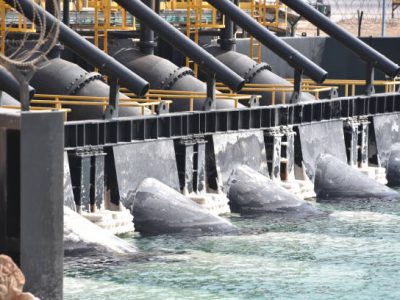
5. Desalination plant: A large Middle Eastern plant uses R60704 zirconium wire filters and nozzles. They work over 10 years in 60℃ water with 100 ppm chlorine. 316L stainless steel parts need replacement every 2 years. Maintenance downtime costs drop by 70%.
Conclusion
ASTM B550 zirconium wire has excellent corrosion resistance, balanced mechanical strength, very low magnetism, good high-temperature stability, and reliable weldability. It becomes irreplaceable in chemical, nuclear, medical, and electronic industries. Different grades meet diverse needs from general corrosion protection to high-strength structural use. Strict composition control and advanced manufacturing ensure stability and reliability. Demand will grow as extreme environment applications expand.
FAQ
1. Corrosion Resistance: ASTM B550 Zirconium Wire vs Pure Titanium Wire
Zirconium wire outperforms titanium alloy in reducing and high-chloride environments like hydrochloric acid, wet chlorine, and high-chloride brine. Titanium fails in boiling hydrochloric acid, but zirconium stays stable. Titanium resists concentrated nitric acid (>60%) better. Zirconium works better in dilute nitric acid, hydrochloric acid, and wet chlorine. Both perform similarly in sulfuric acid. Choose by medium redox potential, chloride concentration, and temperature.
2. Main Advantages of R60705 Zirconium-Niobium Alloy Wire Over R60702 Pure Zirconium
R60705 adds 2%–3% niobium. Tensile strength rises 40%–60% to 550–690 MPa, while keeping excellent corrosion resistance. It handles higher mechanical stress for high-pressure seals, long-span structural parts, and nuclear fuel assemblies. It fixes pure zirconium’s weakness: easy deformation or breakage under high stress. It expands application scope.
3. Why Use High-Purity Argon for Zirconium Wire Welding
Zirconium easily absorbs oxygen, nitrogen, and hydrogen above 400℃. Trace contamination causes weld brittleness and poor corrosion resistance. Standard argon (99.9%) has ~100 ppm oxygen, enough to oxidize welds. Use high-purity argon (≥99.99%) and full shielding. Let welds cool below 150℃ before air exposure for quality joints.
Find a Reliable ASTM B550 Zirconium Wire Supplier?
Baoji Titanium Valley Titanium Nickel Zirconium Material Processing Co., Ltd. is a professional rare metal manufacturer. It uses world-class Italian Danieli production lines. Annual output reaches 5,000 tons of high-end zirconium wire. Diameter ranges from 0.06 mm to 10.0 mm. All products meet ASTM B550. It offers full-grade customization for R60702/R60704/R60705 with full quality traceability from raw material to finished product. Contact for technical support and quotation: sales@titaniumvalleys.com
References
1. Nonferrous Metals Standardization Technical Committee. Zirconium and Zirconium Alloy Standards Compilation (2020 Edition)[M]. Beijing: China Standards Press, 2020.
2. Zhu M. Corrosion and Protection of Zirconium and Zirconium Alloys[M]. Beijing: Chemical Industry Press, 2018.
3. Wang J, Li P. Research Progress on Nuclear-Grade Zirconium Alloy Welding Technology[J]. Transactions of the China Welding Institution, 2020, 41(3): 1-8.
4. China Nonferrous Metals Industry Association. Rare Metal Processing Technology Handbook[M]. Beijing: Metallurgical Industry Press, 2019.
5. ASTM International. ASTM B550/B550M-21: Standard Specification for Zirconium and Zirconium Alloy Bar and Wire[S]. West Conshohocken: ASTM International, 2021.