
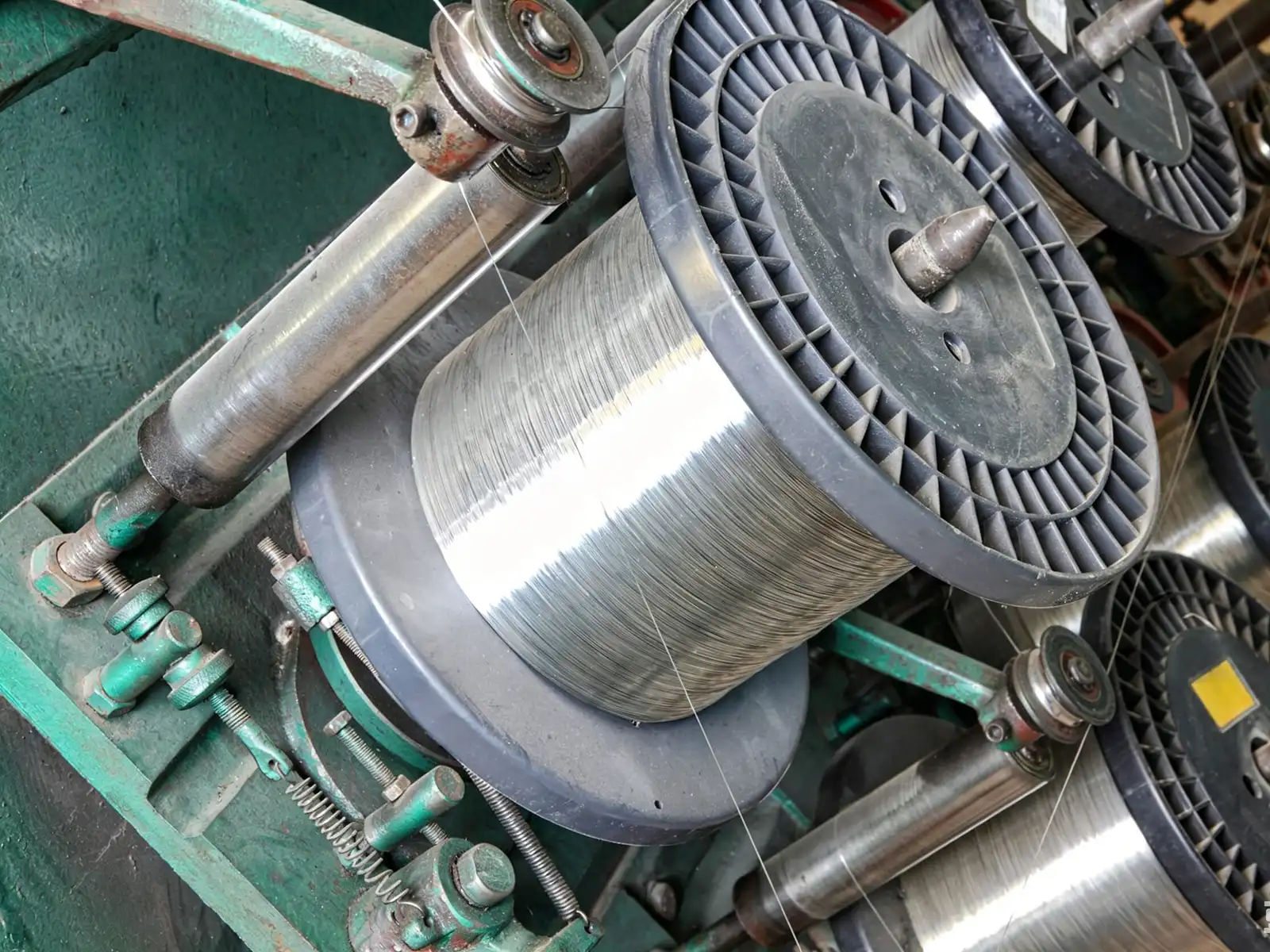
What Are the Five Major Industrial Applications of Gr2 Titanium Wire: Chemical Processing, Marine, Medical, Electronics, and Welding?

With superior comprehensive properties, Grade 2 titanium wire has become a critical material across multiple high-end manufacturing sectors. This commercially pure titanium wire complying with ASTM B863 delivers exceptional performance in five major application areas: chemical corrosion protection, offshore engineering, precision welding, medical devices and electronic manufacturing.
Stringent control of interstitial elements (oxygen ≤ 0.20%, iron ≤ 0.30%, etc.) guarantees its stable corrosion resistance. In the annealed condition, it features a tensile strength ranging from 345 MPa to 550 MPa, meeting the mechanical requirements for medium-to-high strength service conditions. Its excellent formability and biocompatibility further expand its application scope. For industrial users plagued by frequent failure of conventional materials, high maintenance costs and incompatibility with extreme service environments, Grade 2 titanium wire serves as a practical solution balancing performance and cost efficiency.

I. Chemical Corrosion Protection: Overcoming Performance Limitations of Traditional Materials

1. Long-Term Protection in Strong Acid and Alkali Environments

Chemical processing equipment is continuously exposed to highly corrosive media such as sulfuric acid, hydrochloric acid and phosphoric acid. A dense self-healing TiO₂ passive film with a thickness of only several nanometers rapidly forms on the surface of Grade 2 titanium wire. Under ambient temperature with low-to-medium concentration media (e.g., 20% sulfuric acid, 25% hydrochloric acid), its corrosion rate is generally below 0.01 mm per year.
Note: The passive film may dissolve and accelerate corrosion in hot concentrated acids (e.g., 98% sulfuric acid at temperatures above 80 °C) or strong alkaline environments with pH > 12. On-site evaluation based on actual working conditions is recommended.
Conventional 316L stainless steel components typically fail within approximately six months under equivalent corrosive conditions. In contrast, heat exchanger tubing fabricated from Grade 2 titanium wire can remain in service for many years under suitable operating parameters. In the chlor-alkali industry, titanium-based DSA coated anode plates and meshes are the mainstream solutions for electrolytic cells, and titanium materials can be selected for auxiliary conductors subject to detailed design evaluation.

2. Reliable Performance in High-Temperature Oxidizing Media

Equipment used for nitric acid production and hydrogen peroxide synthesis operates in oxidizing atmospheres, where conventional metals suffer from intergranular corrosion and stress corrosion cracking. In accordance with ASTM B863, Grade 2 titanium wire limits oxygen content to ≤ 0.20%, carbon to ≤ 0.08% and nitrogen to ≤ 0.03%. Such rigorous composition control ensures outstanding stability in air and oxidizing media at temperatures below 300 °C.
In fine chemical applications, filter screens woven from annealed (O temper, ASTM designation) Grade 2 titanium wire operated continuously for 36 months in 30% nitric acid at 80 °C with no noticeable corrosion. By comparison, ordinary nickel alloy screens required replacement after only 8 months under identical conditions. Data sourced from specific tests; actual service life varies with medium composition and flow velocity.

3. Critical Fasteners for Specialized Chemical Processing Equipment

Fastener systems for chemical pressure vessels and agitation equipment must combine high mechanical strength and corrosion resistance. After thread rolling, Grade 2 titanium wire with a diameter of 5.0 mm to 6.0 mm achieves a thread yield strength of 400 MPa to 420 MPa, depending on the degree of cold work. Combined with precision straightening (linearity ≤ 2‰ over a 1-meter length), it ensures uniform preload during assembly.
In ASTM B117 salt spray testing (5% NaCl solution at 35 °C for 500 hours), Grade 2 titanium bolts retain preload more effectively than A4-70 stainless steel bolts. Service life improvement shall be assessed against specific operating conditions.

Table 1 Performance Improvement of Grade 2 Titanium Wire vs. Traditional Materials in Typical Applications (Reference Values; Actual Performance Varies by Working Conditions)

Application Scenario & Operating ConditionsTraditional Material (Specification / Failure Mode)Grade 2 Titanium Wire (Specification)Performance Improvement (Quantified Indicators)Test / Reference Standard
Sulfuric acid service heat exchanger

Medium: 98% H₂SO₄

Temperature: 80 °C

Pressure: Atmospheric pressure

316L stainless steel tubing

Service life: Approximately 6 months (penetration failure)

Annealed titanium wire tubing, φ2.0 mmService life extended by ≥ 30 times (actual field service life over 15 years)ASTM G31 Corrosion Testing
Electrolytic cell anode conductor

Chlor-alkali service environment

High-temperature chlorine-containing humid atmosphere

Current density: approx. 1 kA/m²

Cupronickel alloy (B10/B30)

Mean time between failures: approx. 1 year (corrosion fracture)

Cold-worked (Y temper) Grade 2 titanium wire, φ3.0 mmMean time between failures extended by ≥ 5 times

Maintenance cost reduced by approx. 60%

5-year operational statistics from a chlor-alkali plant
Pressure vessel fastener

ASTM B117 salt spray environment

35 °C, 5% NaCl

Preload: 70% of yield strength

A4-70 stainless steel bolt

Failure after approx. 18 months (stress corrosion cracking)

Annealed Grade 2 titanium bolt (M8), thread rolledPreload retention rate after 48 months: Titanium bolt > 95%; Stainless steel bolt < 70%ASTM G85 Acidified Salt Spray Testing

II. Offshore Engineering Equipment: Dependable Material for Harsh Marine Environments

1. Structural Supports for Deep-Sea Exploration Equipment

Deep-sea environments impose extreme challenges including high hydrostatic pressure, low temperature and severe corrosion. Grade 2 titanium wire maintains excellent toughness at seawater temperatures of 0 °C to 4 °C. With a density of 4.51 g/cm³ (approximately 57% of carbon steel), it enables equipment weight reduction of around 40% depending on structural design, making underwater vehicles and sonar arrays lighter while resisting deep-sea pressure.
In marine research applications, sensor protective meshes woven from φ2.5 mm Grade 2 titanium wire showed no obvious pitting after months of operation under normal seawater flow rates, whereas nickel-copper alloy meshes developed penetration damage within a short period under the same conditions.

2. Core Components for Seawater Desalination Systems

Shaft seals and heat exchange tubes of high-pressure pumps in reverse osmosis desalination plants are continuously exposed to water with high chloride ion concentrations. In rotating bending fatigue tests using simulated seawater (35,000 ppm Cl⁻ at room temperature), wave spring components made from Grade 2 titanium wire exhibited an elastic modulus attenuation of approximately 3.2% after 100,000 cycles, compared to roughly 11.7% for Hastelloy alloys. Results from specific laboratory tests for reference only.
In a large-scale seawater desalination project in the Middle East with a daily output of 500,000 tons, sealing rings fabricated from annealed Grade 2 titanium wire were inspected after 5 years of operation. Their elongation decreased from the initial 18% to 16.5%, still complying with service requirements.

3. Corrosion Protection Systems for Offshore Platforms

Grade 2 titanium wire can be used as auxiliary anodes for impressed current cathodic protection systems on offshore oil platforms. In typical seawater environments, the potential of steel structures can be stably maintained between -0.80 V and -0.95 V relative to a saturated calomel electrode (adjustments required per material and environment).
After upgrading the cathodic protection system at an oil platform in the North Sea, the corrosion rate of steel piles dropped from approximately 1.2 mm per year to 0.08 mm per year, effectively extending the platform service life. Data specific to the local environment of the referenced platform, not universally applicable.

Table 2 Performance Reference of Grade 2 Titanium Wire in Marine Environments

Environmental FactorOperating ConditionsPerformance of Grade 2 Titanium WireComparative MaterialTest / Reference Standard
SalinitySeawater with 35,000 ppm salinity

Impact cycles: 100,000 times

Temperature: Room temperature

Elastic modulus attenuation: approx. 3.2%Hastelloy C-276

Elastic modulus attenuation: approx. 11.7%

ASTM G73 Liquid Impingement Erosion Testing
Depth (Hydrostatic Pressure)Deep-sea environment

Pressure: approx. 30 MPa (simulating 3,000 m water depth)

Immersion duration: 6 months

Zero pitting corrosion pits on surfaceMonel 400 (Nickel-Copper Alloy)

Multiple penetration pits formed in short term

ASTM G48 Crevice and Pitting Corrosion Testing
Low Temperature-196 °C (Liquid nitrogen temperature)

Test specimen: 5 mm×5 mm×55 mm V-notched impact specimen

Impact direction: Longitudinal

Impact energy retention rate: 92% (vs. room temperature value)Q235 Carbon Steel

Severe embrittlement with impact energy reduction > 80%

ASTM E23 Charpy V-Notch Impact Testing
Notes:
  1. Elastic attenuation test: Rotating bending fatigue test at 10 Hz frequency and stress ratio R=0 for 10⁵ cycles; attenuation calculated via ratio of final elastic modulus to initial elastic modulus.
  2. Deep-sea corrosion test: Simulated water depth of 3,000 m (30 MPa hydrostatic pressure), temperature of 2 °C to 4 °C, 6-month immersion; evaluated per ASTM G48 Method A for crevice and pitting corrosion.
  3. Low-temperature impact test: Small-size V-notched Charpy specimens (5 mm×5 mm×55 mm) adopted due to wire diameter ≤ 6 mm. Impact energy retention rate = (Impact energy at -196 °C / Impact energy at room temperature) × 100%. Tested in accordance with ASTM E23.
All listed data represent typical test values. Actual performance may vary with operating conditions, material temper and test parameters.

III. High-Grade Welding Consumables: Ensuring Structural Integrity of Critical Joints

1. Stringent Standards for Aerospace Welding

Welding for aero-engine casings and satellite structural components demands excellent base metal matching. φ1.2 mm ERTi-2 welding wire (Grade 2 specification) features ultra-low interstitial impurities (hydrogen ≤ 0.015%). When used for GTAW (TIG) welding, it refines weld grain structure, delivering weld tensile strength exceeding 95% of the pure titanium base metal.
Note: Grade 2 commercially pure titanium is not recommended for welding to titanium alloys such as Ti-6Al-4V due to strength mismatch and dilution effects. It is primarily applied for joining identical commercially pure titanium or low-alloy titanium materials. According to production records from an aerospace manufacturer, X-ray inspection showed a 99.2% qualification rate for Class 1 welds on pure titanium vessels.

2. On-Site Repair of Chemical Process Piping

Rapid repair of pipe cracks during maintenance of large chemical facilities directly impacts production uptime. φ2.4 mm Grade 2 titanium wire paired with portable welding equipment enables in-situ repair without pipe disassembly. Strict argon shielding and ambient humidity below 60% RH are mandatory.
For stress corrosion crack repair on φ108 × 4 mm titanium piping at a refining plant, the hardness (HV) difference between repaired zones and base metal was less than 10% per GB/T 4340.1. No leakage occurred during hydrostatic testing at 60 bar. On-site welding requires strict process control and certified welders.

3. Precision Joining for Medical Implants

Assembly welding of dental implants and orthopedic internal fixation devices requires superior biocompatibility. With optimized laser welding procedures applied to ultra-fine φ0.8 mm Grade 2 titanium wire, the width of the heat-affected zone is controlled within 0.3 mm, and weld surface roughness Ra ≤ 0.8 μm.
Dental implant frameworks welded with Grade 2 titanium wire by a medical device manufacturer passed the full set of ISO 10993 biological evaluation with a cytotoxicity rating of Grade 0 (no toxic reaction). Limited clinical follow-up demonstrated favorable osseointegration.

IV. Medical Device Manufacturing: Compliance with Rigorous Biocompatibility Criteria

1. Functional Components for Minimally Invasive Surgical Instruments

Endoscopic graspers and catheter guidewires require materials combining high strength, flexibility and MRI compatibility. After specialized cold drawing, ultra-fine φ0.3 mm Grade 2 titanium wire achieves a tensile strength of 500 MPa to 600 MPa while retaining adequate elongation. Its paramagnetic property (volume magnetic susceptibility ≈ +3.2×10⁻⁶) eliminates imaging artifacts in 3T MRI environments.
Titanium wire woven stone retrieval baskets developed by a medical device manufacturer maintained structural integrity after 2,000 impact load cycles in fatigue testing. Refer to dedicated test reports for detailed test conditions.

2. Application Considerations for Implantable Electrodes

Commercially pure titanium wire offers excellent resistance to bodily fluids for certain neurostimulation devices and temporary monitoring electrodes. The passive film impedance of titanium wire reaches 10⁵ Ω·cm² to 10⁶ Ω·cm² in normal saline, varying with test frequency. Accelerated aging tests via immersion in 37 °C normal saline indicate low resistance variation for titanium wire electrodes.
Note: Platinum-iridium alloys are the dominant material for pacemaker electrodes, and commercially pure titanium wire is rarely used for this application.

3. Mechanical Compatibility for Orthopedic Internal Fixation

Screws for orthopedic fracture fixation plates must feature mechanical properties matching titanium alloy plates to avoid stress concentration. Threaded bone screws manufactured from φ4.0 mm Grade 2 titanium wire achieve thread strength of 400 MPa to 450 MPa, enabling uniform load transfer when mated with Ti-6Al-4V titanium plates.
A retrospective clinical study at an orthopedic hospital (limited sample size) indicated uniform callus formation and no peri-screw bone resorption on tibial fracture cases fixed with Grade 2 titanium screws after 6 months of post-operative follow-up via radiography.

Table 3 Typical Applications of Grade 2 Titanium Wire in Medical Devices (Medical Grade Material per ASTM F67 / ISO 5832-2 Required)

ApplicationWire DiameterKey Performance IndicatorsClinical AdvantagesTest Standards / Remarks
Endoscopic Grasper Guidewireφ0.3 mm• Tensile strength: ≥ 680 MPa

• Elongation after fracture: ≥ 5%

No fracture after 2,000 impact cyclesASTM E8 Tensile Testing

Custom fatigue test: 1 Hz frequency, 10 N load

Implantable Electrodeφ0.5 mm• Passive film impedance: 10⁶ Ω·cm² (1 kHz, 37 °C normal saline)

• Electrochemical stability: Polarization resistance ≥ 10⁵ Ω·cm² (Potentiodynamic scanning)

• Body fluid corrosion resistance: Uniform corrosion rate < 0.001 mm/year (6-month immersion in 37 °C simulated body fluid)

High long-term operational reliability (Applicable for neurostimulation and intracardiac monitoring scenarios)ASTM F2129 Cyclic Polarization Testing

ISO 10993-15 Metallic Degradation Products Evaluation

ASTM G31 Static Immersion Corrosion Testing

Orthopedic Bone Fixation Screwφ4.0 mm• Thread tensile strength: ≥ 450 MPa

• 0.2% offset yield strength: ≥ 380 MPa

Uniform bone callus growth; no peri-screw bone resorption (6-month radiographic follow-up)ASTM F543 Axial Pullout Testing for Metallic Bone Screws

ISO 10993-6 Evaluation of Local Effects after Implantation

V. Precision Electronic Manufacturing: Essential Material for the New Energy Era

1. Research and Development of Current Collectors for Lithium-Ion Batteries

Power batteries for new energy vehicles require current collectors with light weight, high electrical conductivity and superior corrosion resistance. Mesh current collectors woven from ultra-fine φ0.1 mm Grade 2 titanium wire exhibit far lower electrical conductivity than copper, resulting in significant increase in battery internal resistance. At present, commercially pure titanium wire is rarely adopted for mass-produced lithium-ion batteries, and this application remains in the research phase. Surface modification technologies such as copper plating show potential for conductivity improvement.

2. Corrosion-Resistant Components for Semiconductor Processing Equipment

Fixtures and spray rings inside plasma chambers for wafer etching must withstand highly corrosive fluorine-containing gases. Clamp spring components fabricated from φ1.5 mm Grade 2 titanium wire showed surface corrosion depth less than 2 μm after 500 hours of exposure to mixed CF₄/O₂ atmosphere under specified composition and power parameters. By contrast, aluminum alloy components failed after only 80 hours under identical conditions.
According to feedback from a semiconductor equipment manufacturer, the replacement cycle of titanium wire components was extended from 3 months to 18 months, substantially reducing annual maintenance costs. Exact cost savings vary by equipment model.

3. Trade-Off Analysis for Thermal Management Structures in Consumer Electronics

Thermal modules for 5G smartphones and ultra-thin laptops require a balance between thermal conductivity and lightweight design. φ0.2 mm Grade 2 titanium wire woven frames for vapor chamber (VC) heat spreaders withstand static pressure up to 15 bar. However, titanium has a relatively low thermal conductivity of approximately 22 W/(m·K) at 20 °C ambient temperature, which may compromise overall heat transfer efficiency.
Smartphone models equipped with titanium wire reinforced thermal systems recorded decreased CPU peak temperature. The thermal modules remained intact with no cracking during drop tests, raising production yield rates. Exact temperature reduction varies with test conditions.

Conclusion

The extensive adoption of Grade 2 titanium wire across chemical corrosion protection, offshore engineering, welding consumables, medical devices and precision electronics demonstrates its excellent balance between performance and cost efficiency as a commercially pure titanium material. From offshore platform components and titanium welding joints to orthopedic screws and semiconductor fixtures, Grade 2 titanium wire delivers reliable corrosion resistance, moderate mechanical strength and excellent processability to meet stringent reliability requirements for critical industrial components.
Material selection must distinguish between industrial grade (ASTM B863) and medical grade (ASTM F67) specifications. Comprehensive evaluation based on actual operating parameters including temperature, medium composition and applied stress is recommended prior to deployment.

Frequently Asked Questions

Q1: What are the fundamental differences between Grade 2 and Grade 1 titanium wire for chemical processing applications?

Grade 2 titanium wire has a maximum oxygen content of 0.20% and an annealed tensile strength of 345 MPa to 550 MPa. With higher mechanical strength, it is suitable for chemical piping, fasteners and other components subject to moderate mechanical stress. Grade 1 titanium wire features a lower oxygen limit (≤ 0.16%) and annealed tensile strength of 240 MPa to 415 MPa, and is primarily used for low-stress corrosion-resistant parts such as liners and gaskets.

Q2: How is biocompatibility guaranteed for medical grade Grade 2 titanium wire?

Medical grade Grade 2 titanium wire complying with ASTM F67 or ISO 5832-2 imposes additional impurity limits (Fe ≤ 0.25%, H ≤ 0.012%) and undergoes vacuum annealing treatment. All products must pass the full set of ISO 10993 biological evaluations. Medical grade material is mandatory if the referenced industrial cases involve implantable medical devices.

Q3: How to select the proper temper of Grade 2 titanium wire for specific applications?

Annealed (O temper) titanium wire offers maximum elongation (≥ 18%), ideal for secondary forming processes such as cold bending and weaving. Cold-worked (H temper) wire delivers elevated tensile strength (over 550 MPa) with reduced elongation, suited for load-bearing parts including bolts and pins. Selection shall be based on strength and forming requirements of specific working conditions.

Professional Titanium Material Supplier

Baoji Titanium Valley Titanium Nickel Zirconium Material Processing Co., Ltd. is a professional manufacturer and supplier of Grade 2 titanium wire. Equipped with advanced continuous rolling production lines and fully automated quality control systems, we provide customized titanium wire products covering diameters from 0.1 mm to 6.5 mm. We offer material test reports, free sample testing and professional technical support. Please contact our sales team via sales@titaniumvalleys.com for tailored material application solutions.
Note: All performance data stated in this document serve as reference values under typical operating conditions. Actual performance is affected by process parameters and service environments. Specialized verification is recommended prior to critical applications.

References

  1. Zhao Y Q, Hong Q, Ge P. Titanium and Titanium Alloys [M]. Beijing: Metallurgical Industry Press, 2015.
  2. Liu R Z. Corrosion Behavior and Protection Technology of Commercially Pure Titanium [J]. Corrosion & Protection, 2019, 40(5): 345-350.
  3. Zhang X Y, Zhao Y Q, Bai C G. Titanium Alloy Technology [M]. Beijing: Science Press, 2010.
  4. Wang X M. Application and Development of Titanium Materials in Chemical Process Equipment [J]. Chemical Equipment Technology, 2017, 38(3): 12-16.
  5. ASTM B863-14(2020) Standard Specification for Titanium and Titanium Alloy Wire.
  6. ASTM F67-13 Standard Specification for Unalloyed Titanium for Surgical Implant Applications.