
What Multi-Scenario Values Can Grade 4 Titanium Wire Bring as the Highest-Strength Commercially Pure Titanium Material?
- Grade 4 Titanium Wire
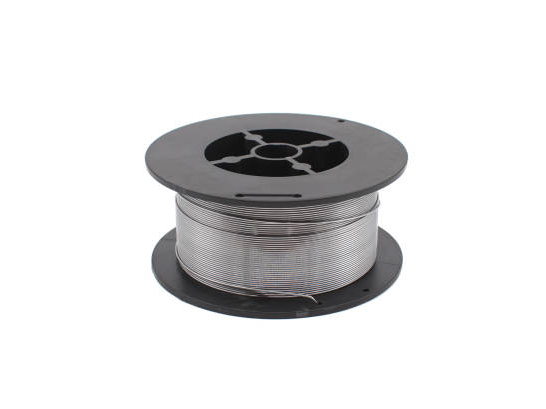
Grade 4 titanium wire holds an irreplaceable position across global industrial sectors. It is the strongest grade among all commercially pure titanium products, with minimum tensile strength reaching 550 MPa. This high-performance wire follows the ASTM B863 standard. It delivers strong mechanical strength, great corrosion resistance and stable welding performance. Factories widely use it for harsh working conditions, including chemical anti-corrosion equipment, offshore engineering and precision mechanical parts.
Compared with standard Grade 1 or Grade 2 titanium wire, Grade 4 titanium wire gains 50% to 60% higher tensile strength and much better load capacity. It still keeps all natural strengths of pure titanium, such as light weight, non-magnetic property and good biocompatibility. Manufacturers use Grade 4 titanium wire as welding filler metals and structural parts. It works well in corrosive environments and heavy-load operating conditions. It solves two major industry problems. First, regular pure titanium lacks enough strength. Second, common anti-corrosion metals cannot balance corrosion resistance and light weight. It becomes the top material choice for high-end manufacturing upgrades.
1. Welding Material Sector: Core Application Scenarios of Grade 4 Titanium Wire
1.1 Main Filler Metal for Chemical Equipment Welding
Factories use Grade 4 titanium wire as the most reliable welding filler to connect titanium equipment during chemical plant production and maintenance. Strong acid, strong alkali and chloride substances cause heavy corrosion. Traditional welding wires often develop early cracks at weld seams under such media.
Workers use TIG or MIG welding processes with Grade 4 titanium wire. The formed weld joints match the mechanical performance of base metal. Weld tensile strength stays above 90% of base metal strength, and pore rate sits below 0.5%. Titanium equipment welded by Grade 4 wire serves far longer than equipment welded with stainless steel wires under strong acid surroundings.
Grade 4 welding wire goes through precise drawing and surface pickling processes and meets ASTM B863 rules. Its oxygen content stays under strict control at maximum 0.30%. Top-grade wires for precision welding control oxygen content within 0.20%. This avoids impurity introduction during welding. Workers can complete all-position welding with suitable welding parameters. The wire fits connection work for key parts, such as chemical pipeline joints, tank heads and heat exchanger tube bundles.
1.2 Connecting Material for Aerospace Structural Components
Welding for titanium alloy spacecraft frames and aircraft fuselage skins sets strict standards for filler metal strength and fatigue resistance. Grade 4 pure titanium wire fits welding tasks for pure titanium structural parts. Weld zones maintain over 85% of the base metal’s fatigue life. Workers must use special titanium alloy wires for TC4 titanium alloy structures.
Ultra-thin Grade 4 titanium wire with diameters from 0.8 mm to 1.2 mm shows unique advantages for precision welding of thin-wall structures with wall thickness below 1.5 mm. It produces low heat input and clean weld shapes. It effectively prevents burn-through and part deformation. Factories apply this wire in large quantities for high-end projects, including repair of room-temperature aerospace structural parts and production of satellite load-bearing frames.
1.3 Top Welding Material Choice for Offshore Engineering Equipment
Metal welding under seawater environments creates constant engineering challenges. Chloride ions erode weld seams and turn them into weak corrosion points. Under normal-temperature seawater conditions, titanium alloy structures welded with Grade 4 titanium wire own passive films with strong self-repair ability. Tiny scratches on weld surfaces can regrow complete protective layers within a short time.
Structures such as aquaculture cage frames and pipeline joints welded with Grade 4 wire show outstanding anti-corrosion performance in marine environments. Their service life far exceeds parts welded with stainless steel wires.
Matching Parameters of Grade 4 Titanium Wire for Welding Scenarios
(Data applies to regular room-temperature working conditions; adjust parameters for extreme high or low temperatures)
| Welding Scenario | Recommended Wire Diameter (mm) | Typical Welding Current (A) | Weld Strength Retention Rate | Applicable Ambient Temperature (℃) |
|---|---|---|---|---|
| Chemical Pipeline Butt Welding | 2.0 ~ 3.0 | 100 ~ 140 | ≥ 90% | -40 ~ 150 |
| Aerospace Thin-Wall Structures | 0.8 ~ 1.2 | 60 ~ 90 | ≥ 85% | -60 ~ 260 |
| Offshore Platform Repair | 2.4 ~ 3.0 | 120 ~ 160 | ≥ 88% | -20 ~ 80 |
| Heat Exchanger Welding | 1.6 ~ 2.0 | 80 ~ 110 | ≥ 92% | -50 ~ 200 |
Note: All listed parameters target regular working environments. Operators need minor adjustments for extreme high or low temperature conditions.
2. Chemical Anti-Corrosion Sector: Solve Material Failure Issues in Extreme Environments
2.1 Durable Components for Acid and Alkali Surroundings
Processing systems for sulfuric acid, nitric acid and phosphoric acid place heavy corrosion and wear pressure on internal equipment parts. These parts include mixing paddles, hanging brackets and filter screens.
Filter screens woven with Grade 4 titanium wire record extremely low annual corrosion rates. They work in room-temperature dilute nitric acid, chromic acid and dilute sulfuric acid. Under identical working loads and service cycles, their service life reaches over 10 times that of 316L stainless steel screens.
Reactor mixing blades made of Grade 4 titanium wire run for long periods under intermittent operation. Only slight surface discoloration appears, with no pitting corrosion or stress corrosion cracks.
Grade 4 titanium wire delivers high tensile strength for anode hanging systems in chlor-alkali electrolytic cells. It fixes the frequent breaking issue of traditional pure titanium wires with insufficient strength. The hanging system’s replacement cycle extends greatly, and overall full-life maintenance costs drop sharply.
2.2 Long-Lasting Fasteners for Salt Spray Environments
Coastal chemical plants and offshore platform equipment face combined corrosion from salt spray and high humidity. Standard fasteners rust and fail within one to two years.
Workers cold-form Grade 4 titanium wire into titanium screws, pins and spring washers. These fasteners show zero visible corrosion after salt spray tests and retain more than 98% of original mechanical performance. Manufacturers widely replace stainless steel fasteners with these titanium products on offshore wind power equipment, cross-sea bridges and oil drilling platforms. The maintenance cycle extends significantly.
Cold-worked (Y state) Grade 4 titanium wire achieves tensile strength above 650 MPa. Spring clamps made from this wire maintain excellent fatigue life under vibration loads and meet strict high-frequency stress standards for offshore engineering.
2.3 Anode Materials for Electrochemical Protection Systems
Cathodic protection systems protect storage tanks and pipelines. Flexible anodes woven with Grade 4 titanium wire cost less and fit target surfaces better than rigid platinum-titanium mesh anodes. They produce evenly distributed electric current and balance protection performance with production costs.
Long-term operation monitoring records low consumption of Grade 4 titanium wire anodes and stable protection potential. No corrosion develops on outer pipeline walls.
Corrosion Resistance of Grade 4 Titanium Wire in Different Corrosive Media
(Static room-temperature environment, typical test values)
| Corrosive Medium Type | Typical Corrosion Rate (mm/a) | Service Life Multiple vs 316L Stainless Steel (Same Working Conditions) | Typical Component Applications | Applicable Temperature Range (℃) | Remarks |
|---|---|---|---|---|---|
| Room-Temperature Dilute Nitric Acid (Oxidizing Acid) | ≤ 0.01 | > 10 times | Filter Screens, Mixing Paddles | 20 ~ 80 | Excellent anti-corrosion performance |
| Room-Temperature Dilute Sulfuric Acid (Concentration < 10%) | ≤ 0.02 | > 8 times | Electrolytic Cell Hanging Parts | 20 ~ 60 | Suitable only for low concentration |
| Seawater Plus Ultraviolet Radiation | ≤ 0.005 | > 20 times | Mooring Cables, Aquaculture Cages | -5 ~ 40 | Top-tier seawater resistance |
| Room-Temperature Low-Concentration Hydrochloric Acid (Concentration < 5%) | ≤ 0.05 | > 5 times | Valve Stems, Sealing Rings | 20 ~ 50 | Avoid high temperature and high concentration use |
| Room-Temperature Dry Chlorine Gas | ≤ 0.01 | > 10 times | Dry Chlorine Gas Equipment Parts | 40 ~ 80 | Do not use in water-containing chlorine gas |
Note: Grade 4 titanium wire loses anti-corrosion performance under high temperature, high concentration, fluorine-containing or strong reducing acid environments. Complete professional evaluation is required before use.
3. Mechanical Manufacturing Sector: Reliable Material Choice for Heavy-Load Scenarios
3.1 Raw Material for Precision Elastic Components
Precision devices such as electronic connectors, switch contacts and medical instruments set three core standards for elastic parts: high tensile strength, long fatigue life and stable electrical conductivity.
Manufacturers apply controlled cold drawing processes to Grade 4 titanium wire. The finished wire reaches tensile strength between 550 MPa and 650 MPa, with elongation rates ranging from 15% to 25%. Spring plates made from this wire recover over 95% of original elasticity after tens of thousands of bending cycles.
Grade 4 titanium spring plates create smaller contact resistance fluctuations and better electrical stability than traditional beryllium copper materials. They match production demands of high-reliability electronic devices.
Producers pick high-toughness Grade 2 pure titanium wire for implantable medical devices, such as guide wires and stents. They select high-strength Grade 4 titanium wire for non-implant precision accessories and external guide structures.
Ultra-fine Grade 4 titanium wire with diameters from 0.1 mm to 0.3 mm receives electrochemical surface polishing treatment. Its surface roughness Ra stays below 0.4 μm. Factories use this wire as inner cores of non-implant precision guide parts. It keeps structural rigidity and eliminates imaging artifacts during MRI scans.
3.2 Core Material for High-Strength Load-Bearing Cables
Steel wire ropes on lifting machines, cable cars and lifting platforms face dual damage from dynamic loads and environmental corrosion. Pure titanium cables woven with Grade 4 titanium wire deliver much higher load capacity per unit weight than steel ropes. They operate for long periods in salt spray environments without extra anti-corrosion coatings.
One port replaced steel lifting cables for container spreaders with Grade 4 titanium cables. The equipment total weight dropped, maximum lifting height increased, and annual maintenance times reduced sharply.
Segmented annealing processes remove residual stress inside Grade 4 titanium wire and fix fatigue cracking risks under vibration. The wire shows outstanding high-cycle fatigue life, more than three times longer than standard Grade 2 titanium wire.
3.3 High-Quality Feedstock for Additive Manufacturing
Workers use Grade 4 titanium wire as feed material for titanium alloy 3D printing, including DED and WAAM technologies. Printed parts from this wire gain higher tensile strength.
Wire feeding methods hold clear advantages over powder metallurgy production lines: material utilization rate above 95%, low oxygen content and controllable production costs. Aerospace maintenance teams use Grade 4 titanium wire for laser cladding repair. Repaired zones retain over 90% of original base metal strength. Single-part repair costs sit far below full part remanufacturing fees. This technology sees wide use for high-value room-temperature aerospace structural parts.
Typical Applications and Advantages of Grade 4 Titanium Wire in Mechanical Manufacturing
| Mechanical Application Type | Wire Diameter Range (mm) | Production Process | Performance Indicators | Cost Advantages vs Traditional Materials |
|---|---|---|---|---|
| Connector Spring Plates | 0.3 ~ 0.8 | Cold Drawing + Stamping | Fatigue Life > 10⁵ Cycles | Over 60% cut in maintenance costs |
| Lifting Cables | 3.0 ~ 5.0 | Multi-Strand Twisting | Breaking Load > 200 kN | 40% rise in overall cost performance |
| Non-Implant Medical Guide Wires | 0.1 ~ 0.3 | Electrochemical Polishing | Ra < 0.4 μm | Complies with ISO 10993 standards |
| 3D Printing Feedstock | 1.2 ~ 2.0 | Cladding Deposition | Density > 99.5% | Material Utilization > 95% |
4. Emerging Application Sectors: Material Technology Breakthroughs to Upgrade Industrial Production
4.1 Key Pressure-Resistant Parts for Hydrogen Energy Equipment
Parts inside hydrogen fuel cells, high-pressure hydrogen storage tanks and hydrogen refueling stations need to resist hydrogen embrittlement and high-pressure cyclic fatigue. Grade 4 pure titanium contains low impurity levels and stable internal structures. It shows far weaker hydrogen embrittlement sensitivity than high-strength steel.
Connecting rings for hydrogen tank liners and valve sealing rings made from Grade 4 titanium wire show zero cracks after repeated high-pressure hydrogen filling and release cycles. Composite hydrogen storage tanks reinforced with Grade 4 titanium wire cut overall system weight compared to full steel tanks and extend vehicle driving ranges.
Electrode connecting wires for water electrolysis hydrogen production plants use Grade 4 titanium wire to replace nickel materials. The wire carries low electrical resistance and resists alkaline corrosion. It lowers full-life operating costs.
4.2 Precision Components for Electronic Information Industry
Manufacturers use Grade 4 titanium wire for 5G base station filters, semiconductor test probes and precision sensors. Its non-magnetic property and low thermal expansion coefficient fit electronic production demands.
Ultra-fine Grade 4 titanium wire with diameters under 0.5 mm receives precise straightening treatment and maintains good linearity. Probe tips made from this wire deliver high positioning accuracy and satisfy advanced chip testing standards.
Suspension wire systems inside laser gyroscopes adopt Grade 4 titanium wire. The wire creates tiny size changes under wide temperature shifts and guarantees stable precision of inertial navigation systems.
4.3 Lightweight Raw Material for Sports Equipment
High-end sports gear including bicycle frames, tennis racket frames and climbing equipment uses Grade 4 titanium wire. Workers build light yet strong frames through TIG welding or mechanical assembly. Its elastic modulus sits between pure titanium and titanium alloys. It creates firm clamping force and avoids uncomfortable tightness for users. This material holds large market shares in premium sports equipment markets.
5. Material Selection Guide: How to Pick Suitable Grade 4 Titanium Wire for Specific Working Conditions
5.1 Choose Wire Specifications Based on Load Types
Select thick-diameter annealed (M state) Grade 4 titanium wire (3.0 mm to 6.5 mm) for static load tasks such as hanging brackets and support frames. This choice fully utilizes the wire’s high tensile strength.
Pick thin-diameter cold-worked (Y state) wire (0.5 mm to 2.0 mm) for dynamic load scenarios including springs and shock-absorbing cables. Work hardening brings higher yield strength and better fatigue resistance.
All welding tasks require annealed Grade 4 titanium wire. Match wire diameter with base metal thickness:
- Base metal thickness below 2 mm: 0.8 mm to 1.2 mm welding wire
- Base metal thickness between 2 mm and 5 mm: 1.6 mm to 2.0 mm welding wire
- Base metal thickness above 5 mm: 2.4 mm to 3.0 mm welding wire plus multi-layer multi-pass welding processes
5.2 Match Wire Surface Finishes with Working Needs
Pick pickled surface wire for chemical anti-corrosion projects. Its natural passive film delivers the best anti-corrosion performance.
Select bright or electro-polished surface wire (Ra < 0.6 μm) for precision mechanical parts. This finish lowers friction coefficients and reduces stress concentration points.
3D printing special wire requires vacuum degreasing plus light pickling treatment. It carries no oxide layers or surface impurities and guarantees high printed part density.
Choose sandblasted surface wire for parts needing follow-up coating or adhesive bonding. The surface roughness range of 3 μm to 6 μm creates the strongest coating adhesion.
5.3 Core Standards to Check for Material Quality Certification
Critical projects in aerospace and medical equipment demand EN 10204 3.1 material certificates. These certificates include complete trace records of chemical composition, mechanical performance and non-destructive testing results.
Equipment used for oil extraction and sulfide-rich environments must comply with NACE MR0175 standards to resist sulfide stress corrosion. General chemical plant equipment follows ISO 9001 and ASTM B863 standards as core quality rules.
Trusted Grade 4 titanium wire suppliers provide batch-by-batch test reports for chemical composition, tensile strength and eddy current inspection. They maintain strict control over actual oxygen content values to lock stable welding and anti-corrosion performance.
Quick Reference Guide for Grade 4 Titanium Wire Selection
| Working Condition Type | Recommended Material State | Recommended Surface Finish | Mandatory Quality Certifications | Key Acceptance Standards |
|---|---|---|---|---|
| Chemical Equipment Welding | Annealed (M) | Pickled | ASTM B863 | Weld pore rate < 0.5% |
| Offshore Fastener Production | Cold-Worked (Y) | Passivated | ASTM F67 | No red rust after 1000-hour salt spray test |
| Non-Implant Medical Parts | Annealed (M) | Electro-Polished | ISO 13485 | Surface roughness Ra < 0.4 μm |
| Aerospace Structural Parts | Annealed (M) | Bright Finished | AMS 4928 | Fatigue Life ≥ 10⁷ Cycles |
Conclusion
Grade 4 titanium wire delivers tensile strength above 550 MPa, excellent corrosion resistance and stable processing performance. It acts as the top material solution for projects facing combined heavy loads and corrosive surroundings. Its application range keeps expanding, covering chemical welding, aerospace manufacturing, offshore engineering and hydrogen energy equipment.
Buyers gain two major benefits by choosing Grade 4 titanium wire products that follow ASTM B863 standards and carry full quality traceability documents. Equipment service life extends significantly, and overall full-cycle operating costs drop sharply.
Grade 4 titanium wire fully matches the material upgrade trend across high-end manufacturing sectors. It creates comprehensive value through perfect working condition matching, longer equipment service life and reduced production costs. It serves as a perfect example to lift both material performance and economic returns.
FAQ
Q1 What Differences Exist Between Grade 4 Titanium Wire and Grade 2 Titanium Wire for Welding Work?
Grade 4 titanium wire reaches 50% to 60% higher tensile strength (minimum 550 MPa) than Grade 2 wire. Weld joints made from Grade 4 wire carry much larger loads.
For high-stress room-temperature projects such as chemical storage tanks and pressure pipelines, Grade 4 weld seams withstand higher working pressure and repeated temperature cycles. Their service life extends two to three times. This wire fits heavy-load structural welding tasks with base metal thickness over 5 mm.
Q2 How to Confirm If Grade 4 Titanium Wire Fits a Certain Corrosive Environment?
Three factors require full evaluation: medium type, medium concentration and operating temperature.
Grade 4 titanium wire works well inside oxidizing acids (nitric acid, chromic acid), chloride liquids and seawater. Its anti-corrosion performance weakens under high-concentration concentrated sulfuric acid, high-temperature wet chlorine gas and strong reducing acids.
It maintains stable anti-corrosion ability at room temperature inside dilute sulfuric acid with concentration below 5%. Its corrosion resistance drops under high-temperature or high-concentration reducing acid environments.
Share full detailed working condition parameters with material suppliers. Suppliers can issue dedicated corrosion test reports or provide real project cases with matching working conditions for performance verification.
Q3 Which Technical Indicators Should Buyers Prioritize When Purchasing Grade 4 Titanium Wire?
Buyers first check standard chemical composition and mechanical performance data.
- Welding use: Focus on oxygen content (maximum 0.30%) and hydrogen content (maximum 0.015%). Lower values create better welding performance.
- Mechanical processing use: Check wire diameter tolerance (precision projects require ±0.01 mm tolerance) and surface roughness.
- Anti-corrosion use: Confirm grain size grade and full passive film coverage.
Contact Titanium Valley for Custom Grade 4 Titanium Wire Solutions
Baoji Titanium Valley Titanium Nickel Zirconium Material Processing Co., Ltd. acts as a professional producer and supplier of Grade 4 titanium wire. The company owns Danieli continuous rolling production lines imported from Italy, with annual production capacity exceeding 20,000 tons.
The factory supplies full-size Grade 4 titanium wire with diameters ranging from 0.1 mm to 6.5 mm. Available material states include annealed, cold-worked and hot-worked finishes. Surface treatment choices cover pickled, bright and passivated finishes.
Send inquiry emails to sales@titaniumvalleys.com for further business talks.
Note: All performance data listed in this paper represent typical test values under standard working conditions. Actual application results change with specific working environments and operating methods. Complete dedicated performance verification is suggested before large-scale use in critical projects.
References
- Titanium, Zirconium and Hafnium Branch of China Nonferrous Metals Industry Association. Selection Guide for Titanium and Titanium Alloy Welding Materials [M]. Beijing: Metallurgical Industry Press, 2021.
- Chen Zhenhua, Wang Jianguo. Research on Corrosion Behavior of Commercially Pure Titanium Inside Chemical Media [J]. Corrosion Science and Protection Technology, 2022, 34(3): 256-263.
- Zhao Yongqing, Qu Henglei. Titanium Alloy Material Handbook [M]. Beijing: Chemical Industry Press, 2019.International Titanium Association. Technical Application Guide for Titanium in Offshore Engineering [S]. 2019.
- ASTM International. ASTM B863-14(2020): Standard Specification for Titanium and Titanium Alloy Wire [S]. West Conshohocken: ASTM International, 2020.