
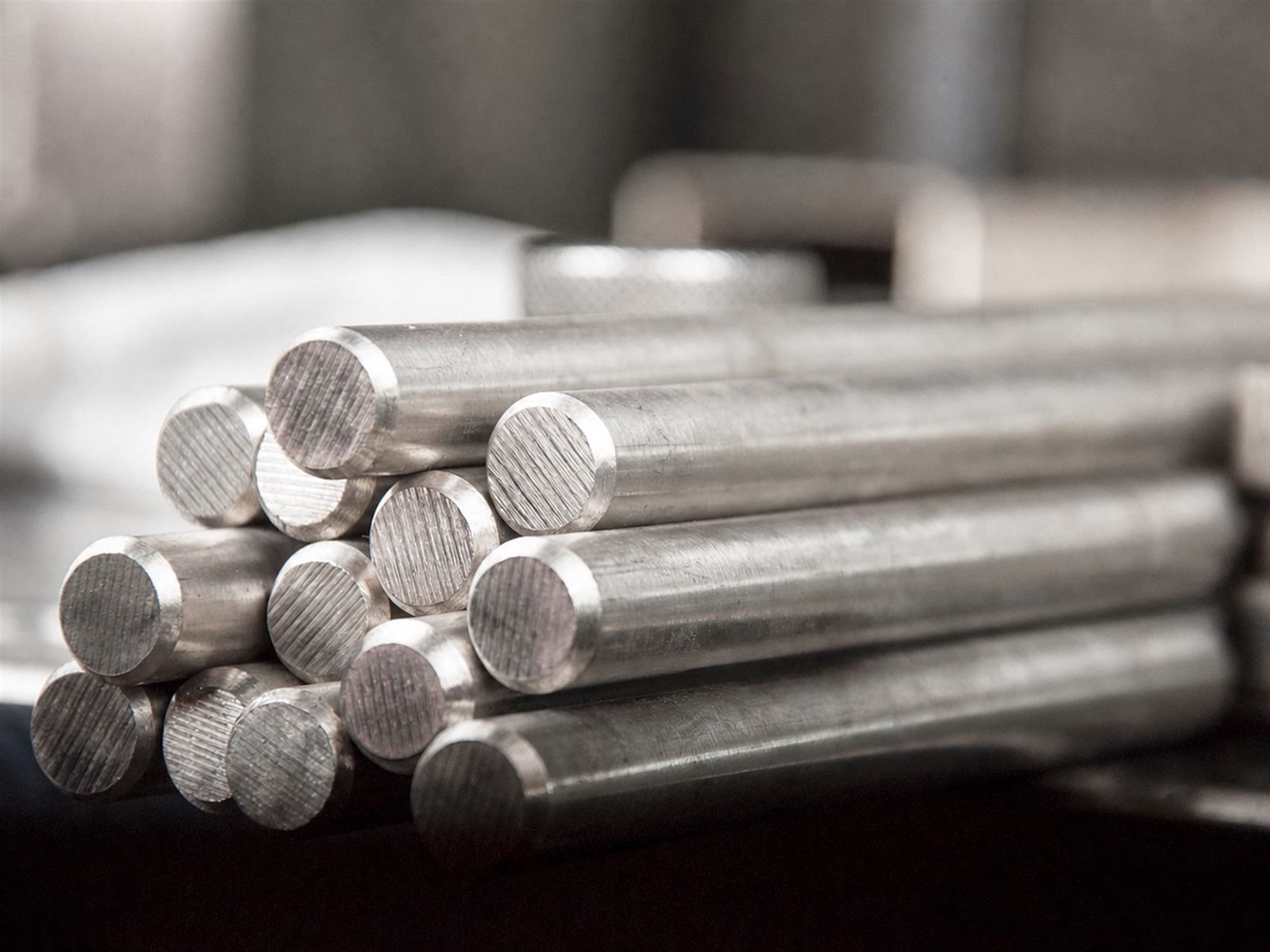
In the global shift toward advanced manufacturing, material choice has become a core factor in competitiveness. Gr5 titanium rod (Ti-6Al-4V) is the most widely used alpha plus beta titanium alloy in high-end industries. It plays a key role in aerospace, medical devices, and precision engineering.
This alloy combines high strength close to steel with only 60% of its density. It also shows strong corrosion resistance, good heat stability, and excellent fatigue performance. For engineers who focus on lightweight design, long service life, and complex working conditions, Gr5 titanium rod offers a balanced solution with strong overall performance and low life-cycle cost.
What Are the Core Material Features of Gr5 Titanium Rod?
1. How Do Composition and Microstructure Improve Performance?
Gr5 titanium rod follows ASTM B348 standards. Aluminum content ranges from 5.5% to 6.75%. This provides solid solution strengthening. Vanadium content ranges from 3.5% to 4.5%. It stabilizes the beta phase.
This dual-phase structure creates a strong balance between strength and ductility. The material reaches a tensile strength of 895 MPa while still keeping elongation above 10%. Oxygen content stays below 0.2% to ensure stable microstructure and batch consistency.
2. What Mechanical Performance Does Gr5 Offer?
Gr5 titanium rod shows a minimum tensile strength of 895 MPa. Yield strength can reach above 825 MPa. This is about 1.7–1.8 times higher than Gr2 pure titanium. Elongation stays above 10%.
Hardness ranges from 280 to 340 HB. Density is only 4.43 g/cm³. This gives a very high strength-to-weight ratio.
The material works well from -196°C to 400°C. It does not become brittle at low temperature. It also keeps strength stable at medium and high temperatures. Annealed condition improves ductility. Rolled condition supports high-strength structures.
3. How Do Surface Conditions Affect Processing and Use?
Different surface finishes support different applications. Black surface bars keep forging scale. They suit rough machining and raw blanks. Peeled bars provide a clean silver surface. They suit general machining.
Turned and polished surfaces offer higher precision. They work well for precision shafts. Surface roughness ranges from Ra 12.5 to Ra 0.8. This allows engineers to match surface quality with real working needs.
Surface Condition Comparison of Gr5 Titanium Rod
| Surface Condition | Process Feature | Dimensional Accuracy | Typical Application |
|---|---|---|---|
| Black surface | Forged or rolled, no machining | ±0.5 mm | Structural blanks, forged parts |
| Peeled | Centerless peeling | ±0.2 mm | Machining stock, fasteners |
| Turned | Precision turning | ±0.1 mm | Precision shafts, clean parts |
| Polished | Rough + fine grinding | ±0.05 mm | High precision shafts, wear parts |
Note: Values apply to standard sizes (φ8–200 mm). Custom precision bars can reach higher accuracy.
How Does Gr5 Titanium Rod Solve Key Engineering Problems?
1. How Does It Perform in Corrosion Environments?
Stainless steel often fails in chloride or seawater environments. Pitting corrosion and stress corrosion cracking reduce service life.
Gr5 titanium rod forms a natural TiO₂ passive film only a few nanometers thick. This film protects the surface in a wide pH range from 1 to 14 under normal conditions.
In seawater systems, Gr5 pump shafts show very low corrosion depth after years of operation. In the same conditions, 316L stainless steel needs frequent replacement. This leads to much lower maintenance cost for Gr5.
2. How Does It Support Lightweight Design?
Aerospace engine parts often face high stress. Traditional high-strength steel adds too much weight.
Gr5 titanium rod can reduce weight by 50%–60% in forged components. It also improves safety margin.
In racing cars, replacing steel connecting rods with Gr5 titanium reduces unsprung mass by about 40%. This improves acceleration response. The benefit is even more important in electric vehicles and drones.
3. How Does It Perform at High Temperature?
Petrochemical heat exchangers operate under high temperature. Steel loses strength quickly in these conditions.
Gr5 titanium rod keeps stable strength at elevated temperature. Its low thermal expansion coefficient (about 8.6 × 10⁻⁶ /°C) reduces thermal stress.
This improves service life of reactor shafts and reduces shutdown frequency.
Engineering Problem Solving Comparison
| Engineering Challenge | Failure Mode of Traditional Materials | Gr5 Titanium Solution | Performance Improvement |
|---|---|---|---|
| Seawater corrosion | Pitting, stress corrosion cracking | Stable TiO₂ passive film | 3–5× longer service life |
| Lightweight demand | Overweight or low strength | High strength-to-weight ratio | 50%–60% weight reduction |
| High temperature loss | Strength drop at heat | Stable microstructure | >85% strength retention at 400°C |
| Fatigue failure | Limited cycle life | High crack resistance | 2–3× fatigue life |
4. Why Is It Safe for Medical Use?
Medical implants need strength, biocompatibility, and long-term stability. Gr5 titanium rod meets all these requirements.
It is non-magnetic and compatible with MRI systems. It is certified under ISO 5832-3 for implant-grade titanium alloys.
Low hydrogen content reduces risk of embrittlement. It has been used in millions of joint implant cases worldwide.
How Does Global Standardization Ensure Quality?
1. Which Standards Does Gr5 Follow?
Gr5 titanium rod matches multiple global standards such as ASTM Grade 5, EN 3.7165, and JIS TPB340. This helps international trade and reduces re-testing needs.
ASTM B348 ensures stable chemical and mechanical performance across batches.
2. How Is Production Quality Controlled?
Manufacturing includes vacuum melting, forging, and heat treatment. Key controls include vacuum level, heating temperature, and annealing time.
Ultrasonic and eddy current testing detect internal and surface defects. This ensures stable product quality.
3. How Is Traceability Managed?
Each batch includes a material test certificate (MTC). The certificate includes full test data and batch tracking.
This system supports aerospace and medical audits and ensures full traceability.
Where Is Gr5 Titanium Rod Used Across Industries?
1. Aerospace Applications
Aircraft structures use many titanium parts. Gr5 fasteners handle repeated thermal cycles.
Engine compressor discs show much better fatigue resistance than aluminum alloys. Rocket engine parts also benefit from low temperature performance in liquid oxygen environments.
2. Chemical Industry Use
Chlor-alkali systems use Gr5 titanium rod for anode frames and coated structures. This reduces cost and extends service life.
In pharmaceutical mixers, Gr5 shafts reduce shutdown cycles and maintenance cost.

3. Medical Devices
Dental implants require high precision. Polished Gr5 rods support machining with surface roughness down to Ra 0.4.
Spinal implants benefit from an elastic modulus close to human bone (about 110 GPa). This improves load balance.
4. New Energy Applications
Hydrogen fuel cells need corrosion resistance and formability. Gr5 maintains stable passive film across wide pH conditions.
Offshore wind fasteners benefit from long-term salt spray resistance and low maintenance design.

What Should Be Considered in Procurement?
1. How to Select Specifications?
Common diameters range from φ8 to φ200 mm. Length ranges from 300 mm to 6000 mm. Custom cutting improves material use and reduces waste.
2. How to Evaluate Cost Over Life Cycle?
Gr5 costs more at purchase, often several times higher than stainless steel. However, long service life reduces total cost.
Lower maintenance and longer replacement cycles often lead to lower total ownership cost.
3. How to Choose a Supplier?
Large production capacity ensures stable batch quality. Advanced rolling equipment improves dimensional accuracy.
Integrated production systems from melting to finishing improve traceability and delivery speed.
4. What Is the Value of Custom Service?
Special applications need high precision and high surface quality. Technical cooperation helps improve yield and reduce processing cost.
Table 3: Key Procurement Criteria for Gr5 Titanium Rod
| Factor | Key Indicator | Recommended Level | Risk Control Point |
|---|---|---|---|
| Production capacity | Annual output | ≥20,000 tons | Avoid unstable small suppliers |
| Equipment level | Rolling accuracy | h6–h9 tolerance | Reduce machining allowance |
| Certification | Quality system | ISO 9001 + AS9100 | Ensure aerospace grade |
| Delivery speed | Custom response | ≤7 days | Shorten project lead time |
Conclusion
Gr5 titanium rod combines high strength, low weight, and strong corrosion resistance. It has become a key material in high-end manufacturing.
It is widely used in aerospace, medical, marine, and energy systems. Its long service life and stable performance reduce total system cost.
For modern engineering, Gr5 titanium rod is a core material for lightweight and high-reliability design.
FAQ
1. What Is the Difference Between Gr5 and Pure Titanium?
Gr5 is a dual-phase alloy with aluminum and vanadium. Its strength is about 1.7–1.8 times higher than Gr2 pure titanium. Pure titanium has better corrosion resistance but lower strength.
2. How to Choose Surface Finish?
Black surface works for rough machining. Peeled bars suit general machining. Polished bars work for precision parts. Proper choice reduces cost.
3. What Are Key Welding Requirements?
Use argon arc or vacuum welding. Clean surface before welding. Preheat at 150–200°C for large bars if needed. Post-weld stress relief improves stability. Proper welding ensures joint strength above 90% of base metal.
Contact for Technical Support
Baoji Titanium Valley Titanium Nickel Zirconium Material Processing Co., Ltd. provides high-quality Gr5 titanium rod with ASTM, GB, and EN standards. We support custom sizes, fast delivery, and full technical service.
Contact: sales@titaniumvalleys.com
References
- Zhao Yongqing, Qu Henglai. Titanium Alloy Application Technology. National Defense Industry Press, 2020.
- China Nonferrous Metals Industry Association. China Titanium Industry Development Report (2023). Metallurgical Industry Press, 2023.
- Li Jianming, Wang Jun. Microstructure and Engineering Application of Ti-6Al-4V Alloy. Chinese Journal of Nonferrous Metals, 2021, 31(6): 1423–1435.
- Baoji Nonferrous Metals Processing Research Institute. Titanium Processing Handbook. Northwestern Polytechnical University Press, 2019.
- ASTM International. ASTM B348-21 Standard Specification for Titanium and Titanium Alloy Bars and Billets.