
How Does TB13 Titanium Alloy Bar Combine Superelasticity and Lightweight Design?
- TB13 Titanium Alloy Bar
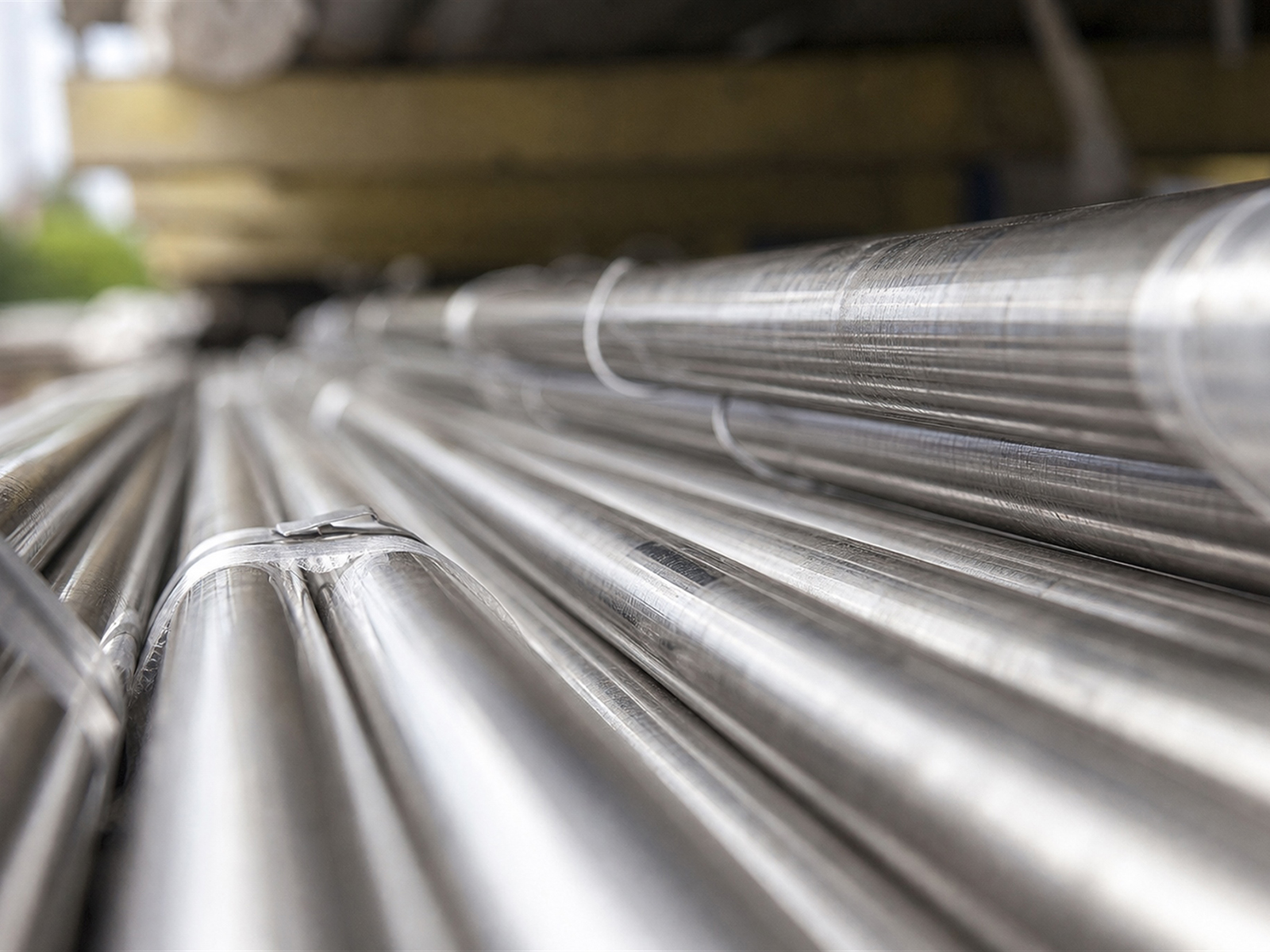
TB13 titanium alloy bar is a near-beta titanium alloy developed for applications that require lightweight construction, high elastic recovery, and good cold workability. As a Ti-3Al-22V alloy, TB13 is used in eyewear, medical devices, aerospace secondary structures, precision electronics, and elastic mechanical components. Its main room-temperature functional behavior should be described as superelasticity rather than a shape memory effect. Superelasticity is associated with stress-induced martensitic transformation and recovery after unloading, while the shape memory effect normally requires temperature-triggered recovery.
What Materials Science Principles Define TB13 Titanium Alloy Bar?
What Is the Microstructure of This Near-Beta Alloy?
TB13 contains approximately Al 2.5 to 3.5% and V 21.0 to 23.0%, with titanium as the balance. This composition keeps the alloy primarily in a beta-phase structure at room temperature. The body-centered cubic beta phase provides many slip systems, giving TB13 excellent plastic deformation capability. Compared with TC4, an alpha-beta alloy, TB13 can reach cold deformation levels around 80% without cracking under appropriate processing conditions.
How Does Superelastic Behavior Work?
TB13 exhibits superelastic behavior when external stress induces reversible martensitic transformation. The material can undergo significant strain and recover after unloading with minimal residual deformation. In eyewear frames, elastic supports, spring clips, and selected surgical tools, this recovery behavior improves durability during repeated bending.
What Lightweight Advantage Does TB13 Provide?
TB13 has a density of about 4.65 g/cm3, roughly 59% of stainless steel. After beta-region treatment and aging, tensile strength can reach approximately 1100 to 1300 MPa. The combination of low density and high strength provides high specific strength for precision components and weight-sensitive assemblies.
How Is TB13 Titanium Alloy Bar Produced and Controlled?
How Does Vacuum Arc Remelting Improve Purity?
TB13 bar production begins with controlled raw materials and electrode preparation. Triple vacuum arc remelting can reduce hydrogen, oxygen, nitrogen, iron, and carbon variation. Typical impurity limits include H <=0.015%, O <=0.20%, N <=0.05%, Fe <=0.20%, and C <=0.10%.
How Are Hot Working and Cold Drawing Applied?
The beta transus of TB13 is approximately 815 °C. Hot working is commonly performed at 850 to 950 °C in the beta region. For medical or precision products, cold drawing after beta-region treatment can improve diameter tolerance to about ±0.02 mm and reduce surface roughness to below Ra 0.4 µm.
How Does Heat Treatment Adjust Properties?
Beta-region solution treatment followed by rapid cooling retains a beta-rich structure with high ductility. Aging at 450 to 550 °C precipitates fine alpha particles and increases strength through precipitation hardening. Lower-temperature aging can favor elasticity, while higher-temperature aging can produce higher strength for structural applications.
| Heat-Treatment Condition | Tensile Strength (MPa) | Elongation (%) | Elastic Modulus (GPa) | Typical Application |
|---|---|---|---|---|
| Beta condition | 800 to 900 | 25 to 30 | 75 to 80 | Eyewear frames and complex formed parts |
| Aged condition, 450 °C/4 h | 1050 to 1150 | 12 to 18 | 82 to 86 | Medical devices and precision springs |
| Aged condition, 520 °C/8 h | 1200 to 1300 | 8 to 12 | 88 to 92 | Aerospace fasteners and high-strength components |
Where Does TB13 Titanium Alloy Bar Create Application Value?
Why Is It Used in Eyewear Manufacturing?
TB13 avoids nickel-related allergy risk, resists corrosion, and provides elastic recovery after accidental bending. It can be cold bent, laser welded, and CNC machined without complex hot-forming dies, supporting small-batch and customized eyewear production.
How Does It Benefit Medical Devices?
TB13 has good corrosion resistance in simulated body environments and naturally forms a titanium oxide film. Its lower modulus compared with stainless steel can reduce stress concentration in selected elastic medical components. Orthodontic wires, surgical forceps, endoscopic biopsy forceps, and precision medical instruments are typical applications.
How Is It Used in Aerospace and Precision Machinery?
TB13 can be used in non-primary aerospace precision structures, elastic connectors, torsion springs, bellows, coupling elements, sensor springs, and marine instrument parts. Its corrosion resistance and elastic deformation range help reduce rigid impact in precision assemblies.
| Application Field | Typical Component | Key Requirement | TB13 Advantage |
|---|---|---|---|
| Eyewear | Temples, frames, hinges | Superelasticity, nickel-free composition, low weight | 80% cold deformation capability and density of 4.65 g/cm3 |
| Medical devices | Orthodontic wire, forceps, implant-related components | Biocompatibility, corrosion resistance, low modulus | Body-fluid corrosion <0.02 mm/year and modulus of 75 to 85 GPa |
| Aerospace | Fasteners and elastic connectors | High specific strength and fatigue resistance | Specific strength and fatigue-limit advantages |
| Precision machinery | Torsion springs, bellows, pins | Large elastic deformation and dimensional stability | Elastic strain up to about 6% and low thermal expansion |
What Commercial Value Does TB13 Provide?
How Does Lifecycle Cost Compare with Stainless Steel?
TB13 has higher initial material cost than stainless steel, but its service life, lower return rate in eyewear, corrosion resistance, and reduced maintenance can improve lifecycle economics in premium applications.
How Does It Support Product Differentiation?
Material upgrades can support premium positioning in eyewear, smart wearable devices, outdoor equipment, and professional instruments. TB13 provides lightweight, skin-friendly, and durable product attributes.
How Does It Support Sustainable Manufacturing?
TB13 is highly recyclable. Long service life can reduce replacement frequency, and titanium scrap can be returned to the melting stream when properly segregated and controlled.
| Cost Dimension | Stainless Steel | TB13 Titanium Alloy | Long-Term Advantage |
|---|---|---|---|
| Initial material cost | Baseline, 1× | 8 to 12× | Higher initial cost |
| Processing scrap rate | 8 to 12% | 2 to 3% | Lower scrap cost |
| Eyewear repair rate | 5 to 8% | <1.5% | Lower after-sales cost |
| Marine service life | 1.5 to 2 years | >10 years | Lower maintenance cost |
| 10-year carbon footprint | Higher | Lower | ESG and carbon-cost advantage |
How Should Suppliers Be Evaluated?
Which Manufacturing and Quality Systems Matter?
Buyers should verify a complete vacuum melting, forging, rolling, and heat-treatment route. AS9100 and ISO 13485 certification may be required for aerospace and medical applications.
What Customization and Technical Support Are Needed?
Suppliers should provide diameter coverage from approximately 2 mm to 80 mm, custom shapes, surface treatments, heat-treatment optimization, and test support for elastic modulus consistency.
Which International Compliance Requirements Apply?
For markets in Europe, the United States, Japan, and Korea, suppliers should support REACH, RoHS, conflict-minerals due diligence, nickel-release documentation where relevant, and carbon-footprint reporting when required.
What Is the Conclusion?
TB13 titanium alloy bar combines near-beta microstructure, superelastic behavior, biocompatibility, corrosion resistance, and lightweight design. Although the initial cost is higher than stainless steel, its lifecycle value and premium product performance make it a practical material for eyewear, medical devices, aerospace secondary components, and precision electronics.
What Questions Do Buyers Commonly Ask?
How Is TB13 Different from TC4 Titanium Alloy?
TB13 is a near-beta alloy with a beta-rich room-temperature structure, high cold deformation capability, and superelastic behavior. TC4 is an alpha-beta alloy with higher conventional structural strength but lower cold formability.
How Is Superelasticity Verified?
Standard evaluation includes bend-recovery testing and cyclic loading. A 90° bend recovery test and 500-cycle loading test can be used to compare residual deformation and elastic recovery.
How Is Corrosion Resistance in Marine Environments Maintained?
Strict impurity control and surface passivation help maintain corrosion resistance in 3.5% NaCl solution. Material selection should account for crevice geometry, temperature, and mechanical load.
How Can You Source TB13 Titanium Alloy Bar?
Baoji Titanium Valley Titanium Nickel Zirconium Material Processing Co., Ltd. supplies TB13 titanium alloy bar for eyewear, medical, aerospace, and high-end manufacturing applications. Contact sales@titaniumvalleys.com for specifications, customization, and sample testing.
References
1. Li Jianguo, Zhang Wei, Chen Minghua. Study on Microstructure, Properties, and Applications of Near-Beta Titanium Alloy TB13[J]. Rare Metal Materials and Engineering, 2021, 50(6): 2145-2152.
2. Wang Haifeng, Liu Qiang, Zhao Yongqing. Biocompatibility and Mechanical Property Optimization of Biomedical Beta Titanium Alloys[J]. Chinese Journal of Biomedical Engineering, 2020, 39(4): 467-475.
3. Zhang Xiaoming, Li Weidong. Application and Process Innovation of Titanium Alloys in High-End Eyewear Manufacturing[J]. Light Alloy Fabrication Technology, 2022, 50(2): 38-45.
4. Chen Zhigang, Zhou Liang, Yang Rui. Fatigue Properties and Fracture Mechanisms of Near-Beta Titanium Alloys for Aerospace Applications[J]. Journal of Aeronautical Materials, 2019, 39(5): 88-96.