
How Should You Choose Between Gr2 and Gr4 Titanium Rods for Different Applications?
- Gr2 Titanium Rod
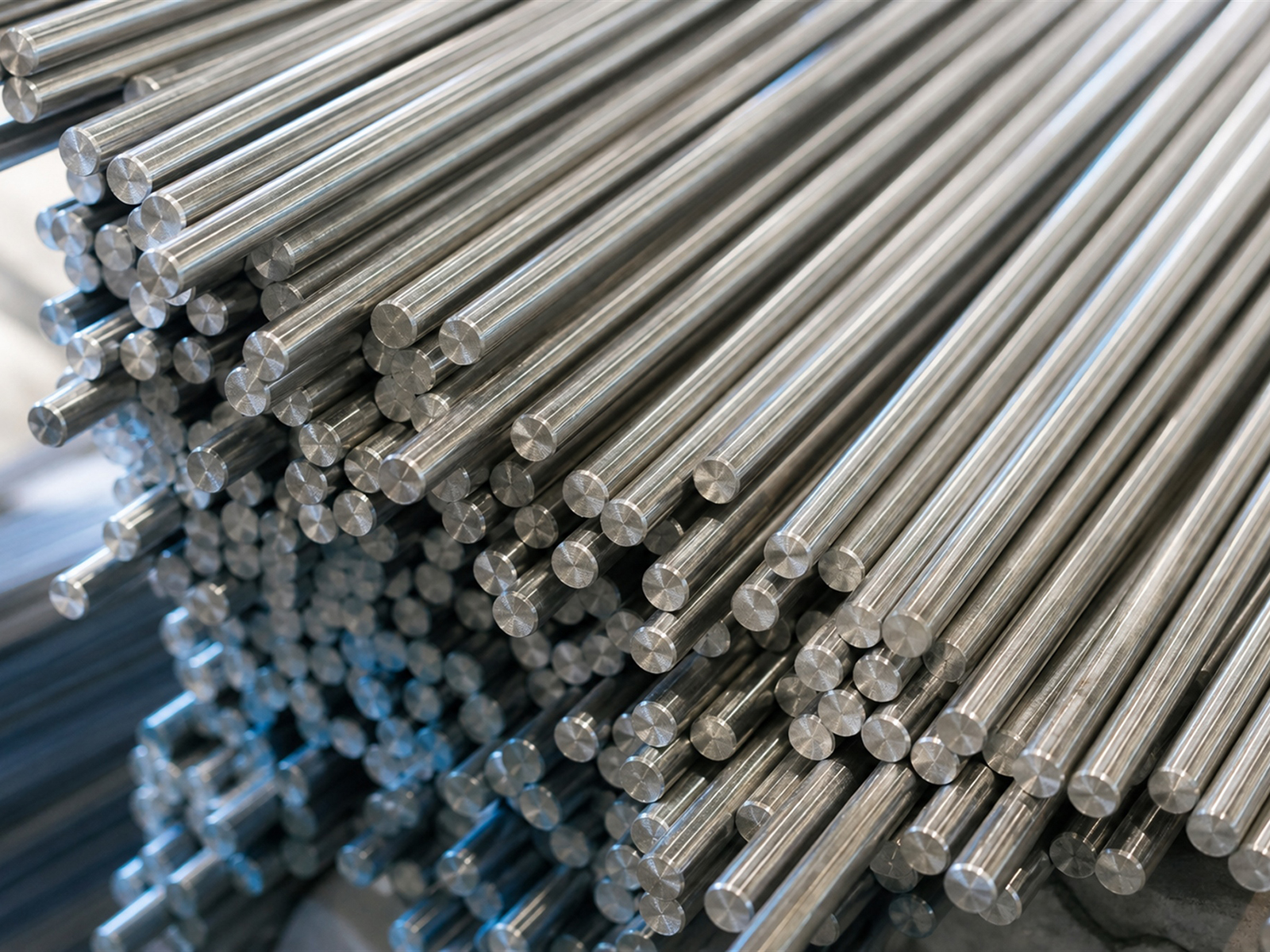
In industrial material selection, Gr2 titanium rod and Gr4 titanium rod are both common grades of commercially pure titanium. However, each grade offers different strengths and suits different working conditions. Gr2 titanium rod stands out for its excellent ductility and cost efficiency. It works well in standard corrosion-resistant systems and forming applications. Gr4 titanium rod offers about 30% higher strength. It suits high-load and high-stress environments better.
If your project focuses on weldability, deep drawing, or cost control, Gr2 titanium rod is a better choice. If your project requires higher mechanical strength, stronger fatigue resistance, or thinner designs for weight reduction, Gr4 titanium rod offers greater advantages. The right grade depends on your service environment, load requirements, and cost target.
What Are the Main Differences Between Gr2 and Gr4 Titanium Rods?
1. How Does Chemical Composition Affect Performance?
Gr2 titanium rod and Gr4 titanium rod both belong to the commercially pure titanium (CP Titanium) family. Both use an alpha-phase structure and contain no alloying elements. However, small differences in impurity control create clear performance differences.
Gr2 titanium rod contains oxygen ≤ 0.18% and iron ≤ 0.30%. Gr4 titanium rod contains oxygen ≤ 0.40% and iron ≤ 0.50%. Higher interstitial elements increase strength and hardness. However, they also reduce ductility to a certain degree.
2. What Is the Difference in Mechanical Properties?
Gr4 titanium rod provides tensile strength of 485–550 MPa. Gr2 titanium rod offers 345–450 MPa. This means Gr4 gives about 30% higher strength. Its yield strength also rises from 275 MPa to 380 MPa. Because of this, Gr4 performs better in high-load, impact, and fatigue conditions.
However, Gr2 titanium rod shows elongation of 20%–25%, while Gr4 reaches 15%–20%. Better ductility gives Gr2 advantages in deep drawing, complex forming, and weld deformation control.
Mechanical Property Comparison Between Gr2 and Gr4 Titanium Rods (Typical Annealed Condition)
| Property | Gr2 Titanium Rod | Gr4 Titanium Rod | Performance Difference |
|---|---|---|---|
| Tensile Strength (MPa) | 345–450 | 485–550 | About 30% higher |
| Yield Strength (MPa) | ≥275 | ≥380 | About 38% higher |
| Elongation (%) | 20–25 | 15–20 | About 20% lower |
| Hardness (HV) | 150–180 | 200–230 | About 30% higher |
| Density (g/cm³) | 4.51 | 4.51 | No difference |
3. Which Grade Offers Better Corrosion Resistance?
Both Gr2 titanium rod and Gr4 titanium rod show excellent corrosion resistance in seawater, chloride environments, and mild acids or alkalis. Their oxide film stays stable and repairs itself naturally. In general, both grades offer similar corrosion resistance.
However, Gr4 titanium rod has higher hardness and strength. It performs better in high-flow erosion, cavitation corrosion, and stress concentration conditions. Gr2 titanium rod contains less oxygen. This gives it better resistance to hydrogen embrittlement in high-temperature and high-pressure hydrogen systems.
How Can You Choose the Right Grade for Different Applications?
1. Which Grade Works Better in Chemical Processing?
In chemical tanks, pipelines, valves, and other low-pressure corrosion-resistant systems, Gr2 titanium rod holds a leading position. It offers good weldability, strong formability, and lower material cost. Its excellent ductility also makes bending and tube expansion easier in complex piping systems.
For pressure reactors, pressure vessels, mixing shafts, and other high-pressure components, Gr4 titanium rod becomes a stronger option. Its higher strength allows thinner wall designs. This lowers overall weight and material use while improving equipment safety.
2. How Do Gr2 and Gr4 Perform in Marine Engineering?
Both grades resist seawater and salt spray very well. They suit seawater desalination systems, offshore platforms, and marine heat exchangers.
However, Gr4 titanium rod performs better in areas with high fluid velocity, cavitation damage, or local stress concentration from marine fouling. Its higher yield strength improves resistance to chloride stress corrosion cracking (SCC). As a result, Gr4 often lasts longer in demanding marine systems.
In real projects, seawater pump shafts made from Gr4 titanium rod usually last much longer than Gr2 under high-speed working conditions.
3. Which Grade Is Better for Medical Devices?
Both Gr2 titanium rod and Gr4 titanium rod meet medical standards and offer excellent biocompatibility and non-magnetic performance.
However, permanent implants require more than grade selection. Materials must also meet medical cleanliness, hydrogen control, and surface quality requirements. Standard industrial-grade Gr2 and Gr4 materials cannot replace medical-grade products directly.
In orthopedic implants such as bone plates, intramedullary nails, and dental implants, Gr4 titanium rod sees wider use. Its higher bending strength and fatigue resistance improve long-term stability.
For surgical instruments and endoscope parts, Gr2 titanium rod works better. Its lower hardness makes turning, milling, and polishing easier. Surface roughness can reach below Ra 0.4 μm.
Recommended Grades for Different Applications
| Application | Recommended Grade | Reason |
|---|---|---|
| Chemical tanks and pipelines | Gr2 | Better formability, easy welding, lower cost |
| High-pressure reactors and vessels | Gr4 | Higher strength supports thinner design |
| Seawater desalination pipelines | Gr2 | Enough corrosion resistance and better cost efficiency |
| High-load offshore shafts | Gr4 | Better impact and stress corrosion resistance |
| Orthopedic implants | Gr4 | Higher strength supports long-term stability |
| Surgical instruments | Gr2 | Easier machining and surface control |
4. How Do Aerospace and Electronics Choose Between Gr2 and Gr4?
In aerospace fasteners, brackets, and hydraulic tubing, Gr4 titanium rod supports lightweight design while keeping high strength.
In semiconductor equipment frames and precision sensor housings, Gr2 titanium rod often performs better. Its low residual stress and uniform structure help maintain dimensional stability over long periods.
How Do Processing and Manufacturing Performance Differ?
1. Which Grade Machines More Easily?
Gr2 titanium rod has lower hardness at 150–180 HV. It creates less cutting resistance and causes slower tool wear. It works well in precision turning, drilling, and threading. Recommended cutting speed ranges from 60–80 m/min. Feed rate usually stays between 0.15–0.25 mm/r.
Gr4 titanium rod reaches 200–230 HV hardness. Lower cutting speed works better, usually 40–60 m/min. Hard alloy or coated tools also help avoid work hardening and tool damage.
In production, tool life for Gr4 titanium rod usually reaches about 60%–70% of Gr2.
2. What Are the Differences in Welding Performance?
Gr2 titanium rod usually needs no preheating. TIG or MIG welding can produce joint strength above 90% of the base metal. Weld ductility also stays strong.
Gr4 titanium rod often requires more control. High heat can enlarge grains in the heat-affected zone. A preheating temperature of 100–150°C helps improve weld quality. Post-weld stress relief at 550–650°C also helps remove residual stress.
After welding optimization, tensile strength of Gr4 welded joints can reach about 85% of the base material.
3. Which Grade Handles Forming Better?
Gr2 titanium rod supports cold forming at room temperature. It handles deep drawing, bending, and expansion more easily. Deformation resistance stays low, and springback remains manageable.
In titanium heat exchanger tube expansion, Gr2 provides strong expansion results without cracking.
Gr4 titanium rod requires more forming force during cold work. Complex shapes often need multiple forming steps or hot working between 600–750°C. Since Gr4 hardens faster during cold forming, intermediate annealing becomes necessary in multi-step production.
Processing Parameter Comparison Between Gr2 and Gr4 Titanium Rods
| Processing Parameter | Gr2 Titanium Rod | Gr4 Titanium Rod | Key Notes |
|---|---|---|---|
| Turning Speed (m/min) | 60–80 | 40–60 | Gr4 requires coated tools |
| Welding Preheat Temperature (°C) | No preheating | 100–150 | Control interpass temperature for Gr4 |
| Minimum Cold Bending Radius | About 3D* | About 5D* | *D means titanium rod diameter |
| Hot Working Temperature (°C) | 650–850 | 700–900 | Avoid long holding time |
How Do Cost and Long-Term Value Compare?
1. Which Grade Costs Less at the Beginning?
The market price of Gr2 titanium rod usually reaches about 85%–90% of Gr4 titanium rod. In large chemical projects, the price difference may reach tens of thousands of dollars.
However, Gr4 allows thinner designs because of its higher strength. Material use may decrease by 15%–25%. In some cases, total material cost may stay similar or even become lower.
2. Which Grade Costs More to Process?
Machining cost for Gr4 titanium rod often stays 20%–35% higher than Gr2 titanium rod. Faster tool wear and lower cutting efficiency create most of the added cost.
However, Gr4 can reduce weld quantity in welded structures because of its higher strength. This helps control total production cost.
3. Which Grade Saves More Money Over Time?
Under cyclic loading, Gr4 titanium rod shows stronger fatigue resistance than Gr2 titanium rod. It usually lasts longer in demanding service conditions.
Although the starting cost stays higher, long-term ownership cost may become lower. In marine engineering, Gr4 mooring connectors often need less maintenance. This reduces downtime and repair expenses.
4. How Can Inventory Management Improve Efficiency?
Gr4 titanium rod can replace Gr2 in most medium- and high-strength applications. However, Gr2 still works better in complex forming operations.
Many companies reduce inventory complexity through a “Gr4-first, Gr2-assisted” strategy. This improves stock turnover and lowers capital pressure, especially in small-batch production.
How Can You Build a Scientific Material Selection Process?
1. How Should You Evaluate Load Requirements?
Start with load analysis. Calculate the ratio between maximum working stress and material yield strength.
For dynamic loading, impact conditions, or higher safety margins, Gr4 titanium rod becomes the preferred option. For static loading and cost-focused projects, Gr2 titanium rod often works better.
2. When Is Gr2 Enough for Corrosion Resistance?
In standard environments with pH 3–11, temperatures below 80°C, and moderate flow speed, Gr2 and Gr4 show little performance difference. Gr2 often provides enough protection.
However, Gr4 becomes a stronger choice in highly corrosive conditions, high-temperature oxidation environments above 100°C, or areas with cavitation and erosion risks.
3. How Does Manufacturing Complexity Affect Selection?
For simple shapes and mass production, Gr4 offers strong performance advantages with manageable processing cost.
For deep drawing, repeated bending, thin-wall parts, or small trial runs, Gr2 usually works better because it forms more easily and has broader processing experience.
4. Why Do Certification Requirements Matter?
Industries such as aerospace, nuclear power, and medical manufacturing require full traceability. Suppliers must provide material certificates, mechanical test reports, and heat treatment records.
Gr4 titanium rod often needs more testing because of stricter strength requirements. This increases certification time and cost. If Gr2 can meet the performance target, it may shorten project lead time and improve supply response.
Conclusion
Gr2 titanium rod and Gr4 titanium rod do not compete as “better” or “worse” materials. They solve different engineering needs.
Gr2 titanium rod offers excellent ductility, lower cost, and easier processing. It suits standard corrosion resistance and forming-intensive applications. Gr4 titanium rod delivers about 30% higher strength and stronger fatigue resistance. It performs better in high-load systems, lightweight design, and long-life service.
A smart material choice should balance four key factors: load, corrosion, processing, and cost. This approach helps avoid both overdesign and insufficient strength.
FAQ
1. Can Gr4 Titanium Rod Fully Replace Gr2 Titanium Rod?
Gr4 can replace Gr2 in many applications. However, deep drawing and complex bending still require the superior ductility of Gr2. Evaluate forming requirements carefully to avoid cracking or tooling damage.
2. How Can You Verify Titanium Rod Grade Authenticity?
Ask suppliers for a third-party material test certificate (MTC). Check oxygen and iron content against standard limits. Use tensile testing to verify strength and elongation. Portable spectrometers also help confirm composition on site.
Reliable suppliers should provide batch traceability, quality certificates, and non-destructive testing reports. Medical and nuclear applications may also require hydrogen level, grain size, and surface quality checks.
3. Can Gr2 and Gr4 Titanium Rod Welded Joints Work Together?
Mixed welding does not offer the best solution. Different strength levels can create stress concentration near the Gr2 side.
If welding becomes necessary, use Gr4 filler wire and apply stress relief treatment to the Gr2 side. Complete non-destructive testing should follow after welding. Even with process control, engineers usually avoid direct welding between different pure titanium grades.
Need Professional Material Selection Support?
Baoji Titanium Valley Titanium Nickel Zirconium Material Processing Co., Ltd. is a leading titanium rod manufacturer and supplier in China. We operate an Italian Danieli rolling production line with annual output of 20,000 tons. We supply full-size Gr2 and Gr4 titanium rods and custom machining services.
Our quality system follows ASTM, ISO, and GB/T standards. Customers widely use our products in aerospace, medical, and precision electronics industries across Europe, America, and Asia.
Contact us for technical advice and sample testing: sales@titaniumvalleys.com
References
- Zhao Yongqing, Qu Henglai. Titanium Alloy Materials Handbook. Beijing: Chemical Industry Press, 2019.
- Li Jianming, Wang Jun. Microstructure, Properties, and Engineering Applications of Commercially Pure Titanium. Chinese Journal of Nonferrous Metals, 2020, 30(5): 1023–1032.
- Baoji Nonferrous Metals Processing Research Institute. Titanium and Titanium Alloy Processing Technology. Xi’an: Northwestern Polytechnical University Press, 2018.
- China Nonferrous Metals Industry Association. Collection of Standards for Titanium and Titanium Alloy Processing Products. Beijing: China Standards Press, 2020.
- ASTM International. ASTM B348-21: Standard Specification for Titanium and Titanium Alloy Bars and Billets. West Conshohocken: ASTM International, 2021.