
What Are the Magnetostrictive Properties of Ni200 Nickel Rods and Their Applications in Sensors?
- Ni200 Nickel Rods
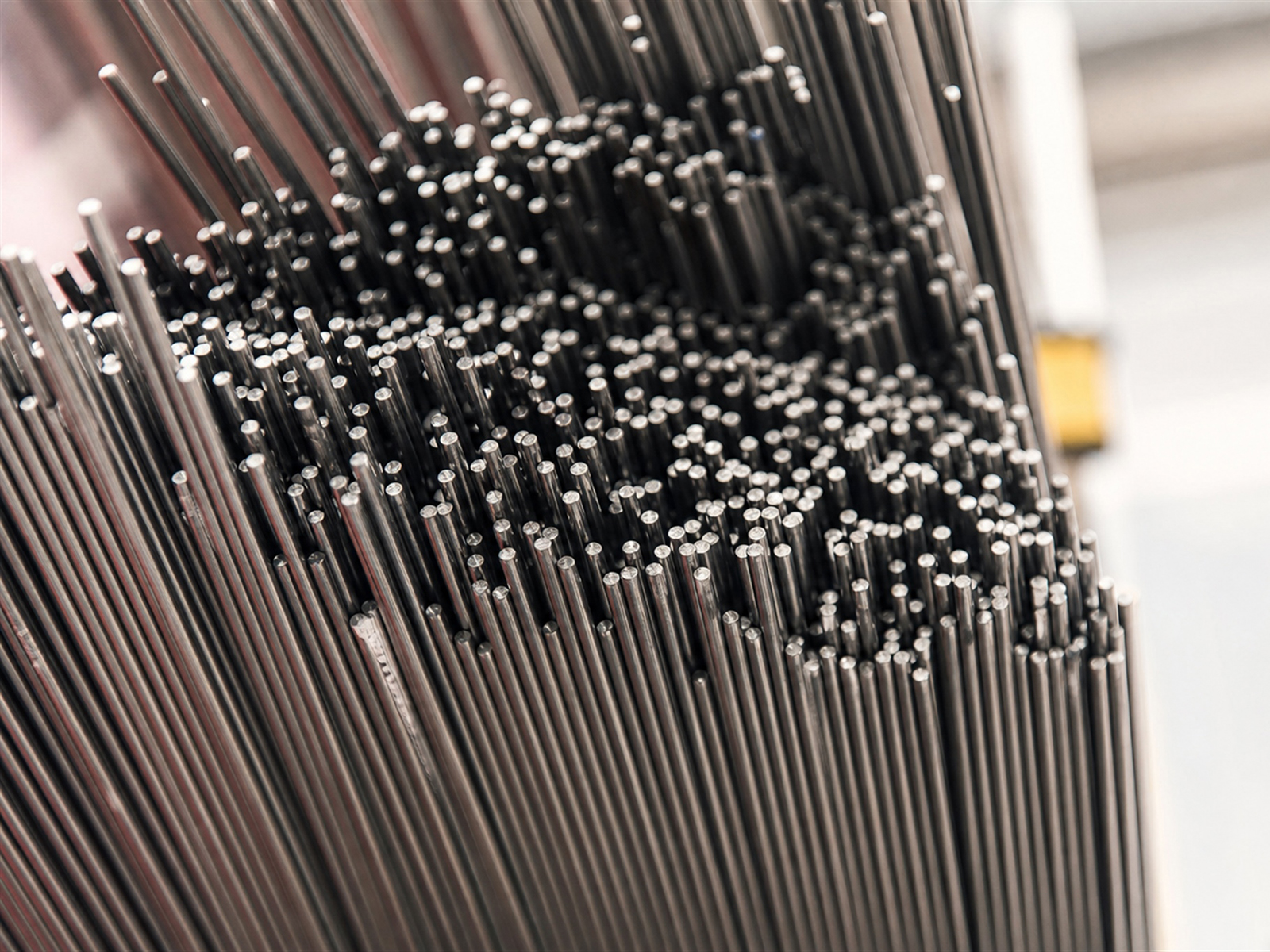
Ni200 Nickel Rods exhibit unique magnetostrictive properties that make them valuable in precision sensor applications. The magnetostriction effect—the deformation of magnetic materials in response to applied magnetic fields—enables Ni200 nickel rods to convert magnetic energy into mechanical displacement and vice versa. This characteristic, combined with the material’s excellent corrosion resistance, high purity, and stable mechanical properties, positions Ni200 nickel rods as a critical component in magnetic sensors, position detectors, and precision actuation systems used in aerospace, automotive, and industrial automation applications.
1. Fundamentals of Magnetostriction in Pure Nickel
(1) Magnetic Domain Behavior and Strain Generation
Pure nickel is a ferromagnetic material with a positive magnetostriction coefficient (λs ≈ +60 ×10⁻⁶ at room temperature). When subjected to an external magnetic field, the magnetic domains within the nickel crystal lattice align with the field direction, causing measurable dimensional changes along the axis of magnetization. This phenomenon, known as the Joule effect, produces strains typically in the range of 10⁻⁶ to 10⁻⁵ for Ni200 nickel rods under practical field strengths. The reversibility of this effect—where mechanical stress induces changes in magnetic property, known as the Villari effect—enables bidirectional energy conversion essential for sensing applications.
(2) Influence of Material Purity on Magnetic Performance
ASTM B160 Ni200 nickel rods, with nickel content (Ni+Co) ≥99.0%, exhibit superior and consistent magnetostrictive performance compared to lower-purity alternatives. Impurity elements such as iron, carbon, and sulfur disrupt the magnetic domain structure, reducing the saturation magnetostriction coefficient and introducing hysteresis in the magnetic-field-to-strain conversion curve. High-purity Ni200 ensures reproducible sensor characteristics and long-term stability, critical for precision measurement systems requiring calibration intervals exceeding one year.
(3) Effect of Processing History on Magnetic Properties
The magnetostrictive behavior of Ni200 nickel rods is significantly influenced by manufacturing processes. Cold working increases dislocation density and residual stress, which pins magnetic domain walls and reduces effective magnetostriction. Annealing at 650–850°C in hydrogen or vacuum atmospheres relieves internal stresses, restores ductility, and optimizes magnetic domain mobility. For sensor-grade Ni200 rods, controlled annealing is essential to achieve consistent magnetostrictive coefficients across production batches.
2. Key Sensor Applications of Ni200 Nickel Rods
(1) Magnetic Position Sensors and Linear Displacement Detectors
Ni200 nickel rods serve as magnetostrictive sensing elements in position transducers that measure linear displacement with micrometer-level accuracy. In these devices, a torsional stress wave propagates along the nickel rod when a magnetic field from a permanent magnet interacts with the magnetostrictive material. The time-of-flight measurement of this wave provides precise position information. Ni200 rods are preferred in harsh environments—such as oil well logging, hydraulic cylinder positioning, and aerospace actuator feedback—where their corrosion resistance outperforms alternative magnetostrictive materials like terfenol-D.
(2) Magnetic Field Sensors and Fluxgate Probes
Fluxgate magnetometers utilize high-permeability Ni200 nickel rods as core materials to detect weak magnetic fields with sensitivities down to nanotesla levels. The rod core is driven into periodic saturation by an AC excitation field, and external magnetic fields disturb the symmetry of the saturation waveform, inducing detectable harmonic signals in the pickup coil. Ni200’s high magnetic permeability and low coercivity enable compact sensor designs with excellent linearity and low power consumption, making them suitable for geomagnetic surveying, navigation systems, and scientific instrumentation.
(3) Precision Actuators and Micro-Positioning Stages
Magnetostrictive actuators based on Ni200 nickel rods convert electrical signals into precise mechanical displacement. When wrapped with excitation coils and placed within a bias magnetic field, the rod expands or contracts proportionally to the applied current. These actuators offer response times in the microsecond range, resolution below 1 nanometer, and force generation capabilities exceeding 100 N. Ni200 rods are favored in applications requiring corrosion-resistant actuation, including semiconductor wafer positioning, micro-fluidic valve control, and biomedical instrument drive mechanisms.
(4) Stress and Force Sensors in Industrial Monitoring
The Villari effect in Ni200 nickel rods enables stress and force sensing through magnetic property changes induced by mechanical loading. When a nickel rod is subjected to tensile or compressive stress, its magnetic permeability changes predictably, allowing force measurement through inductive or Hall-effect sensing arrangements. Ni200-based stress sensors are deployed in structural health monitoring of bridges and pipelines, load cells for industrial weighing systems, and real-time force feedback in robotic gripping mechanisms.
3. Material Selection and Performance Optimization
(1) Comparing Ni200 with Alternative Magnetostrictive Materials
While rare-earth magnetostrictive materials such as Terfenol-D (TbDyFe) offer significantly larger magnetostriction coefficients (λs ≈ 1,500 ×10⁻⁶, over 20 times that of Ni200), they suffer from brittleness, high cost, and poor corrosion resistance. Ni200 nickel rods provide a balanced combination of moderate magnetostriction, excellent ductility, outstanding corrosion resistance, and competitive pricing. For applications where environmental durability and mechanical robustness outweigh the need for maximum strain output, Ni200 remains the material of choice.
(2) Heat Treatment and Surface Conditioning for Sensor Grades
Sensor-grade Ni200 nickel rods require specialized heat treatment to optimize magnetostrictive performance. Vacuum annealing at 750°C for 2–4 hours followed by controlled cooling at 50°C/hour produces the lowest residual stress and most uniform magnetic domain structure. Surface finishing through precision grinding or polishing to Ra ≤0.4 μm reduces stress concentration sites and ensures consistent magnetic coupling in sensor assemblies.
(3) Dimensional Tolerance and Geometric Specifications
Precision sensor applications demand tight dimensional control of Ni200 nickel rods. Diameter tolerances of ±0.02 mm, straightness within 0.5 mm/m, and length tolerances of ±0.1 mm are standard for sensor-grade material. Cylindrical rods with parallel end faces ensure uniform magnetic field distribution and consistent coupling efficiency in fluxgate and position sensor configurations.
4. Quality Assurance and Testing Protocols
(1) Magnetic Property Characterization
Magnetic performance of Ni200 nickel rods is verified through hysteresis loop measurement using a vibrating sample magnetometer (VSM) or B-H tracer. Key parameters include saturation magnetization, coercivity, initial permeability, and maximum permeability. Acceptance criteria typically require coercivity <80 A/m and initial permeability >600 for sensor-grade material. Magnetostriction coefficient testing employs strain gauge techniques or laser interferometry under controlled magnetic fields.
(2) Mechanical and Corrosion Resistance Verification
Routine mechanical testing includes tensile testing per ASTM E8, hardness testing per ASTM E10, and microscopic examination for grain size uniformity. Corrosion resistance verification employs salt spray testing per ASTM B117 (1,000-hour minimum) and electrochemical polarization testing in relevant service environments. Ni200 nickel rods must demonstrate zero visible corrosion after salt spray exposure and corrosion current density <0.1 μA/cm² in acidic media.
Conclusion
Ni200 nickel rods leverage their inherent magnetostrictive properties, combined with exceptional corrosion resistance and mechanical stability, to serve as critical sensing elements across diverse industrial applications. From magnetic position transducers and fluxgate magnetometers to precision actuators and stress sensors, the unique combination of moderate magnetostriction, high ductility, and environmental durability makes Ni200 an irreplaceable material for sensor systems operating in demanding conditions. Continued optimization of heat treatment, surface finishing, and dimensional control further expands the application envelope of Ni200 nickel rod-based sensor technologies.
FAQ
Q1: What is the saturation magnetostriction coefficient of Ni200 nickel rods?
The saturation magnetostriction coefficient (λs) of high-purity Ni200 nickel rods is approximately +60 ×10⁻⁶ at room temperature. This positive value indicates that the material elongates along the direction of magnetization. While smaller than rare-earth magnetostrictive materials, this coefficient is sufficient for most sensing applications and is consistently achievable across production batches due to the material’s high purity.
Q2: Can Ni200 nickel rods operate in high-temperature sensor environments?
Ni200 nickel rods maintain stable magnetostrictive properties up to approximately 200°C. Above this temperature, approaching the Curie temperature of nickel (~358°C), magnetic permeability decreases and magnetostriction diminishes. For elevated-temperature applications above 200°C, alternative magnetic materials or thermal isolation strategies should be considered.
Q3: How does cold working affect the magnetostrictive performance of Ni200 nickel rods?
Cold working increases dislocation density and residual stress within Ni200 nickel rods, which pins magnetic domain walls and reduces the effective magnetostriction coefficient by 15–30%. For sensor applications requiring maximum magnetic responsiveness, cold-worked rods must undergo post-processing annealing to restore optimal magnetic domain mobility and consistent magnetostrictive performance.
Contact Titanium Valley
Baoji Titanium Valley Titanium Nickel Zirconium Material Processing Co., Ltd. is a professional manufacturer and supplier of high-purity Ni200 nickel rods, providing sensor-grade material with optimized magnetic properties, EN 10204 3.1 certification, and customized dimensional specifications. Contact us for technical data and quotations:
References
Smith, J.R. Magnetic Properties of Pure Nickel for Sensor Applications [J]. Journal of Magnetism and Magnetic Materials, 2020, 498: 166123.
Brown, A., Davis, K. Magnetostrictive Materials and Their Role in Precision Sensing [M]. Springer, 2019.
Chen, L., Wang, H. Corrosion-Resistant Magnetic Sensors for Harsh Environment Applications [J]. Sensors and Actuators A, 2021, 325: 112634.
ASTM International. ASTM B160-2020 Standard Specification for Nickel and Nickel Rods and Bars [S]. 2020.