
What Are the Manufacturing Standards and Inspection Requirements for ASTM B160 Nickel Rods?
- ASTM B160 Nickel Rods
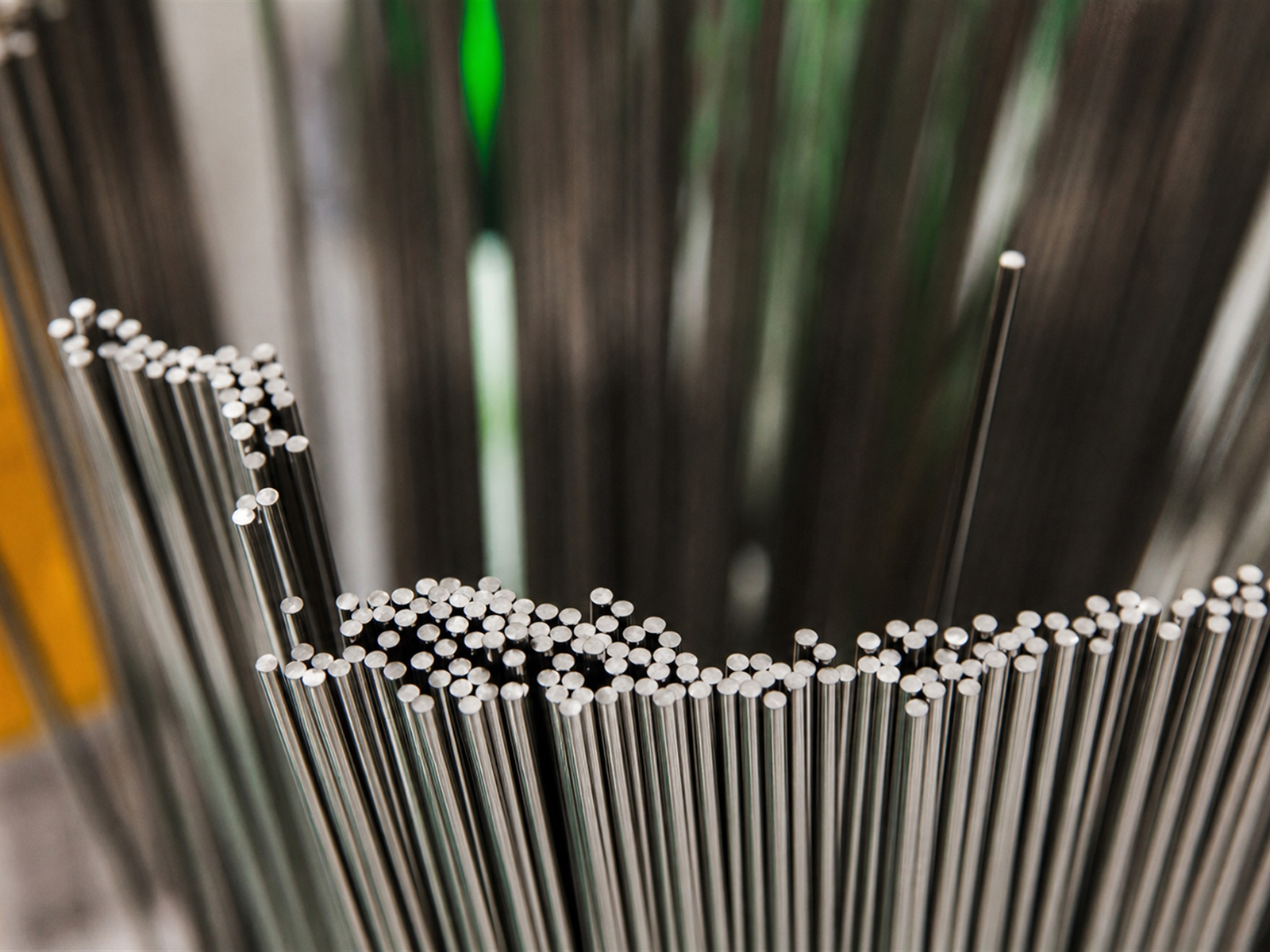
ASTM B160 is the globally recognized manufacturing standard for pure nickel rods, covering grades such as Ni200 (UNS N02200) and low-carbon Ni201 (UNS N02201). The standard specifies comprehensive requirements for the entire production process—from raw material selection, melting, hot working, and cold working to final quality inspection. Through strict control of chemical composition, mechanical property testing, non-destructive examination, and dimensional accuracy verification, ASTM B160 ensures that nickel rods exhibit superior corrosion resistance, electrical and thermal conductivity, and processing stability in chemical alkali environments, electronic conductive components, high-temperature equipment, and marine corrosion conditions. This complete quality assurance system makes ASTM B160 Nickel Rods a reliable choice for high-end manufacturing applications.
1. Core Technical Requirements of the ASTM B160 Standard
(1) Precise Control Boundaries for Chemical Composition
The ASTM B160 standard establishes strict control ranges for the chemical composition of nickel rods, ensuring material purity meets the highest levels required for industrial applications. Taking Ni200 as an example, the nickel content (including cobalt) must reach ≥99.0%, with typical values exceeding 99.5%. The carbon content for Ni200 shall be ≤0.15%, while the low-carbon Ni201 requires carbon content ≤0.02% to prevent carbide precipitation at elevated temperatures. Sulfur and phosphorus—two harmful impurities—are limited to ≤0.01% and ≤0.015% respectively, preventing hot cracking during welding and hot working. Trace elements such as iron, manganese, silicon, and copper are individually restricted (Fe ≤0.30%, Mn ≤0.50%, Si ≤0.02%, Cu ≤0.10%). This high-purity design ensures that nickel rods do not introduce contamination in applications demanding extreme medium cleanliness, such as chlor-alkali electrolysis, pharmaceutical, and food processing industries.
(2) Multi-Dimensional Verification System for Mechanical Properties
The standard requires comprehensive mechanical property testing for nickel rods, including tensile strength, yield strength, elongation, and hardness. Annealed (M temper) nickel rods typically exhibit tensile strength ≥380 MPa (typical values reaching 550 MPa), with elongation no less than 30%, ensuring adequate plastic deformation capability. Cold-worked (Y temper) rods achieve strength exceeding 600 MPa through strain hardening, suitable for structural components requiring higher load-bearing capacity. Hot-worked (R temper) retains the fibrous characteristics of forged microstructure, balancing strength and toughness with tensile strength ranging from 480 to 620 MPa. These graded performance metrics provide precise material selection guidance for different operating conditions.
(3) Graded Standards for Dimensional Accuracy and Surface Quality
ASTM B160 establishes strict tolerance requirements for nickel rod geometries, with diameters ranging from φ4 mm cold-drawn fine rods to φ300 mm large forged bars. Cold-drawn bright rods can achieve diameter tolerances within ±0.05 mm, straightness deviation not exceeding 1 mm per meter, and surface roughness Ra values of 0.8–1.6 μm; ground finishes can achieve diameter tolerances of ±0.02 mm and straightness within 0.5 mm per meter. This precision machining capability meets the stringent dimensional consistency requirements of electronic components and precision shaft parts. Surface conditions are classified into five grades: black skin, turned, cold-drawn bright, ground, and polished. Customers can select the appropriate surface treatment based on downstream processing needs and application environments, achieving optimal balance between cost and performance.
2. Key Control Points in Nickel Rod Manufacturing Processes
(1) Vacuum Melting Technology Ensures Purity Foundation
ASTM B160 nickel rod manufacturing begins with vacuum melting of high-purity electrolytic nickel, the source process for controlling material cleanliness. Vacuum induction furnaces melt electrolytic nickel at 1500–1600°C under low-pressure environments of 10⁻² Pa, effectively blocking oxygen and nitrogen intrusion while removing dissolved gases such as hydrogen and oxygen through vacuum degassing. During melting, appropriate deoxidizers such as magnesium or calcium are added to further reduce oxygen content below 20 ppm. This precise metallurgical control minimizes non-metallic inclusions within ingots, providing high-quality billets with uniform microstructure and stable composition for subsequent processing.
(2) Temperature-Strain Synergistic Control for Hot Working
Hot forging and rolling are core processes for nickel rod forming, conducted within the temperature range of 1000–1150°C. At these temperatures, nickel exhibits excellent plastic deformation capability. However, excessive temperatures lead to abnormal grain growth, while insufficient temperatures may cause work-hardening cracks. The forging process employs a progressive strategy of multiple heating cycles with controlled deformation, with each reduction rate maintained between 15% and 25%, ensuring thorough internal recrystallization. Hot rolling gradually extends ingots into rods through continuous multi-pass rolling, with inter-pass temperature drops strictly controlled within 50°C to maintain microstructural uniformity. Forged and rolled rods typically undergo annealing to eliminate residual stress and obtain stable metallurgical microstructure (grain size 6–8).
(3) Cold Working Finishing Processes for High Precision
Cold drawing and grinding are critical steps for improving dimensional accuracy and surface quality of nickel rods. The cold drawing process deforms annealed rods through dies at room temperature, with each diameter reduction rate controlled between 10% and 18%, and drawing speeds typically maintained at 3–8 meters per minute. This plastic deformation reduces surface roughness to Ra 0.4–0.8 μm while enhancing material hardness and strength. Centerless cylindrical grinding removes surface scale through high-speed abrasive wheel cutting, achieving diameter tolerances of ±0.02 mm and surface roughness Ra ≤0.4 μm. Cold working enables nickel rods to meet the tightest dimensional requirements for precision instruments and semiconductor equipment.
3. Comprehensive Inspection and Quality Verification
(1) Chemical Analysis and Mechanical Testing
Chemical composition verification employs spectral analysis and infrared carbon-sulfur determination methods in accordance with ASTM E1019, ensuring all elements fall within specified grade ranges. Room temperature tensile testing per ASTM E8 validates tensile strength and elongation compliance. Brinell hardness testing per ASTM E10 confirms hardness values meet requirements for the designated temper condition. These fundamental tests form the core of routine quality verification for every production batch.
(2) Non-Destructive Examination Methods
Ultrasonic testing (UT) per ASTM E114 employs longitudinal wave inspection to detect internal defects, with acceptance criteria requiring no flaws larger than φ1.5 mm. Eddy current testing (ET) per ASTM E243 performs surface scanning to identify cracks and surface-breaking defects, accepting no cracks exceeding 0.3 mm. These complementary non-destructive methods ensure both internal integrity and surface quality of nickel rods, critical for demanding applications in chemical processing and aerospace.
(3) Dimensional Accuracy Verification
Dimensional inspection utilizes calipers and micrometers per ASTM B160 requirements, verifying diameter, straightness, and length tolerances against purchase order specifications. For high-precision applications, automated optical measurement systems may be employed to perform 100% dimensional screening, providing statistical process control data for continuous improvement.
4. Quality Traceability and Certification Systems
(1) Full-Lifecycle Digital Traceability Mechanism
Each batch of nickel rods is assigned a unique Heat Number from the start of melting, recording raw material source, melting parameters, chemical composition, processing route, heat treatment schedule, and all inspection data. The rod surfaces are marked with heat numbers and material grades via laser engraving or steel stamping. If markings need to be removed for subsequent processing, grinding or polishing can be performed. Warehouse management systems networked with manufacturing execution systems (MES) enable complete quality archives to be retrieved by scanning rod identifiers. This digital traceability system allows material quality issues to be pinpointed to specific production steps within minutes, supporting rapid response and continuous improvement.
(2) Graded Provision of EN 10204 Quality Certificates
Depending on customer requirements and application standards, nickel rods can be supplied with quality documentation at different certification levels. Type 3.1 certificates (Mill Test Certificate) are issued by the manufacturer’s quality inspection department, containing all measured data for chemical composition, mechanical properties, non-destructive testing, and dimensional measurements, stamped with the quality seal. Type 3.2 certificates add witnessed signatures from independent third-party inspection agencies such as TUV, SGS, or national testing centers on top of 3.1 data. Critical nuclear and aerospace applications require 3.2 certificates accompanied by original inspection records and complete quality traceability documentation, meeting aerospace quality management system requirements.
(3) Response Capability for Customer-Specified Inspection Requirements
Beyond standard routine inspections, high-end application customers often request special testing. These include low-temperature impact toughness testing (e.g., –196°C liquid nitrogen environment; pure nickel exhibits good toughness at cryogenic temperatures), hydrogen embrittlement susceptibility assessment (additional testing for special environments such as high-pressure hydrogen; pure nickel is generally insensitive to hydrogen embrittlement), residual stress X-ray diffraction measurement, and electron backscatter diffraction (EBSD) crystal orientation analysis (an advanced microstructural characterization technique typically used only in R&D or special applications). Manufacturer quality management systems must possess these specialized testing capabilities or establish stable outsourcing inspection partnerships. For medical device FDA certification requirements, biocompatibility test reports must be provided, although pure nickel containing nickel ions has sensitization potential and is generally not suitable for long-term implants. For EU RoHS compliance, pure nickel typically meets requirements, although coated products require additional testing. This flexible response capability enables ASTM B160 nickel rods to comply with regulatory requirements across global regions and industries.
Conclusion
The ASTM B160 standard constructs a comprehensive quality assurance framework for nickel rod manufacturing through rigorous composition control, process specification, and multi-dimensional inspection systems. From the purity foundation of vacuum melting to precision forming through cold working, and through comprehensive validation via chemical analysis, mechanical testing, and non-destructive examination, every step is interconnected to ensure stable and reliable product performance. Customized acceptance criteria for different application scenarios and complete quality traceability mechanisms enable nickel rods to meet the demanding requirements of chemical, electronic, and aerospace sectors, establishing them as an indispensable foundational material for high-end manufacturing.
FAQ
Q1: What is the essential difference between annealed and cold-worked ASTM B160 nickel rods in terms of performance?
Annealed nickel rods exhibit lower strength (≥380 MPa, typical values reaching 550 MPa) and excellent ductility (elongation >30%), making them suitable for deep drawing, bending, and other deformation processes. Cold-worked rods achieve strength exceeding 600 MPa through strain hardening, but elongation decreases to approximately 15%, making them suitable for fasteners and shaft components requiring high load-bearing capacity.
Q2: How to determine whether nickel rods meet strong alkali service requirements through inspection reports?
Key verification points include: nickel content ≥99.0% in chemical composition, sulfur and phosphorus impurities within specified limits, intergranular corrosion tests showing no groove erosion at grain boundaries, and alkali immersion tests demonstrating annual corrosion rates below 0.1 mm/year. Additionally, non-destructive examination reports should confirm the absence of internal cracks and inclusions.
Q3: How to ensure internal microstructural uniformity for large-diameter nickel rods above 50 mm?
Large-diameter bars employ multi-heating forging processes with deformation per pass controlled within 20% to promote internal recrystallization, combined with full-section ultrasonic testing to detect internal defects. Extended soaking times during annealing ensure consistency between core and surface microstructures. Final verification through metallographic examination confirms uniform grain size meeting the 6–8 grade standard.
Contact Titanium Valley
As a manufacturer and supplier of ASTM B160 nickel rods, Baoji Titanium Valley Titanium Nickel Zirconium Material Processing Co., Ltd. possesses advanced production equipment and a comprehensive quality management system, providing high-quality pure nickel rod materials conforming to international standards along with customized processing services. For cooperation inquiries, please contact:
References
American Society for Testing and Materials. ASTM B160-2020 Standard Specification for Nickel and Nickel Rods and Bars [S]. 2020.
China Nonferrous Metals Industry Association. Nickel and Nickel Alloy Processing Technology [M]. Beijing: Metallurgical Industry Press, 2010.
Liu Guoping, Zhang Weihua, Wang Jianping. Study on Corrosion Behavior of Pure Nickel in Alkali Solutions [J]. Corrosion Science and Protection Technology, 2015, 27(3): 245–250.
Zhang Ting’an, Lv Guozhi. Nickel and Nickel Alloy Processing Technology and Quality Control [M]. Beijing: Metallurgical Industry Press, 2018.