
What Are the Three Most Common Misconceptions When Purchasing Gr5 Titanium Foil?
- Gr5 Titanium Foil
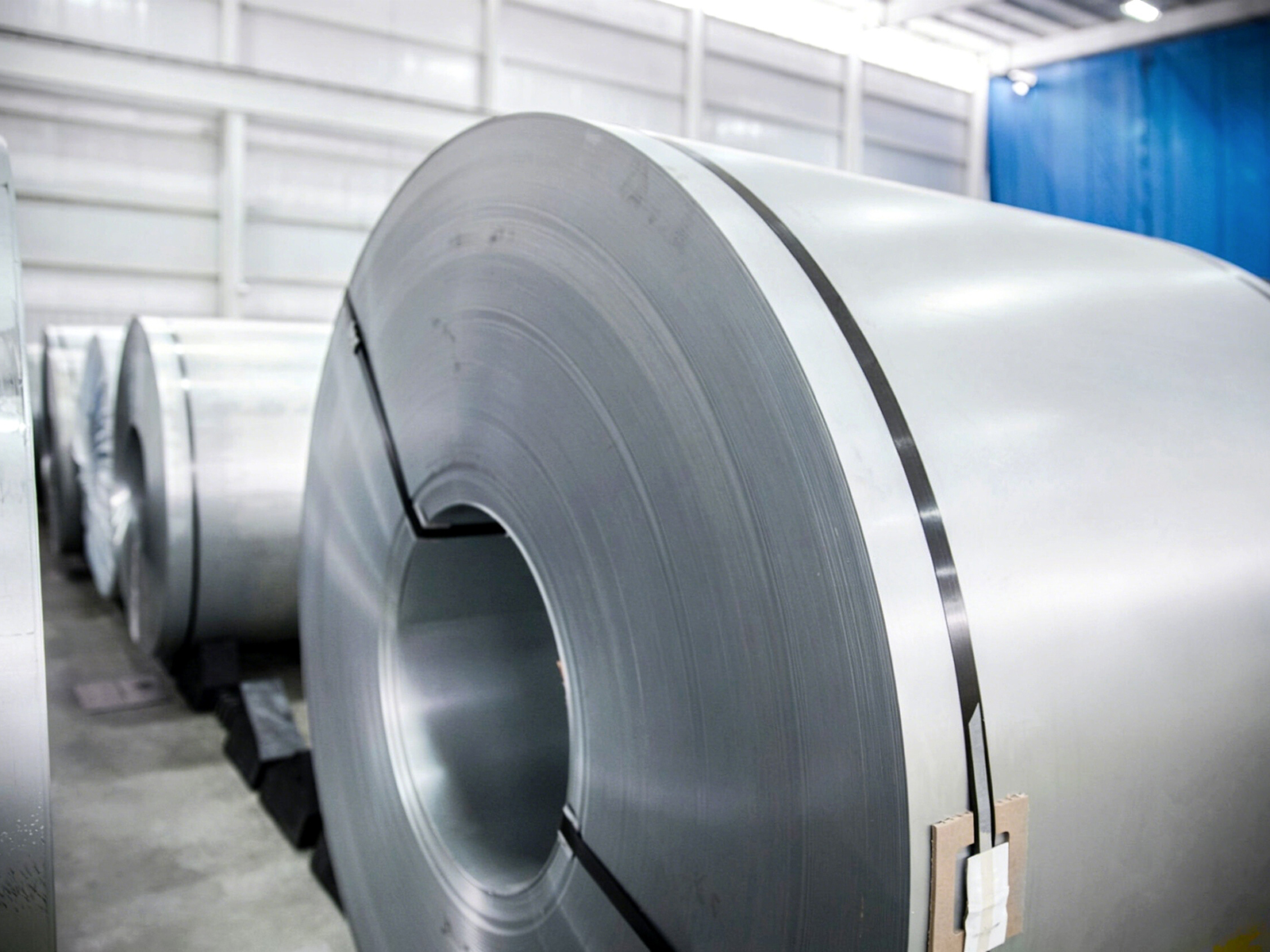
Gr5 Titanium Foil (Ti-6Al-4V per ASTM B265) is one of the most widely specified titanium alloys for aerospace, medical, and industrial applications. However, procurement engineers and purchasing managers frequently encounter misconceptions that lead to inappropriate material selection, unexpected performance shortfalls, and costly project delays. This article addresses the three most common misconceptions encountered when purchasing Gr5 titanium foil and provides factual guidance to help buyers make informed decisions that optimize performance and total cost of ownership.
Misconception 1: All Gr5 Titanium Foil Is the Same Quality
(1) Grade and Temper Variations
Gr5 titanium foil is available in multiple temper conditions—annealed (M), stress-relieved (SR), half-hard (YH), and full-hard (FH)—each offering different combinations of strength, ductility, and formability. An engineer specifying Gr5 foil for a deep-drawn medical device component requiring complex shaping will be disappointed if supplied with full-hard foil that cracks during forming. Conversely, specifying annealed foil for a spring application requiring high yield strength will result in components that deform under load. Buyers must verify that the supplier offers the full range of tempers and can supply the specific condition required for the application.
(2) Manufacturing Process and Microstructure Control
Not all Gr5 titanium foil is manufactured to the same quality standards. Premium-grade foil produced by vacuum arc melting (VAR) or electron beam melting (EBM) followed by precision rolling and controlled annealing exhibits superior microstructural uniformity, tighter dimensional tolerances, and better surface finish compared to foil produced by single vacuum arc melting (VAR) with conventional rolling. Microstructural variations affect fatigue life, corrosion resistance, and formability—properties that may not be evident from a basic material certificate but will manifest during component fabrication or in-service performance.
(3) Certification and Traceability
Quality suppliers provide EN 10204 3.1 material certificates with full heat traceability, detailed chemical analysis, mechanical property test results, and non-destructive examination records. Lower-cost suppliers may provide only basic 3.0 self-declaration certificates or no documentation at all. For aerospace, medical, and nuclear applications, inadequate documentation is unacceptable and may result in component rejection by regulatory authorities or end customers.
Misconception 2: Higher Strength Always Means Better Performance
(1) The Strength-Ductility Trade-Off
While Gr5 titanium foil in the full-hard condition achieves tensile strengths exceeding 1100 MPa, this comes at the expense of ductility (elongation below 8%) and fracture toughness. Components fabricated from high-strength foil are susceptible to cracking during forming, welding, or service loading. Selecting the minimum strength condition that satisfies design requirements—rather than specifying maximum strength—often results in better overall component performance, lower manufacturing costs, and improved reliability.
(2) Fatigue Performance Considerations
Fatigue strength does not scale linearly with tensile strength. While higher-strength Gr5 foil exhibits higher fatigue limits in smooth specimen testing, surface defects and stress concentrations that are acceptable in ductile material become critical crack initiation sites in high-strength foil. Components subjected to cyclic loading often perform better with medium-strength (solution-treated and aged, approximately 1000 MPa) foil that combines adequate strength with superior fatigue crack growth resistance.
(3) Corrosion Fatigue and Stress Corrosion
High-strength titanium alloys are more susceptible to stress corrosion cracking (SCC) and corrosion fatigue in aggressive environments. Gr5 foil with tensile strengths above 1100 MPa shows reduced threshold stress intensity factors (K ISCC) in chloride-containing environments. For marine, chemical processing, or biomedical applications where corrosive media are present, selecting a lower-strength temper with improved SCC resistance may be more appropriate than maximizing tensile strength.
Misconception 3: Price Should Be the Primary Selection Criterion
(1) Total Cost of Ownership
Focusing solely on unit price ignores the total cost of ownership, which includes material yield (scrap loss during fabrication), manufacturing productivity (forming speed, tool life), quality rejection rates, in-service reliability, and maintenance costs. Premium-priced Gr5 foil from a reputable manufacturer with tight tolerances and consistent properties may deliver 20-30% better manufacturing yield and zero field failures, resulting in net savings compared to cheaper foil with higher scrap rates and potential quality issues.
(2) Supply Chain Reliability
Low-cost suppliers may lack the production capacity, quality systems, or financial stability to support long-term supply commitments. Production delays, quality inconsistencies, and sudden price increases from unreliable suppliers can disrupt manufacturing schedules and jeopardize customer deliveries. Established manufacturers with annual capacities exceeding 5,000 tons, diversified raw material sourcing, and robust quality management systems provide supply chain security that justifies their pricing.
(3) Technical Support and Value-Added Services
Quality suppliers provide value-added services including material selection consultation, custom cutting and slitting, heat treatment, surface finishing, and engineering support for component fabrication. These services reduce development time, improve component quality, and lower overall project costs—benefits that are not reflected in the per-kg price but significantly impact total procurement cost.
Conclusion
Purchasing Gr5 titanium foil successfully requires moving beyond simplistic assumptions about material uniformity, strength priorities, and price sensitivity. By recognizing that quality varies significantly between suppliers, that higher strength is not always better, and that total cost of ownership matters more than unit price, procurement professionals can make informed decisions that optimize component performance, manufacturing efficiency, and long-term value. Working with qualified, reputable suppliers who provide comprehensive documentation, technical support, and supply chain security is the foundation of successful Gr5 titanium foil procurement.
FAQ
Q1: What is the typical price range for Gr5 titanium foil?
Gr5 titanium foil prices range from -200/kg depending on thickness, width, temper, surface finish, quantity, and certification requirements. Ultra-thin foil (below 0.1 mm) and wide-width custom sizes command premium pricing. EN 10204 3.1 certification and aerospace-grade quality add 15-25% to base pricing.
Q2: How do I verify a Gr5 titanium foil supplier’s quality?
Request EN 10204 3.1 material certificates, ISO/AS9100 certification copies, and sample testing results. Conduct on-site audits for critical applications. Verify that the supplier has experience supplying your specific industry and can provide reference customers.
Q3: What thickness tolerances should I expect for Gr5 titanium foil?
Standard thickness tolerances per ASTM B265 are +/-0.005 mm for foil below 0.5 mm and +/-0.010 mm for foil 0.5-2.0 mm thick. Precision tolerances of +/-0.002 mm are available from specialized manufacturers at premium pricing.
Contact Titanium Valley
Baoji Titanium Valley Titanium Nickel Zirconium Material Processing Co., Ltd. supplies premium-grade Gr5 titanium foil with EN 10204 3.1 certification, full material traceability, and comprehensive technical support. Custom thicknesses 0.03-3.0 mm, widths up to 1200 mm, and all temper conditions available. Contact us for quotations and technical consultation:
References
ASM International. ASM Handbook, Volume 10: Materials Data for Carbon, Alloy, and Stainless Steels [M]. ASM International, 2002.
Lambert, F. Titanium Data Guide–Inset [M]. 4th ed. Martin Lüder Associates, 2008.
ASTM International. ASTM B265-20 Standard Specification for Titanium and Titanium Alloy Sheet and Plate [S]. 2020.