
What Is the ASTM B550 Standard for Zirconium Materials?
- ASTM B550 Zirconium Wire
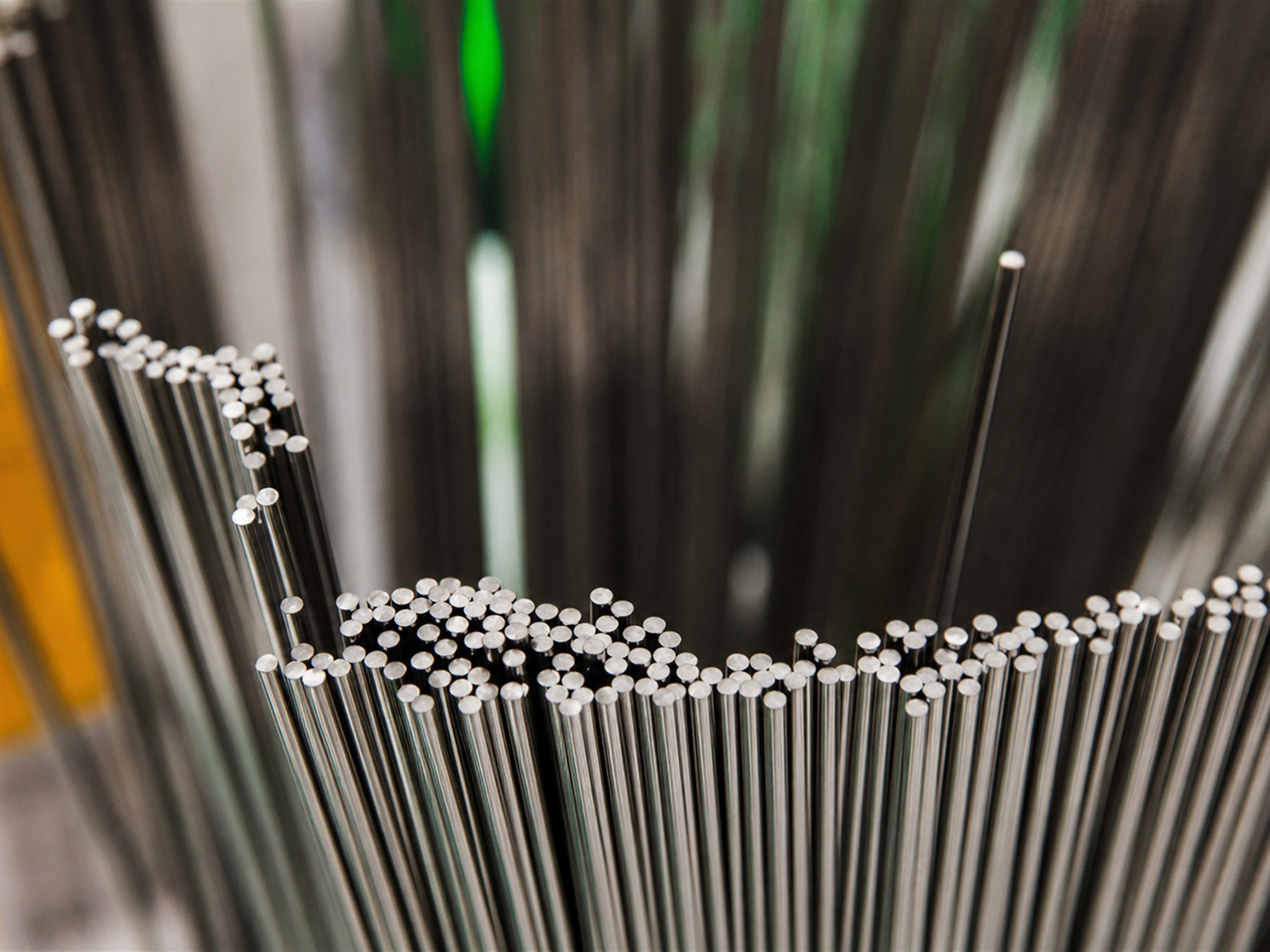
ASTM B550 is a technical standard specification established by ASTM International specifically for zirconium and zirconium alloy bars, wires, and forged billets. This standard clearly specifies the key technical requirements such as the chemical composition, mechanical properties, dimensional tolerances, surface quality, and inspection methods for industrial pure zirconium (such as R60702, R60703) and zirconium alloys (such as R60704 zirconium-tin alloy, R60705 zirconium-niobium alloy). As a material specification widely used in the chemical, nuclear, medical, and precision manufacturing industries, ASTM B550 zirconium wire demonstrates reliability and consistency under extreme corrosive environments, high-temperature steam, and nuclear irradiation conditions, providing essential material assurance for the long-term safe operation of equipment.
1. What Should You Know About Core Technical Framework of ASTM B550 Standard?
(1) Why Is Scope of Standard Application and Material Grade System Important?
ASTM B550 covers a complete specification range from 0.06 mm ultra-fine wire to 10 mm structural-grade wire. The standard divides zirconium materials into two main categories: commercially pure zirconium series and alloy series, with each grade corresponding to specific application scenarios. R60702, as a representative grade of industrially pure zirconium, is suitable for conventional corrosion-resistant equipment, and its impurity elements must meet the standard requirements. R60704 increases strength by adding tin and is commonly used for load-bearing components. R60705 contains 2.0-3.0% niobium, maintaining excellent corrosion resistance, with an annealed tensile strength of not less than 550 MPa, making it one of the important candidate materials for nuclear reactor core components.
(2) What Should You Know About Precise Control Requirements of Chemical Composition?
The standard sets strict limits on impurity elements to ensure material purity. The iron content must be controlled within 0.20%, carbon no more than 0.05%, nitrogen content below 0.025%, and hydrogen content must be kept under 0.005%. These seemingly minor numerical differences directly determine whether ASTM B550 zirconium wire can form a stable, self-healing oxide film in strongly corrosive media such as hydrochloric acid, wet chlorine, and organic acids. Excessive hydrogen content can cause material embrittlement, while excessive interstitial elements such as iron and carbon can lead to intergranular corrosion, shortening the service life of equipment. It should be particularly noted that nuclear-grade zirconium has very strict requirements for hafnium content (usually below 0.01%), whereas industrial-grade zirconium allows a wider range of hafnium content. However, the hafnium content in standard R60702 is not below 4.5%; the actual reference should be the latest version of ASTM B550.
(3) What Should You Know About Mechanical Properties and Processing State Classification?
ASTM B550 classifies zirconium wire materials into annealed and cold-worked conditions according to their heat treatment status. The annealed R60702 must have a tensile strength of not less than 380 MPa, with an elongation of over 20% to ensure good formability and weldability. Cold-worked materials increase strength by controlling the amount of deformation but need to balance the risk of reduced plasticity. The standard also specifies detailed methods for tensile testing, hardness testing, and grain size inspection, requiring manufacturers to provide a complete material certificate, including furnace batch number, chemical analysis report, and mechanical performance data.
2. Why Is Analysis of the Performance Advantages of ASTM B550 Zirconium Wire Important?
(1) What Should You Know About Corrosion Resistance Mechanism in Extreme Environments?
When zirconium materials come into contact with corrosive media, a dense zirconium oxide (ZrO₂) protective film 2-5 nanometers thick forms on the surface instantaneously. This passivation film has a self-healing ability, allowing it to regenerate rapidly in an oxygen-containing environment even if scratched. Under boiling hydrochloric acid under specific conditions, the corrosion rate of stainless steel can exceed 10 mm/year, and titanium alloys can reach several millimeters per year, while R60702 zirconium wire meeting ASTM B550 standards can have a corrosion rate as low as 0.1 mm/year. This magnitude of difference gives zirconium materials significant economic value in equipment such as pharmaceutical reactors, hydrometallurgical leaching tanks, and chlor-alkali electrolytic cells. It should be noted that the actual corrosion rate is influenced by various factors such as temperature, concentration, and flow rate; the above data are only typical reference values.
(2) What Should You Know About High-temperature Steam and Nuclear Irradiation Stability?
The primary loop coolant temperature of pressurized water reactors reaches 320-350℃, with pressures up to 15.5 MPa, while also being accompanied by intense neutron irradiation and a coexisting environment of high-concentration boric acid and lithium hydroxide. ASTM B550 R60705 zirconium-niobium alloy effectively suppresses irradiation growth and hydrogen-induced delayed cracking through precise control of niobium content. According to public data, more than 300 pressurized water reactors worldwide have cumulatively used this material for over 2, 000 reactor-years, with no incidents of fuel element leakage caused by material failure, verifying the reliability of the standard system.
(3) What Should You Know About Non-magnetic Properties and Biocompatibility?
Zirconium is a paramagnetic metal with a magnetic permeability close to that of vacuum, so it does not interfere with the operation of MRI, mass spectrometers, and precision electron beam equipment. In the medical device field, surgical suturing needles, guide wires, and orthopedic implant frameworks made from ASTM B550 zirconium wire have good tissue compatibility and do not cause inflammatory reactions or allergies after implantation in the human body. For example, a German medical device manufacturer uses 0.15 mm diameter R60702 zirconium wire to produce minimally invasive interventional catheter reinforced frameworks, and the products are ISO 13485 certified and CE marked.
3. Why Is Key Pain Points and Material Selection Strategies in Industrial Applications Important?
(1) What Should You Know About Breakthrough in the Problem of Corrosion in Strongly Acidic Media?
The chemical industry has long faced corrosion challenges in hydrochloric acid, sulfuric acid, and acetic acid mixed systems. A large caprolactam production company originally used nickel-based alloy C-276 to manufacture the internal stirring shaft of hydrogenation reactors. The equipment suffered pitting corrosion and perforation in an acidic environment containing chloride ions within 18 months, with a single replacement costing more than 1.2 million yuan. After replacing it with an assembly welded from R60705 zirconium alloy wire material meeting the ASTM B550 standard, the equipment operated continuously for 60 months without signs of corrosion, and the annual maintenance cost of the equipment decreased by 73%.
Comparison Table of Typical Corrosive Media (Data are reference values under specific conditions; actual application needs verification according to operating conditions)
Medium type | Corrosion rate of stainless steel 316L (reference value) | Titanium TA2 Corrosion Rate (Reference Value) | Corrosion rate of Zirconium R60702 (reference value) | Recommended Material Grade |
10% hydrochloric acid boiling | >10 mm/year | 2-5 mm/year | 0.1-0.2 mm/year | R60702 |
98% sulfuric acid at room temperature | 1-2 mm/year | 0.05-0.1 mm/year | <0.01 mm/year | R60702 |
Wet chlorine gas 40℃ | Quick perforation | Severe pitting | 0.02-0.03 mm/year | R60705 |
Organic acid mixed acid 120℃ | Intergranular corrosion | 0.2-0.4 mm/year | <0.05 mm/year | R60704 |
(2) What Should You Know About Material Strength Matching Under High-stress Conditions?
The high-pressure pump shafts and evaporator tube bundles of seawater desalination reverse osmosis units need to withstand extreme conditions of 7-8 MPa pressure and a chloride ion concentration of 60, 000 ppm simultaneously. Although pure zirconium R60702 is corrosion-resistant, its yield strength is only about 210 MPa, making it prone to fatigue fracture under alternating stress. The tube bundle support springs, made from ASTM B550 R60705 zirconium-niobium alloy wire, have their annealed yield strength increased to no less than 380 MPa through niobium strengthening. In a 100, 000-ton per day seawater desalination plant in the Middle East, they have been in continuous service for 8 years without a single fracture failure, demonstrating the reliability of high-strength zirconium alloys under harsh operating conditions.
(3) What Should You Know About Metal Ion Contamination Control in High-Purity Processes?
Wet etching of semiconductors and the synthesis of pharmaceutical active ingredients require ppb-level control of metal ion contamination. Iron, chromium, and nickel elements continuously leach from ordinary stainless steel equipment, leading to reduced chip yield or excessive heavy metals in drugs. A Japanese electronic chemicals manufacturer changed the pump shaft material of the etching solution circulation system from SUS316L to ASTM B550 R60703 zirconium wire machined parts. ICP-MS testing showed that the zirconium ion leaching was below 5 ppb, far below the SEMI C1 standard limit of 50 ppb, and the wafer surface defect density decreased by 40%.
4. What Should You Know About Specification System and Supply Forms of ASTM B550 Zirconium Wire?
(1) What Should You Know About Diameter Range and Accuracy Grade Classification?
The standard covers the full range of specifications from 0.06 mm medical micro guide wires to 7.0 mm structural shafts, with some manufacturers able to customize up to 10 mm. Ultra-fine wires (0.06-0.3 mm) are mainly used for electron beam welding wires, precision springs, and medical devices; conventional welding material specifications are concentrated in the 0.8-3.0 mm range; structural wire materials (4.0-7.0 mm) are mostly used for load-bearing components such as fasteners, pump shafts, and valve stems. Diameter tolerance grades are divided into H9, H8, and H7, with precision applications reaching up to ± 0.01 mm.
ASTM B550 Zirconium Wire Material Specifications and Application Comparison Table
Diameter range (mm) | Tolerance grade | Typical application scenarios | Supply form | Single roll length (m) |
0.06-0.2 | ± 0.005 | Medical guide wires, precision electronic leads | Plastic spool | 500-1000 |
0.5-1.2 | ± 0.01 | TIG/MIG Automatic Welding Wire | metal wire spool | 1000-2500 |
1.6-3.0 | ± 0.02 | Corrosion-resistant springs, chemical equipment welding | Wooden shaft or coil | 500-2000 |
4.0-7.0 | ± 0.05 | Pump shaft, valve stem, fasteners | Fixed-size strips | Single 0.5-3.0 |
(2) How Should Surface Treatment and Delivery Condition Selection?
Coiled wire is suitable for automated continuous production, such as resistance welding and laser welding lines; cut-to-length straight bars are convenient for manual arc welding and machining. Surface conditions are divided into pickled (removal of oxide scale), bright (mirror effect after cold drawing), and electro-polished (ultra-clean surface, Ra≤ 0.2um). Wire used for pharmaceutical equipment requires providing a surface roughness inspection report and cleanliness certification; nuclear-grade materials must be accompanied by metallographic photos of grain size and ultrasonic flaw detection records.
(3) What Should You Know About Quality Traceability and Certification System Requirements?
Zirconium wire materials that meet the ASTM B550 standard must establish a complete furnace batch traceability chain. From the melting ingot number and the forging billet batch to each reel of the final wire product, all must be engraved or attached with an identification card. The Mill Test Certificate (MTC) includes at least 15 items, such as chemical composition spectrum analysis data, tensile test curves, hardness values, grain size rating, and surface inspection reports. Export to the European Union market requires compliance with EN 10204 3.1 certification, and nuclear-grade materials also need to provide ASME stamp authorization and an NQA-1 quality assurance plan.
5. What Should You Know About the Guarantee Role of Manufacturing Processes in Standard Implementation?
(1) What Should You Know About Vacuum Melting and Composition Homogeneity Control?
The reactive chemical nature of zirconium requires it to be melted using a vacuum arc remelting (VAR) furnace to prevent contamination from gases such as nitrogen, oxygen, and hydrogen. During the initial VAR melting stage in industry, the vacuum is typically maintained at 10⁻²~10⁻¹ Pa. In secondary refining, electromagnetic stirring is used to control the segregation of niobium in the ingot within ± 0.15%. This microscopic compositional uniformity ensures consistency in the performance of each batch of wire during subsequent processing, preventing degradation of corrosion resistance due to local compositional variations.
(2) What Should You Know About Precision Rolling and Dimensional Stability Achievement?
Traditional zirconium rolling is prone to defects such as excessive ovality, surface scratches, and large dimensional fluctuations. Advanced rolling mills adopt a multi-stand configuration arranged in alternating horizontal and vertical layouts, combined with an induction heating furnace to achieve precise temperature control. During the rolling process, process parameters are automatically adjusted in a closed loop, keeping diameter tolerance stable at ± 0.01 mm, ovality controlled within 0.03 mm, and straightness reaching the aerospace-grade standard of 1 mm/m.
(3) What Should You Know About Online Detection and Defect Removal System?
The high-end production line is equipped with laser micrometers, eddy current flaw detectors, and ultrasonic testing equipment to monitor wire diameter, surface cracks, internal inclusions, and other defects in real time. When a diameter deviation exceeding 0.015 millimeters is detected or a surface scratch deeper than 0.05 millimeters is found, the system automatically triggers the cutting device to remove the defective section and marks the abnormal location of the batch in the quality database. This fully digital process control increases the final product pass rate to over 98.5%, far exceeding the industry average.
6. What Should You Know About Summary?
As a technical benchmark for the global zirconium materials industry, the ASTM B550 standard ensures the reliable performance of ASTM B550 zirconium wire under extreme conditions such as severe corrosion, high-temperature irradiation, and ultra-high purity by implementing strict composition control, performance grading, and quality traceability systems. Mastering the technical details and grade selection logic of this standard is a key path for high-end equipment manufacturing enterprises in the chemical, nuclear power, and medical sectors to reduce operation and maintenance costs and enhance product competitiveness.
FAQ
Q1: How should the R60702 and R60705 grades be chosen according to the ASTM B550 standard?
R60702 is industrial pure zirconium, with excellent corrosion resistance but lower strength (tensile strength ≥ 380 MPa in annealed condition), suitable for conventional chemical equipment pipelines, heat exchangers, and other low-stress situations. R60705 is a niobium-containing alloy with high strength (tensile strength ≥ 550 MPa in annealed condition), combining both corrosion resistance and load-bearing capacity, recommended for high-stress corrosion environments such as nuclear reactor components and high-pressure pump shafts.
Q2: What key control points should be noted when welding zirconium wire material?
It is necessary to use high-purity argon (purity ≥ 99.99%) for protection. Before welding, clean the surface oil and oxide layer with a mixture of acetone and nitric acid. Control the welding current within the recommended range to avoid overheating and oxidation. The back of the weld must be continuously protected with argon until it cools below 200℃ to prevent embrittlement caused by oxygen and nitrogen absorption at high temperatures.
Q3, How Can We Verify Whether the Zirconium Wire Material Provided by the Supplier Truly Complies with the ASTM B550 Standard?
Require the supplier to provide a material certificate with an ASME steel stamp or issued by an ASTM authorized laboratory, and verify the traceability of the heat number. Key checks include whether the chemical composition is labeled with actual measured values for each element rather than just indicating compliance. Mechanical properties must include complete tensile curves rather than just listing values. If possible, a third-party reinspection can be commissioned, focusing on verifying the oxygen and hydrogen content.
What Should You Know About Contact Us Immediately?
As a professional manufacturer and supplier of zirconium and zirconium alloy wires, Titanium Valley relies on vacuum consumable arc remelting (VAR), precision rolling, and a full-process online inspection system to provide zirconium wires of all grades R60702, R60703, R60704, R60705 in compliance with ASTM B550 standards. The product diameters range from 0.06 to 10 mm, with tolerance accuracy up to ± 0.005 mm. Surface conditions include pickled, bright, and electrolytic polished options, meeting the diverse requirements of chemical corrosion protection, nuclear power equipment, medical devices, and high-purity semiconductor processes. We provide complete material test certificates (MTC) in accordance with EN 10204 3.1 certification, including measured values of elemental composition, full tensile curves, grain size reports, and eddy current/ultrasonic nondestructive testing records to ensure traceability of all batch numbers. Whether you need bulk supply of standard specifications or customized material solutions for specific corrosion conditions, our technical team can provide comprehensive support from grade selection and welding guidance to batch traceability. Please contact us via email at sales@titaniumvalleys.com to obtain product samples, technical materials, and detailed quotations.
References
- Li Guixiang, Wang Zhenhua. Research on the Application and Standards of Zirconium and Zirconium Alloys in Chemical Equipment [J]. Chemical Equipment and Piping, 2019, 56(4): 45-50.
- Zhang Mingyuan, Chen Jianbin. Analysis of the Corrosion Resistance of Nuclear-grade Zirconium Alloys and Their Conformity with ASTM Standards [J]. Nuclear Science and Engineering, 2020, 40(3): 512-518.
- Liu Weidong, Zhao Yongfeng. Study on the Corrosion Behavior of Zirconium Wire Material in Strong Acid Media [J]. Corrosion and Protection, 2021, 42(8): 23-28.
- Wang Jianguo, Sun Lixin. The Effect of Precision Rolling Process on the Dimensional Stability of Zirconium Alloy Wire Materials [J]. Rare Metal Materials and Engineering, 2022, 51(6): 2045-2052.
- Zhou Xiaoping, Huang Zhiqiang. Application Practice of ASTM B550 Standard in Primary Circuit Materials of Nuclear Power Plants [J]. Nuclear Power Engineering, 2020, 41(5): 78-83.