
What Should You Know About Key Characteristics of Gr5 Titanium Foil You Need to Understand Before Purchasing?
- Gr5 Titanium Foil
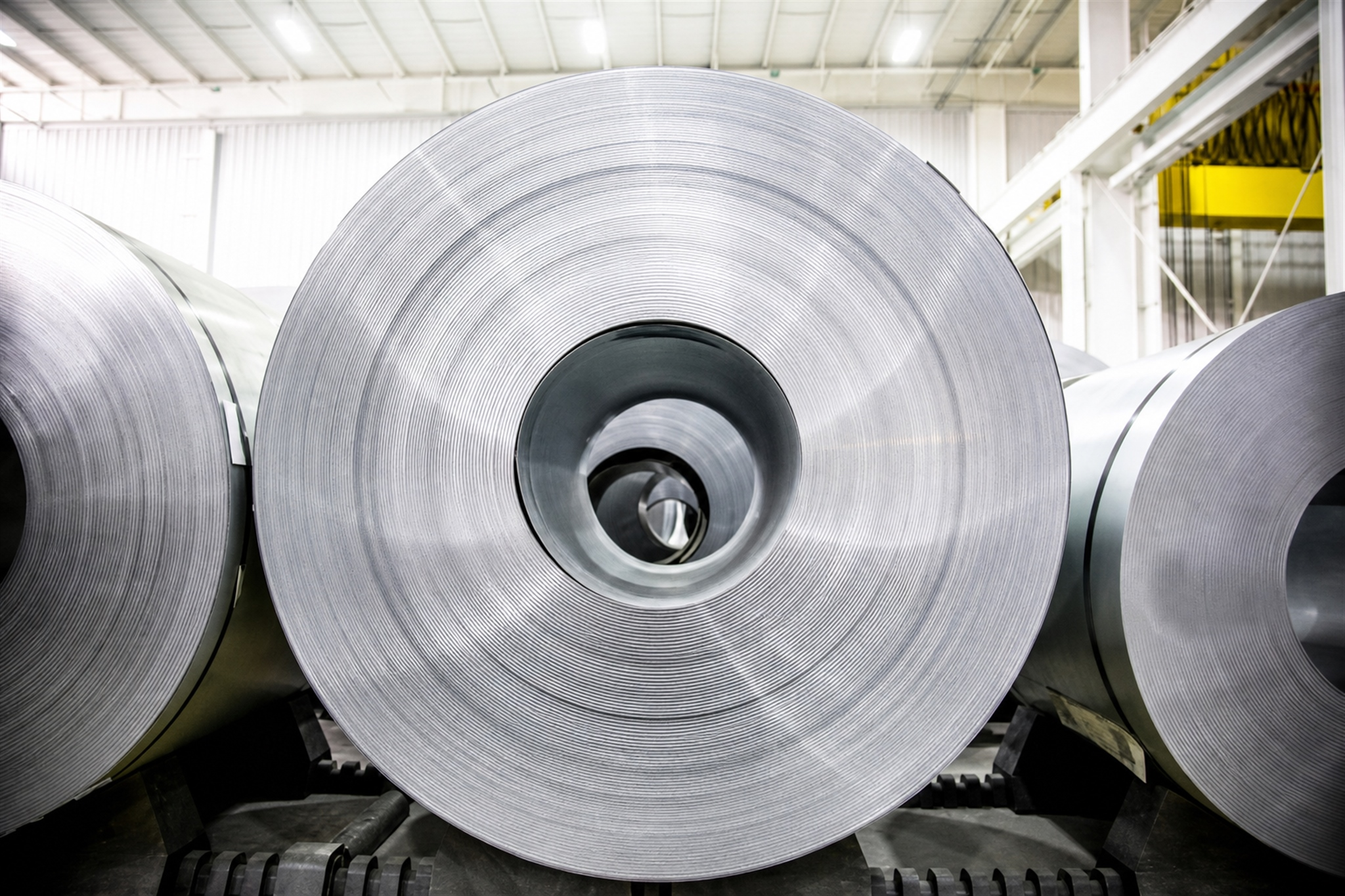
When selecting titanium foil materials in the field of high-end manufacturing, Gr5 titanium foil, with its excellent strength-to-weight ratio and overall performance, has become the preferred material for aerospace, precision electronics, and new energy equipment. Unlike ordinary pure titanium, Gr5 (Ti-6Al-4V) is an alpha-beta dual-phase titanium alloy, with a tensile strength of 895-1100 MPa, far exceeding the 345 MPa of Gr2 pure titanium. Before purchasing, attention should be paid to the material’s strength indicators, microstructural uniformity, surface quality, thickness tolerance control capability, and the supplier’s stability in mass production. For ultra-thin specifications of 0.03-0.8 mm, the processing difficulty increases exponentially, requiring suppliers to have 20-roll precision rolling equipment and vacuum annealing capability. The alpha-beta phase distribution of the material directly affects fatigue life, while surface cleanliness determines the quality of subsequent welding and forming.
1. Why Is the Material Nature and Performance Advantages of Gr5 Titanium Foil Important?
(1) What Should You Know About the Decisive Influence of Alloy Composition on Performance?
The main component of Gr5 titanium foil is Ti-6Al-4V, where aluminum (5.5-6.75%) acts as an α-phase stabilizing element, enhancing the material’s oxidation resistance and high-temperature strength; vanadium (3.5-4.5%) acts as a β-phase stabilizing element, improving room temperature ductility and fracture toughness. The dual-phase structure gives the material both high strength and machinability, with a density of only 4.43 g/cm³, about 57% of that of stainless steel.
(2) What Are the Differences in Quantitative Comparison of Mechanical Properties?
Compared to pure titanium, Gr5 titanium foil has a yield strength increased by more than 140%, reaching over 825 MPa, while maintaining an elongation of over 10%. This combination of properties makes it perform excellently under cyclic loading, with a fatigue strength at 10⁷ cycles of about 50-60% of its tensile strength, much higher than that of aluminum alloys. In long-term working conditions at 300℃, the strength retention rate still exceeds 85%.
(3) What Should You Know About Microscopic Mechanisms of Corrosion Resistance?
The naturally formed TiO2 passivation film on the surface has a thickness of 2-7 nm and can remain stable in media with a pH value of 1-12. In seawater, chloride solutions, and most organic acids, the corrosion rate is less than 0.01 mm/year. Compared with Gr2 pure titanium, Gr5 has stronger pitting corrosion resistance in high-temperature chlorine-containing environments, making it suitable for key components in chemical equipment and marine engineering.
Performance indicators | Gr5 Titanium Foil | Gr2 Pure Titanium | 304 stainless steel |
Tensile Strength (MPa) | 930-1100 | 345-480 | 515-620 |
Yield Strength (MPa) | ≥ 825 | ≥ 275 | ≥ 205 |
Density (g/cm³) | 4.43 | 4.51 | 7.93 |
Specific strength (kN·m/kg) | 210 | 76 | 65 |
2. What Should You Know About Technical Barriers to Manufacturing Ultra-thin Specifications?
(1) What Should You Know About Processing Challenges with Thicknesses of 0.03-0.8 Mm?
The high-strength characteristics of Gr5 alloy result in cold rolling deformation resistance that is 2.5 times that of pure titanium. When rolling thicknesses below 0.1 mm, the difficulty of plate shape control increases significantly. Traditional four-roll mills cannot achieve stable production; it is necessary to use 20-roll precision mills, dispersing pressure through a multi-support roller system, combined with a tension control system, to control thickness tolerance within ± 0.005 mm (for specifications below 0.1 mm).
(2) What Should You Know About Wide-strip Rolling Shape Control Technology?
In the 350-670 mm wide specifications, defects such as edge thinning and center wave are prone to occur. A supplier using a 750 mm 20-roll mill equipped with a CVC roll profile control system ensures a thickness deviation of ≤ 0.005 mm in the width direction through lateral movement of the rolling stand and dynamic adjustment of the bending force. The precision leveling process can control the flatness index (I value) within 8, meeting the requirements for automated slitting.
(3) What Should You Know About Control of Microstructural Uniformity in Continuous Annealing?
Gr5 titanium foil needs to be annealed under a vacuum of ≤ 1×10⁻³ Pa and a temperature of 730-790℃, so that while the work hardening is eliminated, the α and β phase ratio reaches the optimum. The temperature uniformity of the continuous annealing furnace needs to be ≤ ± 5℃; otherwise, local overheating or underheating may occur, leading to fluctuations in mechanical properties. The grain size after annealing should be controlled at ASTM grade 8-10 to ensure the elongation meets the standard. In addition, the cooling rate after annealing must be strictly controlled at 5-20℃/min to avoid excessive coarse α phase precipitation or β phase retention.
Thickness range (mm) | Rolling pass | Number of annealing cycles | Plate Index (I value) |
0.03-0.1 | 15-20 | 4-5 | ≤ 8 |
0.1-0.3 | 10-15 | 2-3 | ≤ 10 |
0.3-0.8 | 6-10 | 1-2 | ≤ 12 |
3. Why Is Performance Adaptation in Application Scenarios Important?
(1) What Should You Know About the Ultimate Test in the Aerospace Field?
The load-bearing skin of the honeycomb sandwich structure requires material with a tensile strength ≥ 930 MPa and elongation ≥ 10% to withstand ± 50℃ temperature cycles and 6g overloads. The high specific stiffness of Gr5 titanium foil (24.7 GPa·cm³/g) reduces structural weight by 30% while maintaining sufficient buckling stability. The engine heat shield must withstand short-term high temperatures of 400℃, and Gr5’s melting point is about 1604-1660℃, providing ample safety margin.
(2) Why Is Thermal Management Applications of New Energy Battery Packs Important?
The thermal management foil for power batteries needs to balance thermal conductivity (Gr5 thermal conductivity is about 7.2 W/m·K), corrosion resistance (electrolyte environment), and lightweight properties. Gr5 foil with a thickness of 0.05-0.1 mm can be laser welded to form complex channels, improving heat dissipation efficiency by 15% compared to aluminum alloy, and extending service life more than threefold. Its non-magnetic properties prevent electromagnetic interference with the battery management system.
(3) What Should You Know About Electromagnetic Shielding and Precision Electronic Packaging?
The shielding cover of the RF module for 5G base stations must meet the requirements of shielding effectiveness ≥ 80 dB and thickness ≤ 0.08 mm. Gr5 titanium foil has a resistivity of 165-175 μΩ·cm, and, with surface plating treatment, can achieve higher shielding effectiveness (typical values can exceed 90 dB). The material’s low coefficient of thermal expansion (8.6×10⁻⁶/K) closely matches the chip substrate, reducing the risk of thermal stress failure.
4. What Should You Know About Core Evaluation Dimensions When Shopping?
(1) What Should You Know About Batch Stability Verification of Mechanical Properties?
Suppliers are required to provide mechanical performance reports for at least three consecutive batches, checking that the standard deviation of tensile strength is ≤ 20 MPa and the elongation fluctuation is ≤ 2%. The hardness of annealed material should be in the range of HB 270-330; too high indicates insufficient annealing, while too low means the strength does not meet the standard. The survival rate in fatigue performance tests (R=0.1, 10⁷ cycles) should be ≥ 95%, and the tests must be conducted according to ASTM E466 standards.
(2) What Should You Know About Standards for Surface Quality Inspection?
The roughness Ra of the pickled surface should be ≤ 0.8 um, and there should be no defects such as oxidation color differences or scratches deeper than 0.01 mm. After ultrasonic cleaning, the residual carbon content on the surface should be ≤ 50 ppm, and the grease content should be ≤ 10 mg/m² to ensure that no pores are generated during welding and forming. The bright surface needs to be checked for a reflectivity of ≥ 60% and a surface hardness uniformity deviation of ≤ 5%.
(3) What Should You Know About Consideration of Dimensional Accuracy and Supply Capability?
Thickness tolerance needs to be specified: for specifications below 0.1 mm, it is ± 0.005 mm, and for specifications between 0.1-0.8 mm, it is ± 0.01 mm; width tolerance is ± 0.5 mm. The consistency of the coil diameter of the rolled material affects the efficiency of automated feeding, and the deviation should be ≤ 2 mm. Suppliers must have an annual production capacity of over 3, 000 tons, a delivery cycle of ≤ 6 weeks, and support stable supply for batch orders of more than 500 kg.
Test items | High-quality standard | Normal standard | Unqualified |
Thickness tolerance (mm) | ± 0.005 | ± 0.01 | >± 0.015 |
Surface Roughness Ra (um) | ≤ 0.6 | ≤ 1.0 | >1.2 |
Tensile strength dispersion coefficient | ≤ 2% | ≤ 5% | >8% |
Plate Index I Value | ≤ 8 | ≤ 12 | >15 |
5. What Should You Know About Analysis of Manufacturing Process Compatibility?
(1) What Should You Know About Formability and Rebound Control?
The yield-to-tensile strength ratio (yield strength/tensile strength) of Gr5 titanium foil is about 0.88, and the springback angle during cold forming is 40% larger than that of pure titanium. For structures with a bending radius of <3t (t being the thickness), hot forming (750-850℃) or superplastic forming processes need to be used. Stamping dies should be made of tool steel with a hardness above D2, and the clearance should be optimized to 1.05-1.1t to reduce the risk of burrs and cracking.
(2) What Should You Know About Optimization of Welding Process Parameters?
During TIG welding, pure argon protection (purity ≥ 99.99%) is required, and back shielding with argon is used to prevent oxidation and discoloration. For foils with a thickness of 0.05-0.5 mm, too high welding current (>100A) can lead to excessive β phase precipitation, reducing joint toughness; too low current results in insufficient penetration. For laser welding, the power density should be controlled at 10⁵-10⁶ W/cm², with a welding speed of 2-5 m/min, and the heat-affected zone width can be controlled within 0.5 mm.
(3) What Should You Know About Surface Treatment and Functional Coatings?
Anodizing can increase surface hardness to HV 300-400 and improve wear resistance by 5 times. In high-temperature oxidation environments, a TiAlN coating can raise the oxidation resistance temperature to 600℃. For biomedical applications, plasma-sprayed hydroxyapatite coatings can enhance bone integration, but the substrate surface roughness must be maintained at Ra≤ 0.4 um to prevent coating delamination.
6. What Is the Conclusion?
The selection of Gr5 titanium foil needs to be comprehensively evaluated from five dimensions: verification of material composition, stability of mechanical properties, processing capability for ultra-thin specifications, surface quality control, and adaptation to application scenarios. High-quality suppliers should be equipped with core facilities such as 20-roll precision rolling, vacuum annealing, and full-process clean control, ensuring stable mass supply of specifications ranging from 0.03-0.8 mm × 350-670 mm. The uniformity of the material’s α and β phase structure, thickness tolerance control capability (for example, ± 0.005 mm for specifications below 0.1 mm), and surface cleanliness directly determine the reliability and processing yield of the final product.
FAQ
Q1: What are the fundamental differences between Gr5 titanium foil and Gr2 pure titanium in aerospace applications?
The tensile strength of Gr5 is more than 2.5 times that of Gr2, capable of withstanding higher loads, and the strength-to-weight advantage reduces the structure’s weight by 30%. In a high-temperature environment of 300℃, the strength retention rate of Gr5 is over 85%, while the strength of Gr2 decreases by more than 40%, making it unsuitable for engine peripheral components.
Q2: What are the processing difficulties of ultra-thin Gr5 titanium foil below 0.05 mm?
The high strength of the material results in high resistance to rolling deformation, making it prone to edge cracks and poor plate shape. It is necessary to equip a 20-roll mill and a high-precision tension control system, and use multiple passes of small reduction rolling, combined with 4-5 times of vacuum annealing to relieve stress, in order to achieve stable production with a thickness tolerance of ± 0.005 mm.
Q3: How to verify the batch consistency of Gr5 titanium foil?
Suppliers are required to provide material reports for more than three consecutive batches, checking that the standard deviation of tensile strength is ≤ 20 MPa, elongation fluctuation is ≤ 2%, and hardness range is HB 270-330. At the same time, metallographic structure inspection is required to confirm that the distribution of α and β phases is uniform, and the grain size is stable at ASTM 8-10 level.
How Should Looking for High-quality Gr5 Titanium Foil Suppliers?
A supplier has invested USD 36.2 million to build an automated foil production line, which has overcome seven core technical challenges of ultra-thin wide titanium alloy foil. With an annual production capacity of over 3, 000 tons, it can stably supply aerospace-grade Gr5 titanium foil. Contact us now for technical parameters and customized solutions: sales@titaniumvalleys.com
References
- Li Minghua, Wang Jianjun. Study on the Cold Rolling Process and Microstructure Performance of Ultra-thin Ti-6Al-4V Titanium Alloy Foil[J]. Rare Metal Materials and Engineering, 2021, 50(6): 2145-2152.
- Zhang Zhichao, Liu Jianrong. Precision Rolling Technology and Surface Quality Control of Ti-6Al-4V Thin Strip for Aviation [J]. Progress in Titanium Industry, 2022, 39(3): 18-24.
- Chen Wenjie, Zhao Xiaodong. Research on the Application of Titanium Alloy Foils in Thermal Management of New Energy Batteries [J]. Power Supply Technology, 2023, 47(2): 112-118.
- Liu Guohua, Wang Yongqiang. Analysis of the Electromagnetic Shielding Performance of Gr5 Titanium Foil and Its Application in 5G Devices [J]. Electron Process Technology, 2022, 43(5): 278-283.