
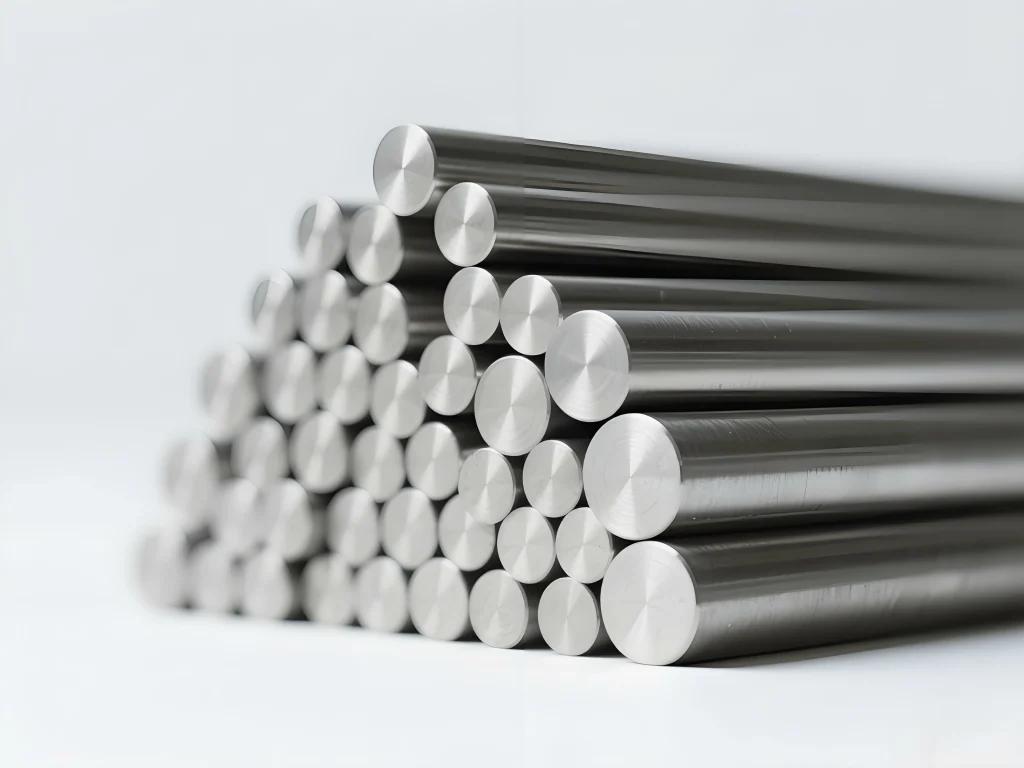
When purchasing nickel bars, you will frequently encounter the two terms “Ni200” and “ASTM B160”, which are often used together and easily mistaken for identical concepts. In reality, Ni200 refers to a material grade representing commercially pure nickel with a minimum nickel content of 99.0%; ASTM B160 is a technical specification issued by ASTM International that governs chemical composition, mechanical properties, dimensional tolerances, and inspection procedures for nickel bars. Simply put, Ni200 defines the grade and intrinsic material properties, while ASTM B160 establishes uniform production, testing, and delivery criteria for such bar products. The two exist in a grade-to-specification relationship rather than being competing or interchangeable alternatives. Clear comprehension of this relationship enables precise material selection, streamlined procurement, and robust quality control, eliminating communication discrepancies and material failure risks.
I. Material Properties and Classification Framework of Ni200 Nickel Bar
1. Global Cross-Reference Standard Designations for Ni200
Ni200 nickel bar carries equivalent grade codes across regional standard systems worldwide. Within the US standard system, its UNS identifier is UNS N02200; European/German standards correspond to EN 2.4060 (Ni200) and EN 2.4066 (Ni201). The universal industry name is Commercial Pure Nickel 200. All these designations reference the same base material: industrial pure nickel with nickel content ≥99.0%, with tightly controlled trace impurities including iron, carbon, manganese, silicon, and copper. This controlled composition delivers outstanding resistance to alkaline corrosion, high electrical and thermal conductivity, and excellent formability.
2. Chemical Composition Characteristics of Commercially Pure Nickel
Ni200 nickel bar is manufactured with tightly regulated chemical composition: combined nickel and cobalt content is specified at a minimum of 99.0%, with typical measured values ranging from 99.5% to 99.6%. Individual impurity limits are set as follows: iron ≤0.40%, carbon ≤0.15%, manganese ≤0.35%, silicon ≤0.35%, copper ≤0.25%, sulfur ≤0.01%, phosphorus ≤0.015%. This high-purity formulation delivers exceptional corrosion resistance in strong alkaline media such as sodium hydroxide (NaOH) and potassium hydroxide (KOH), paired with stable mechanical strength and ductility. The controlled carbon level minimizes intergranular embrittlement risk, while low sulfur content prevents hot cracking and hot shortness during welding operations.
Table 1: Comparison of Ni200 Chemical Composition Limits per ASTM B160 vs Typical As-Manufactured Values
| Element | ASTM B160 Limit (wt%) | Typical Actual Value (wt%) | Function & Material Impact |
|---|---|---|---|
| Ni+Co | ≥99.0 | 99.5~99.6 | Primary constituent governing purity and corrosion resistance |
| Fe | ≤0.40 | 0.10~0.25 | Excess iron reduces corrosion resistance and electrical conductivity |
| C | ≤0.15 | 0.05~0.10 | Elevated carbon causes intergranular embrittlement and weld cracking |
| Mn | ≤0.35 | 0.10~0.20 | Deoxidizing alloy; excessive manganese impairs ductility |
| Si | ≤0.35 | 0.05~0.15 | Deoxidizing alloy; excessive silicon reduces toughness |
| Cu | ≤0.25 | 0.05~0.10 | Minor adverse effects at low levels; excess copper degrades alkaline corrosion resistance |
| S | ≤0.01 | ≤0.005 | Harmful trace element responsible for hot shortness |
| P | ≤0.015 | ≤0.008 | Harmful trace element responsible for cold brittleness |
3. Supply Conditions and Geometric Product Categories
Ni200 nickel bars are supplied in hot forged/hot rolled, annealed, and cold worked tempers. Annealed material delivers maximum ductility and low hardness, ideal for secondary forming operations. Cold worked stock exhibits elevated tensile strength and superior surface finish at the cost of reduced ductility, suited for high-precision structural components requiring no post-forming plastic deformation. Geometric profiles include round, square, and hexagonal bars produced via hot rolling, forging, cold drawing, and precision turning to match diverse machining requirements.
II. Technical Framework and Quality Control System of ASTM B160 Specification
1. Scope and Revision History of ASTM B160
The full official title of ASTM B160 is Standard Specification for Nickel Rod and Bar; industry terminology distinguishes thin drawn rod from heavy rolled/forged bar. Published by ASTM International, this globally recognized commercial specification covers two primary grades: Ni200 (UNS N02200) and low-carbon Ni201 (UNS N02201). It establishes mandatory requirements for chemical composition, mechanical performance, dimensional tolerances, surface finish, sampling protocols, acceptance/rejection criteria, and packaging standards. Multiple technical revisions have been released to integrate manufacturing advancements and industry feedback, aligning the standard with international best practices for high-end manufacturing applications.
2. Mandatory Mechanical Property Requirements Defined by the Specification
ASTM B160 sets fixed mechanical performance thresholds for all Ni200 nickel bar tempers. Annealed material requires minimum tensile strength of 380 MPa, minimum yield strength of 103 MPa, and minimum elongation of 40%. Cold worked variants display a 30% to 50% tensile strength increase relative to annealed stock, with corresponding reductions in elongation. The specification also defines acceptable ranges for hardness, reduction of area, and impact toughness, validated through tensile testing, hardness surveys, and metallographic analysis to guarantee long-term reliable service in chemical equipment, electrode assemblies, heat exchangers, and other demanding service environments.
Table 2: Mechanical Properties and Typical Applications of Ni200 Nickel Bar by Supply Temper
| Supply Temper | Tensile Strength (MPa) | Yield Strength (MPa) | Elongation (%) | Vickers Hardness (HV) | Typical End Use Applications |
|---|---|---|---|---|---|
| Annealed | Typical 380~480 (Min 380 per spec) | 103~150 | ≥40 | 80~120 | Corrosion-resistant chemical process equipment, welded assemblies, deep-drawn formed parts |
| Cold Worked | 550~750 | 450~600 | 15~25 (typical) | 150~220 | Precision shafts, fasteners, electrode rods, high-strength connection hardware |
| Hot Worked | 400~550 | 150~250 | 30~40 | 100~150 | Large forged components, rough machining blanks |
3. Dimensional Tolerance and Surface Finish Control Criteria
ASTM B160 enforces strict dimensional accuracy and surface quality controls for nickel bar products. Diameter tolerances for round bars comply with shaft tolerance grades h9 through h11. Fixed-length bars carry a maximum positive length tolerance of 10 mm, with negative tolerances governed by specification; random length ranges are agreed upon between buyer and supplier. Surfaces shall be free of cracks, laps, inclusions, and heavy scale; minor machining marks are permitted provided their depth does not exceed the negative dimensional tolerance limit. Precision turned bright bar finishes achieve surface roughness Ra 0.8 μm to Ra 1.6 μm, with exact values negotiated contractually to satisfy precision machining and ultra-clean operating environments.
4. Mandatory Chemical Analysis and Non-Destructive Testing Protocols
Every production lot of nickel bar requires optical emission spectroscopy to verify compliance with grade-specific element limits. For bars with diameter ≥50 mm intended for pressure-containing and high-performance equipment, ultrasonic testing (UT) or eddy current testing (ET) is recommended to detect internal discontinuities and confirm material homogeneity. Critical applications including aerospace and nuclear components require full traceability via mill test certificates (MTC), third-party laboratory reports, and heat lot records to establish a complete quality audit trail.
III. Logical Relationship Between Ni200 and ASTM B160, and Application Matching
1. Subordinate Relationship Between Material Grade and Governing Specification
Ni200 answers the question of what material is specified, while ASTM B160 outlines how the material must be manufactured, tested, and delivered. Nickel bars marked “Ni200 ASTM B160” confirm UNS N02200 commercially pure nickel manufactured, inspected, and accepted in full conformance with ASTM B160, the universal labeling format for global trade contracts, technical agreements, and procurement documents. This dual designation simultaneously clarifies material identity and establishes an enforceable quality benchmark.
2. Specification Selection Variations Across Industrial Sectors
Chemical and chlor-alkali processing facilities primarily specify annealed Ni200 nickel bar to ASTM B160 for electrolytic cell cathode components, alkali-resistant pump shafts, and heat exchange tubing, leveraging its exceptional resistance to alkaline media. Semiconductor and electronics manufacturing favors high-precision cold worked nickel bar for resistive heating elements, battery current collectors, and vacuum electronic lead pins, prioritizing tight dimensional tolerances and consistent surface finish. Aerospace applications mandate supplementary ultrasonic inspection documentation and full heat lot traceability to eliminate internal material defects and meet stringent long-term reliability requirements.
3. Global Standard Equivalence and Mutual Recognition
Although ASTM B160 originates as a US standard, its technical parameters are widely recognized across global manufacturing regions. European facilities may reference EN 2.4060 concurrently, while Japanese manufacturers adhere to JIS NW2200; all regional specifications demonstrate high alignment in chemical composition, mechanical testing, and inspection methodology. International procurement contracts should define a priority standard hierarchy such as “ASTM B160 or equivalent EN specification” and require suppliers to furnish mill test certificates aligned with the designated standard to guarantee material compliance and traceability.
Table 3: Global Equivalent Standard Cross-Reference for Ni200 Commercially Pure Nickel Bar
| Region / Standards Body | Standard Number | Corresponding Grade | Key Differentiators & Applicable Conditions |
|---|---|---|---|
| US ASTM | ASTM B160 | UNS N02200 | Originating specification, global industry baseline standard |
| European EN | EN 2.4060 / 2.4066 | NiCo 99.0 | Near identical chemical composition and mechanical performance limits |
| German DIN | DIN 17740 | 2.4060 (Ni99.0 equivalent) | Slightly tighter dimensional tolerances and refined surface requirements, applicable only to designated product sizes |
| Japanese JIS | JIS NW2200 | NW2200 | Includes mandatory low-temperature impact testing; requirement only active for cryogenic service equipment, irrelevant for standard ambient-temperature use |
| ISO International | N/A¹ | N/A¹ | No dedicated universal ISO specification for nickel bar stock; ASTM B160 serves as the primary reference for international trade |
Note : ISO 6207 and ISO 6208 govern nickel and nickel alloy sheet/strip products and do not apply to bar stock, hence excluded from this table.
IV. Core Verification Criteria for Procurement and Receiving Inspection
1. Mandatory Mill Test Certificate Verification Checklist
Reputable Ni200 nickel bar manufacturers provide fully documented mill test certificates (MTC) containing heat lot number, rolling batch identifier, test date, authorized inspector signature, measured chemical composition values, mechanical test results, heat treatment temper, referenced governing standard (ASTM B160), manufacturer compliance statement, and official corporate stamp. High-performance applications require supplementary third-party laboratory reports (SGS, TÜV), non-destructive testing (UT/ET) documentation, and dimensional inspection logs. Shipments lacking complete or clear certification carry elevated risk of non-conforming material or substandard substitutions.
2. On-Site Receiving Inspection Protocols for Surface Condition and Dimensional Accuracy
Upon delivery, inspectors use calipers and micrometers to spot-check bar diameters and across-flat dimensions against ordered tolerances. Surface evaluation utilizes high-intensity lighting and magnification to identify cracks, laps, heavy scale, and surface pitting. Uniform dark oxide scale is acceptable for hot rolled stock; annealed bar exhibits matte silver-gray surfaces, while cold drawn or precision turned bright bar displays bright silver reflective finishes. For food, pharmaceutical, and ultra-clean service environments, surfaces must be free of residual oil and mechanical damage, with solvent degreasing and purity testing performed as required.
3. Supplier Qualification and Production Capacity Evaluation Metrics
Qualified Ni200 nickel bar producers maintain electric arc or induction melting furnaces; high-purity Ni200 variants utilize vacuum induction melting (VIM) to enhance material cleanliness. Production lines must integrate precision rolling mills, controlled atmosphere heat treatment furnaces, and ultrasonic inspection equipment for closed-loop quality management. Valid supplier credentials include ISO 9001 quality management certification, AS9100 aerospace quality accreditation, and proven mass production capacity (minimum annual output of 3,000 metric tons).
V. Performance Matching and Failure Risk Mitigation for Engineering Applications
1. Material Selection Logic for Alkaline Service Environments
Chlor-alkali electrolysis, caustic production, and specialty chemical facilities operate with continuous exposure to high-temperature, high-concentration sodium or potassium hydroxide solutions, where carbon steel and standard stainless steel suffer rapid corrosive penetration. Under pure alkaline conditions free of oxidizing contaminants, Ni200 nickel bar forms a dense passive oxide film, delivering corrosion rates below 0.1 mm per year and continuous stable service lifespans of 10 to 20 years. Material specification must reference ASTM B160 compliance: annealed temper offers superior ductility and weldability for complex formed components, while cold worked temper delivers enhanced tensile strength and wear resistance for pump shafts and mixing impellers.
2. High-Temperature Oxidative Service Limitations of Ni200
Ni200 nickel bar exhibits excellent high-temperature performance in neutral and reducing atmospheres for continuous service up to 600 °C. However, accelerated corrosion and sulfur embrittlement occur in hot oxidizing acids (e.g., hot nitric acid) or sulfur-containing atmospheres operating above 315 °C, the widely accepted critical temperature threshold for sulfur-induced embrittlement in pure nickel. For these service environments, low-carbon Ni201 is specified for high-temperature sulfur-containing service, while nickel-chromium superalloys such as Inconel 600 are selected for strong oxidizing acid exposure. Design engineering must fully document media chemistry, operating temperature range, and continuous exposure duration to prevent improper material selection and premature equipment failure.
3. Performance Optimization Strategies for Electrical and Thermal Conductivity Applications
Ni200 nickel bar delivers a room-temperature thermal conductivity of approximately 90 W/(m·K). Annealed temper achieves electrical conductivity near 23% IACS, while cold working reduces conductivity to roughly 14.6% IACS due to work hardening effects. Cold worked stock provides elevated mechanical strength for load-bearing conductive hardware, while annealed temper maximizes electrical conductivity for low-stress high-purity electrical components. Nickel metal hydride (NiMH) battery current collectors manufactured from Ni200 require oxide-free, oil-free surfaces processed via bright annealing and ultrasonic cleaning to minimize contact resistance and extend cycle service life.
Conclusion
Ni200 designates a commercially pure nickel material grade, while ASTM B160 establishes the comprehensive manufacturing specification for nickel bar products. The two standards operate in tandem and cannot be utilized independently. Thorough understanding of their relationship enables engineering, procurement, and quality assurance teams to execute material selection, formalize contract terms, and complete incoming receiving inspection. Specifying Ni200 nickel bar manufactured to ASTM B160 requirements, paired with full technical support and complete material traceability from qualified manufacturers, delivers long-term stable equipment operation and optimized total cost of ownership across chemical, electronics, aerospace, and other high-end industrial sectors.
FAQ
Q1: What key differences exist between Ni200 and Ni201 nickel bars within the ASTM B160 specification?
ASTM B160 covers both Ni200 (UNS N02200) and Ni201 (UNS N02201), differentiated primarily by maximum allowable carbon content. Ni201 serves as the low-carbon variant of Ni200 with a carbon limit ≤0.02%, providing superior resistance to intergranular corrosion and graphitization at operating temperatures exceeding 315 °C. Ni201 is preferred for high-temperature chemical processing equipment, while Ni200 offers a cost-effective alternative for ambient-temperature alkaline service applications.
Q2: How can buyers verify nickel bars fully comply with ASTM B160 during procurement?
Suppliers must furnish mill test certificates (MTC) listing heat lot traceability, chemical composition analysis, mechanical test results, and explicit reference to the ASTM B160 standard. For pressure-containing and high-performance critical equipment, buyers may request third-party laboratory certification (SGS, TÜV) and non-destructive testing records to validate full material traceability and absence of internal discontinuities.
Q3: What service environments are unsuitable for Ni200 nickel bar, and what alternative materials should be specified?
Contact Us
Baoji Titanium Valley Titanium Nickel Zirconium Material Processing Co., Ltd. is a professional manufacturer and supplier of Ni200 nickel bar equipped with advanced vacuum melting and precision rolling production lines with an annual output exceeding 20,000 metric tons of high-grade nickel bar manufactured in strict compliance with ASTM B160. Custom dimensional fabrication, complete mill test certification packages, and full technical engineering support are available. Contact our team for quotations and customized technical solutions: sales@titaniumvalleys.com
References
1.Zhang Dongming. Processing Technology of Nickel and Nickel Alloys [M]. Beijing: Metallurgical Industry Press, 2009.
2.Wang Zhengpin. Metal Corrosion and Protection [M]. Beijing: China Machine Press, 2008.
3.Heat Treatment Society of China Mechanical Engineering Society. Heat Treatment Handbook (4th Edition) [M]. Beijing: China Machine Press, 2008.
4.ASTM B160-05 (2019) Standard Specification for Nickel Rod and Bar.