
How Does Gr5 Titanium Rod Influence Aerospace and Medical Material Selection?
- Gr5 Titanium rod
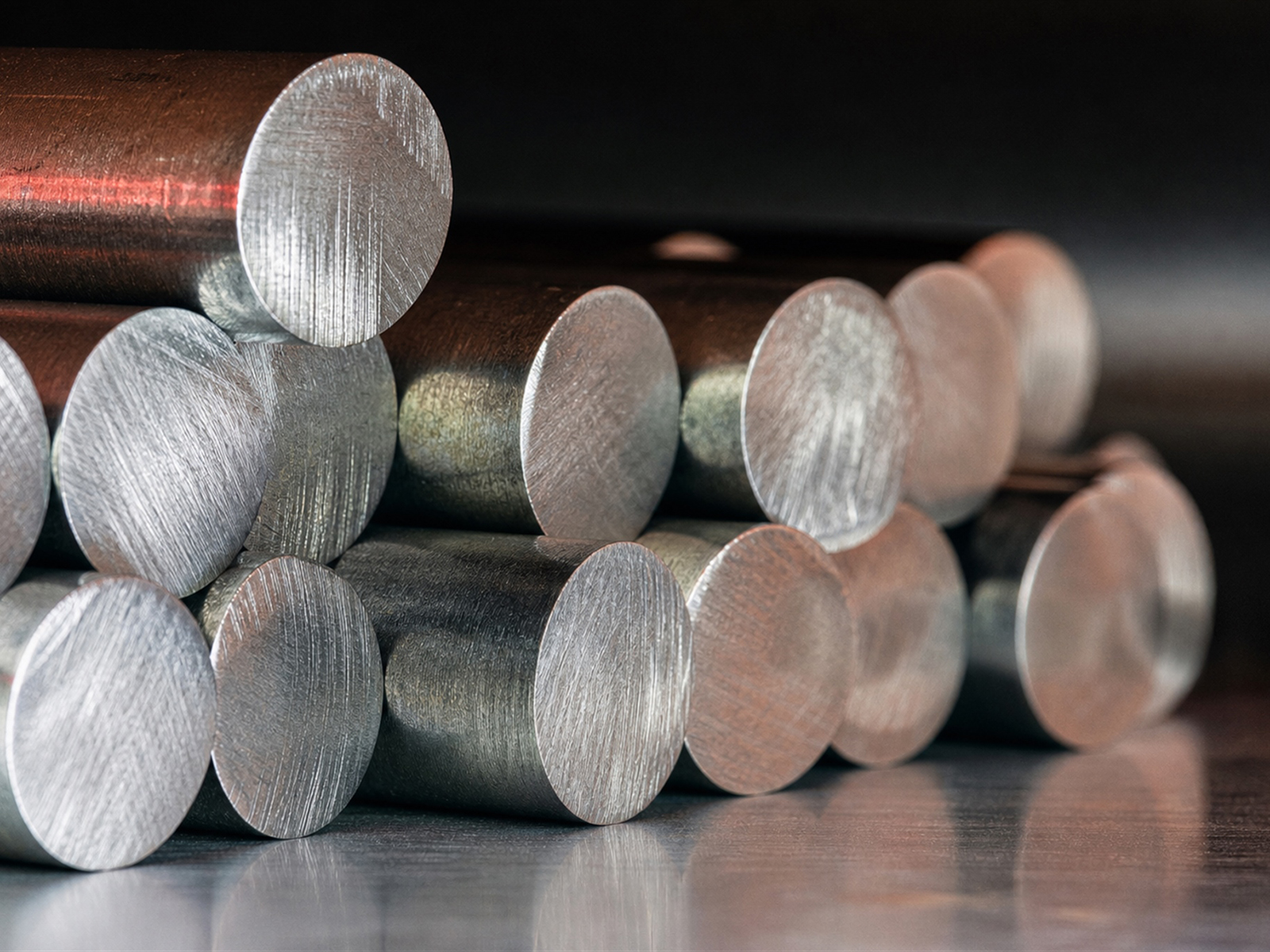
Today, as the global high-end manufacturing industry is evolving toward lightweight, high strength, and long life, Gr5 Titanium Rods (Ti-6Al-4V) are becoming the “gold standard” in the field of precision machining. This ?+? titanium alloy not only has a strength close to that of high-strength steel, but its density is only 60% of steel. It also shows irreplaceable comprehensive advantages in corrosion resistance, fatigue resistance, biocompatibility and other dimensions. For purchasing decision-makers in the fields of American aviation medical, German high-end equipment, Japanese and Korean precision electronics, etc., choosing Gr5 Titanium Rods that meet ASTM B348 standards means avoiding the risk of material performance fluctuations from the source and significantly reducing later rework and operation and maintenance costs. This article will systematically analyze the technical characteristics, application value and selection logic of this material to help engineers and procurement teams make more informed decisions.
1. Material genes and process evolution of Gr5 titanium rods
(1) Precise control logic of alloy composition
The core value of Gr5 Titanium Rods comes from its precise ratio of 6% aluminum and 4% vanadium. As an ?-phase stabilizer, aluminum element significantly improves the high-temperature strength and oxidation resistance of the material, allowing it to maintain structural stability in an environment of 400~500 ?C. As a beta phase stabilizer, vanadium gives the alloy excellent room temperature strength, toughness and cold workability. The oxygen content is strictly controlled below 0.2% to avoid a decrease in plasticity due to excessive quenching and strengthening. This composition design allows Gr5 to achieve a tensile strength of ?895 MPa while still achieving an elongation of more than 10%, perfectly balancing the needs of strength and toughness.
(2) Purity guarantee of VAR vacuum melting
From titanium sponge to finished rods, the VAR (vacuum consumable arc remelting) process is a key link in quality control. Under 10?? Pa level vacuum, the titanium electrode is melted layer by layer and directional solidified through arc heating, effectively removing hydrogen, nitrogen and other gas impurities, and controlling the inclusion content within 0.40%. Compared with the traditional smelting process, VAR technology can improve the uniformity of the structure by more than 40% and completely eliminate the problem of batch performance fluctuations caused by component segregation. This is crucial for aerospace structural parts and medical implants that require stable mechanical properties.
(3) Process differentiation between hot working and cold working
Hot-rolled (R) bars are obtained through high-temperature deformation at 900~1050 ?C. They retain large residual stress inside, and because the structure is not fully recrystallized, the plasticity is the worst and the surface oxide scale is obvious, but the strength can reach the peak. This type of material is suitable for forging blanks that are subsequently machined with large margins. Annealed (M) rods are heated at 650~850 ?C for 2~4 hours and then furnace cooled. The stress is fully released and the plasticity and welding properties are optimal. It is the first choice for precision parts. Through centerless grinding and precision drawing, the cold-drawn bar has a surface roughness of up to Ra 0.8 ?m and a dimensional accuracy of h9 level, which directly meets the needs of high-precision shaft parts and eliminates the need for rough machining processes.
2. How to meet the needs of composite working conditions with multi-dimensional performance indicators
(1) Reconstruct structural design boundaries using specific strength advantages
Data shows that the specific strength of Gr5 Titanium Rod reaches 202, which is equivalent to 7075 aluminum alloy, but its heat resistance and corrosion resistance far exceed the latter. In applications such as drone fuselage frames and racing car connecting rods, the use of Gr5 materials can achieve a weight reduction of 30-40%, while the load-bearing capacity does not decrease but increases. This advantage is particularly critical in moving parts that require frequent acceleration and deceleration, which can significantly reduce inertia loads and improve system response speed.
(2) Quantitative relationship between fatigue life and safety factor
Aviation fasteners need to withstand more than 10? alternating loads. Under the condition of stress ratio R=-1, the fatigue strength of Gr5 Titanium Rod can reach 50~55% of the tensile strength (data comes from “Experimental Research on Fatigue Properties of Titanium Alloys” [1]), which is much higher than the 35-40% of ordinary steel. More importantly, its crack growth rate is about 2?10?? m/cycle when ?K=20 MPa??m, which is only 1/5 of that of aluminum alloy. This means that even if microcracks occur, they propagate extremely slowly, leaving a sufficient safety window for regular inspections. In key parts such as helicopter rotor shafts and engine blades, this characteristic is directly related to flight safety.
(3) Electrochemical nature of corrosion resistance
Gr5 Titanium Rod instantly generates a 2~5nm thick TiO? passivation film in a natural environment. This oxide film remains stable in the pH range of 2~12, with a pitting corrosion potential as high as +800mV (vs. SCE). After being soaked in 3.5% NaCl solution for 1 year, the corrosion depth is
3. Technical path selection for precision machining and surface treatment
(1) Cutting parameter optimization reduces tool wear
The thermal conductivity of Gr5 Titanium Rod is only 7.5 W/(m?K), which is 1/6 of 45 steel. The cutting heat is concentrated in the tool tip area, which can easily lead to tool bonding and crater wear. It is recommended to use carbide YG8 or coated tools, with the cutting speed controlled at 40~60 m/min, the feed rate 0.1~0.15 mm/r, and the back cutting amount ? 2 mm. Sufficient high-pressure coolant (pressure ?3 MPa) can reduce the cutting zone temperature from 600 ?C to below 200 ?C, increasing tool life by 3 to 5 times. For small-diameter bars below ?10 mm, it is recommended to use a Swiss-type center lathe, which can eliminate overhang vibration through guide sleeve support, and the processing accuracy can reach ?0.01 mm.
(2) Match the surface treatment level to the application scenario
The surface oxide scale thickness of the black-skinned (Forged) bar is 50~100 ?m, and the dimensional tolerance is ?1.5 mm. It is suitable for forging blanks and welded structural parts. The peeled state (Peeled) removes the oxide layer through centerless peeling. The surface is silver-white, with a roughness Ra 3.2-6.3 ?m and a dimensional tolerance of ?0.5 mm. It can be directly used for general machining. After turning, the surface roughness is Ra 1.6~3.2 ?m and the dimensional accuracy is ?0.2 mm. It is suitable for precision parts that require clean surfaces. The ground state adopts centerless grinding, with a roughness of Ra 0.4~0.8 ?m, dimensional accuracy of ?0.05 mm, and roundness of ?0.02 mm. High-precision bearings and seals can be directly assembled.
(3) Control of microstructure by heat treatment system
A 10 ?C difference in annealing temperature can result in a 30% hardness fluctuation. Standard annealing (700~850 ?C/2h/furnace cooling) obtains an equiaxed ?+? dual-phase structure, a hardness of 280~320 HB, and the best overall performance. Rapid annealing (920~960 ?C/15min/air cooling) can retain part of the basket structure and increase the hardness to 340 HB, but the plasticity is slightly reduced. Beta phase zone quenching + aging (930 ?C/1h/water cooling + 540 ?C/4h/air cooling) can make the tensile strength exceed 1100 MPa, but the cooling rate needs to be strictly controlled, the martensite phase is used to achieve strengthening, and embrittlement caused by overcooling is avoided. Medical implants usually use the standard annealed state, and aviation fasteners mostly use the ? phase zone quenching + aging state.
4. Construction of supply chain management and quality traceability system
(1) Transnational certification logic of differences in standard systems
American ASTM B348 Gr5 and European EN 3.7165 (Ti-6Al-4V) are completely equivalent in chemical composition, but there are differences in mechanical property testing methods. ASTM requires longitudinal specimens, and EN standards also require transverse performance, with the latter being more stringent. Japan’s JIS H4650 SAT-64 adds an impact toughness index (?30 J), which is suitable for anti-seismic equipment. It is necessary to clarify the certification requirements of the target market when purchasing to avoid customs clearance delays due to mismatched standards. Third-party certifications such as T?V Rheinland in Germany, NSF in the United States (applicable to water-related products, such as seawater pipeline systems), and JQA in Japan can effectively enhance product acceptance in the local market. Among them, NSF certification is usually used for materials that are in direct contact with drinking water. If Gr5 is used in seawater pipelines or chemical pipelines, NSF certification is applicable; if it is only used for structural parts, it is not necessary.
(2) Full life cycle management of batch traceability codes
Each bar should have a unique identification code, recording the melting furnace number, rolling batch, heat treatment parameters, and measured values ??of mechanical properties. By scanning the QR code, the origin and production date of the raw material titanium sponge can be traced. This is critical to the AS9100 quality system for the aerospace supply chain. A European aerospace OEM once had a batch of fasteners worth 1.2 million euros scrapped because the supplier failed to provide complete melting records. Establishing digital files linked to the ERP system and MES system can realize millisecond-level quality data retrieval and meet the pre-flight review requirements of regulatory agencies such as FAA and EASA.
(3) Game balance between inventory strategy and delivery cycle
Mature suppliers can maintain spot inventory for conventional rods of ?8~100 mm and other specifications. Non-standard specifications such as ?180 mm forged rods or 2.5-meter fixed-length materials need to be customized from the blank, and the cycle is extended to 45~60 days. Using the VMI (Vendor Managed Inventory) model, the buyer’s inventory turnover days can be compressed from 90 days to 30 days, and capital usage is reduced by 60%. For stable customers with an annual consumption of more than 10 tons, it is recommended to sign a framework agreement to lock in quarterly prices to avoid cost risks caused by titanium sponge price fluctuations (annual fluctuations can reach ?20%).
5. Quantitative analysis of cost-benefit of industry application scenarios
(1) Full life cycle value of medical implants
A ?12 mm ? 300 mm Gr5 Titanium Rod can process 8 to 10 pieces of artificial joint handles, and the material cost of a single piece is about 120 to 150 US dollars. Compared with cobalt-chromium alloy, titanium alloy implants can reduce postoperative inflammatory reactions by 30%, reducing the reoperation rate from 12% to 4%, saving medical institutions approximately US$8,000 in single-case complication treatment costs. More importantly, the osseointegration speed of titanium alloy is twice that of stainless steel, and the patient’s recovery period is shortened by 3 to 5 weeks, which has significant indirect social benefits. The FDA 510(k) certification cycle is about 9 to 12 months, and certification of compliance with the ISO 5832-3 standard and 10 years of clinical tracking data are required.
(2) TCO (Total Cost of Ownership) Advantages of Offshore Engineering
A North Sea oil field uses Gr5 Titanium Rods instead of nickel-based alloys to make seawater lift pump shafts. The price of a single ?80 mm?6000 mm rod is about US$18,000, which is 70% of the price of nickel-based alloys. In the H?S+CO? compound corrosion environment, the service life of titanium shafts is 15 years, while that of nickel-based alloys is only 8 years. Taking into account the cost of downtime maintenance (about 500,000 US dollars each time) and production loss (daily production of 1,200 barrels of crude oil), although the unit price of titanium materials is slightly higher, the TCO in 10 years is reduced by 42%. Det Norske Veritas DNV certification requires -40 ?C low temperature impact toughness data, which places extremely high requirements on the stability of the heat treatment process.
(3) Lightweight dividends from the new energy battery industry
A Japanese lithium battery manufacturer uses ?25 mm Gr5 Titanium Rods to process electrolyte circulation system connections. After replacing 316L stainless steel, the weight of the equipment is reduced by 35% and energy consumption is reduced by 8%. In a production line with an annual output of 10GWh, the cumulative electricity cost savings is approximately US$1.2 million. The excellent fluoride corrosion resistance of titanium has extended the equipment maintenance cycle from 6 months to 18 months, and increased the production line availability from 82% to 91%., which poses challenges to the temperature uniformity (?5 ?C) and holding time control of the annealing process.
in conclusion
As the “performance cornerstone” of modern industry, Gr5 Titanium Rod’s value is not only reflected in its excellent material properties, but also in providing a systematic cost optimization path for complex working conditions. From ingredient control to process evolution, from performance matching to supply chain management, every link requires precise collaboration. For manufacturing companies pursuing long-term competitiveness, choosing high-quality suppliers that meet international standards and have a complete traceability system is far more strategic than simply comparing prices.
FAQ
Q1: What are the essential differences in weldability between Gr5 Titanium Rods and pure titanium rods?
Gr5 is an ?+? dual-phase alloy. The cooling rate must be strictly controlled during ? phase transformation during welding, otherwise brittle martensite will easily form. TIG welding (tungsten arc welding) or electron beam welding (EBW) with high purity argon gas protection must be used… and annealing at 500~600 ?C is required after welding to eliminate stress. The welding process window of pure titanium is wider, but the strength is only 30% of Gr5.
Q2: How to identify the counterfeiting of Gr2 as Gr5 in the market?
Detecting aluminum and vanadium content through a portable spectrometer is the most direct method. The aluminum content of Gr5 should be 5.5~6.75% and vanadium 3.5~4.5%, while Gr2 does not contain alloy elements. The hardness test can also be used for preliminary screening. Gr5 annealed state is ?280 HB, and Gr2 is only 120~200 HB. Regular suppliers will provide third-party SGS or T?V material reports.
Q3: What is the inventory selection logic for cold drawn and annealed bars?
If large margin cutting is required in the future, the annealed state is preferred. The material is soft and easy to process, and the tool life is long. If it is used directly for precision shafts and the margin is
call to action
As a professional Gr5 Titanium Rod manufacturer and supplier, a professional manufacturer relies on Italy’s Danieli rolling production line and full-process quality management system to provide full-specification customization services of ?4~300 mm, with an annual production capacity of over 20,000 tons. We promise that each batch of products will come with ASTM and EN double standard material certificates and PMI spectrum testing reports. For technical inquiries or sample testing, please contact sales@titaniumvalleys.com.
References
“Experimental Study on Fatigue Performance of Titanium Alloys”, Beijing Aviation Materials Research Institute of Aviation Industry Corporation of China, 2018
“Titanium Alloy Materials Science and Engineering Applications”, China Aviation Industry Press, 3rd Edition, 2021
“Surface Modification Technology of Medical Titanium Alloy Implants”, Science Press, 2022
“Study on the Effect of Titanium Alloy Heat Treatment Process on Microstructure and Mechanical Properties”, Journal of Materials Heat Treatment, Volume 41, Issue 5, 2020