
How Does Gr2 Titanium Foil Combine Strength and Ductility in Commercially Pure Titanium?
- Gr2 titanium foil
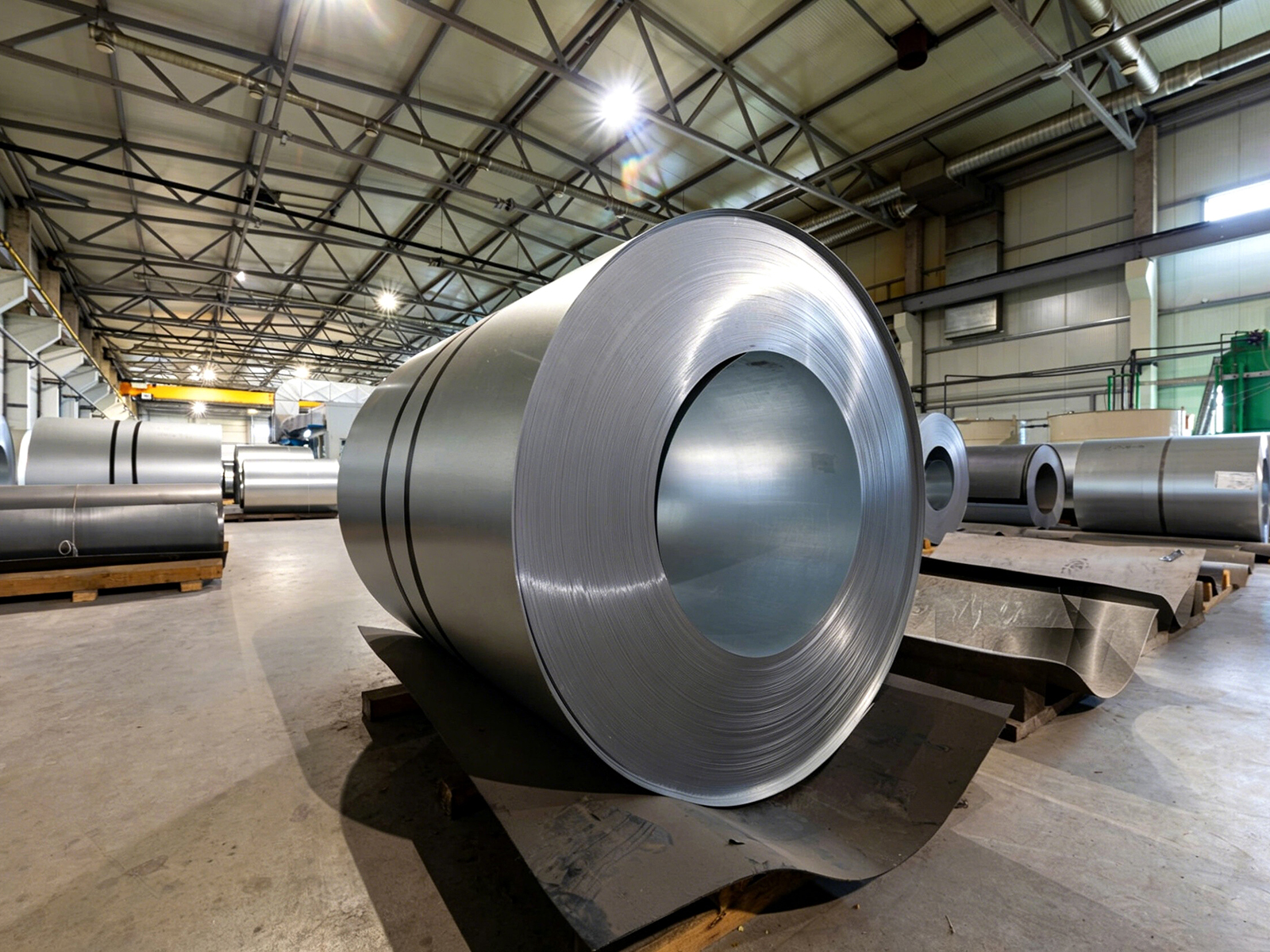
Among the industrial pure titanium family, Gr2 Titanium Foil has become a core material in chemical industry, marine engineering, new energy and other fields with its balanced strength, excellent corrosion resistance and good processing performance. As the most widely used grade of industrial pure titanium, Gr2 Titanium Foil has a purity of more than 99.2%, a tensile strength of ?345 MPa, an elongation of ?20%, and a density of only 4.51 g/cm?. This material significantly improves the structural strength while maintaining the excellent plasticity of Gr1, and is especially suitable for applications requiring medium strength and long-term corrosion resistance. Through 20-roll precision cold rolling and continuous annealing processes, the thickness can be stably controlled at 0.02~1.0 mm and the width can reach 670 mm, meeting the mass production needs of large-area thin-walled parts.
1. Material characteristics and technical parameters of Gr2 titanium foil
(1) Chemical composition and purity standards of Gr2 Titanium Foil
The chemical composition of Gr2 industrial pure titanium strictly controls the impurity content to ensure stable material performance: Ti: balance, iron ? 0.30%, oxygen ? 0.25%, nitrogen ? 0.03%, carbon ? 0.08%, hydrogen ? 0.015%. Compared with Gr1 Titanium Foil, Gr2 allows slightly higher oxygen and iron content. This slight difference brings significant strength improvement without affecting the ductility and welding performance of the material. This composition design enables Gr2 Titanium Foil to perform well in mild to moderate corrosive environments, especially the dense TiO? passivation film formed in seawater, salt spray and dilute acid and alkali media to provide lasting protection.
(2) Comparison of physical properties and mechanical strength
The physical parameters of Gr2 Titanium Foil determine its unique application value. The density is 4.51 g/cm?, which is only 60% of steel, significantly reducing the structural weight; the melting point is 1668 ? to ensure high temperature stability; the long-term temperature resistance is ?350 ?, and the short-term temperature can reach 540 ?. In terms of mechanical properties, the tensile strength ?345 MPa is about 20% higher than Gr1, the yield strength 275-410 MPa provides reliable structural support, and the elongation ?20% ensures the feasibility of complex forming processing. The resistivity of 0.56 ???cm makes it suitable for certain electrochemical applications.
(3) Comparison between international standard system and material grades
Gr2 Titanium Foil follows multiple international standard systems: Grade 2 (UNS R50400) in the American ASTM B265 standard, BT1-0 in Russian GOST 19807, Class 2 in Japanese JIS H4600:2012, Ti-P02 in European EN 2002-1:2005, 3.7035 in German DIN 17850, and British BS ISO Grade 2 of 7209:2023+A1:2024. This extensive standard certification ensures the interchangeability of materials in the global supply chain, meeting the compliance requirements and quality traceability needs of multinational projects.
2. Core manufacturing process and technological breakthroughs of Gr2 Titanium Foil
(1) 20-roll precision rolling technology enables stable production of ultra-thin and wide widths
Using a 750 mm twenty-high precision rolling mill, the maximum rolling force is 3500 KN, the rolling speed can reach 400 m/min, and the thickness tolerance can reach up to ? 0.001mm (for ultra-thin foil specifications). The unique structural design of the 20-roll mill effectively disperses rolling pressure and avoids wrinkles and thickness fluctuations in ultra-thin materials during processing. The stable rolling capacity with a maximum width of 670 mm breaks through the technical bottleneck of edge cracking and middle thinning in traditional processes where wide-width thin materials are prone to occur, and enables integrated supply for large-area application scenarios.
(2) Continuous annealing process ensures material performance uniformity
A continuous annealing production line controlled by 7-section electric heating is used. The annealing temperature is controlled at 700~800 ? (the maximum heating capacity of the equipment is 1100 ?). The temperature control accuracy is ?2 ?, under a vacuum or high-purity inert gas protective atmosphere… This process effectively eliminates the residual stress accumulated during the cold rolling process, restores the ductility of the material, and ensures uniform refinement of the microstructure. Compared with batch annealing, continuous annealing avoids performance fluctuations between material batches, keeping the tensile strength, yield strength and elongation of each roll of titanium foil highly consistent, meeting the strict requirements of precision processing and mass production.
(3) Ultrasonic cleaning and surface treatment technology improve cleanliness
Equipped with an ultrasonic cleaning production line with a maximum line speed of 30 m/min, the surface dyne value after cleaning reaches more than 40, effectively removing rolling oil stains and particulate pollution. The self-developed degreasing formula combined with the alkali cleaning process ensures that the surface cleanliness meets high standards for applications. The grinding line further optimizes surface uniformity and texture consistency, improving adhesion for subsequent coatings, laminations and welding. The high-precision leveling line runs at a speed of 150 m/min to improve strip flatness and reduce residual stress, ensuring dimensional stability during processing.
3. Core application scenarios of Gr2 Titanium Foil in the industrial field
(1) Application of linings and structural parts in chemical anti-corrosion equipment
Gr2 Titanium Foil is widely used as reactor lining, pipe lining and valve seal in chemical equipment. The TiO? passivation film formed on its surface shows better corrosion resistance than stainless steel in media such as hydrochloric acid, sulfuric acid, nitric acid, etc., especially in environments containing chlorine ions, pitting corrosion and stress corrosion cracking will not occur. Titanium foil with a thickness of 0.3~0.8 mm is combined with a carbon steel matrix through an explosive compounding or bonding process to form a titanium-steel composite plate, which not only ensures corrosion resistance but also significantly reduces costs. This application effectively extends the service life of equipment and reduces maintenance frequency and downtime losses.
(2) Selection of corrosion-resistant materials for seawater desalination and marine engineering
Evaporators, condensers and heat exchange tubes of seawater desalination units are typical applications of Gr2 Titanium Foil. The high concentration of chloride ions in seawater is highly corrosive to ordinary metals, while the corrosion rate of titanium in seawater is almost zero. Welded heat exchange tubes made of Gr2 titanium strips with a thickness of 0.5~1.0 mm have thin walls, high thermal conductivity, light weight and easy installation, and a service life of more than 30 years. Gr2 Titanium Foil is also widely used in the anti-corrosion layer of offshore platforms, ship ballast water tank linings and submarine pipeline protective layers, significantly reducing maintenance costs in the marine environment.
(3) Innovation in new energy batteries and electrolysis electrode materials
In the field of hydrogen energy production, the bipolar plates and current collectors of proton exchange membrane electrolyzers (PEM) place stringent requirements on the conductivity, corrosion resistance and lightweight of materials. It is developed and used as a current collector in special new batteries. Its non-magnetic characteristics avoid electromagnetic interference, high strength ensures structural integrity, and provides material support for the lightweight and high efficiency of new energy equipment.
4. Performance differences and material selection strategies between Gr2 Titanium Foil and Gr1 Titanium Foil
(1) Balanced selection of strength and ductility
Gr1 Titanium Foil has lower impurity content and better ductility, and is suitable for extreme deformation processes such as deep drawing and superplastic forming. The strength of Gr2 Titanium Foil is increased by about 40%, providing higher structural load-bearing capacity while maintaining good plasticity, and is suitable for thin-walled parts that require certain strength support. When selecting materials, you need to weigh the difficulty of forming and the strength requirements: Gr1 is preferred for extremely complex shapes, and Gr2 is more economical and reasonable for structural parts that need to bear loads.
(2) Comparison of practical applications of corrosion resistance
The two have equivalent corrosion resistance in most media, and both can form a stable TiO? passivation film. Gr2 Titanium Foil performs well in mild to moderate oxidizing acids, alkaline environments and seawater, and is suitable for chemical pipelines, heat exchangers and marine equipment. Gr1 Titanium Foil has more advantages in extremely pure media and precision instruments that require absolutely non-magnetic properties. In engineering practice, Gr2 Titanium Foil covers about 80% of industrial anti-corrosion applications with a higher cost performance, while Gr1 Titanium Foil focuses on high purity and extreme forming scenarios.
(3) Analysis of processing performance and welding applicability
Weld strength $\ge 95\%$ Base material (or higher) Compared with Gr1, Gr2 requires slightly stricter control of heat input during welding, but the difference between the two is not obvious in industrial applications. During stamping and bending processing, the springback amount of Gr2 is slightly larger than that of Gr1, so a compensation angle needs to be reserved in the mold design.
5. Technical capabilities and quality assurance of high-end Gr2 Titanium Foil production lines
(1) The scale advantage of an automated production line with an annual output of 3,000 tons
Baoji Baoji Titanium Valley Titanium Nickel Zirconium Material Processing Co., Ltd. invested US$36.2 million to build a high-end Gr2 Titanium Foil production line, which broke through seven key technical bottlenecks such as rolling plate shape control, ultra-thin material slitting, and batch performance consistency, and achieved stable mass production of ultra-thin wide-width titanium foil with a thickness of 0.02~1.0 mm and a maximum width of 670 mm. The annual production capacity of 3,000 tons ensures the stable delivery of large-volume orders. It is equipped with six core equipment: 20-roller precision rolling mill, ultrasonic cleaning line, continuous annealing line, high-precision leveling line, slitting line and polishing line, forming a full-process automated production capability from smelting and forging to finished product packaging.
(2) Precision control technology with thickness tolerance ?0.001 mm
Through the multi-point pressure sensing and real-time feedback system of the 20-roll mill, combined with tension leveling technology, the thickness tolerance is strictly controlled within ?0.001 mm. This micron-level precision control ensures the thickness uniformity of large-area thin materials and avoids stress concentration and service failure caused by local weak points. The high-precision slitting line is combined with a laser thickness gauge to achieve precise slitting with a width tolerance of ?0.1 mm, adapting to application scenarios that require extremely high dimensional consistency, such as electronic shielding and battery current collectors.
(3) Full-process quality inspection and certification system
Each roll of product is equipped with a complete material certificate, mechanical performance report and third-party testing certificate to meet the quality traceability requirements of high-standard industries such as aerospace and medical devices. Strict process control and terminal inspection ensure stable performance between batches and provide customers with reliable material guarantees.
in conclusion
Gr2 Titanium Foil has become the most cost-effective choice for industrial pure titanium applications due to its balanced strength, excellent corrosion resistance and good processing performance. Through advanced processes such as 20-roll precision rolling, continuous annealing and high-precision slitting, stable mass production of 0.02~1.0 mm ultra-thin wide-width materials is achieved. It is widely used in chemical anti-corrosion, marine engineering, new energy, precision electronics and other fields, providing reliable material support for high-end manufacturing.
FAQ
Q1: How to choose between Gr2 Titanium Foil and Gr1 Titanium Foil in practical applications?
The strength of Gr2 Titanium Foil is about 40% higher than that of Gr1, which is suitable for parts requiring medium structural load; Gr1 has better ductility and is suitable for extreme deformation and superplastic forming. The corrosion resistance of the two is equivalent, and Gr2 is more cost-effective and suitable for 80% of industrial anti-corrosion scenarios.
Q2: Can Gr2 Titanium Foil meet the long-term use in seawater environment?
Gr2 Titanium Foil hardly corrodes in seawater, and the TiO? passivation film exists stably on the surface. It is suitable for seawater desalination, ocean platforms and ship equipment. In practical applications, the service life of titanium foil heat exchange tubes with a thickness of 0.5~1.0 mm can reach more than 30 years, which is significantly better than stainless steel materials.
Q3: What are the minimum thickness and tolerance control capabilities of ultra-thin Gr2 Titanium Foil?
Adopting a 20-roll precision rolling process, the conventional thickness range is 0.02~1.0 mm, and ultra-thin specifications ?0.005 mm can be customized. The thickness tolerance is controlled at ?0.001 mm, and the width tolerance is ?0.1 mm. Together with continuous annealing and high-precision leveling, it ensures the dimensional consistency and flatness of large-area thin materials.
Get customized Gr2 Titanium Foil solution now
Baoji Baoji Titanium Valley Titanium Nickel Zirconium Material Processing Co., Ltd., as a professional Gr2 Titanium Foil manufacturer and supplier, has an annual production capacity of 3,000 tons and a complete quality system. We provide customized processing services with thicknesses of 0.03~1.0 mm and widths of 15~680 mm to meet your precision application needs. Contact us for technical specifications and quotations: sales@titaniumvalleys.com
References
China Nonferrous Metals Industry Association. Titanium and Titanium Alloy Materials Manual[M]. Beijing: Chemical Industry Press, 2010.
Xiao Lifeng, et al. Titanium alloy and its processing technology[M]. Beijing: National Defense Industry Press, 2016.
National Technical Committee for Standardization of Nonferrous Metals. Compilation of Titanium and Titanium Alloy Standards[M]. Beijing: China Standards Press, 2020.
Wang Guisheng, et al. Titanium and titanium alloys for chemical equipment [M]. Beijing: Chemical Industry Press, 2005.