
How Does Hot Rolling Determine the Performance and Quality of GR12 Titanium Wire?
- GR12 Titanium Wire
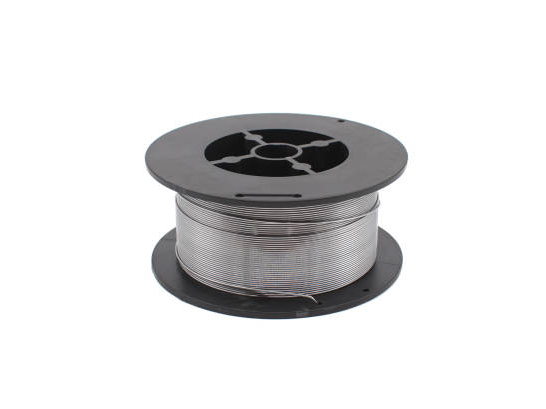
Hot rolling acts as a core production step for GR12 titanium wire. It directly shapes the inner metal structure and overall material performance. This nickel and molybdenum added alpha-type corrosion resistant titanium alloy relies on precise temperature control and deformation settings during hot rolling. The process refines grain size, spreads alloy elements evenly and optimizes internal texture.
The standard hot rolling temperature sits between 950 and 1150 ℃. This range keeps the alloy soft enough for forming and stops grains from growing too large. Hot rolling cuts work hardening far more than cold working. It stabilizes later wire drawing steps and balances the metal’s corrosion resistance and mechanical strength. For harsh working conditions such as chemical factories and offshore engineering, hot rolling quality decides whether GR12 titanium wire meets key technical standards. These standards cover pitting resistance, crevice corrosion resistance and high temperature stability.
1 How Does Hot Rolling Reshape the Microstructure of GR12 Titanium Wire
1.1 Dynamic Recrystallization Triggers Grain Refinement
Metal atoms move much faster inside GR12 titanium alloy within the hot rolling temperature range. This movement starts the dynamic recrystallization process. Evenly spread molybdenum and nickel strengthen the alloy. They pin dislocation movement and stop abnormal grain growth.
GR12 alloy needs 15 to 20 percent more energy to start recrystallization than commercial pure titanium TA2. Higher activation energy creates stronger resistance against grain expansion and widens the usable hot rolling temperature window. Identical rolling settings produce finer, uniform equiaxed grains in GR12.
Raw cast metal carries grains sized 200 to 300 μm. Hot rolling shrinks grain size down to 20 to 40 μm. This microstructure change raises the balance between tensile strength and stretch rate of the material.
1.2 Phase Structure Changes and Alloy Element Redistribution
Hot rolling pushes molybdenum, a beta stabilizing element, to spread uniformly inside the alpha metal base. It removes tiny element separation found in cast metal structures. Nickel and molybdenum stay dissolved evenly across the metal base and grain boundaries. This boosts electrochemical stability at grain borders and blocks corrosive liquid from seeping along grain lines.
X-ray diffraction tests show rolling texture weakens after hot rolling. The material loses large gaps in mechanical and corrosion performance across different directions. This improved phase structure helps the metal form stable passive oxide films during pickling and chloride rich environments.
1.3 Dislocation Density Control and Internal Stress Optimization
Hot rolling deformation creates large numbers of movable dislocations inside the metal. High heat speeds up dislocation climb and cross slip until a stable balance forms. Cold wire drawing leaves dense tangled dislocations. High temperature dynamic recovery during hot rolling forms subgrain structures instead. Hot rolled metal holds ordered cell-shaped or subgrain dislocation structures. Its residual tensile stress drops by over 75 percent.
Lower residual stress greatly lowers risks of stress corrosion cracks. This effect matters most under high temperature chloride conditions. Low internal stress stops cracks from appearing and spreading.
2 How Precise Hot Rolling Parameters Decide GR12 Titanium Wire Performance
2.1 Critical Effects of Initial Rolling Temperature Range
Initial Rolling Temperature Comparison Table
| Temperature Range (℃) | Microstructure Features | Performance Output | Process Compatibility |
|---|---|---|---|
| 900 ~ 950 | Partial beta phase remains, fine grains | Typical tensile strength 620 ~ 690 MPa, medium ductility | Needs extra rolling passes, high power consumption |
| 950 ~ 1050 | Alpha phase takes lead, uniform grains | Best balance of strength and ductility, top corrosion resistance | Optimal process window, stable finished quality |
| 1050 ~ 1150 | More beta phase appears, high risk of coarse grains | Excellent ductility but reduced tensile strength | Fit rough rolling with heavy single pass deformation |
| > 1150 | Abnormal oversized grains | Thick oxide layers, abnormal grain expansion, fully defective finished products | Not recommended for production |
Users select initial rolling temperatures based on raw cast bar microstructure and target finished performance. Too low temperature sharply raises deformation resistance. It overloads rolling machines and creates surface cracks. Too high temperature improves ductility but causes severe grain growth and thick surface oxide layers.
Modern production lines combine induction heating machines and holding furnaces. They control temperature fluctuation within ±5 ℃. All sections of each raw bar keep even temperature. This setup acts as a basic technical requirement for steady mass production.
2.2 Total Deformation Distribution and Inter-Pass Cooling Control
The total deformation rate of hot rolling usually falls between 70 and 85 percent. Operators limit single pass thickness reduction strictly to 15 to 25 percent. Excessive single pass deformation creates sharp local temperature rises. This makes microstructure and performance uneven across the wire cross section and triggers edge cracks and other surface flaws.
Factories use a descending deformation rule: large reduction for early rough rolling passes, medium reduction for middle passes and small reduction for final finishing passes. Rough rolling quickly breaks down raw cast structures. Finishing rolling locks grain size and improves surface quality.
Cooling speed between rolling passes carries equal importance. Cooling rates faster than 25 ℃ per second generate thermal stress cracks. Cooling rates slower than 8 ℃ per second let grains keep expanding. The ideal cooling range runs from 15 to 25 ℃ per second, and production lines normally hold cooling speeds between 20 and 30 ℃ per second.
2.3 Final Rolling Temperature Locks Final Microstructure and Performance
Final rolling temperature freezes the hot processed metal structure. It directly changes the difficulty level of later cold working and final wire performance. GR12 titanium wire works best with final rolling temperatures from 850 to 900 ℃. At this temperature, alpha phase fully recrystallizes without obvious grain expansion, and dislocation density stays low.
Final rolling temperatures above 950 ℃ over soften the metal. The wire surface turns soft, and stacking pressure during coiling creates surface indent marks. Final rolling temperatures below 800 ℃ leave heavy work hardening inside the wire. The wire breaks easily during later drawing steps.
Production lines install infrared temperature detectors and closed-loop adjustment systems. The system adjusts finishing mill speed and cooling water flow in real time. It keeps final rolling temperature error within ±8 ℃.
3 How Hot Rolling Boosts the Outstanding Corrosion Resistance of GR12 Titanium Wire
3.1 Microstructure Basis for Stable Passive Film Formation
Corrosion Resistance Comparison in Different Liquid Environments
| Corrosion Liquid Type | Corrosion Behavior of Pure Titanium TA2 | Corrosion Behavior of Hot Rolled GR12 | Performance Improvement Rate (Test Rules: Normal room temperature and pressure, static soaking) |
|---|---|---|---|
| Boiling 10% sulfuric acid | Medium corrosion rate (>0.5 mm per year) | Top corrosion resistance (<0.05 mm per year) | Over 10 times improvement |
| 35 ℃ seawater soaking | Minor risk of pitting | Zero visible corrosion | Fully blocks pitting |
| 6% ferric chloride solution | Severe crevice corrosion | Light surface discoloration | 8 times improvement |
| Saturated hydrogen sulfide solution | High sensitivity to stress corrosion | Full corrosion resistance | Sharply upgraded stress corrosion resistance |
Even spread molybdenum inside alpha phase during hot rolling builds passive films with stronger electrochemical stability. Molybdenum lifts the breakdown voltage of passive films. Nickel helps damaged passive films repair themselves. The two elements work together to form highly stable composite oxide films.
Hot rolled GR12 titanium wire raises passive film breakdown voltage by 150 to 200 mV compared with cold worked wire. Its re-passivation current density drops by about 40 percent. This data explains its strong pitting resistance in chloride rich liquids.
3.2 Grain Boundary Engineering Raises Local Corrosion Resistance
Dynamic recrystallization during hot rolling creates large volumes of low-angle grain boundaries. These boundaries hold orientation differences below 15 degrees and make up over 60 percent of all grain borders. Low-angle grain boundaries resist corrosion and crack spread far better. They serve as the main reason for improved local corrosion resistance in hot rolled wire.
Nickel gathers moderately along grain boundaries to form continuous anti-corrosion barriers. Fast cooled metal structures form disconnected nickel deposits instead. Electrochemical impedance tests record charge transfer resistance at 10⁵ Ω·cm² for hot rolled GR12 wire inside 3.5 percent sodium chloride liquid. This reading is two to three times higher than cold worked wire. The test proves optimized grain boundaries greatly lift overall corrosion resistance.
3.3 Residual Stress Removal Blocks Stress Corrosion Cracks
Dense dislocations and residual tensile stress from cold working act as the main drivers of stress corrosion cracks. Hot rolling uses high temperature plastic forming and dynamic recovery. It limits residual tensile stress between 30 and 60 MPa, while cold worked wire normally carries 200 to 300 MPa residual tensile stress. Hot rolling cuts residual tensile stress by more than 75 percent.
Accelerated corrosion tests simulate ocean splash zones. Hot rolled test samples show zero new cracks after 1000 hours of exposure. Cold worked samples with identical metal composition grow stress corrosion cracks after only 300 hours. This stress gap carries decisive meaning for high-stress service parts such as pressure-bearing chemical equipment and ocean mooring cables.
4 How Advanced Hot Rolling Technology Improves GR12 Titanium Wire Quality Stability
4.1 Technical Advantages of Continuous Short-Stress Rolling Lines
Traditional reciprocating rolling mills carry built-in defects. The front and tail ends of rolled bars hold uneven temperatures, and large temperature drops form between rolling passes. Modern continuous rolling lines adopt integrated heating, rough rolling, finishing rolling and coiling design. They greatly cut total processing time and raise microstructure uniformity.
Mill units place vertical rollers and flat rollers in alternating order. This setup delivers even deformation across three dimensions, and ovality tolerance stays within ±0.02 mm. Intermediate induction heating machines make up heat lost during rolling. They keep small temperature changes throughout production. Metal structure uniformity rises over 50 percent, and performance consistency between production batches improves sharply.
4.2 Intelligent Full-Range Quality Control
Modern GR12 titanium wire production lines connect dozens of sensor points. The sensors track key data including temperature, rolling pressure, mill speed and wire tension in real time. Prediction models built on digital twin technology spot temperature errors early. The system automatically adjusts heating power and rolling speed to form self-adaptive closed-loop control.
Online ultrasonic flaw detectors find internal metal defects. The machine marks defective wire sections and removes them automatically. All production data can be fully traced. Each wire coil carries a unique batch number. The system stores dozens of process records from original titanium ingot to finished wire. These records meet quality audit standards of high-end sectors such as aerospace.
4.3 Value of Long Coil Delivery for Downstream Manufacturers
Traditional segmented rolling limits the maximum length of single wire coils. Weld joints between segments become weak points with unstable performance. Continuous rolling combined with large-diameter coiling equipment supports long-coil supply of GR12 titanium wire and removes all middle weld joints.
Long coil supply brings major benefits to automatic welding production lines. It lowers coil replacement frequency and lifts welding efficiency. It also avoids weak corrosion resistance areas at weld seams. For mass production projects such as chemical heat exchanger tube welding and ocean cage manufacturing, long coil supply directly cuts production costs and raises output.
5 Matching Analysis of Service Scenarios for Hot Rolled and Cold Worked GR12 Titanium Wire
5.1 Core Logic to Pick Hot Rolled Wire for Heavy Corrosion Environments
Hot rolled GR12 titanium wire forms high-quality passive films and holds low residual stress. It becomes the top material choice for heavy corrosion working environments. Acid leaching equipment in hydrometallurgy faces high temperature sulfuric acid mixed with chloride ions. This liquid quickly attacks microcracks and high-energy grain boundaries inside cold worked wire. Hot rolled wire with uniform microstructure works steadily for over five years under these conditions.
Evaporator tubes inside seawater desalination devices often run above 90 ℃ and touch concentrated corrosive seawater. Hot rolled wire holds three to five times stronger crevice corrosion resistance than cold worked wire, and it greatly extends equipment maintenance cycles. Sulfur-rich gas pipelines for oil extraction run inside wet gas filled with hydrogen sulfide and carbon dioxide. This environment easily creates stress corrosion cracks. The low-stress feature of hot rolled wire acts as the core safety guarantee.
5.2 Balanced Performance Advantages Under Mixed Working Conditions
| Application Field | Working Condition Features | Hot Rolled Wire Compatibility | Typical Uses |
|---|---|---|---|
| Chemical Equipment | High temperature + heavy corrosion + bearing pressure | Perfect match, best overall performance | Anode hangers for chlor-alkali electrolytic cells, heating coils inside fluorochemical reactors |
| Offshore Engineering | Seawater contact + mechanical stress + fatigue load | Excellent match, long service life guarantee | Deep sea fish cage frames, mooring cables for ocean platforms, ship heat exchangers |
| Environmental Protection Devices | High temperature flue gas + wet desulfurization liquid | Good match, outstanding corrosion resistance | Spray layers of flue gas desulfurization towers, aeration tubes for sewage treatment |
| General Machinery | Medium tensile strength + corrosion resistance + stable service | Moderate match, needs extra cold drawing after rolling | Pipeline fasteners, standard mechanical parts |
Note: Users may add later cold working and stress relief annealing to hot rolled wire for higher dimensional precision.
Hot rolled GR12 titanium wire provides unique solutions for mixed working conditions with both corrosion and mechanical loads. Its tensile strength sits between 620 and 690 MPa to meet medium-high strength structural needs. Its elongation rate stays above 20 percent to support easy forming processes. Its top corrosion resistance removes the need for extra protective coatings. This multi-functional material property simplifies material selection rules and stock management work. It delivers strategic value to control overall project costs.
5.3 Coordinated Usage Model for Precision Machining Fields
Cold worked GR12 titanium wire gains advantages in dimensional accuracy and surface smoothness. Even so, hot rolled wire acts as an irreplaceable intermediate raw material. Precision medical tools such as spinal correction guide wires need ultra-thin diameters and mirror-grade surface finish. Factories follow a composite process route: hot rolled wire rod → multi-pass cold drawing → intermediate annealing → precision grinding. The uniform microstructure built during hot rolling decides the stability of later cold working and performance consistency of final finished goods.
High-end elastic parts include constant force springs and wave washers. Manufacturers take advantage of low residual stress inside hot rolled wire. They shape the wire via cold forming then run annealing treatment. This process produces finished parts with the best balance of elastic modulus and fatigue service life.
Conclusion
Hot rolling combines precise temperature field and deformation field control. It creates refined, uniform microstructure and optimizes internal stress status inside GR12 titanium wire. These changes lay the foundation for its excellent corrosion resistance and mechanical performance.
The use of advanced continuous rolling technology lifts finished quality stability and production efficiency to new levels. The material meets strict technical standards of high-end sectors including chemical processing, offshore engineering and aerospace.
Operators must fully understand performance gaps between hot rolled and cold worked GR12 titanium wire. They select the correct material type based on real working conditions. This choice acts as a key decision point to guarantee project success and long-term economic returns.
FAQ
1 Can manufacturers use hot rolled GR12 titanium wire directly for welding work?
Yes, users can apply direct welding. Hot rolled wire holds good welding performance. Its low residual stress stops crack growth inside welding heat affected zones. For critical pressure-bearing components, factories recommend low temperature stress relief annealing at 500 to 600 ℃ after welding. This step removes welding residual stress, lifts stress corrosion resistance of weld joints and keeps identical corrosion resistance between weld seams and base metal.
2 How to judge if GR12 titanium wire receives standard hot rolling treatment?
Fully standard hot rolled wire carries these features:
Metallographic structure forms uniform equiaxed grains (ASTM grain size grade 7 to 8). The wire surface holds even oxide color without clear scratch marks. Hardness reading ranges from HV 240 to HV 280. No rolling defects such as cracks, folded metal or deep scratches exist on the surface. Elongation rate stays above 20 percent.
Buyers may ask suppliers to provide heat treatment process files and metallographic test reports for full verification.
3 What differences sit between hot rolled GR12 titanium wire and fully annealed GR12 titanium wire?
Hot rolled wire: Shipped with air cooling after rolling. It keeps partial hot working stress and deformed microstructure. It carries relatively high tensile strength and medium ductility. Users can directly use it to build structural parts.
Fully annealed wire: Hot rolled raw wire receives heat holding then slow cooling treatment. Its metal structure completes full recrystallization, and all internal stress releases fully. It holds the best ductility and forming ability. It fits deep processing steps including multi-pass cold drawing and metal bending.
Pick a Professional GR12 Titanium Wire Manufacturer to Secure Project Success From the Start
Baoji Titanium Valley Titanium Nickel Zirconium Material Processing Co., Ltd. works as a professional maker and supplier of GR12 titanium wire. The company installs advanced Danieli hot rolling production lines imported from Italy. It offers fully customized wire sizes from φ0.1 mm to φ10.0 mm. Every production batch ships with complete material certificates and performance test reports.
For technical consultation or sample testing requests, send emails to sales@titaniumvalleys.com
References
1 Zhao Yongqing, Qu Henglei, Zhou Lian. Phase Transformation and Heat Treatment of Titanium Alloys [M]. Changsha: Central South University Press, 2012.
2 Li Xingwu, Ma Yingjie, Xin Shewei. Microstructure Control and Performance Optimization of Titanium Alloys [J]. Rare Metal Materials and Engineering, 2018, 47(3): 721-728.
3 Chen Yuyong, Song Ming, Zhang Xiaodan. Application and Corrosion Protection of Titanium Alloys in Offshore Engineering [J]. Chinese Journal of Corrosion and Protection, 2020, 40(5): 401-408.
4 China Nonferrous Metals Industry Association. Standard Collection of Titanium and Titanium Alloy Processed Products [M]. Beijing: China Standards Press, 2020.