
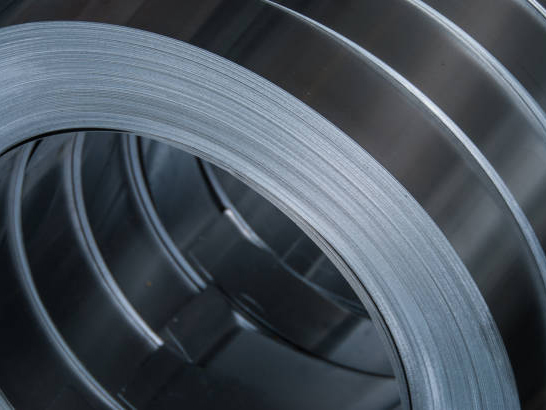
Nickel 200 foil delivers great electrical conductivity, stable chemical properties and easy processing. It works as ideal raw material for electrode production, electromagnetic shielding, battery connectors and other core parts.
Compare nickel 200 foil with titanium foil or copper foil. Nickel 200 foil stays more stable inside alkaline liquid and electrochemical working environments. It keeps reliable performance during high-frequency signal transmission, precise connection and corrosive conditions.
This commercially pure nickel material (Ni+Co ≥ 99.0%, meets ASTM B162 standards). Manufacturers use precise rolling to make ultra-thin foil between 0.03 mm and 0.1 mm. Its maximum width reaches 670 mm. It matches various demands from new energy batteries to tiny electronic components.
I. Core Material Features and Industry Standards of Nickel 200 Foil
1. Chemical Composition of High-Purity Commercially Pure Nickel
Nickel 200 foil belongs to industrial pure nickel. Its total nickel and cobalt content sits above 99.0%, matching UNS N02200 specifications.
Its chemical limits follow fixed rules: carbon ≤ 0.15%, iron ≤ 0.40%, manganese ≤ 0.35%, silicon ≤ 0.35%, sulfur ≤ 0.01%.
Strict component limits cut impurity interference under electrochemical conditions. It stops unstable chemical reactions and surface stains caused by foreign elements.
Nickel alloys carry extra alloy elements. Commercially pure nickel shows stronger resistance against alkaline liquid and reducing chemicals.
2. Physical Features, Electrical and Thermal Conductivity
Nickel 200 foil has a density of 8.89 g/cm³ and a melting point of 1455 °C. It conducts electricity and heat well. Its conductivity equals 14% IACS. Titanium hits 3.5% IACS, copper reaches 100% IACS.
Its conductivity far exceeds titanium foil and stainless steel foil. It fits current transmission paths and heat spread layers.
The annealed foil carries weak magnetism. It suits precise electronic devices sensitive to magnetic fields.
Its high melting point keeps its solid shape inside high-temperature equipment with vacuum or protective gas.
3. Mechanical Properties and Supply Temper Options
Annealed Nickel 200 foil (temper M) has minimum tensile strength of 345 MPa (typical range 380–480 MPa) and elongation above 30%. It supports stamping and bending operations smoothly.
Cold-worked Nickel 200 foil (temper Y) delivers tensile strength from 500 MPa to 600 MPa with elongation over 8%. It fits structural connectors and heavy-load electrodes that need higher mechanical strength.
Engineers pick different tempers based on production needs. Choose annealed temper for complex forming tasks. Choose cold-worked temper for structural parts that carry large electric current.
Performance Comparison Between Nickel 200 Foil and Other Metal Foils
| Performance Index | Nickel 200 Foil | Grade 2 Titanium Foil | Copper Foil | 304 Stainless Steel Foil |
|---|---|---|---|---|
| Density (g/cm³) | 8.89 | 4.51 | 8.96 | 7.93 |
| Electrical Conductivity (%IACS) | ≈14 | ≈3.5 | 100 | ≈2.5 |
| Alkali Corrosion Resistance | Excellent | Good | Poor | Moderate |
| Formability (Annealed State) | Outstanding | Good | Top-tier | Good |
| High-Temperature Oxidation Resistance (300°C) | Good | Excellent | Moderate | Good |
II. Typical Application Scenarios in Electrical and Electronic Industries
1. Core Functions Inside New Energy Battery Systems
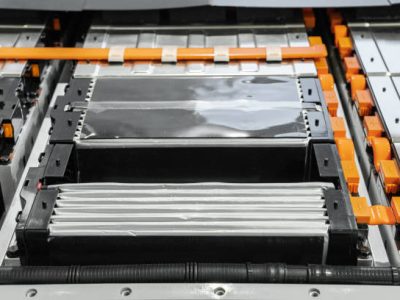
Manufacturers widely use Nickel 200 foil to make battery tabs, connecting strips and current collector substrates for Ni-MH batteries, alkaline fuel cells and special lithium batteries.
Its strong conductivity lowers ohmic loss on current channels and lifts battery charge and discharge efficiency.
Alkaline electrolyte environments test metal foils heavily. Nickel 200 foil resists corrosion much better than copper foil and aluminum foil. It maintains stable surfaces after thousands of electrochemical cycles without passivation or pitting.
Ultra-thin sizes (0.03–0.1 mm) and clean surfaces guarantee stable welding joints and steady electrochemical interfaces. They slow battery internal resistance growth and capacity decay.
2. Electromagnetic Shielding and Precision Connector Applications
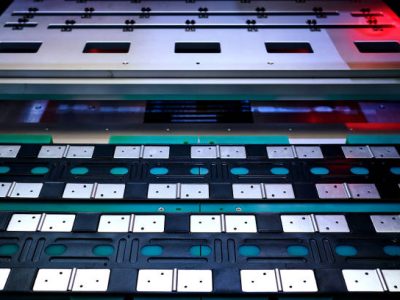
High-frequency electronic devices and precision sensors easily suffer electromagnetic interference (EMI). Nickel 200 foil owns good conductivity and weldability, so factories use it for shielding layers and ground conductors.
Copper foil oxidizes quickly under damp air. Nickel foil forms thin anti-oxidation films and avoids insulating oxide layers that weaken shielding effects.
Its great ductility supports automatic welding processes, including laser welding, spot welding and ultrasonic welding. It fits mass production of micro connectors and flexible circuit boards.
Engineers select thickness from 0.05 mm to 0.3 mm based on target shielding frequency and limited installation space.
3. Electrode Materials for Electrolysis and Electroplating Industries
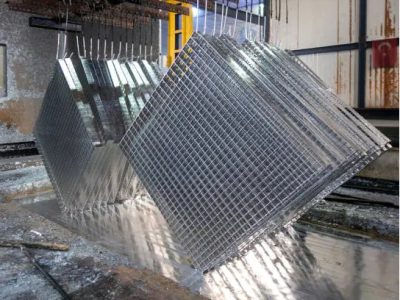
Workers apply Nickel 200 foil as cathode substrates in alkaline water electrolysis hydrogen production, chlor-alkali electrolytic tanks and electroplating equipment. Titanium substrates coated with precious metals act as anodes in chlor-alkali production.
Nickel 200 foil resists sodium hydroxide and potassium hydroxide solutions. It lets electrodes run steadily for years. It prevents electrolyte pollution and falling current efficiency caused by dissolved substrate metal.
Titanium electrodes carry higher overpotential under some low-voltage electrolysis conditions. Pure nickel electrodes cut overpotential and improve energy conversion rates.
Ultra-thin nickel foil also works as carriers for composite electrodes. Manufacturers coat catalytic layers on nickel foil to produce functional electrode products.
III. Manufacturing Technology Breakthroughs for Ultra-Thin Wide-Width Nickel 200 Foil
1. Multi-Pass Precision Rolling Process
Producing 0.03–0.8 mm ultra-thin nickel foil brings challenges like work hardening, flatness control and thickness error limits.
Factories deploy 20-high precision rolling mills, combined with multi-pass cold rolling and intermediate annealing. This method controls thickness tolerance within ±0.002 mm.
Workers test metal texture and hardness after each rolling pass. Precise adjustment of annealing temperature and holding time removes processing stress and restores metal ductility.
This gradual rolling method stops edge cracks and surface defects from heavy single-pass compression. It enables stable mass production of foil up to 670 mm wide.
2. Surface Cleaning and Continuous Annealing Technology
Electrical and electronic applications demand extremely clean foil surfaces. Residual rolling oil, oxide layers or tiny particles ruin welding quality and conductivity.
Ultrasonic cleaning and alkaline degreasing stabilize surface dyne value at 44 mN/m. This value supports strong coating adhesion and full welding wetting in later steps.
Continuous annealing furnaces fill chambers with argon protective gas. Accurate temperature control and atmosphere management stop secondary oxidation during heating. The finished foil shows uniform surface color and consistent grain structure.
3. High-Precision Slitting and Flatness Control
Ultra-thin nickel foil easily creates burrs, wavy edges and width errors during slitting.
Full-automatic slitting lines with automatic deviation correction systems produce burr-free cuts and keep width tolerance within ±0.5 mm.
Leveling machines and tension systems work together to remove warping and curling caused by residual stress.
Automatic production lines integrate online thickness gauges, surface inspection tools and data tracking platforms. Every foil roll holds consistent dimensions and full quality traceability.
Key Production Parameters of Nickel 200 Foil
| Production Step | Key Parameters | Quality Target |
|---|---|---|
| Precision Rolling | 20-high rolling mill, thickness tolerance ±0.002 mm | Thickness tolerance ±0.002 mm |
| Annealing Treatment | Continuous argon annealing, temperature control ±2°C | Uniform grain, no surface oxidation |
| Surface Cleaning | Ultrasonic washing + alkaline degreasing, dyne value 44 mN/m | Clean surface with zero residues |
| Precision Slitting | Automatic deviation correction, width tolerance ±0.5 mm | Burr-free, straight cutting edges |
IV. Solve Core Pain Points of Electrical and Electronic Industries
1. Handle Corrosion Risks from Strong Alkali and Electrochemical Environments
Traditional copper or aluminum conductors corrode easily inside alkaline electrolyte, salt spray and electrolytic reactors. Corrosion brings larger resistance, broken connections and contaminated reaction liquid.
Nickel 200 foil forms dense passive films in sodium hydroxide and potassium hydroxide liquids. These films block further damage from corrosive agents.
It maintains steady electrode potential and low metal dissolving speed under repeated electrochemical cycles. It cuts maintenance frequency and part replacement costs for long-running equipment.
2. Meet Strict Cleanliness Standards for High-Purity Applications
Semiconductor production, medical devices and precision analytical instruments set strict rules for material purity and surface cleanliness. Released metal ions or surface dirt directly cause product failure.
Nickel 200 foil uses high-purity raw materials (Ni+Co ≥ 99.0%) and fully clean production flows. It lowers risks of heavy metal leakage, organic residues and particle pollution to the minimum.
Uniform grain structures after annealing avoid grain boundary segregation and impurity precipitates. The material meets cleanliness standards for electronic-grade metals.
3. Improve Stability Under High-Temperature and Vacuum Conditions
Vacuum coating machines, electron beam heating systems and high-temperature sensors need materials to keep stable performance under heat and low pressure.
Nickel 200 foil has a high melting point (1455 °C) and low vapor pressure. It resists obvious metal evaporation and shape deformation at high temperatures inside vacuum or reducing gas environments.
Its strong oxidation resistance limits oxide scale formation under heat. It keeps continuous conductive paths and stable heat transfer efficiency.
Note: Do not use this foil long-term in open air above 315°C. Choose Nickel 201 or work under protective gas for higher temperature working conditions.
V. Custom Processing Capacity and Supply Chain Advantages
1. Flexible Size Customization and Multiple Surface Treatment Choices
Standard Nickel 200 foil thickness ranges from 0.03 mm to 0.8 mm, with width from 350 mm to 670 mm. Factories produce extra-thin foil between 0.01 mm and 0.03 mm according to customer orders.
Customers pick surface finishes including bright finish, acid-washed finish and matte finish for different appearance and functional demands.
Adjust annealing cycles and surface treatment parameters to precisely control foil hardness, surface roughness and surface tension. The treated foil matches laser welding, diffusion welding or conductive adhesive bonding processes.
2. Full Compliance with International Standards and Quality Certifications
Nickel 200 foil production strictly follows international standards such as ASTM B162. Every shipment includes complete material test reports and third-party inspection certificates.
Each production batch passes chemical composition analysis, mechanical performance testing, surface quality checks and dimensional accuracy measurement. All test data prove the foil meets design performance requirements.
The full quality tracking system records all data from raw material melting to finished product delivery. It supports customer quality audit work.
Typical Applications and Size Selection Guide for Nickel 200 Foil
| Application Field | Recommended Thickness (mm) | Suggested Temper | Key Performance Requirements |
|---|---|---|---|
| Battery Tabs & Connecting Strips | 0.05–0.15 | Annealed (M) | High conductivity, easy welding |
| Electromagnetic Shielding Layers | 0.03–0.10 | Annealed (M) | Strong shielding effect, simple forming |
| Electrolytic Cathode Substrates | 0.10–0.30 | Annealed (M) | Alkali corrosion resistance, solid mechanical strength |
| Precision Connectors | 0.05–0.20 | Annealed (M) | Accurate dimensions, ultra-clean surface |
| Heating Elements (≤315°C) | 0.20–0.50 | Annealed (M) | High-temperature oxidation resistance, uniform heat conduction |
Conclusion
Nickel 200 foil combines reliable electrical conductivity, outstanding alkali corrosion resistance and flexible processing performance. It acts as an essential metal material across electrical and electronic manufacturing.
Engineers apply it for efficient battery connections, electromagnetic shielding of precision electronics, stable cathodes in alkaline electrolytic tanks and durable parts inside high-temperature vacuum equipment. Nickel 200 foil delivers outstanding performance value across diverse industrial scenes.
Clean energy, precision manufacturing and electronic information industries keep expanding. Market demand for high-performance nickel foil will keep rising steadily.
FAQ
1. What conductivity differences exist between Nickel 200 foil and copper foil?
Copper foil reaches 100% IACS conductivity, higher than Nickel 200 foil at roughly 14% IACS. However, nickel foil shows far stronger corrosion resistance inside alkaline liquid and electrochemical environments.
Pick Nickel 200 foil for projects that require both conductivity and corrosion resistance, such as alkaline battery connectors. It avoids rising resistance and broken connections caused by copper foil corrosion.
2. How to choose between annealed temper and cold-worked temper Nickel 200 foil?
Annealed nickel foil holds elongation above 30%. It fits production tasks that require stamping, bending and other complex forming operations.
Cold-worked nickel foil has higher tensile strength (500–600 MPa). It works for structural connectors that carry heavy electric current loads.
Match temper selection to forming difficulty and mechanical strength demands. This balance optimizes material performance and processing costs.
3. How to select foil thickness for battery production applications?
Manufacturers normally pick 0.05–0.15 mm foil for battery tabs and connecting strips. This thickness balances conductive performance and welding process needs.
Choose ultra-thin sizes between 0.03 mm and 0.10 mm for current collectors to cut overall battery weight and volume.
Final thickness selection relies on combined factors: current density, welding method and full battery structural design.
Search for Trusted Nickel 200 Foil Manufacturers and Suppliers?
Baoji Titanium Valley Titanium Nickel Zirconium Material Processing Co., Ltd. operates as a professional nickel foil producer. The factory owns advanced 20-high precision rolling equipment and maintains stable annual output of 3,000 tons. It supplies high-precision Nickel 200 foil with thickness between 0.03 mm and 0.8 mm.
We accept custom size orders and customized surface treatments. All products fully comply with ASTM B162 standards.
Contact our team to get technical support and official quotations: sales@titaniumvalleys.com
References
- ASTM International. ASTM B162-20: Standard Specification for Nickel Plate, Sheet, and Strip[S]. West Conshohocken: ASTM International, 2020.
- Compilation of Standards for Nickel and Nickel Alloy Wrought Products[M]. Beijing: China Standards Press, 2020.
- Wang Cheng, Zhang Jun. Research on Applications of Pure Nickel Foil in Alkaline Water Electrolysis for Hydrogen Production[J]. Nonferrous Metals Engineering, 2021, 11(5): 52-58.