
How to Choose TB13 Titanium Alloy Bars? Five Core Dimensions from Material Composition to Suppliers
- TB13 Titanium Alloy Bars
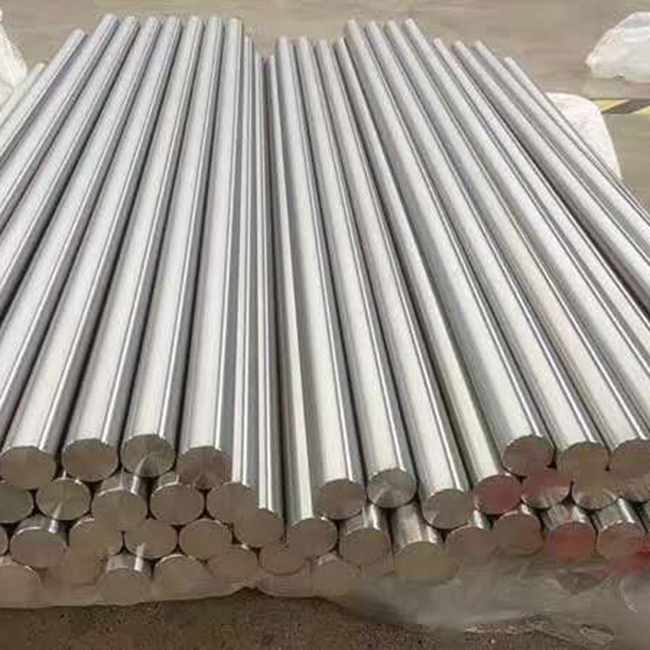
Buyers check five core factors to pick high-quality TB13 titanium alloy bars: compliant chemical composition, stable manufacturing processes, surface quality and dimensional accuracy, mechanical performance indicators, and supplier qualifications. TB13 acts as a near-beta titanium alloy. Its superelasticity and cold working ability fully rely on precise control of aluminum and vanadium ratios and reasonable heat treatment schedules. Qualified bars hold strict aluminum content between 3.0% and 4.5%, and vanadium content from 20.0% to 23.0%. Factories produce these bars through vacuum arc remelting (VAR) and precision cold drawing. These steps create fine uniform grains, low residual stress and smooth surface finish. Buyers also confirm suppliers carry full quality traceability records and global certifications. These documents matter greatly for high-end fields such as aerospace medical devices and precision electronics.
1. Grasp Material Properties and Industry Standards of TB13 Titanium Alloy Bars
1.1 Chemical Composition Rules for TB13 Titanium Alloy Bars
TB13 titanium alloy bars (Ti-4Al-22V) belong to metastable beta titanium alloys. Accurate chemical composition directly decides its superelastic performance. The standard composition range follows these rules. Titanium forms the base matrix. Aluminum ranges from 3.0% to 4.5% as an alpha stabilizer to boost material strength. Vanadium covers 20.0% to 23.0% as a beta stabilizer to deliver outstanding ductility. Factories enforce tight limits on impurity elements: iron ≤ 0.20%, carbon ≤ 0.10%, nitrogen ≤ 0.05%, hydrogen ≤ 0.015%, oxygen ≤ 0.20%. Hydrogen levels over 0.015% raise clear risks of hydrogen embrittlement, and this flaw ruins the service life of products like eyeglass frames. Buyers ask suppliers to provide hydrogen content test reports before placing orders.
1.2 Key Value of Complying with Standard YS/T 1077
Chinese aerospace material standard YS/T 1077 lays out clear technical requirements, test methods and delivery states for TB13 titanium alloy. This standard requires bars to ship after solution treatment (State M). Solution-treated bars carry tensile strength ≥ 900 MPa, yield strength ≥ 800 MPa, elongation ≥ 10%. Buyers request suppliers to issue Material Test Certificates (MTC) that meet this standard. Each certificate includes heat batch numbers, spectrum analysis records for chemical makeup and full mechanical test data. These files guarantee full material traceability.
1.3 Decisive Impact of Beta Phase Microstructure on Material Performance
TB13 titanium alloy bars maintain single beta phase structures at room temperature. This body-centered cubic crystal structure delivers a low elastic modulus near 60 GPa and superelastic strain up to 8%. Microscope checks show qualified bars hold uniform equiaxed beta grains with grain size grades 7 to 9. No obvious texture or banded structures appear inside. This special microstructure lets the material bear cold deformation up to 80% without cracks. Common alpha-beta titanium alloys cannot match this feature.
| Performance Index | Advantages of TB13 Titanium Alloy Bars | Comparison with Regular Titanium Alloys |
|---|---|---|
| Elastic Modulus | 60 GPa | 110 GPa |
| Superelastic Strain | Up to 8% | Usually below 2% |
| Max Cold Deformation Rate | 80% | Generally below 40% |
| Density | 4.65 g/cm³ | 4.51 g/cm³ |
2. Evaluate Production Processes and Manufacturing Capacity
2.1 Process Advantages of Vacuum Arc Remelting (VAR)
All premium TB13 titanium alloy bars use vacuum arc remelting. This process remelts metal electrodes via electric arcs inside vacuum chambers. It fully removes gas impurities such as hydrogen, nitrogen and oxygen, and keeps oxygen content below 0.15%. Compared with ordinary vacuum induction melting, VAR balances vanadium distribution across ingots and cuts segregation. The whole ingot carries consistent chemical composition. Buyers check whether suppliers own VAR furnaces and matching electrode production lines. This equipment forms the foundation of stable mass supply.
2.2 Critical Control Points of Hot Forging and Rolling
Forging and rolling processes hold deformation temperatures 50–100 °C above the beta transformation point (roughly 830 °C), which creates a working range of 880–930 °C. Excessively high temperatures expand grain sizes and weaken fatigue resistance. Temperatures that sit too low trigger processing cracks. Reliable manufacturers adopt multi-fire forging. Each forging pass controls deformation between 50% and 60%. They add intermediate annealing at 860 °C to eliminate internal stress. Advanced rolling lines produce full-size bars from φ5 mm to φ100 mm through continuous rolling, and hold diameter tolerances within ±0.05 mm.
2.3 Solution Treatment and Age Hardening Schedules
TB13 titanium alloy bars ship in solution-treated state (State M) as standard. Workers hold the alloy at 780–820 °C for 30–60 minutes then perform water quenching. This treatment forms uniform single beta microstructures. State M delivers the best cold forming ability and superelasticity, perfect for eyeglass frames and other bent elastic parts. Users who need higher strength add aging treatment. The process keeps the alloy at 480–520 °C for 4–8 hours. Tiny alpha phases separate out and lift tensile strength above 1200 MPa. Buyers clarify required heat treatment states based on actual applications to avoid mismatched material performance.
| Heat Treatment State | Process Parameters | Typical Mechanical Performance | Suitable Applications |
|---|---|---|---|
| State M (Solution Treatment) | 800 °C / 30 min / Water Quench | Tensile strength 900 MPa, elongation 15% | Eyeglass frames, elastic components |
| State MA (Aging Treatment) | State M plus 500 °C / 6 h | Tensile strength 1200 MPa, elongation 8% | Aerospace structural parts |
3. Inspect Surface Quality and Dimensional Accuracy
3.1 Inspection Methods for Complete Surface Condition
Bar surfaces cannot carry dangerous defects including cracks, laps and heavy scale layers. Buyers demand suppliers to provide 100% eddy current or ultrasonic non-destructive testing (NDT) reports. Testing sensitivity matches artificial defect equivalents of φ0.5 mm following relevant inspection standards. High-end projects add fluorescent penetrant testing (PT) to ensure all open surface defects stay smaller than 0.2 mm. Bars for medical devices hold surface roughness Ra ≤ 0.8 μm. Factories achieve this standard through precision turning and polishing instead of simple acid pickling.
3.2 Rules for Dimensional Tolerance and Straightness
Standard ASTM B348 sets two tolerance grades for TB13 titanium alloy bar diameters: regular grade (h9–h11) and precision grade (h7–h8). Precision electronic connectors select h7 tolerance. Take φ10 mm bars as an example. Their diameter deviation ranges from +0.015 mm to 0 mm. Straightness strongly affects finished product yield for long bars. Trusted suppliers use straightening machines to limit straightness to ≤ 2 mm per meter. ASTM B348 caps overall bend at 2 mm multiplied by bar length in meters. Ovality cannot exceed half of the full diameter tolerance range.
3.3 Verification of Uniform Internal Microstructure
Surface inspections alone cannot guarantee material quality. Uniform internal microstructure carries equal importance. Ultrasonic C-scan checks spot internal flaws such as porosity and white spots. Qualified materials hold attenuation coefficients below 3 dB/cm. Lab metallurgy tests measure microhardness differences between bar center and outer edge on cross-section samples. The hardness gap stays within 20 HV, and beta grain size differences cover less than one grade. These indicators reflect the quality control level of melting and forging steps, and directly decide material fatigue life and reliability.
4. Verify Mechanical Performance and Functional Features
4.1 Tensile Property and Superelasticity Tests
All standard tensile tests run at room temperature. Solution-treated TB13 titanium alloy bars meet these standards: tensile strength ≥ 900 MPa, yield strength ≥ 800 MPa, elongation ≥ 10%, reduction of area ≥ 30%. Superelasticity tests carry equal weight. Testers stretch samples to 4% strain then release the load. Residual strain must sit below 0.5%, and strain recovery rates exceed 85%. This shape memory property lets eyeglass frames bend repeatedly without permanent deformation. Buyers ask suppliers to provide cyclic loading curves. The curves prove performance drops below 10% after 100 bending cycles.
4.2 Fatigue Performance and Service Life Evaluation
Elastic components under alternating loads rely on stable fatigue resistance. Standard test data shows TB13 titanium alloy bars complete over 10⁷ load cycles under ±300 MPa stress amplitude and 10 Hz frequency. Its low elastic modulus cuts stress concentration, and the beta phase structure slows crack expansion. Rotating bending fatigue tests show valid fractures form inside gauge sections instead of clamping areas. This result confirms zero internal metallurgical defects inside the sample. Manufacturers select shot-peened bars for long-service precision instrument spring plates. Shot peening raises fatigue strength by 15–20%.
4.3 Corrosion Resistance and Biocompatibility
TB13 titanium alloy bars soak in 3.5% sodium chloride solution for 720 hours. Their corrosion rate reads below 0.005 mm per year, far better than stainless steel’s 0.1 mm per year rate. A natural TiO₂ passivation film with 5–10 nm thickness covers the material surface and remains stable within pH 2 to pH 12. Medical-grade bars pass the full set of ISO 10993 biocompatibility tests, covering cytotoxicity, skin sensitization and implant tissue response. Factories limit nickel content below 0.01% inside TB13 bars. This strict rule removes risks of nickel allergy, so the material fits long-term skin contact products such as eyeglass frames and wearable electronics.
| Test Item | Performance of TB13 Titanium Alloy Bars | Relevant Test Standard | Practical Application Value |
|---|---|---|---|
| Salt Spray Corrosion (720 h) | Mass loss < 0.5 mg/cm² | ISO 9227 | Long service life in marine environments |
| Sweat Corrosion (168 h) | No discoloration, no rust spots | ISO 3160 | Stable performance for long-time eyeglass wear |
| Cytotoxicity Test | Grade 0 (zero toxicity) | ISO 10993-5 | Safety guarantee for medical device parts |
5. Check Supplier Qualifications and Service Capacity
5.1 Quality Management System Certifications
Qualified suppliers of TB13 titanium alloy bars hold ISO 9001 quality management certification and AS9100 aerospace quality system certification. Suppliers targeting medical markets add ISO 13485 certification. Buyers also check complete quality traceability systems. Every production batch carries a unique tracking code covering raw material melting, forging, heat treatment and finished product inspection. The code links back to exact heat numbers and production dates. Full-process data recording and real-time quality monitoring create stable performance across different batches.
5.2 Technical Support and Custom Manufacturing Services
Reliable suppliers deliver technical support including material selection guides and process optimization plans. For eyewear manufacturers, they supply bars treated at different solution temperatures to balance strength and machinability. For medical device clients, they offer customized surface polishing and passivation treatment. Buyers check whether suppliers produce all sizes from φ0.5 mm to φ100 mm. Full-size production meets diverse demands ranging from micro springs to heavy structural parts. Large annual output guarantees on-time delivery for bulk orders.
5.3 Delivery Lead Time and Stock Support
TB13 titanium alloy bars pass multiple production stages from raw material to finished goods: VAR melting, multi-fire forging and heat treatment. Standard custom orders take 45–60 days to finish. Powerful manufacturers hold stock of common-size finished bars, and cut lead times down to 7–15 days for standard sizes. Buyers ask suppliers whether they operate Vendor Managed Inventory (VMI) systems and provide Just-in-Time (JIT) delivery aligned with client production schedules. Small trial orders start at 10 kg with cutting services available. This option lowers development risks for new products.
Conclusion
Selecting high-quality TB13 titanium alloy bars requires systematic assessment across all links. Buyers analyze material fundamentals, manufacturing workflows, quality inspection standards, performance verification records and overall supplier capacity. Key evaluation points include precise chemical composition control, VAR melting and precision forming technology, strict non-destructive testing, validated superelasticity and fatigue performance, plus supplier certification and full service systems. This full set of checks guarantees purchased bars satisfy strict requirements of aerospace medical devices and precision electronics, and deliver stable performance for end products.
FAQ
Q1: What application differences exist between TB13 titanium bars and Grade 5 titanium bars?
TB13 belongs to near-beta titanium alloy. It carries strong superelasticity and excellent cold forming ability with maximum 80% deformation rate. It fits eyeglass frames and elastic parts that need repeated bending. Grade 5 counts as alpha-beta alloy with higher tensile strength but poor ductility, and factories mainly use it for aerospace structural components. TB13 only has a 60 GPa elastic modulus, so finished eyeglasses deliver far better wearing comfort than Grade 5 alternatives.
Q2: How to confirm TB13 titanium alloy bars meet superelasticity standards?
A simple bending test works for quick checks. Bend the bar to a 90-degree angle then release the force. Qualified samples rebound to angles above 80 degrees without permanent deformation. Professional lab tests rely on stress-strain curve measurements. Testers stretch samples to 4% strain then remove loads; residual strain below 0.5% passes the test. Ask suppliers to provide cyclic loading test reports for the most reliable verification.
Q3: What extra certifications do TB13 titanium bars for medical devices need?
Apart from standard Material Test Certificates, suppliers deliver full ISO 10993 biocompatibility test reports covering cytotoxicity and skin sensitization, nickel content inspection certificates (nickel < 0.01%), plus surface roughness and surface cleanliness inspection records. Products for implant applications also carry supporting documents for FDA or CE-MDR registration. Buyers prioritize suppliers with ISO 13485 certification.
Searching for a Trusted TB13 Titanium Alloy Bar Manufacturer?
Baoji Titanium Valley Titanium, Nickel & Zirconium Material Processing Co., Ltd. acts as a professional manufacturer and supplier of TB13 titanium alloy bars. We run Italian Danieli rolling production lines with annual output of 20,000 tons and maintain a complete full-process quality control system. We accept custom orders for all bar sizes from φ0.5 mm to φ100 mm, all products follow YS/T 1077 standards and meet demand from aerospace, medical device and precision electronics industries. Contact our team to get technical support and formal quotations: sales@titaniumvalleys.com.
References
- Zhao Yongqing, Zeng Weidong, Zhou Wei. Phase Transformation and Heat Treatment of Titanium Alloys[M]. Beijing: National Defense Industry Press, 2020.
- Li Miaoquan, Wang Kelu. Precision Plastic Forming Technology of Titanium and Titanium Alloys[M]. Beijing: Science Press, 2019.
- Editorial Committee of China Aerospace Materials Handbook. China Aerospace Materials Handbook (Volume 4): Titanium Alloys & Copper Alloys (2nd Edition)[M]. Beijing: China Standards Press, 2021.
- Chen Jun, Zhang Xiyan. Biocompatibility and Surface Modification Technology of Medical Titanium Alloys[M]. Beijing: Chemical Industry Press, 2018.