
How to Select Corrosion-Resistant Zr702 Zirconium Foil for Chemical Reactors?
- Zr702 foil
Selecting Zr702 zirconium foil for chemical reactors requires comprehensive evaluation of five core dimensions: corrosive service environment, thickness tolerance accuracy, surface quality, supply stability, and cost efficiency. In highly corrosive media such as hydrochloric acid and dilute sulfuric acid, Zr702 delivers outstanding corrosion resistance due to its high purity (Zr+Hf ≥ 99.2%, complying with ASTM B551), outperforming titanium and stainless steel by a significant margin. Key selection criteria include chemical composition of the material, capacity to maintain tight thickness tolerances (±0.005 mm), stable annealed mechanical properties, surface cleanliness, and the supplier’s ability to guarantee consistent batch-to-batch performance. Proper material selection extends the service life of reactor sealing components by 3 to 5 years compared with titanium alternatives, drastically reducing unplanned downtime for maintenance while improving overall system safety and economic benefits.
1. Understanding Core Performance Requirements of Foil for Chemical Reactors
1.1 Material Stability Challenges in Severe Corrosive Environments
Chemical reactors operate continuously in complex media including high-concentration hydrochloric acid, sulfuric acid mixtures, and organic acids, with operating temperatures ranging from ambient to 300 °C. Conventional titanium suffers corrosion rates of 0.5–1.0 mm per year in non-oxidizing acids such as hydrochloric acid and dilute sulfuric acid, leading to rapid component failure. Stainless steel is prone to severe pitting and crevice corrosion, with localized degradation likely to occur at chloride ion concentrations exceeding 100 ppm. Zr702 zirconium foil forms a unique passivation film that limits annual corrosion rates to below 0.1 mm even in 37% hydrochloric acid environments (tested per ASTM G48). This exceptional stability establishes Zr702 as the preferred material for gaskets and lining structures in reactors handling strong acids.
1.2 Strict Thickness Tolerance Standards for Sealing Assemblies
Flange sealing and diaphragm isolation structures within reactors demand micrometer-level thickness uniformity for foil materials. For gauges ranging from 0.02 mm to 0.8 mm, maintaining a tolerance of ±0.005 mm represents an industry-standard achievable production capability, which directly determines sealing integrity. Zr702 zirconium foil manufactured via 20-high cold rolling, combined with multi-pass cold reduction and intermediate annealing, delivers consistent thickness uniformity across widths of 350 mm to 670 mm, eliminating localized thinning that causes stress concentration and premature failure. While advanced manufacturers can consistently hold ±0.005 mm tolerances, ±0.001 mm precision is limited to laboratory-grade experimental materials.
1.3 Critical Impact of Surface Cleanliness on High-Purity Manufacturing Processes
For high-purity applications in pharmaceutical and semiconductor chemical production, residual oxides and oil contaminants on metal surfaces can compromise product purity. Zr702 zirconium foil subjected to ultrasonic cleaning and alkaline washing achieves a stable surface energy of 44 mN/m, balancing excellent formability with compliance with stringent cleanroom standards. Vacuum or inert atmosphere annealing suppresses surface oxidation to eliminate discoloration and microdefects, ensuring consistent quality across production batches.
2. Zr702 Zirconium Foil Material Assessment and Standard Compliance Verification
2.1 Decisive Influence of Chemical Composition on Corrosion Resistance
Table 1 Chemical Composition Limits and Performance Impacts of Zr702 Zirconium Foil
| Element | Specified Content Limit | Performance Impact |
|---|---|---|
| Zr + Hf | ≥ 99.2 % | Determines baseline corrosion resistance |
| Fe + Cr | ≤ 0.20 % (Note: ASTM B551 does not specify individual limits for Zr702; supplier data shall govern) | Excess content reduces resistance to acidic corrosion |
| O | ≤ 0.16 % | Governs material ductility and weldability |
| N | ≤ 0.025 % | Affects grain refinement behavior |
| C | ≤ 0.05 % | Prevents precipitation of brittle phases |
Zr702 zirconium foil mandates a combined zirconium and hafnium content of no less than 99.2%. Hafnium content naturally varies between 2% and 4% based on zircon ore deposits and is not subject to separate controlled limits. Oxygen content directly correlates with ductility; limiting O ≤ 0.16% guarantees minimum elongation of 20% in the annealed condition, suitable for stamping, bending, and other complex forming operations. During procurement, suppliers shall provide third-party material test reports conforming to ASTM B551 to verify trace element control.
2.2 Balancing Mechanical Properties and Fabrication Compatibility
Annealed Zr702 zirconium foil exhibits a minimum tensile strength of 380 MPa (per ASTM B551) and elongation of at least 20%. This soft temper is ideal for die-cut sealing gaskets and deep-drawn diaphragms. Conversely, cold-worked (H temper, ASTM Cold Worked) material delivers higher strength at the cost of reduced ductility, suited for load-bearing support structures requiring stiffness. Equipment designers shall select material temper based on component loading conditions to avoid cracking during fabrication or excessive deformation during installation.
2.3 Application Guidance for International Standard Frameworks
ASTM B551 establishes specifications for dimensional tolerances, surface quality, and inspection procedures for zirconium foil, serving as the global procurement benchmark for the chemical industry. European EN standards are largely compatible with ASTM specifications with minor discrepancies in testing protocols. Procurement engineers shall define applicable standards per project location and require suppliers to provide corresponding certificates of conformance and traceability documentation. Low neutron absorption cross-section performance, a core advantage of zirconium for nuclear and aerospace applications, requires additional verification for high-end nuclear and aerospace projects.
3. Underlying Impact of Manufacturing Capabilities on Product Consistency
3.1 Precision Rolling Technology Resolving Ultra-Thin Production Limitations
Table 2 Core Manufacturing Process Parameters and Quality Assurance for Zr702 Zirconium Foil
| Process Stage | Technical Parameter | Quality Assurance Outcome |
|---|---|---|
| 20-High Cold Rolling | Thickness tolerance ±0.005 mm | Eliminates strip flatness waviness |
| Continuous Annealing | Temperature control ±5 °C | Homogeneous metallurgical microstructure |
| Tension Control | Real-time dynamic adjustment | Defect-free strip edges |
| Ultrasonic Cleaning | Multi-frequency synergistic treatment | Contaminant-free surface finish |
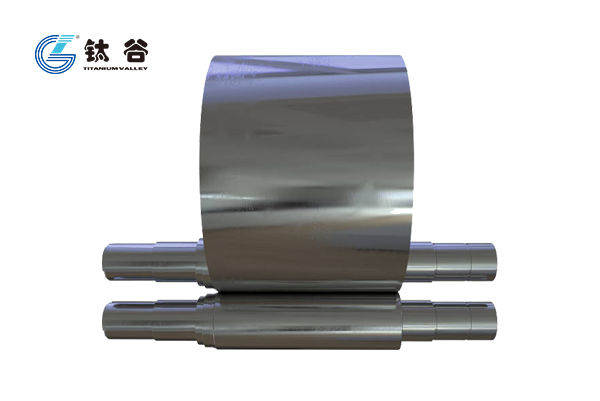
750 mm wide 20-high cold rolling mills utilize coordinated deformation of upper/lower work rolls and multiple intermediate rolls to stably produce ultra-thin foil down to 0.02 mm. This equipment minimizes transverse thickness variation across the strip, a common edge-thinning defect in conventional 4-high and 6-high rolling mills. The multi-pass rolling and intermediate annealing process route maintains high total reduction ratios while restoring material plasticity via recrystallization, mitigating grain elongation and anisotropy risks induced by single-pass heavy reduction. Industrial-scale mass production reliably achieves ±0.005 mm tolerances; custom orders may reach ±0.003 mm, while ±0.001 mm precision is commercially impractical for standard production.
3.2 Microstructure Control Mechanisms of Vacuum Annealing
Zr702 zirconium readily absorbs interstitial oxygen and nitrogen elements during heating, leading to embrittlement when interstitial element concentrations exceed specification limits. Continuous vacuum annealing furnaces or inert atmosphere systems maintain oxygen partial pressure between 10⁻² Pa and 10⁻¹ Pa to suppress surface oxidation. Uniform temperature control within ±5 °C across the furnace coil delivers consistent recrystallized grain size throughout the full strip length, eliminating mechanical property fluctuations caused by localized over-annealing or under-annealing. Post-annealing homogenization heat treatment further optimizes microstructure and relieves residual stress, yielding a uniform silvery metallic surface finish.
3.3 Batch Consistency Benefits of Full-Line Automated Production
Production lines with 90% automation utilize PLC systems to precisely regulate critical process parameters and eliminate human-induced variability. MES systems log complete process data from material feeding, rolling, cleaning, annealing, and slitting for full product traceability. This Industry 4.0 production model supports long-term stable supply for chemical manufacturing projects, allowing buyers to validate supplier process control performance via historical production data and reduce batch-to-batch performance deviations.
4. Customized Gauge and Surface Treatment Matching Strategies for End Use
4.1 Engineering Logic for Graded Thickness Selection
Standard thickness range (0.02 mm to 0.8 mm): Designed for general-purpose gaskets, flange seals, and corrosion-resistant lining applications. The 0.05 mm to 0.1 mm thickness range balances mechanical strength and flexibility, representing the dominant specification for sealing gaskets. 0.3 mm to 0.5 mm foil provides sufficient rigidity for isolation diaphragms subjected to moderate pressure differentials.
Custom ultra-thin range (0.01 mm to 0.03 mm): Developed for electrolytic cell electrodes and high-precision sensor diaphragms. These products demand exceptional thickness tolerance and flatness, requiring 20-high rolling equipment paired with real-time laser thickness feedback systems. Manufacturing ultra-thin foil poses significant technical challenges involving specialized rolling lubricants and tension regulation. Buyers shall request sample validation prior to full-scale procurement to prevent wrinkling or tearing under operating conditions.
Research-grade ultra-precision range (0.005 mm to 0.01 mm): Primarily used for laboratory electrochemical testing and miniature reactor prototype development. Low production volumes and high technical barriers limit stable commercial supply to a small number of global manufacturers requiring specialized vacuum rolling and laser flattening processes. Suited for research institutions and innovative enterprises, custom orders require advanced technical alignment with extended lead times of 8–12 weeks or longer.
4.2 Functional Differences Between Surface Finishes
Bright finish is achieved through precision rolling and electrolytic polishing, delivering surface roughness Ra ≤ 0.4 μm with high reflectivity. Ideal for equipment panels requiring aesthetic standards and lining structures designed to reduce fluid flow resistance. Pickled finish undergoes chemical descaling to produce a matte surface with elevated surface activity and superior weldability, suited for TIG and spot-welded sealing assemblies.
Brushed finish features uniform micro-texturing from mechanical abrasion to increase surface area and adhesive bonding strength, commonly utilized for composite gaskets bonded with rubber or PTFE. Buyers shall select surface finish based on assembly processes to avoid delamination with bright finishes in bonding applications or particulate shedding from brushed finishes in high-purity clean environments.
4.3 Economic Considerations for Width and Length Specifications
350 mm to 670 mm wide strip covers most standard chemical equipment flange dimensions, minimizing longitudinal weld seams and improving sealing reliability. Wider strip specifications require advanced rolling and flatness control equipment, corresponding to higher unit pricing. Procurement engineers shall balance material utilization and processing costs via optimized nesting layouts to reduce scrap waste.
Coil form is recommended for mass production, while cut-to-length sheet is suited for low-volume, multi-specification requirements. Production lines with 3,000-ton annual capacity deliver consistent long-term supply for large-scale chemical projects, eliminating construction delays from material shortages. Long-term supply agreements shall define minimum order quantities, delivery lead times, and quality arbitration clauses to secure supply chain reliability.
5. Supplier Evaluation Framework and Long-Term Collaboration Assurance Mechanisms
5.1 On-Site Inspection Criteria for Advanced Manufacturing Equipment
Table 3 Supplier Production Capacity Evaluation Metrics and Verification Methods
| Evaluation Category | Key Performance Indicator | Verification Procedure |
|---|---|---|
| Rolling Capacity | 20-high or higher precision rolling mill | On-site trial rolling observation |
| Annealing Infrastructure | Continuous vacuum furnace or controlled-atmosphere furnace | Review furnace temperature profile records |
| Testing Capabilities | On-line thickness gauging, ultrasonic flaw detection | Cross-reference third-party test reports |
| Annual Production Capacity | ≥ 3,000 tons | Audit production and sales records |
Capital investment in world-class manufacturing equipment reflects a supplier’s technical expertise and long-term operational strategy. Premium imported rolling and annealing systems deliver superior precision retention and lower failure rates relative to standard domestic equipment. Buyers may conduct facility audits focusing on equipment maintenance status, automation levels, and embedded in-process quality control checkpoints.
5.2 In-Depth Validation of Quality Management Systems
6. Cost-Benefit Analysis and Full Lifecycle Value Assessment
6.1 Rational Evaluation of Upfront Procurement Expense
Zr702 zirconium foil typically carries a unit price 2–3 times higher than titanium and 5–8 times higher than stainless steel. Price differentials must be evaluated within a full asset lifecycle framework. Stainless steel gaskets may require replacement every 3–6 months in strong acid environments, while titanium components fail after approximately 1 year. Zr702 zirconium sealing assemblies operate reliably for 3–5 years, delivering superior overall economic performance when accounting for maintenance labor and production downtime losses. Full lifecycle cost (LCC) comparisons based on specific operating conditions are required to quantify return on investment, rather than generalized cost assumptions.
Buyers shall exercise caution with abnormally low pricing, which often signals compromised quality from uncontrolled hafnium ratios or excessive interstitial oxygen/nitrogen levels. Suppliers shall provide detailed itemized quotations separating raw material, fabrication, surface finishing, and testing fees. Multiple vendor technical reviews and price comparisons establish reasonable market pricing bands. Volume tiered pricing may be negotiated for bulk orders, with mandatory minimum quality guarantee clauses to prevent cost-cutting via degraded manufacturing standards.
6.2 Hidden Economic Gains from Extended Maintenance Intervals
Each scheduled or unscheduled reactor shutdown involves a multi-step workflow including cooling, media draining, component disassembly, replacement, pressure testing, and reheating, consuming 3–7 days of total downtime. Extending sealing component service life from 1 year to 5 years eliminates four unplanned shutdown cycles over a four-year period, generating downtime savings valued at hundreds of thousands of US dollars for mid-sized reactor facilities based on daily production output.
Long-life zirconium components also mitigate safety hazards from unexpected leaks, avoiding regulatory environmental penalties and brand reputation damage. Full lifecycle cost (LCC) financial models shall integrate upfront material investment, maintenance frequency, failure probability, and disposal costs, validated via NPV (Net Present Value) or IRR (Internal Rate of Return) financial analysis to confirm zirconium’s economic viability.
6.3 Inventory Management and Supply Chain Resilience Optimization
Conclusion
Zirconium foil selection constitutes a system-level engineering task for chemical reactor design, requiring cross-functional validation of material performance, manufacturing processes, supplier competence, and full lifecycle costs. Strict adherence to ASTM B551 standards for chemical composition, dimensional accuracy, and surface quality, paired with suppliers equipped with advanced rolling infrastructure and rigorous quality control systems, unlocks the full corrosion-resistant performance of Zr702 zirconium foil while balancing operational safety and total economic value.
FAQ
Q1: What is the practical service life of Zr702 zirconium foil in hydrochloric acid environments?
Under operating conditions with hydrochloric acid concentrations ≤ 37% and temperatures ≤ 100 °C, Zr702 zirconium foil exhibits annual corrosion rates below 0.1 mm. A 0.3 mm thick sealing gasket delivers a theoretical service life of 3–5 years, vastly exceeding titanium’s 1-year lifespan and stainless steel’s 6-month service window. Actual service life varies based on media purity, temperature cycling, and applied mechanical stress.
Q2: How can buyers verify the thickness precision of supplied Zr702 zirconium foil?
Request third-party dimensional inspection reports utilizing laser or ultrasonic thickness gauges for random sampling. Tolerance compliance of ±0.005 mm requires multi-point measurements across strip edges and central regions to confirm uniform thickness distribution across the full coil width. Reputable suppliers provide complete coil thickness distribution graphs as formal quality documentation.
Q3: What are typical lead times for custom ultra-thin foil (0.01 mm to 0.03 mm)?
Standard stocked specifications ship within 2–4 weeks. Custom ultra-thin foil requires dedicated production scheduling and specialized process adjustments, with extended lead times of 8–12 weeks due to complex manufacturing constraints. Early technical alignment and framework supply agreements are recommended to lock production capacity and avoid project schedule delays.
Contact Us
Baoji Titanium Valley Titanium Nickel Zirconium Material Processing Co., Ltd. is a leading Chinese manufacturer and supplier of Zr702 zirconium foil with an annual production capacity of 3,000 tons, supplying premium zirconium materials to chemical, pharmaceutical, electronics, and global industrial sectors. Our team of material application engineers develops custom material solutions tailored to unique operating conditions. Contact our sales team: sales@titaniumvalleys.com
References
1.Liu J, Zhang W. Research on Zirconium Material Application in Sealing Structures of Chemical Reactors[J]. Process Equipment & Piping, 2020, 57(3): 45–49.
2.Wang M, Li Q. Research on Rolling Technology of Ultra-Thin Zirconium Foil[D]. Beijing: University of Science and Technology Beijing, 2019.
3.Chen H, Zhao L. Full Lifecycle Cost Analysis Methodology for Sealing Materials in Chemical Reactors[J]. Chemical Industry and Engineering Progress, 2022, 41(5): 2321–2328.