
Is Gr4 Titanium Rod Quality Testing Based on Chemistry, Mechanics, and NDT Reliable?
- Gr4 Titanium Rod
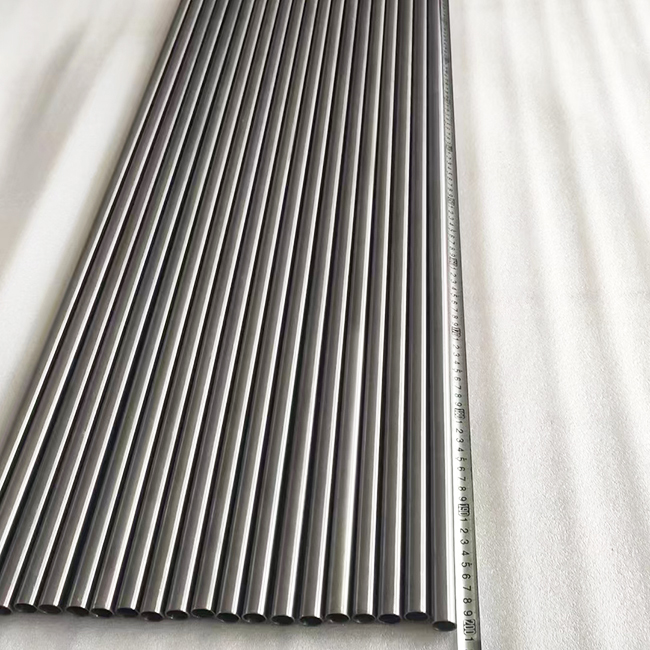
Quality checks for Gr4 Titanium Rod cover three core parts: chemical composition analysis, mechanical property tests and non-destructive inspection. Technicians use spectrometers to check titanium base content and limit values of impurities such as oxygen and iron. They run tensile tests to confirm tensile strength above 550 MPa, and apply ultrasonic inspection to clear internal defects. Surface inspections check pickling uniformity, dimensional tolerance and straightness. For precision machining parts, inspectors also measure grain size uniformity and residual stress levels. Full-set quality inspections make materials meet standards including ASTM B348 and GB/T 2965. They cut equipment breakdown risks and safety hazards caused by material defects, and deliver stable raw materials for high-standard industries like aerospace, medical devices and chemical anti-corrosion projects.
I. Chemical Composition Inspection: Why Purity Serves as the Foundation of Product Quality
1. Test Methods to Verify Main Element Content
Titanium content acts as the core index to judge Gr4 Titanium Rod quality. Industrial labs use XRF (X-ray Fluorescence Spectrometer) or OES (Optical Emission Spectrometer) for fast analysis. The testing accuracy reaches ±0.05%. Inspectors collect samples from multiple positions on each rod to guarantee even chemical makeup. Gr4 titanium belongs to commercially pure titanium. Titanium makes up the balance of its chemical composition. High-quality Gr4 rods carry at least 99.0% titanium by mass. For products exported to European and American markets, labs adopt ICP-MS (Inductively Coupled Plasma Mass Spectrometry) to detect trace elements accurately. This test carries high importance for medical-grade titanium supplies.
2. Control Standards for Interstitial Elements
Interstitial elements including oxygen, nitrogen, carbon and hydrogen directly balance the strength and ductility of titanium rods. The Gr4 standard caps oxygen content at 0.40%. This value separates Gr4 titanium from Gr1 and Gr2 titanium. Higher oxygen levels push up tensile strength to above 550 MPa. Factories must keep oxygen within the standard range to retain good material ductility. Excess nitrogen makes titanium brittle, while too much carbon ruins welding performance. Professional labs deploy oxygen-nitrogen-hydrogen analyzers and carbon-sulfur analyzers for tests. Staff avoid surface contamination during sampling. Samples taken 5 mm to 10 mm below the rod surface generate more precise data.
3. Limit Checks for Impurity Elements
Iron counts as the major impurity in Gr4 Titanium Rod. The standard iron limit sits at 0.50%. Extra iron weakens corrosion resistance, and easily triggers pitting corrosion in chloride-rich environments. Inspectors track trace elements such as silicon, chromium and nickel. Official standards do not set clear limits for these elements, but manufacturers must control total impurity content within allowed ranges. Vacuum consumable arc melting effectively cuts down impurity levels. Buyers can ask suppliers to provide MTC (Material Test Certificates) to compare composition stability across different production batches.
Comparison of Test Standards and Methods for Gr4 Titanium Rod Chemical Composition
| Element | Standard Limit (ASTM B348) | Recommended Test Method | Core Function |
|---|---|---|---|
| Ti (Titanium) | Balance | OES (Optical Emission Spectrometer) | Guarantee basic material purity |
| O (Oxygen) | ≤0.40% | Oxygen-Nitrogen-Hydrogen Analyzer | Balance material strength and ductility |
| Fe (Iron) | ≤0.50% | X-ray Fluorescence Spectrometer | Key index of corrosion resistance |
| N (Nitrogen) | ≤0.05% | Inert Gas Fusion Method | Stop material embrittlement |
| C (Carbon) | ≤0.08% | Infrared Absorption Method | Secure stable welding performance |
| H (Hydrogen) | ≤0.015% | Thermal Conductivity Method | Prevent hydrogen embrittlement risks |
II. Mechanical Property Tests: How to Quantify Material Strength and Ductility
1. Standard Tensile Test Procedures
Tensile tests offer direct data to judge the load-bearing capacity of Gr4 Titanium Rod. Operators machine standard tensile specimens from raw rods following ASTM E8 or GB/T 228 rules. The common specimen diameters are 10 mm and 12.5 mm. Tests run on universal material testing machines. Qualified Gr4 titanium rods meet these targets: tensile strength ≥550 MPa, yield strength ≥483 MPa, elongation ≥15%. Testers set the loading speed between 5 mm/min and 10 mm/min, and maintain test temperature at 20 ±5℃. For aerospace titanium materials, labs run extra tests at -196℃ (low temperature) and 300℃ (high temperature). These tests verify material reliability under extreme working environments.
2. Hardness Tests and Grain Structure Assessment
Hardness testing delivers fast, non-destructive quality evaluation. Brinell Hardness (HB) of Gr4 Titanium Rod falls between 160 and 240. Portable hardness testers take readings directly on rod surfaces. Surface roughness distorts test results, so operators prefer ground or turned surfaces for accurate measurements. Abnormal hardness values usually signal uneven chemical composition or faulty heat treatment. Metallographic tests expose the internal micro-structure of titanium. Premium Gr4 titanium rods show uniform equiaxed alpha grains with grain size grade 6 to grade 8. No thick alpha layer or acicular structures appear inside qualified materials. Grain structure directly shapes machining performance and fatigue life of titanium rods.
3. Impact Toughness and Fatigue Performance Tests
Global standards do not make these two tests mandatory. However, structural parts under dynamic loads must pass impact toughness checks. Normal-temperature impact energy of Gr4 Titanium Rod stays above 35 J (reference value), much higher than regular carbon steel. Labs use Charpy V-notched specimens and pendulum impact testers for measurements. Factories carry out fatigue tests for parts working under repeated high stress loads, such as marine engineering fasteners and aero-engine components. Rotating bending fatigue tests prove Gr4 titanium rods reach 10⁷ loading cycles under 240 MPa stress amplitude. Research data shows surface polishing and stress relief annealing raise the fatigue limit of Gr4 titanium by 15% to 20%.
Test Items and Acceptance Standards for Gr4 Titanium Rod Mechanical Properties
| Test Item | Test Standard | Acceptance Value (Annealed State) | Test Temperature | Industrial Application Value |
|---|---|---|---|---|
| Tensile Strength | ASTM E8 / GB/T 228 | ≥550 MPa | Room temperature (20℃) | Core index for load-bearing design |
| Yield Strength | ASTM E8 / GB/T 228 | ≥483 MPa | Room temperature (20℃) | Basic data for structural design |
| Elongation | ISO 6892 / GB/T 228 | ≥15% | Room temperature (20℃) | Judge forming ability during machining |
| Brinell Hardness | ASTM E10 / GB/T 231 | 200–250 HV | Room temperature | Reflect wear resistance and machinability |
| Impact Energy | ISO 148-1 | ≥35 J | Room temperature | Resist impact force under dynamic loads |
| Fatigue Limit | ASTM E466 | ≥240 MPa | Room temperature | Support long-term repeated cyclic loads |
III. Physical Property and Corrosion Tests: How to Verify Material Adaptability in Special Working Environments
1. Density and Thermal Conductivity Testing
The theoretical density of Gr4 Titanium Rod hits 4.51 g/cm³. Technicians apply the Archimedes water immersion method for actual measurements. Acceptable measurement error stays below 0.5%. Unusual density values often point to internal pores or foreign inclusions inside rods. Thermal conductivity tests carry high priority for titanium used in heat exchangers. The thermal conductivity of Gr4 titanium reaches roughly 15.2 W/(m·K). Copper and aluminum conduct heat faster, but Gr4 titanium delivers better overall cost performance in corrosive environments. Industrial tests confirm Gr4 titanium resists chemical corrosion far better than 316L stainless steel, and lasts several times longer in corrosive chemical workshops.
2. Magnetic Property and Biocompatibility Evaluation
Non-magnetic performance serves as a key advantage of Gr4 Titanium Rod. This feature makes it ideal for MRI equipment supports and precision sensors. Labs use high-precision magnetometers for magnetic tests. Qualified titanium carries magnetic permeability close to 1.0 (equal to air permeability). Manufacturers supplying medical devices run a full set of ISO 10993 biocompatibility tests, covering cytotoxicity, skin sensitization and tissue reaction after implantation. Scientific studies confirm pure titanium has excellent biocompatibility, so factories widely use it for orthopedic implants and surgical instruments. Metal ion release tests detect very low titanium ion separation from pure titanium inside simulated body fluid. The reading sits far below medical safety thresholds.
3. Specialized Corrosion Resistance Tests
Titanium gains fame for anti-corrosion ability, but different titanium grades show different performance in specific chemical solutions. Standard corrosion tests for Gr4 Titanium Rod contain three main items:
- Salt spray test (ASTM B117): No rust appears after 1000 continuous hours of spray.
- Pitting potential test: Titanium holds high breakdown potential in 3.5% sodium chloride solution, and blocks pitting corrosion effectively.
- SCC (Stress Corrosion Cracking) test: No cracks form under assigned corrosive test conditions.
Field test data shows Gr4 titanium has an extremely low corrosion rate in seawater, outperforming common stainless steel by a wide margin. Chemical industry buyers run extra corrosion tests in different acid and alkaline solutions. The most common test methods include weight loss coupon testing and electrochemical impedance spectrum analysis.
IV. Non-Destructive Testing and Dimensional Precision: How to Find Hidden Defects and Match Machining Needs
1. Standards and Operation Steps for Ultrasonic Testing
Internal material defects create major risks of titanium rod failure. Factories follow GB/T 5193 standards to carry out UT (Ultrasonic Testing). Testers use longitudinal wave straight probes or angle probes to scan every rod. All Gr4 Titanium Rod, regardless of diameter, receive 100% full-length ultrasonic scans. Common internal defects include shrinkage cavities, foreign inclusions and internal cracks. Aerospace-grade titanium rods follow stricter rules. No defect echo signals can exceed the limits listed in reference standards. Factories adopt phased array ultrasonic inspection systems. These systems generate 3D images of internal defects and greatly lift inspection accuracy.
2. Eddy Current and Penetrant Testing Applications
Eddy Current Testing (ET) works well to find surface and near-surface defects. This method fits small-diameter Gr4 Titanium Rod most. For cold-drawn Gr4 rods, inspectors focus on longitudinal drawing marks and circumferential cracks. Magnetic Particle Testing (MT) does not work on titanium materials. Fluorescent Penetrant Testing (PT) replaces MT for surface flaw checks. Automatic eddy current inspection lines stabilize surface quality control for Gr4 rods and raise the pass rate of precision machining parts.
3. Dimensional Tolerance and Surface Quality Control
Dimensional tolerance directly changes the efficiency of follow-up machining. According to ASTM B348 and GB/T 2965, hot-rolled Gr4 Titanium Rod has a diameter tolerance of ±0.5 mm for 50 mm diameter rods. Cold-drawn rods reach a tighter tolerance of ±0.1 mm. Staff use micrometers or laser diameter gauges and take measurements at multiple points along the whole rod length. The straightness standard stays below 1.5 mm per meter. Inspectors measure straightness with flat plates plus feeler gauges or laser straightness testers. Surface roughness Ra values meet two standards: ≤3.2 μm for turned surfaces, ≤1.6 μm for ground surfaces. Rod surfaces cannot carry scale, cracks, folds or delamination. Pickling leaves a uniform silver-white metallic finish on qualified rods.
Acceptance Standards for Non-Destructive Testing and Dimensions of Gr4 Titanium Rod
| Inspection Type | Applicable Standard | Inspection Scope | Inspection Frequency |
|---|---|---|---|
| Ultrasonic Testing | GB/T 5193 | Internal volume defects | 100% full inspection |
| Eddy Current Testing | ASTM E243 | Surface cracks | Sampling or full inspection |
| Fluorescent Penetrant Testing | ASTM E1417 | Open surface defects | Key sections only |
| Diameter Measurement | ASTM B348 | Outer diameter size | Sampling per batch |
| Straightness Test | GB/T 2965 | Bending deformation | Full length of each rod |
| Surface Roughness Test | ISO 4287 | Surface finish quality | Sampling |
V. Certification System and Supplier Qualifications: Quality Traceability and Compliance Guarantee
1. Compliance Check against International Standards
Inspectors judge Gr4 Titanium Rod quality with multiple standard systems. Materials for the US market must meet ASTM B348 and AMS 4928 specifications. European products need certificates matching EN 10204 and relevant industrial standards. Japanese and Korean markets refer to JIS H4650. Third-party labs such as SGS, TÜV and China Nonferrous Metals Quality Inspection Center offer independent verification reports. Buyers should ask suppliers for MTC (Material Test Certificate) 3.1 or 3.2. Complete MTC documents cover heat batch numbers, chemical composition data, mechanical test records and non-destructive testing reports. Aerospace projects require extra AS9100 quality system certificates and NADCAP special process certifications.
2. Production Process Traceability and Batch Management
Stable quality of premium Gr4 Titanium Rod comes from strict production process control. Buyers check if suppliers use high-purity titanium sponge raw materials (titanium content above 99.7%) and vacuum arc melting processes. They also confirm forging and rolling machines carry full temperature control systems. Every production batch goes through vacuum stress relief annealing and pickling to remove surface scale. Buyers can request heat treatment curve charts and metallographic photos from suppliers to verify full compliance with production rules.
3. Long-Term Cooperation and Quality Improvement Mechanism
Long-term strategic supplier partnerships greatly improve consistent quality of titanium raw materials. Buyers pick manufacturers with ISO 9001 and ISO 14001 certifications. They review the suppliers’ records of quality accidents and customer complaint handling systems. Buyers run regular supplier audits to check raw material storage records, equipment maintenance logs and inspector qualification certificates. Both sides build a closed-loop quality feedback system. Buyers send all on-site quality problems back to suppliers for continuous process upgrades.
Conclusion
Full quality inspection of Gr4 Titanium Rod builds a five-part evaluation system: chemical composition, mechanical performance, physical properties, non-destructive testing and dimensional precision. Complete quality verification confirms all rods comply with international standards like ASTM B348. It provides reliable raw materials for high-end sectors including aerospace medical equipment, precision electronics and chemical anti-corrosion engineering. This system cuts equipment failure risks and lowers total life-cycle costs of finished products.
FAQ
1. What differences exist between quality inspection of Gr4 Titanium Rod and Gr2 Titanium Rod?
Gr4 titanium sets a higher oxygen limit (≤0.40%) while Gr2 titanium caps oxygen content at 0.25%. For this reason, Gr4 rods need a minimum tensile strength of 550 MPa, around 60% higher than Gr2’s 345 MPa minimum tensile strength. Inspectors pay extra attention to the balance between hardness and impact toughness. They stop strength growth from bringing down material ductility. Accurate chemical analysis of oxygen content acts as the key basis to tell these two grades apart.
2. How to verify Gr4 Titanium Rod quality for small-batch orders?
Ask suppliers to offer third-party test reports of the target batch from labs such as SGS or TÜV. Match the heat batch numbers on reports with the delivered rods. Use portable spectrometers to test chemical composition on site, and check HB hardness values with portable hardness testers. Watch the uniformity and color of pickled rod surfaces, and sample diameter sizes with micrometers. For critical application scenarios, send rod samples to local quality inspection institutions for tensile tests and metallographic analysis.
3. How to judge whether Gr4 Titanium Rod receives standard annealing treatment?
Properly annealed Gr4 Titanium Rod shows an even silver-gray surface without local oxidized stains. Metallographic analysis shows uniform equiaxed grains, clear grain boundaries and no abnormal separated phases. Hardness values stay consistent across one single rod, with hardness differences below 30 HB between different positions. X-ray diffraction residual stress tests record low internal stress values. Rods without annealing or with improper annealing usually carry overly high hardness and crack easily during machining.
Cooperate with Baoji Titanium Valley
Baoji Titanium Valley Titanium Nickel Zirconium Material Processing Co., Ltd. works as a professional maker of Gr4 Titanium Rod. The company owns Italian Danieli rolling lines and full-automatic foil production lines. Its annual output exceeds 20,000 tons. The company supplies high-precision Gr4 titanium rods matching ASTM, GB and DIN standards, with complete MTC documents and NDT test reports attached. As a trusted Gr4 titanium rod supplier, we accept customized size orders and supply large batches stably. Send emails to sales@titaniumvalleys.com for technical support and price quotations.
References
- ASTM International. ASTM B348-19: Standard Specification for Titanium and Titanium Alloy Bars and Billets[S]. West Conshohocken: ASTM International, 2019.
- ASTM International. ASTM E2375-21: Standard Practice for Ultrasonic Testing of Wrought Products[S]. West Conshohocken: ASTM International, 2021.
- ISO 6892-1:2019 Metallic materials – Tensile testing – Part 1: Method of test at room temperature[S]. Geneva: ISO, 2019.
- Zhao Y, Chen Y, Zhang X, et al. Phase Transformation and Heat Treatment of Titanium Alloys[M]. Changsha: Central South University Press, 2012.