
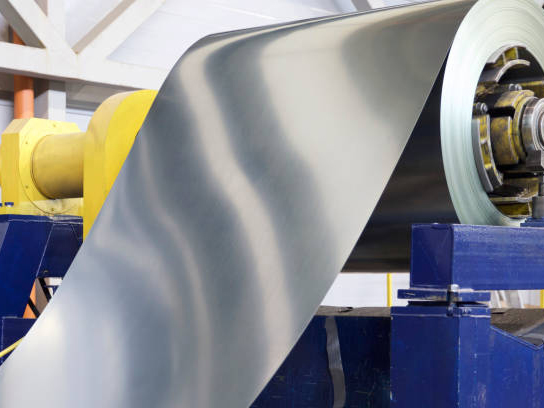
Gr1 titanium foil has shear strength from 140 MPa to 180 MPa. This value equals 60% to 75% of its annealed tensile strength (≥240 MPa). It works well under complex stress.
As alpha-phase commercially pure titanium, Gr1 titanium foil has titanium content over 99.5% and good ductility. It sees wide use in aerospace, electromagnetic shielding and new energy industries. Shear strength changes with foil thickness, annealing process, surface treatment and grain size. Knowing its shear strength helps select proper foil grades, adjust processing parameters and guarantee product quality. This article covers influencing factors, test methods and real applications of Gr1 titanium foil shear strength.
1. Definition of Shear Strength & Basic Mechanical Properties of Gr1 Titanium Foil
1.1 Engineering Value of Shear Strength
Shear strength refers to the maximum stress to resist shear damage under parallel load. Shear force acts on cross sections and makes atomic layers slide against each other.
Shear stress occurs during stamping, slitting and welding of titanium foil. Clear shear strength data prevents tearing, edge cracks and joint failure in production.
1.2 Standard Mechanical Properties of Gr1 Titanium Foil
ASTM B265 sets standard values for annealed Gr1 titanium foil. Its tensile strength is no less than 240 MPa, yield strength no less than 140 MPa, and elongation no less than 24%. These values show performance under uniaxial tension.
We use special tests to get shear strength data. The foil density is 4.51 g/cm³, just 57% of steel. It features 100–150 HB hardness, good ductility and workability for bending and deep drawing.
1.3 Relation between Shear Strength and Tensile Strength
Metal materials follow a fixed ratio between shear strength and tensile strength. For pure titanium, shear strength is 60% to 75% of tensile strength.
When annealed Gr1 titanium foil has tensile strength above 240 MPa, its theoretical shear strength ranges from 144 MPa to 180 MPa. Actual test results vary with grain direction, work hardening and surface condition. This ratio helps estimate shear performance quickly for material selection and process design.
2. Key Factors Affecting Shear Strength of Gr1 Titanium Foil
2.1 Material Thickness & Size Effect
Foil thickness directly affects shear strength. Ultra-thin foil (0.02–0.1 mm) has stronger surface effect. Its grain size takes a larger proportion of total thickness, so shear strength is slightly higher than thick foil.
Precision rolling mills keep thickness tolerance within ±0.002 mm. They maintain uniform structure for wide ultra-thin foil (max width 670 mm). High dimensional accuracy reduces local stress and stabilizes test results.
2.2 Annealing Process & Microstructure
Annealing under argon gas is critical to adjust mechanical properties. Continuous annealing lines control temperature within ±2 ℃ for full recrystallization of alpha grains.
Too low annealing temperature leaves residual stress and causes tiny cracks under shear force. Too high temperature makes grains coarse. Ductility improves but strength drops.
Tests prove 550 ℃ to 650 ℃ is the ideal annealing range. It balances grain size and dislocation density, and delivers good shear strength and elongation. Proper heat treatment stabilizes shear strength and keeps even surface color.
2.3 Surface Condition & Cleanliness
Surface defects easily develop into shear cracks. Ultrasonic cleaning plus alkaline liquid removes oil and particles. It keeps surface dyne value steady at 44.
Clean surface distributes stress evenly in shear tests and ensures repeatable data. It also serves as high-quality base material for later welding and coating work.
| Surface Treatment | Surface Cleanliness | Shear Strength (MPa) | Fracture Mode | Application Scenarios |
| As-rolled (untreated) | Normal | 130–150 | Uneven tearing | General industrial use |
| Ultrasonic + alkaline cleaning | High | 150–165 | Ductile fracture | Electromagnetic shielding, electrode base |
| Matte finish + annealing | Excellent | 155–170 | Uniform shear | Aerospace parts, precision instruments |
| Polishing + annealing | Premium | 160–178 | Plastic fracture | Medical implants, fuel cells |
3. Test Methods & Standards for Shear Strength of Gr1 Titanium Foil
3.1 Standard Test Methods
We follow ASTM B831 for thin metal shear tests. The double shear test clamps samples between fixed plates and loading plates. It applies vertical shear force and records maximum load to calculate shear strength.
Double shear structure avoids eccentric force and ensures accurate data. We strictly control sample size, loading speed and fixture gap for consistent test results.
3.2 Sample Preparation & Test Conditions
Cut samples from titanium foil rolls along rolling direction and transverse direction. Use precision slitting machines to avoid work hardening.
Sample width ranges from 10 mm to 25 mm, length from 50 mm to 100 mm. Keep original foil thickness and clean surface without oil or oxide. Set loading speed at 0.5–5 mm/min for static loading.
Test environment stays at 20±5 ℃ with humidity below 70%. Run at least 5 tests for each group, remove abnormal data and take the average value.
3.3 Data Processing & Quality Control
Calculation formula: τ = F / (2A)
τ = shear strength, F = maximum shear load, A = shear area of sample.
We build a full-range inspection system with online thickness gauges, surface defect detectors and mechanical test equipment. Sampling rate reaches over 5% for regular batches, and 100% inspection for key applications.
All test data enters the quality tracking system. We check mechanical performance by furnace batch and rolling batch to keep consistent quality.
| Thickness (mm) | Tensile Strength (MPa) | Shear Strength (MPa) | Shear / Tensile Ratio | Elongation (%) | Typical Applications |
| 0.02–0.05 | 250–280 | 150–170 | 60–65% | 22–28 | Electromagnetic shielding, FPC |
| 0.05–0.1 | 240–270 | 145–165 | 60–65% | 24–30 | Battery tabs, sensors |
4. Practical Value of Shear Strength in Different Applications
4.1 Structural Connection for Aerospace Industry
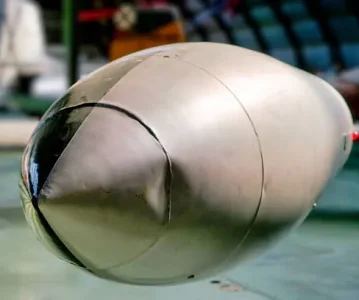
Riveted and bonded joints of aerospace parts bear complex shear force during service. Gr1 titanium foil has enough shear strength to secure joints and prevent failure.
Wide foil (350–670 mm) reduces weld seams and lowers stress concentration. Ultra-thin foil (0.02–0.1 mm) works for skin and heat insulation layers. Its shear performance meets aerodynamic load requirements. Titanium content above 99.5% keeps stable performance and follows aerospace traceability rules.
4.2 Shear Processing for Electronic Shielding & Packaging
Shielding materials go through frequent stamping, bending and welding. Shear strength directly decides processing quality. Gr1 titanium foil delivers smooth edges without burrs or tiny cracks after high-speed slitting, and cuts signal leakage.
Max width 670 mm reduces joints and improves shielding continuity. Steady dyne value at 44 keeps coating well attached. Shear deformation will not damage the coating layer.
4.3 Electrode Base for New Energy Batteries & Fuel Cells
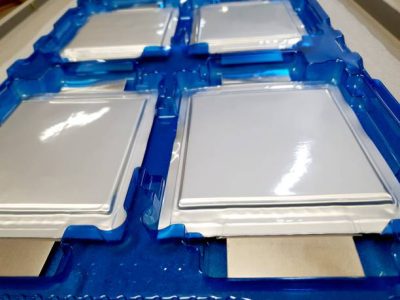
Battery tabs and fuel cell bipolar plates face combined pressure and electrochemical stress. Good shear strength stops tearing during ultrasonic welding and laser welding.
Wide foil cuts electrode joints, and avoids uneven current and local overheating. Ultra-thin foil (0.02–0.05 mm) lowers internal resistance and raises energy density. Continuous argon annealing creates uniform structure. Batch fluctuation of shear strength stays below 5% for large-scale supply.
4.4 Integrated Forming for Chemical Anti-corrosion Equipment
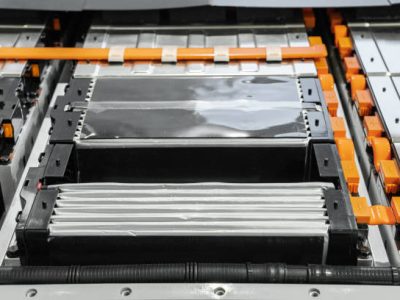
Wide titanium foil forms seamless lining for chemical equipment. It reduces weld seams and corrosion leakage points. The material needs solid shear strength to avoid edge cracks during forming.
Gr1 titanium foil combines good corrosion resistance and shear performance. It extends equipment service life by 3 to 5 times.
5. Process Optimization to Improve Shear Strength of Gr1 Titanium Foil
5.1 Precision Rolling & Structure Control
Multi-pass cold rolling refines grains through accumulated strain and improves shear strength. Precision rolling mills control thickness tolerance within ±0.002 mm. We adjust tension and speed during rolling to keep uniform material structure.
We solve springback and shape problems for ultra-thin foil. Optimized roller design and lubrication system support stable mass production.
5.2 Optimization of Heat Treatment Window
Annealing temperature, holding time and cooling speed jointly decide final microstructure. 550 ℃ to 650 ℃ is the best annealing range for balanced grain size, dislocation density, shear strength and elongation.
Continuous annealing lines use sectional temperature control: preheating at inlet, constant temperature in middle section and slow cooling at outlet. Temperature fluctuation stays within ±2 ℃. Annealing removes residual stress and improves shear toughness.
5.3 Surface Strengthening & Post-treatment
Matte grinding removes defective surface layers and eliminates crack sources. Ultrasonic cleaning plus alkaline degreasing reaches electronic-grade surface cleanliness. Combined surface treatments meet demands of different applications.
Conclusion
Annealed Gr1 titanium foil has shear strength from 135 MPa to 170 MPa. Thickness, annealing process, surface condition and grain structure all affect this index. Mastering shear performance helps optimize production processes and improve product reliability.
Precision rolling, continuous argon annealing and full-range quality control support stable production of wide ultra-thin titanium foil. The material features steady shear strength across batches. It serves high-end fields including aerospace, electronics, new energy and chemical industry.
FAQ
1. What is the relation between shear strength and foil thickness?
Ultra-thin foil (0.02–0.1 mm) has shear strength of 150–170 MPa due to surface effect and fine grains. Thick foil (0.6–1.0 mm) stands at 135–150 MPa. Choose proper grades based on strength and ductility needs.
2. How to optimize shear strength via annealing?
Use continuous argon annealing at 550–650 ℃, with temperature controlled within ±2 ℃. Adjust holding time according to foil thickness. The finished material has stable structure, qualified shear strength and elongation above 24% for complex processing.
3. Are the shear strength data reliable?
We run double shear tests per ASTM B831 standards. Strict sample preparation and loading rules ensure repeatable results. Qualified suppliers can provide complete mechanical test reports.
Looking for Reliable Gr1 Titanium Foil Supplier?
Baoji Titanium Valley Titanium Nickel Zirconium Material Processing Co., Ltd. is a professional Gr1 titanium foil manufacturer. Our annual output reaches 3000 tons. We supply customized foil with thickness 0.02–1.0 mm and width 350–670 mm.
We have complete shear strength test equipment and third-party certifications, and follow ASTM and ISO test standards. Contact us for technical support and quotes: sales@titaniumvalleys.com
References
- ASTM International. ASTM B265-20 Standard Specification for Titanium and Titanium Alloy Strip, Sheet, and Plate[S]. 2020.
- Wang Chunming, Li Jianguo. Study on Shear Properties and Microstructure of Commercially Pure Titanium[J]. Rare Metal Materials and Engineering, 2021, 50(8): 2850-2856.
- Zhang Hongwei, Liu Minghui. Rolling Process and Mechanical Property Optimization of Ultra-thin Titanium Foil[J]. The Chinese Journal of Nonferrous Metals, 2022, 32(5): 1320-1328.
- Titanium, Zirconium & Hafnium Branch of China Nonferrous Metals Industry Association. Titanium and Titanium Alloy Materials Handbook (3rd Edition)[M]. Beijing: Metallurgical Industry Press, 2021.