

Gr1 titanium foil has purity above 99.5%. It has good surface performance and workability, so it is an ideal base material for various coating processes. After ultrasonic cleaning and alkaline treatment, its surface dyne value stays around 44. This high cleanliness makes coatings stick firmly to the base. It works well with conductive coatings, anti-oxidation coatings and decorative coatings. With proper surface pre-treatment, this material is widely used in aerospace, electromagnetic shielding, new energy and other fields.
1. Coating Adaptability Analysis of Gr1 Titanium Foil
1.1 Advantages of Material Surface Performance
Gr1 titanium foil is alpha-phase commercially pure titanium. Its surface keeps stable state. The natural oxide film is only a few nanometers thick and has strong chemical resistance. The foil thickness ranges from 0.02 mm to 1.0 mm. Precision rolling controls surface flatness within ±0.003 mm. This smooth surface supports even coating distribution. Ultrasonic cleaning and alkaline liquid remove organic dirt and metal residues. The surface dyne value reaches 40 to 44, the ideal range for most industrial coatings.
1.2 Coating Performance Comparison with Common Metal Base Materials
| Material Type | Surface Energy (Dyne) | Coating Adhesion (Process Dependent) | Corrosion Resistance | Density (g/cm³) |
|---|---|---|---|---|
| Gr1 Titanium Foil | 40-44 | Good to excellent | Excellent | 4.51 |
| Stainless Steel Foil | 38-42 | Good | Good | 7.93 |
| Aluminum Foil | 36-40 | Medium | Medium | 2.70 |
| Nickel Foil | 40-44 | Good | Excellent | 8.90 |
Gr1 titanium foil features light weight. Its density is 4.51 g/cm³, about 57% of stainless steel. It has the same surface energy as nickel foil. Its natural corrosion resistance helps coated products serve much longer in corrosive environments.
1.3 Influence of Cleaning Pre-treatment on Coating Effect
Surface cleanliness directly decides coating quality. Ultrasonic cleaning and alkaline degreasing clear rolling oil, grease and tiny particles on foil surface. Alkaline treatment activates the surface and creates more active points on titanium layers. Annealing under argon at 550-650 ℃ improves material ductility and strength. It also forms uniform oxide film on the surface. The surface roughness Ra stays between 0.2 μm and 0.4 μm. It creates firm mechanical bonding, and avoids uneven coating caused by overly rough surface.
2. Common Coating Processes for Gr1 Titanium Foil
2.1 Physical Vapor Deposition (PVD)
PVD fits ultra-thin titanium foil coating. It uses vacuum evaporation or sputtering to form nano-scale coatings on 0.02-0.1 mm Gr1 titanium foil. The working temperature stays below 450 ℃, far lower than titanium phase transition temperature at 882 ℃. The base material keeps all original performance. Common PVD coatings include TiN, TiC and CrN. These coatings lift surface hardness to 1500-2500 HV and improve wear resistance. Use special fixtures for wide foil to keep coating thickness even.
2.2 Comparison between Electroless Plating and Electroplating
| Process Type | Suitable Foil Thickness | Coating Thickness Range | Uniformity | Cost | Typical Applications |
|---|---|---|---|---|---|
| Electroless Nickel Plating | 0.05-1.0 mm | 5-30 μm | Good | Medium | Anti-corrosion parts |
| Copper Electroplating | 0.1-1.0 mm | 10-50 μm | Fairly Good | Low | Conductive base materials |
| Gold Electroplating | 0.02-0.5 mm | 0.5-5 μm | Good | High | Electronic packaging |
| Electroless Silver Plating | 0.03-0.8 mm | 3-15 μm | Good | Medium | Anti-bacterial products |
Electroless plating needs no external current. It forms metal layers through chemical reduction. It works great for 0.02-0.08 mm ultra-thin foil and avoids uneven current in electroplating. The bonding strength between electroless nickel layer and titanium base reaches 20-30 MPa, higher than regular electroplating layers.
2.3 Organic Coatings and Functional Coatings
Organic coatings bring diverse functions to Gr1 titanium foil. Epoxy coating improves insulation performance, with breakdown voltage over 5 kV/mm. Polyurethane coating enhances flexibility. Fluorocarbon coating makes surface water and oil repellent. Conductive coatings such as silver paste and carbon nanotube coating lower surface resistance below 0.1 Ω/sq, while the foil stays light and easy to shape. For battery tabs, anti-oxidation coatings protect foil from electrolyte corrosion at 200-300 ℃ and extend service life.
3. Key Control Parameters in Coating Process
3.1 Relationship between Surface Roughness and Coating Adhesion
Precision rolled Gr1 titanium foil has surface roughness Ra from 0.2 μm to 0.6 μm. Ra between 0.3 μm and 0.4 μm creates the best balance of mechanical bonding and chemical adsorption. Micro pits and peaks on rough surface hold coating materials firmly after curing. Adjust surface texture by grinding according to different coating types to get better adhesion.
3.2 Influence of Thickness Tolerance on Coating Uniformity
Base material thickness tolerance greatly affects coating quality. Thickness deviation over ±0.003 mm leads to uneven coating thickness during roller coating or spray coating. In electromagnetic shielding products, uneven thickness creates weak shielding areas. Annealing keeps temperature variation within ±2 ℃. Uniform material structure means even surface energy. Coating shrinkage stress releases evenly and prevents cracks or bubbles.
3.3 Influence of Annealing on Subsequent Coating Performance
Annealing under argon is an important pre-coating step. The temperature sets at 550-650 ℃. Holding time changes from 1 hour to 3 hours based on foil thickness. This process removes cold working stress, and forms stable TiO₂ oxide film with thickness 10-30 nm. This oxide layer has high chemical stability. Coatings bond better with oxide film than pure titanium surface. Annealing also improves ductility. Coatings do not crack or fall off easily during bending and stamping after coating.
4. Coating Solutions for Different Application Fields
4.1 High Temperature Anti-oxidation Coating for Aerospace Industry
Hot end parts of aero engines require strong heat resistance. Gr1 titanium foil works long term below 300 ℃. Plasma sprayed ceramic coatings like alumina and zirconia help the foil stand short-time high temperature at 500-600 ℃. Do not use it continuously above 800 ℃. For large thin-wall parts, use sectional spraying and slow cooling to control residual stress. Coated wide foil makes integrated heat shields and reduces weld seams.

4.2 Conductive Coating for Electromagnetic Shielding
| Application Scenario | Coating Material | Typical Shielding Effectiveness | Thickness Requirement | Features |
|---|---|---|---|---|
| Filter for Communication Base Station | Silver Paste + Protective Layer | >60 dB | 0.03-0.1 mm | High conductivity |
| Flexible Circuit Base | Conductive Polymer | >50 dB | 0.02-0.05 mm | Good flexibility |
| Laptop Shield Cover | Nickel + Copper Double Layer | >60 dB | 0.05-0.15 mm | Light weight |
| Automotive ECU | Carbon Nanotube Coating | >55 dB | 0.08-0.2 mm | Wide working temperature range |
4.3 Coating Technology for New Energy Batteries and Electrolytic Electrodes
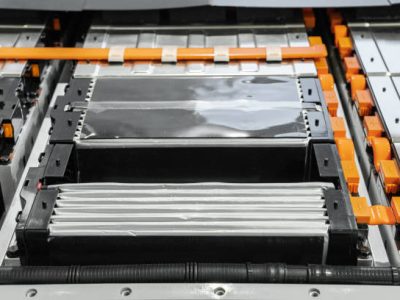
Fuel cell bipolar plates need good conductivity and corrosion resistance. Gold coating or carbon-based coating works well on Gr1 titanium foil. 1-3 μm gold coating lowers contact resistance below 10 mΩ·cm², and titanium base provides structural strength and chemical stability. For hydrogen production electrodes, coat mixed metal oxide such as iridium oxide and ruthenium oxide on pre-treated foil. The catalytic layer thickness is 3-8 μm. Wide foil makes larger single electrode area and distributes current evenly.

4.4 Bio-functional Coating for Medical Implants
Coatings on medical grade titanium foil must meet biocompatibility standards. Plasma sprayed hydroxyapatite coating ranges from 30 μm to 80 μm. It has similar composition with human bone and boosts bone integration. Strictly control coating crystallinity and Ca/P ratio to keep bioactivity. Anti-bacterial coatings with nano silver or copper ions release active ingredients continuously and lower infection risks. High purity of Gr1 titanium foil avoids harmful elements, so it fits thin-wall implants and minimally invasive surgical tools.

5. Coating Quality Control and Testing Standards
5.1 Adhesion Test Methods and Standards
Cross hatch test follows ASTM D3359. Cut 1mm×1mm grids on coated surface, then pull off with adhesive tape. Most industrial products need grade 4B or 5B, with peeling area less than 5%. Pull-off test follows ASTM D4541 for accurate data. Typical bonding strength is 20-40 MPa for PVD coating, 20-30 MPa for electroless plating and 10-20 MPa for organic coating. Optimize process parameters to keep stable adhesion.
5.2 Coating Thickness and Uniformity Test
Electromagnetic thickness gauge tests conductive coatings with precision ±0.5 μm. XRF carries out non-destructive test for precious metal coatings. Take multiple measurements along the width of wide foil and draw thickness distribution curve. Metallographic section observes interface between coating and base. Qualified coatings have no holes or cracks at the interface. SEM and EDS further check element diffusion at the interface.
5.3 Long-term Stability and Environmental Adaptability Test
Accelerated aging test simulates long-term working conditions. High temperature and humidity test runs 500 to 1000 hours at 85 ℃ and 85%RH. Check for bubbles, color change and peeling. Salt spray test follows ASTM B117, which is critical for anti-corrosion products in chemical industry. Thermal cycle test runs 100 cycles from -50 ℃ to 150 ℃, with 30 minutes holding for each cycle. It checks thermal expansion matching between coating and base. Titanium thermal expansion coefficient is about 8.6×10⁻⁶/K, close to most ceramic coatings. This good matching ensures high thermal stability.
Conclusion
Gr1 titanium foil shows reliable coating performance in actual production. Its high purity, precise size and excellent surface quality make it suitable for all kinds of coating processes. Various technologies including PVD, electroless plating, organic coating and ceramic coating expand its application scope. With strict quality control and process optimization, coated Gr1 titanium foil plays an important role in aerospace, electromagnetic shielding, new energy and medical industries.
FAQ
1. How to avoid deformation when coating 0.02 mm ultra-thin Gr1 titanium foil?
Yes. Annealed Gr1 titanium foil has elongation above 25% and good ductility. Use flexible coatings like polyurethane or thin metal layers. Coatings stay intact after 180° bending. Protect coating areas during welding, or use laser spot welding to prevent large-area coating damage.
Titanium Valley — Your Reliable Gr1 Titanium Foil Manufacturer and Supplier
We own world-class 20-high precision rolling mills with annual output of 3000 tons for ultra-thin wide foil. We supply high-precision Gr1 titanium foil from 0.02 mm to 1.0 mm thick and 15 mm to 680 mm wide. Our complete surface treatment fits all common coating processes. Contact us for customized solutions and technical support: sales@titaniumvalleys.com
References
- Li Minghua, Zhang Weidong. Surface Treatment Technology of Titanium and Titanium Alloys[M]. Beijing: Chemical Industry Press, 2021.
- Wang Zhenguo, Chen Zhiqiang. Influence of Titanium Foil Surface Pre-treatment on Coating Adhesion[J]. Surface Technology, 2020, 49(8): 112-119.
- Zhao Yuzhen, Liu Jianhua. Research on Application of PVD Ceramic Coating on Titanium Alloys[J]. Journal of Vacuum Science and Technology, 2019, 39(6): 503-510.
- Li Xiaofeng, Sun Mingming. Interface Structure and Bonding Strength of Electroless Nickel Coating on Titanium Substrate[J]. Electroplating & Finishing, 2021, 43(2): 15-21.