
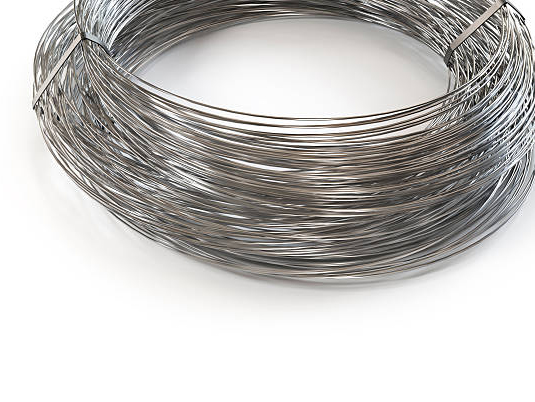
ASTM B550 zirconium wire is a high-performance material widely used in modern industry. It serves chemical anti-corrosion, nuclear power, medical devices and precision manufacturing fields. This zirconium and zirconium alloy wire meets ASTM B550 standards. It has strong corrosion resistance, good workability and stable mechanical strength. It solves the failure problems of stainless steel and titanium alloy in strong acid, high chloride and high temperature environments. It works as fasteners for chemical equipment, fuel assembly parts for nuclear reactors, medical guide wires and aerospace precision components. It expands material choices for high-end manufacturing.
1. Core Applications in Chemical & Environmental Protection
Chemical industry is the largest application market for ASTM B550 zirconium wire. It relies on the material’s excellent resistance to extreme corrosion.
1.1 Anti-corrosion Fasteners & Connectors for Strong Acid Media
Common stainless steel fasteners suffer severe pitting or even breakage within months in hydrochloric acid, sulfuric acid and nitric acid. We make bolts, nuts and gaskets from R60702 pure zirconium wire under ASTM B550 standards. These parts work stably for a long time in 37% hydrochloric acid below 50°C. Their service life is 5 to 10 times longer than ordinary parts. Zirconium fasteners are standard parts for urea synthesis units, wet-process phosphoric acid production lines and chlor-alkali electrolytic cells. Their diameter ranges from 2.0 mm to 5.0 mm. We use pickling or electropolishing on the surface to remove oxide scale.
1.2 Corrosion-resistant Parts for Heat Exchangers & Tube Bundles
Zirconium wire is also widely used for chemical heat exchangers. We process R60704 zirconium-tin alloy wire and R60705 zirconium-niobium alloy wire into fins, tube supports and erosion strips for heat exchange equipment in high-temperature acid media. Zirconium-niobium alloy contains 2.0% to 3.0% niobium. Its strength is about 50% higher than pure zirconium. It keeps complete structure in sulfuric acid at 150°C to 200°C. Field data shows heat exchanger tube bundles made of zirconium alloy wire run continuously for 8 years. The corrosion depth is less than 0.05 mm, far better than design requirements.
1.3 Spray & Demisting Parts for Flue Gas Desulfurization Equipment
Flue gas desulfurization systems contact acid droplets with chloride ions all the time. Ordinary materials easily develop crevice corrosion. We weave ASTM B550 zirconium wire (0.8 mm to 3.0 mm in diameter) into demister grids. We also make spray pipe joints and distributors with it. It stops common materials from failing quickly in wet desulfurization conditions. A self-repairing oxide film forms on zirconium wire surface. The film regrows steadily in strong acid with pH 2 to 3. It keeps equipment running safely for over 10 years.
| Application Parts | Common Grade | Typical Diameter (mm) | Working Environment | Typical Service Life |
|---|---|---|---|---|
| Acid-resistant Fasteners | R60702 | 2.0-5.0 | 37% HCl (≤50°C), 98% H₂SO₄ | 5-10 times of stainless steel |
| Heat Exchanger Fins | R60705 | 0.5-2.0 | Sulfuric acid at 150°C | 8-12 years |
| Desulfurization Demister Mesh | R60702 | 0.8-3.0 | pH 2-3 with chloride ions | ≥10 years |
2. Key Role in Nuclear Power & Energy
Nuclear industry sets strict standards for materials. ASTM B550 zirconium wire has low neutron absorption rate, good radiation resistance and high temperature stability. It is an irreplaceable material for nuclear reactors.
2.1 Structural Supports for PWR Fuel Assemblies
We make end plugs, guide tubes and spacer grids for fuel assemblies from R60705 zirconium-niobium alloy wire. These parts work in high temperature and high pressure water at 300°C to 350°C. They resist radiation and stress corrosion at the same time. Niobium in the alloy restricts hydride precipitation and intergranular corrosion. The wire keeps stable size through the 18-month refueling cycle. Zirconium alloy wire with diameter 1.0 mm to 3.0 mm goes through vacuum annealing. It has fine and uniform grains. Its tensile strength reaches 500 MPa to 550 MPa, meeting strict nuclear material standards.
2.2 Corrosion-resistant Parts for Spent Fuel Reprocessing
Spent fuel treatment equipment needs to stand strong radiation and corrosive media. We make hooks, lifting ropes and sealing rings from ASTM B550 zirconium wire. These parts perform well in mixed nitric acid and hydrochloric acid solutions. A spent fuel reprocessing plant uses lifting fixtures made of 4.0 mm R60702 pure zirconium wire. The fixtures work continuously for 5 years in normal temperature 8 mol/L nitric acid with no obvious corrosion. It cuts high shutdown costs and radiation risks from frequent part replacement.
2.3 Concentrated Solar Power & Advanced Reactors
We use zirconium alloy wire for high-temperature heat transfer parts and structural supports in concentrated solar power systems and fourth-generation nuclear reactors. R60704 zirconium-tin alloy wire maintains good creep resistance for short-term use in molten salt at 400°C to 500°C. It provides reliable material solutions for new energy technologies. The wire diameter tolerance needs to stay within ±0.01 mm. We use advanced continuous rolling technology to reach this standard.
| Nuclear Power Application | Grade | Working Temperature (°C) | Key Performance | Refueling / Maintenance Cycle |
|---|---|---|---|---|
| Fuel Assembly Grids | R60705 | 300-350 | Radiation resistance & hydrogenation resistance | 18 months |
| Spent Fuel Handling Fixtures | R60702 | Room temperature – 80 | Resist mixed strong acid | ≥5 years |
| Molten Salt Components | R60704 | 400-500 | High temperature creep resistance (short-term) | Long-term operation |
3. High-value Applications in Medical & Precision Fields
Medical and precision electronic industries demand high purity, good biocompatibility and non-magnetic property for materials. ASTM B550 zirconium wire shows unique advantages in these fields.
3.1 Surgical Instruments & Guide Wires
Medical products require high purity and biocompatibility. We use medical grade R60702 pure zirconium wire (Fe+Cr ≤0.20%, O ≤0.16%) to make surgical suture needles and minimally invasive guide wires. The material is non-magnetic and will not affect MRI devices. Ultra-fine wire (0.06 mm to 0.3 mm) goes through electropolishing. Its surface roughness is Ra 0.2 μm. It causes little resistance during implantation and complies with ISO 10993 biological safety standards.
3.2 Precision Electronic Connectors & Spring Contacts
Connectors, switches and probe contacts for semiconductors and high-end electronics need non-magnetic and corrosion-resistant materials. ASTM B550 zirconium wire with diameter 0.2 mm to 1.0 mm fully meets these needs. It is an ideal material for functional components. Annealed zirconium wire has stable elastic modulus and excellent resilience. It can withstand over 100,000 plug-in cycles. Zirconium alloy spring contacts for aerospace on-board electronics keep stable contact resistance from -40°C to +125°C. The failure rate is lower than 5 parts per million.
3.3 High-cleanliness Laboratory Instrument Parts
Analytical instruments for pharmaceutical, food and semiconductor industries cannot release heavy metals to contaminate samples. We make sampling probes, stirring rods and filter frames from R60702 pure zirconium wire (H ≤0.005%, N ≤0.025%). The material has no substance release after long soaking in ultrapure water and organic solvents. Many pharmaceutical companies use zirconium wire flow connectors for high performance liquid chromatography systems. The material passes compliance checks and ensures accurate test results.
| Medical & Precision Application | Diameter (mm) | Surface Treatment | Core Performance | Reference Standard |
|---|---|---|---|---|
| Cardiovascular Guide Wire | 0.06 – 0.3 | Electropolishing | Biocompatible & low magnetism | ISO 10993 |
| Electronic Connector | 0.2 – 1.0 | Annealing & bright finishing | High elasticity & low contact resistance | MIL-STD |
| High-purity Instrument Parts | 0.5 – 2.0 | Pickling & passivation | No substance release & solvent resistance | FDA Compliance |
4. Professional Uses in Aerospace & Marine Fields
Harsh working conditions test material performance. ASTM B550 zirconium wire shows great overall performance in aerospace and marine industries.
4.1 High-temperature Parts & Fuel Systems for Aero-engines
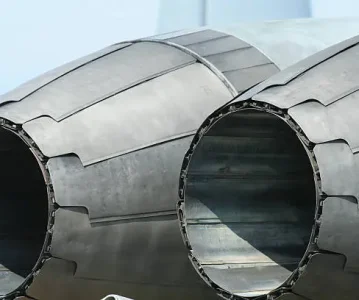
We use R60705 zirconium-niobium alloy wire to make high-temperature fasteners, fuel nozzles and hydraulic pipe joints for aero-engines. The alloy keeps stable mechanical properties for short-term use below 350°C. It resists jet fuel and hydraulic oil better than aluminum alloy. Zirconium alloy wire (2.0 mm to 4.0 mm) makes lock wires and anti-loose bolts. These parts work reliably under engine vibration and thermal cycling. An aircraft manufacturer uses zirconium alloy fasteners on new turbofan engines. It extends the maintenance interval of key parts by about 30%.
4.2 Seawater Desalination & Offshore Platform Anti-corrosion
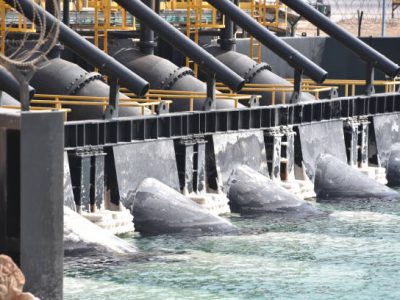
Seawater contains 19,000 ppm chloride ions. Common titanium alloy still has local corrosion at gaps. We make seawater pump sleeves, valve sealing wires and reverse osmosis membrane supports from ASTM B550 zirconium wire. It has better corrosion resistance than TA10 titanium alloy in hot seawater above 60°C. A seawater desalination plant in the Middle East uses filter screens woven from R60702 zirconium wire for high-pressure pumps. The screens run for 10 years continuously. The weight loss is less than 1%. It cuts frequent filter replacement work.
4.3 Non-magnetic Structural Parts for Deep-sea Exploration Equipment
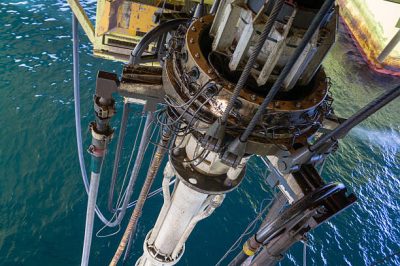
Deep-sea research equipment needs non-magnetic materials to avoid interference with geomagnetic measurement and navigation systems. We make sensor brackets, sonar array fixtures and sampler springs from pure zirconium wire (1.0 mm to 3.0 mm). Its magnetic permeability is about 1.0×10⁻⁶, close to vacuum. It keeps precise size under high pressure at 6000 meters deep sea. Zirconium wire has good low temperature toughness. It will not turn brittle at 2°C to 4°C in deep sea and supports safe research work.
| Aerospace & Marine Application | Grade | Working Environment | Core Advantages | Performance |
|---|---|---|---|---|
| Engine Fasteners | R60705 | ≤350°C & aviation fuel | High temperature strength & corrosion resistance | Maintenance interval extended by about 30% |
| Seawater Desalination Mesh | R60702 | Hot seawater at 60°C | Resist chloride pitting corrosion | Weight loss <1% after 10 years |
| Deep-sea Sensor Bracket | R60702 | 6000 m depth & 2°C | Ultra-low magnetism & pressure resistance | Magnetic permeability ~1×10⁻⁶ |
5. How to Select Proper ASTM B550 Zirconium Wire & Suppliers
5.1 Choose Alloy Grade & Diameter Based on Working Conditions
- R60702 pure zirconium: For general corrosion environments and low magnetism requirements. Tensile strength is about 380 MPa.
- R60704 zirconium-tin alloy: Better performance at high temperature. Suitable for use below 400°C.
- R60705 zirconium-niobium alloy: Highest strength (≥550 MPa). Ideal for load-bearing parts and nuclear grade applications.
Select diameter according to processing methods: 0.8 mm to 2.4 mm for welding wire; 0.5 mm to 2.0 mm for spring wire; 3.0 mm to 6.0 mm for fastener wire; ultra-fine wire down to 0.06 mm for precision electronics. Surface types include pickled finish (oxide scale removed), bright finish (smooth after cold drawing) and annealed finish (soft for easy forming).
5.2 Check Production Technology & Quality Traceability of Suppliers
Reliable suppliers own Vacuum Arc Remelting (VAR) furnaces. The equipment ensures even alloy composition and low impurity content. Continuous rolling technology produces wire with fine grains and good straightness. The diameter tolerance can reach ±0.01 mm. A complete quality traceability system includes heat number, chemical composition report, mechanical property test and intergranular corrosion inspection certificate.
5.3 Custom Service & Technical Support Capability
High-end applications often need customized solutions. Suppliers shall provide various surface treatments such as electropolishing, anodizing and functional coating. They also offer special diameter tolerance down to ±0.005 mm and customized mechanical properties like high elastic modulus or ultra-low hydrogen content. Technical support covers material selection advice, corrosion environment assessment and failure analysis.
Conclusion
ASTM B550 zirconium wire has strong resistance to strong acid and chloride corrosion, ultra-low magnetism and good high temperature stability. It becomes a key material for chemical, nuclear, medical, aerospace and other high-end industries. It solves pitting problems of hydrochloric acid equipment, keeps nuclear reactors running stably for long cycles, makes minimally invasive medical devices and supports deep-sea exploration equipment. It shows outstanding performance in harsh conditions. Choose suppliers with ASTM B550 qualified products, advanced technology and full quality traceability. It helps extend equipment service life and reduce overall costs.
FAQ
What is the difference in corrosion resistance between ASTM B550 zirconium wire and pure titanium wire?
Zirconium wire has much better corrosion resistance than titanium alloy in hydrochloric acid, wet chlorine and high chloride environments. It works far better against chloride pitting and crevice corrosion. Passive film on titanium alloy easily breaks in reducing acid like hydrochloric acid. The self-repairing oxide film on zirconium stays stable in strong reducing conditions. Its service life is 5 to 10 times longer.
How to choose between R60702 and R60705?
R60702 is commercial pure zirconium. It fits general corrosion environments and low magnetism requirements with lower cost. R60705 zirconium-niobium alloy contains 2% to 3% niobium. Its strength rises by about 50%. It suits high-stress, high-pressure equipment and nuclear grade use. Pick R60705 for load-bearing parts and high temperature working conditions. Choose R60702 for common anti-corrosion parts to cut cost.
What are the production difficulties for ultra-fine zirconium wire (diameter <0.1 mm)?
Ultra-fine zirconium wire demands high raw material purity, precise rolling technology and perfect surface quality. We use multi-pass cold drawing, intermediate vacuum annealing and precision molds to avoid wire breakage and surface defects. The diameter tolerance needs to stay within ±0.005 mm. The grain size shall be refined to 5-10 μm. Low production yield and cost control are the main challenges.
Get Professional Zirconium Wire Solutions
Baoji Titanium Valley Titanium Nickel Zirconium Material Processing Co., Ltd. is a professional manufacturer and supplier of ASTM B550 zirconium wire. We own world-class Danieli continuous rolling lines and complete quality management systems. We supply full series R60702 / R60704 / R60705 zirconium wire. The diameter range is 0.06 mm to 10.0 mm. We provide customized processing and global delivery. Contact us for technical support and quotation: sales@titaniumvalleys.com
References
- ASTM International. ASTM B550-20 Standard Specification for Zirconium and Zirconium Alloy Bars, Wire and Forging Stock[S]. 2020.
- Zhang Wei, Li Minghua. Application and Performance Research of Zirconium Alloy in Nuclear Power Industry[J]. Rare Metal Materials and Engineering, 2021, 50(6): 2145-2152.
- Wang Jianguo, Chen Xiaodong. Corrosion Behavior and Protection Technology of Zirconium and Zirconium Alloy[M]. Beijing: Metallurgical Industry Press, 2019.
- Liu Jianrong, Zhao Yongqing. Research Progress on Hydriding Behavior and Corrosion Performance of Nuclear-grade Zirconium Alloy[J]. Materials Reports, 2018, 32(3): 387-394.