
Why Does the ASTM B550 Standard Have Strict Impurity Control for Zirconium Wire?
- Zirconium wire
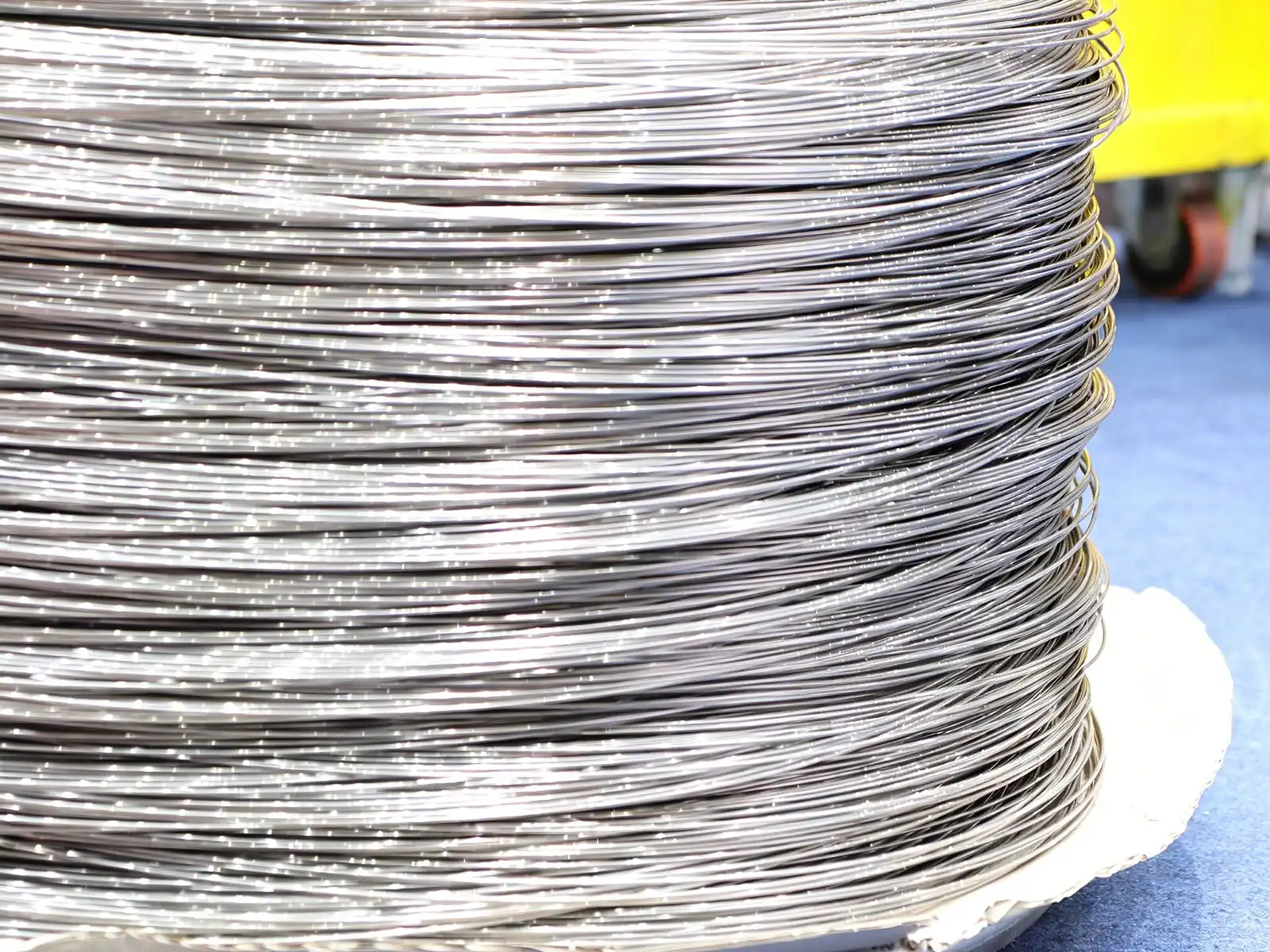
ASTM B550 is the governing standard for zirconium and zirconium alloy wire used in nuclear, chemical, and industrial applications. The standard imposes exceptionally strict limits on interstitial impurities—hydrogen, oxygen, nitrogen, and carbon—because these elements profoundly influence the mechanical properties, corrosion resistance, and nuclear performance of Zirconium Wire. Understanding the rationale behind these stringent impurity controls enables engineers to select appropriate grades, specify correct material conditions, and ensure compliance with application-specific requirements.
1. Impact of Interstitial Impurities on Zirconium Properties
(1) Hydrogen: Embrittlement and Hydride Formation
Hydrogen is the most critical impurity in zirconium wire because it forms brittle zirconium hydrides (ZrHx) that degrade mechanical properties dramatically. At temperatures below 200°C, hydrogen solubility in zirconium is limited to approximately 100 ppm; excess hydrogen precipitates as ZrH₂ platelets oriented perpendicular to the wire axis, reducing ductility and fracture toughness by up to 70%. ASTM B550 limits hydrogen content to ≤30 ppm for Grade 1 wire and ≤50 ppm for Grade 2 wire to prevent hydride-induced embrittlement during service. For nuclear applications, hydrogen is further limited to ≤15 ppm to ensure adequate swelling resistance under neutron irradiation.
(2) Oxygen: Strength-Ductility Trade-Off
Oxygen acts as a potent interstitial solid solution strengtheners in zirconium, increasing tensile strength by approximately 700 MPa per weight percent of dissolved oxygen. However, excessive oxygen content reduces elongation and increases susceptibility to stress corrosion cracking. ASTM B550 specifies oxygen limits of ≤0.18% for Grade 1 (maximum ductility) and ≤0.25% for Grade 2 (balanced properties). For wire drawing applications requiring extensive cold work, Grade 1 with lower oxygen content is preferred to maintain formability through multiple drawing passes.
(3) Nitrogen and Carbon: Minor but Cumulative Effects
Nitrogen and carbon also strengthen zirconium through interstitial solid solution, though less effectively than oxygen. Combined limits for nitrogen and carbon are typically imposed to prevent excessive embrittlement. Nitrogen above 0.05% promotes formation of zirconium nitride particles that act as crack initiation sites, while carbon above 0.08% can form zirconium carbides that reduce fatigue resistance. ASTM B550 limits nitrogen to ≤0.05% and carbon to ≤0.08% to maintain the balance of strength and ductility required for wire applications.
2. Nuclear Applications: The Driving Force for Strict Impurity Control
(1) Neutron Absorption Cross-Section
Zirconium is selected for nuclear fuel rod cladding and structural components primarily for its exceptionally low thermal neutron absorption cross-section (0.185 barns for natural zirconium). However, certain impurities dramatically increase neutron capture: boron (3840 barns), cadmium (2450 barns), and hafnium isotopes absorb neutrons competitively, reducing reactor core efficiency and fuel burnup. While hydrogen, oxygen, nitrogen, and carbon have relatively modest cross-sections, their cumulative effect on neutron economy becomes significant in high-burnup fuel assemblies, driving the need for ultra-low impurity specifications.
(2) Irradiation-Induced Swelling and Creep
Under neutron irradiation, impurity atoms and their associated precipitates serve as nucleation sites for void formation and dislocation loop accumulation. Hydrogen-rich zirconium wire exhibits 2–3 times higher irradiation creep rates than low-hydrogen grades, accelerating dimensional changes that can compromise fuel rod clearance. Oxygen content above 0.25% increases irradiation hardening, raising the ductile-to-brittle transition temperature and reducing fracture tolerance under accident conditions such as loss-of-coolant scenarios.
(3) Corrosion Under Irradiation
Irradiation accelerates zirconium corrosion in high-temperature water environments by modifying the protective ZrO₂ oxide layer structure. Impurity-induced microstructural heterogeneities create localized galvanic cells that promote pitting and accelerated oxide growth. Low-impurity zirconium wire maintains oxide layer stability and corrosion rates below 10 μm/year even after extended irradiation, essential for fuel assembly longevity and reactor safety margins.
3. Chemical Processing and Industrial Applications
(1) Corrosion Resistance in Reducing Acids
In chemical processing equipment exposed to hydrochloric, sulfuric, and phosphoric acids, zirconium wire used for welding consumables, mesh fabrications, and reinforcement must maintain high purity to ensure uniform corrosion resistance. Interstitial impurities disrupt the protective ZrO₂ film, creating localized attack sites that propagate into through-wall corrosion. ASTM B550 Grade 1 wire with tightly controlled impurities achieves corrosion rates below 0.001 mm/year in hot acid environments.
(2) Welding Wire and Consumable Requirements
Zirconium welding wire must match the impurity levels of the base material to maintain weld metal corrosion resistance and mechanical properties. Hydrogen in welding wire contributes to porosity and crack formation in weld beads, while oxygen and nitrogen pickup during welding increases hardness in the weld zone beyond acceptable limits. ASTM B550 specifies welding-grade wire with hydrogen ≤20 ppm, oxygen ≤0.15%, and nitrogen ≤0.03% to produce defect-free welds with corrosion resistance equal to the base material.
4. Manufacturing Control and Impurity Prevention
(1) Vacuum Melting and Degassing
Zirconium wire production begins with electron beam melted (EBM) or vacuum arc remelted (VAR) zirconium ingots that minimize initial impurity levels. Vacuum processing at 10⁻³ to 10⁻⁵ Pa removes dissolved hydrogen and volatile impurities through degassing. The resulting ingot chemistry meets the tightest ASTM B550 specifications before any mechanical working begins.
(2) Controlled Atmosphere Processing
All hot and cold working operations—forging, rolling, drawing, and annealing—are conducted in controlled atmospheres (vacuum, argon, or hydrogen-controlled furnaces) to prevent atmospheric pickup of oxygen, nitrogen, and hydrogen. Annealing atmospheres are maintained with dew points below -60°C and oxygen content below 10 ppm to ensure impurity levels remain within ASTM B550 limits throughout processing.
(3) Analytical Verification and Certification
Every heat of ASTM B550 zirconium wire is analyzed by optical emission spectroscopy (OES) for oxygen, nitrogen, and carbon, and by fusion extraction infrared analysis for hydrogen. Results are documented on EN 10204 3.1 material certificates with full traceability to the original ingot. Wire batches failing to meet impurity specifications are rejected or downgraded to less demanding grade applications.
Conclusion
The strict impurity controls specified in ASTM B550 for zirconium wire are not arbitrary regulatory requirements but fundamental material science necessities driven by the profound influence of interstitial elements on zirconium’s mechanical, corrosion, and nuclear properties. Hydrogen, oxygen, nitrogen, and carbon each affect zirconium wire performance in specific, quantifiable ways—from hydride embrittlement and irradiation swelling to corrosion degradation and neutron absorption. Manufacturers who maintain rigorous impurity control throughout melting, working, and processing deliver zirconium wire that meets the exacting demands of nuclear, chemical, and high-purity industrial applications with confidence and consistency.
FAQ
Q1: What is the difference between ASTM B550 Grade 1 and Grade 2 zirconium wire regarding impurity limits?
Grade 1 wire has stricter oxygen limits (≤0.18% vs. ≤0.25% for Grade 2) and lower hydrogen limits (≤30 ppm vs. ≤50 ppm), providing maximum ductility and corrosion resistance. Grade 2 offers higher strength through slightly elevated oxygen content while maintaining acceptable formability for most applications.
Q2: Can zirconium wire with slightly elevated impurity levels be used in non-nuclear applications?
Yes. For general chemical processing or architectural applications where nuclear-grade purity is not required, zirconium wire with impurity levels at the upper bounds of ASTM B550 specifications remains suitable. The key is matching material grade to the specific corrosion and mechanical requirements of the application.
Q3: How is hydrogen content measured in zirconium wire?
Hydrogen in zirconium wire is measured by fusion extraction infrared analysis, where a weighed sample is melted in a high-frequency induction furnace in a helium carrier gas. Released hydrogen reacts to form H₂O, which is detected by infrared absorption. Detection limits reach 1 ppm, providing accurate quantification well below ASTM B550 specification limits.
Contact Titanium Valley
Baoji Titanium Valley Titanium Nickel Zirconium Material Processing Co., Ltd. manufactures ASTM B550 zirconium wire with strict impurity control, providing EN 10204 3.1 certification, full analytical reports, and nuclear-grade material for demanding applications. Contact us for material specifications and quotations:
References
ASM International. ASM Handbook, Volume 13A: Advanced Materials and Corrosion Data [M]. ASM International, 2003.
Stainslater, R. Zirconium Handbook: Processing, Properties, and Applications [M]. ASM International, 2020.
Ross, I.R., et al. Impurity Effects on Zirconium Alloy Performance in Nuclear Reactors [J]. Journal of Nuclear Materials, 2019, 521: 145–158.
ASTM International. ASTM B550-20 Standard Specification for Zirconium and Zirconium Alloy Wire [S]. 2020.