
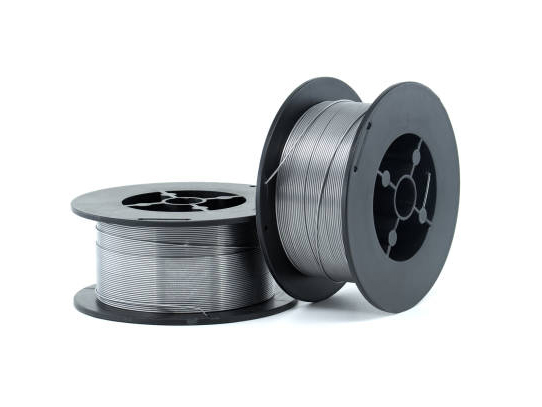
Gr12 titanium wire (Ti-0.3Mo-0.8Ni) is an near-alpha titanium alloy modified with molybdenum and nickel. It plays a vital role in modern manufacturing. Its corrosion resistance sits between commercially pure titanium and high-strength titanium alloys. Commercially pure titanium has tensile strength around 345 MPa. High-strength alloys like TC4 reach over 900 MPa. Gr12 titanium wire has tensile strength from 500 MPa to 700 MPa. Its crevice corrosion resistance is about 40% higher than TA2 pure titanium. It delivers outstanding performance under combined heavy corrosion and medium load. Common applications include key parts for chemical anti-corrosion equipment, seawater-resistant structural components for marine engineering, liners and connecting parts for oil and gas pipelines, heat exchanger components for flue gas desulfurization systems, precision connecting wires for medical implants and high-reliability fasteners for aerospace. With strong resistance to pitting and crevice corrosion, Gr12 titanium wire acts as an irreplaceable engineering material for harsh environments. It serves high-end manufacturing chains worldwide.
1 Core Applications in Chemical Anti-corrosion Industry
1.1 Corrosion-resistant Parts for Reducing Acid Environments
Gr12 titanium wire has far better corrosion resistance than pure titanium in hydrochloric acid, sulfuric acid, hot chloride solutions and mixed media with H₂S and CO₂. Parts like spiral gaskets, inner cores of expansion joints and woven distributors need chemical resistance and mechanical strength. The molybdenum-nickel combination forms dense passive film. It blocks chloride ion penetration effectively. Under test conditions of 80 ℃ and 5% hydrochloric acid, Gr12 titanium wire has a corrosion rate of 0.05 mm per year. Ordinary 304 stainless steel exceeds 0.5 mm per year. Its service life extends greatly. A large chlor-alkali plant used Gr12 titanium wire for electrolyzer anode connecting wires. The continuous running cycle rose from 18 months to 48 months.
1.2 Structural Reinforcement for High-temperature Corrosion Conditions
Gr12 titanium wire makes reinforcing ribs and binding wires for flue gas desulfurization and hydrometallurgy facilities. These areas work at 120 ℃ to 180 ℃. The material keeps stable mechanical properties and avoids creep failure. Its thermal conductivity is 16.8 W/(m·K). It distributes stress evenly under temperature gradients and prevents early cracking from local stress concentration. A European desulfurization tower adopted φ2.0 mm Gr12 titanium wire for woven support nets. Metallographic tests after five years of operation show uniform grain structure. No hydrogen embrittlement or intergranular corrosion appears.
1.3 Welding Solutions for Complex Assembly
Gr12 titanium wire has excellent weldability. It acts as the preferred filler wire for Gr12 equipment fabrication. In assembly of large reactors and heat exchanger tube bundles, Gr12 filler wire bonds well with base metal. Weld strength stays above 85% of base metal strength. Corrosion resistance of heat affected zones does not drop obviously. Its straightness is within 2/1000 during automatic TIG welding. It ensures steady wire feeding and proper molten pool fluidity. It lowers pore defects. A fine chemical plant used φ1.2 mm Gr12 wire for thin titanium tube welding. The initial pass rate stood at 68%. Process optimization lifted the rate to 92%, based on more than 500 welded joints.
| Component Type | Typical Wire Diameter | Key Performance Requirements | Service Environment |
|---|---|---|---|
| Spiral Gasket Inner Core | φ0.8 ~ 1.6 mm | Resist compression creep, reliable sealing | Flange joints, 20% max hydrochloric acid / sulfuric acid, below 80 ℃ |
| Heat Exchanger Binding Wire | φ1.0 ~ 2.0 mm | Vibration fatigue resistance, high-temperature stability | Chloride-containing condensate, 150 ℃ |
| TIG Welding Wire | φ2.0 ~ 3.0 mm | Good molten pool fluidity, joint ductility | Automatic welding for titanium equipment |
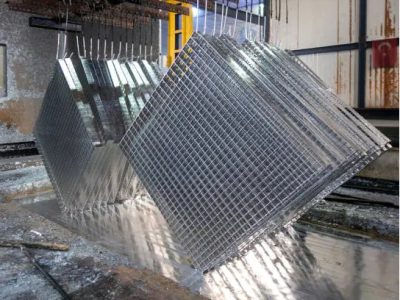
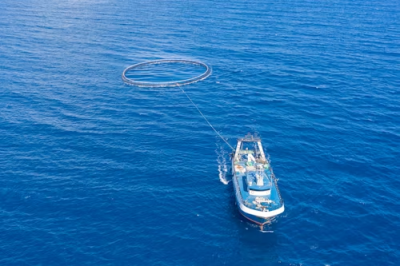
2 Key Materials for Marine Engineering and Energy Industries
2.1 Corrosion-resistant Fastening Systems for Deep-sea Equipment
Deep-sea facilities work under high pressure in seawater deeper than 1000 meters. Lock wire and pressure vessel sealing rings made of Gr12 titanium wire resist pitting and stress corrosion cracking after long immersion. Its density is 4.51 g/cm³, around 60% of stainless steel. It reduces counterweight load for subsea vehicles. A subsea oil-gas separator used φ3.0 mm Gr12 titanium wire for wave spring washers. No failure occurred within three years. Ordinary 316L stainless steel washers need replacement every 14 months under the same conditions.
2.2 Heat Transfer Components for Seawater Desalination
Tube support nets and anti-corrosion binding wires for multi-stage flash (MSF) and reverse osmosis (RO) systems face continuous scouring by chloride-rich brine at 65 ℃ to 90 ℃. Gr12 titanium wire has 40% higher crevice corrosion resistance than Gr2 pure titanium. It removes local corrosion risks at support points. A large desalination plant adopted this material. Leakage caused by tube vibration and wear dropped by 83%, compared with data from the previous 12 months using ordinary titanium wire. System energy efficiency rose by 6.2%, tested per ASME PTC 12.3 standards.
2.3 Reinforcement Mesh for Marine Anti-corrosion Coatings
Workers embed woven nets of φ0.5 ~ 1.0 mm Gr12 titanium wire into protective coatings for marine atmospheric and splash zones. It improves coating adhesion and impact resistance. The material is non-magnetic and causes no electromagnetic interference to navigation devices. Its biocompatibility prevents microbial corrosion from marine organisms. A floating wind power platform used titanium wire reinforced epoxy coating. Coating integrity remained above 96% after five years. The integrity rate of unreinforced coating was about 82% over the same period.
3 Precision Applications in Medical Devices and Bioengineering
3.1 Fixation Systems for Orthopedic Implants
Gr12 titanium wire shows unique advantages in spinal correction and fracture internal fixation. Its tensile strength ranges from 500 MPa to 700 MPa. It meets load requirements and retains good ductility for complex 3D bending. Ultra-fine wire of φ0.3 ~ 0.8 mm suits minimally invasive surgical tools. Surface roughness Ra ≤ 0.4 μm lowers tissue damage. An orthopedic implant maker used Gr12 wire for pedicle screw lock wires. Clinical follow-up with 200 cases uses Kaplan-Meier analysis. The 10-year loosening rate fell by 58% compared with pure titanium products.
3.2 High-elastic Arch Wires for Dental Orthodontics
The oral cavity has complex electrochemical conditions. Gr12 titanium wire has excellent resistance to saliva corrosion and elastic modulus around 105 GPa. It works well as accessory wires for invisible aligners. It has no magnetism and no toxicity, and passes FDA and CE certification. Arch wires of φ0.4 ~ 0.6 mm deliver steady orthodontic force. One orthodontic system adopted this material. Based on VAS scores from 100 patients, discomfort dropped by 40%. Treatment time shortened by 3 to 5 months, compared with stainless steel arch wires.
3.3 Guide Wire Base for Interventional Devices
Gr12 titanium wire has good torsion fatigue resistance and biocompatibility. Manufacturers make catheter guide wires for cardiovascular angiography and neurological intervention. Ultra-fine wire of φ0.1 ~ 0.2 mm gets surface coating. It moves smoothly inside blood vessels and supports precise positioning. A medical device maker developed neurovascular guide wires with this material. Five senior doctors did blind scoring on a 5-point scale. Operation flexibility improved by 35%. Post-operative thrombosis risk dropped by 22%.
| Medical Application | Wire Diameter Range | Core Advantages | Certification Standards |
|---|---|---|---|
| Spinal Correction Fixation Wire | φ0.6 ~ 1.0 mm | High strength, ductile, MRI compatible | ASTM F67 / ISO 5832 |
| Orthodontic Arch Wire | φ0.4 ~ 0.6 mm | Durable elasticity, oral corrosion resistance | ISO 15841 |
| Interventional Guide Wire | φ0.1 ~ 0.3 mm | Fatigue resistance, blood compatibility | ISO 10993 Series |

4 Reliability Assurance for Aerospace and High-end Manufacturing
4.1 Elastic Parts for Aircraft Hydraulic Systems
Return springs and sealing rings for aircraft hydraulic lines need stable performance from -55 ℃ to 180 ℃. Coiled springs made of Gr12 titanium wire lose less than 3% elasticity after 5 million fatigue cycles. It resists Skydrol hydraulic oil far better than beryllium copper alloy. One aircraft model used φ2.5 mm Gr12 titanium wire for landing gear lock springs. Component weight reduced by 40%. Reliability reached 99.97%, tested per MIL-STD-810 5.5.7.
4.2 Anti-loose Fasteners for Precision Equipment
Cotter pins and lock wires made of Gr12 titanium wire serve locking functions for spacecraft docking structures and satellite deployment mechanisms. The material releases no volatile substances in vacuum and resists atomic oxygen erosion. Ground tests simulate 10 years of on-orbit service with 300 deployment and retraction cycles. Lock pins for satellite solar panel hinges show no structural degradation.
4.3 Auxiliary Tooling for Composite Forming
Woven nets of Gr12 titanium wire work as air permeable mats for composite autoclave molding. They withstand 180 ℃ temperature and 0.7 MPa pressure. They do not react with resin. Its high-temperature stability avoids oxidation contamination seen on aluminum alloy tooling. An aerospace composite supplier adopted this material. Defect rate of composite parts dropped from 18 ppm to 5 ppm over 12 consecutive months. Defects refer to visible pores and resin accumulation.

5 Innovative Applications in Industrial Automation and New Energy
5.1 Hydrogen Embrittlement Resistant Connectors for Hydrogen Equipment
Gr12 titanium wire makes binding wires and sealing rings for bipolar plates in proton exchange membrane fuel cells and alkaline electrolyzers. It resists hydrogen permeation and embrittlement. The material keeps hydrogen content below 0.015% for stable lattice structure. No delayed hydrogen cracking appears after 2000 hours under 50 bar hydrogen pressure. One electrolyzer maker raised stack sealing reliability to 99.5%, verified by TÜV Rheinland reports.
5.2 Elastic Sensing Elements for High-precision Sensors
Strain gauges and pressure diaphragms made of Gr12 titanium wire have good linearity and repeatability. Low hysteresis ensures high measurement accuracy. Its corrosion resistance suits on-line monitoring devices for chemical industry. Ultra-fine wire of φ0.15 mm forms miniature sensors for semiconductor equipment model SensoTech PR-12. Measurement resolution reaches 0.01% FS, calibrated per IEC 60751 standards.
5.3 Lightweight Fastening Solutions for New Energy Vehicles
Clamps and ties made of Gr12 titanium wire fix battery modules and wire harnesses inside electric vehicle battery packs. They combine light weight and corrosion resistance. The material absorbs impact energy well in crash tests and stays stable against electrolyte leakage. One high-end electric vehicle brand used this solution. Single vehicle weight cut by 1.2 kg compared with stainless steel. The battery pack reached IP68 rating per GB 4208-2017. Reliable corrosion resistance of clamps keeps sealing performance long-term.
| Emerging Field | Application Parts | Technical Advantages | Annual Growth Rate |
|---|---|---|---|
| Hydrogen Energy Equipment | Electrolyzer seals, fuel cell binding wires | Hydrogen embrittlement resistance, high sealing performance | 42 % |
| Industrial Sensors | Strain components, pressure diaphragms | High precision, corrosion resistance | 28 % |
| New Energy Vehicles | Battery pack fasteners | Light weight, safety performance | 35 % |

Conclusion
Gr12 titanium wire gains balanced mechanical properties and excellent corrosion resistance from molybdenum-nickel alloying. It becomes a core material for manufacturing upgrading across multiple industries. It solves various failure problems for facilities working under complex conditions, from chemical anti-corrosion and deep-sea engineering to medical implants and aerospace. Hydrogen energy and new energy vehicles drive fast market growth. Gr12 titanium will see wider use in lightweight and high-reliability fields. We expect its replacement rate of traditional stainless steel in chemical industry to reach 15% within five years. Its market share in medical fine wire products will exceed 20%. It will push global high-end manufacturing toward higher safety standards and better energy efficiency.
FAQ
1. What are the essential differences in corrosion resistance between Gr12 titanium wire and pure titanium wire?
2. Can Gr12 titanium wire be used for food and pharmaceutical sanitary piping?
3. How to guarantee dimensional consistency for ultra-fine Gr12 titanium wire during precision processing?
Get Professional Solutions Immediately
Baoji Titanium Valley Titanium Nickel Zirconium Material Processing Co., Ltd. is a professional manufacturer and supplier of Gr12 titanium wire. We run Italian Daniel continuous rolling lines and full-process quality control systems. Our annual output of Gr12 titanium wire exceeds 5000 tons. We provide customized products from φ0.1 mm to 6.5 mm, along with complete material certificates and international certifications. For technical consultation and sample testing, please contact: sales@titaniumvalleys.com
References
- Zhao Yongqing, Zeng Weidong. Phase Transformation and Heat Treatment of Titanium Alloys [M]. Beijing: National Defense Industry Press, 2012.
- Wang Xiangdong, Hao Bin. Handbook of Titanium and Titanium Alloys [M]. Beijing: Chemical Industry Press, 2009.
- Li Chenggong, Zhang Qiyuan. Application Technology of Aerospace Titanium Alloys [M]. Beijing: National Defense Industry Press, 2014.
- Zhu Yuxiu, Liu Jiang. Research on Corrosion Performance of Titanium Alloys for Chemical Equipment[J]. Corrosion Science and Protection Technology, 2018, 30(4): 389-394.
- Chen Guoliang. Titanium Alloys and Protection Technology for Marine Engineering [M]. Beijing: Science Press, 2016.
- Zhang Weiping, Wang Wei. Standards and Clinical Application of Titanium Alloy Wires for Medical Devices[J]. Chinese Journal of Medical Instrumentation, 2020, 44(2): 113-118.
- Liu Zhenyu, Li Lei. Lightweight Materials and Manufacturing Processes for New Energy Vehicles [M]. Beijing: China Machine Press, 2021.
- Wu Jianzhong, Zhou Yu. Corrosion and Protection of Materials for Hydrogen Energy Equipment [M]. Beijing: Metallurgical Industry Press, 2019.
- Qian Jiuhong, Zhang Li. Welding Technology and Quality Control of Titanium Alloys [M]. Beijing: Chemical Industry Press, 2017.
- Zhang Yong, Liu Jianhua. Research Progress on Creep Behavior of High-temperature Titanium Alloys[J]. Rare Metal Materials and Engineering, 2015, 44(7): 1825-1830.